
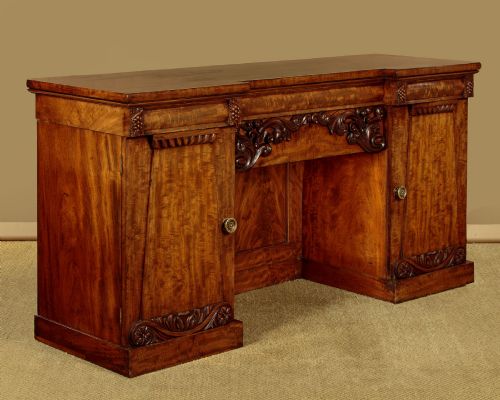
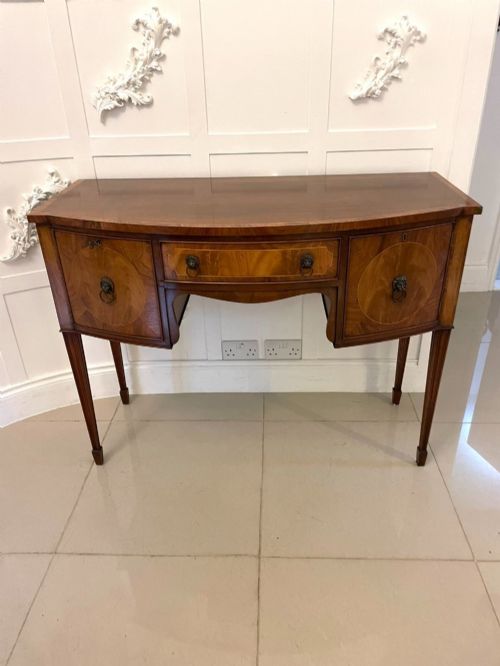
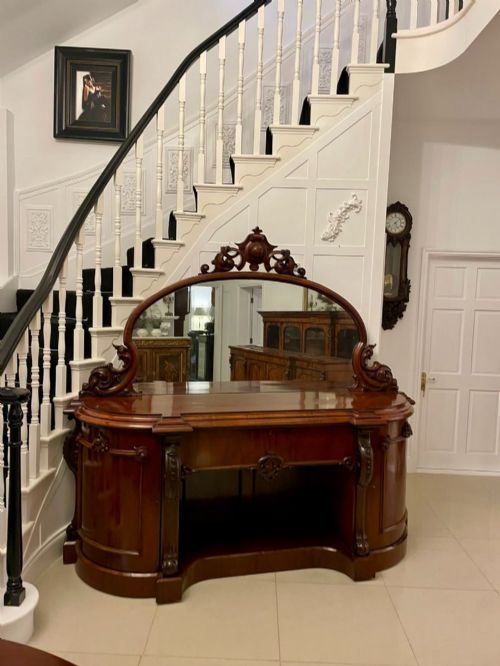
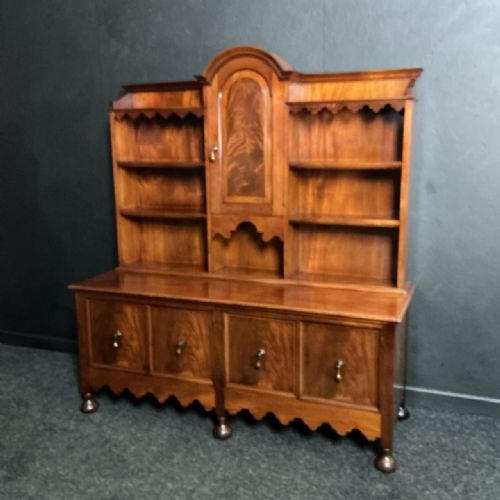
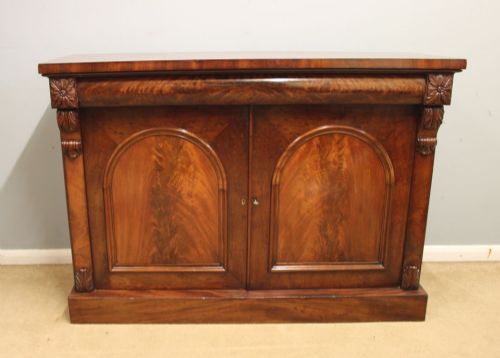
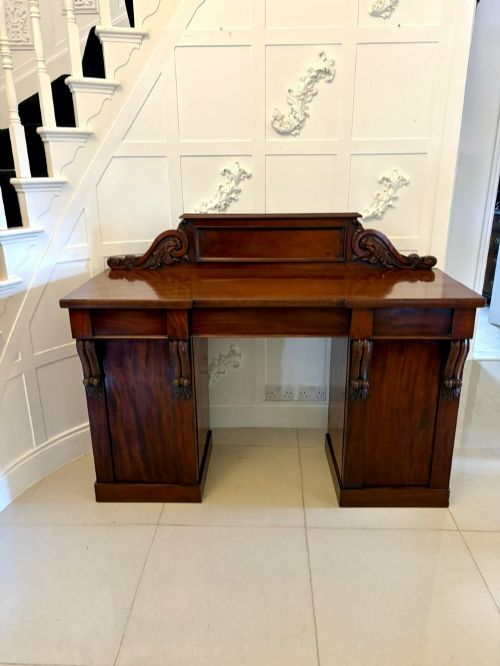
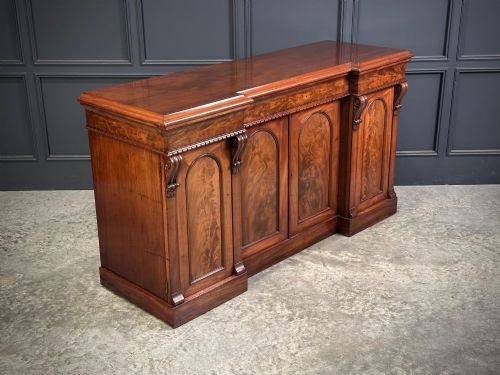
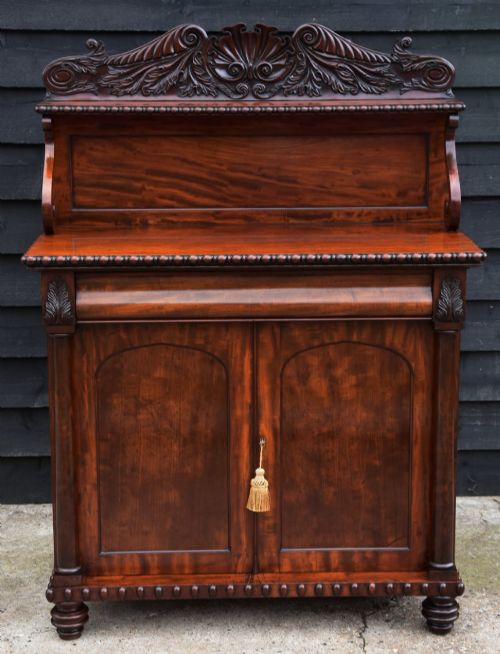
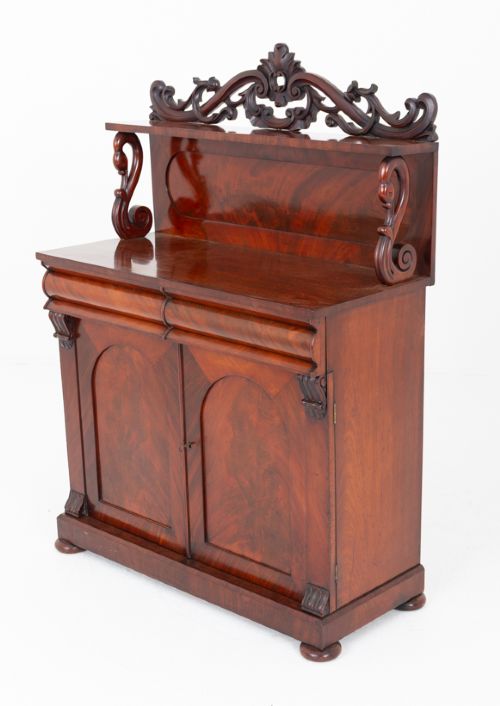
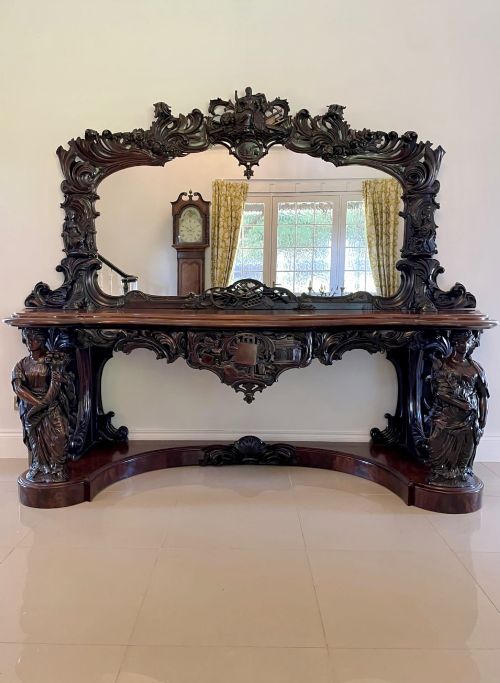
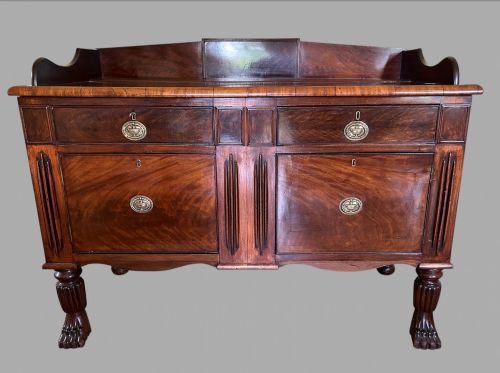
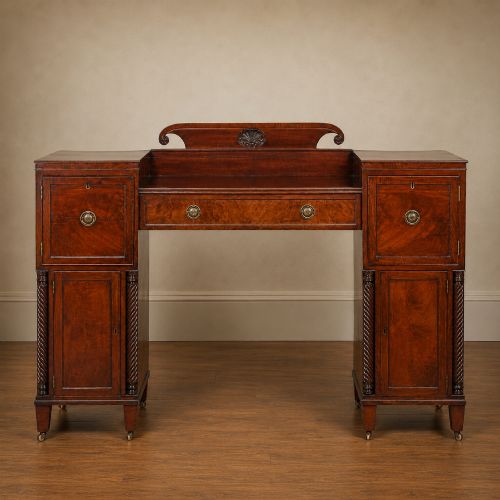
Carved Mahogany Buffet Sideboard
A carved mahogany buffet sideboard anchors a dining room with substance, bringing deep timber tones and traditional storage into domestic spaces.
Carved Mahogany Buffet Sideboard
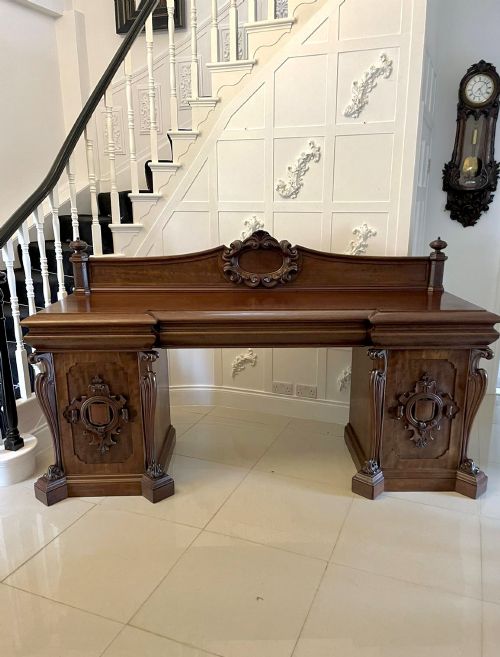
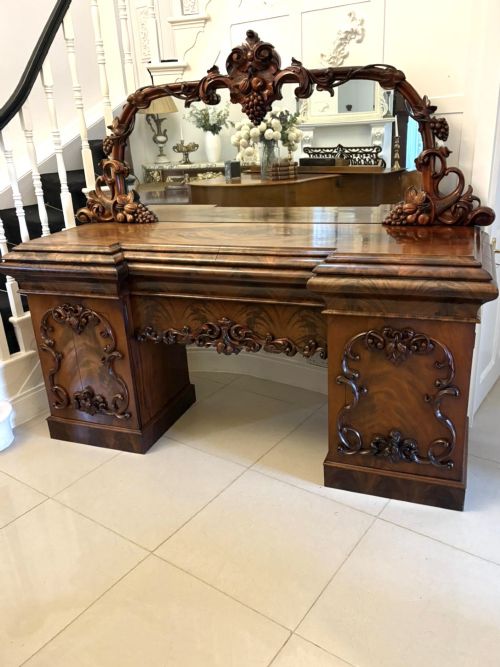
A carved mahogany buffet sideboard brings substantial timber furniture into dining spaces, taking forms that developed across the nineteenth century and into the Edwardian period. Buyers searching for a carved mahogany buffet sideboard encounter pedestal designs, mirror-back servers, and breakfront configurations originating from Victorian, Regency, William IV, and Edwardian workshops.
The pieces listed span utilitarian serving tables to large exhibition pieces featuring carved details, glazed cupboards, and brass hardware. Victorian mirror-back variations and Regency pedestal types appear frequently, alongside later Edwardian revivals of Sheraton and Chippendale styles.
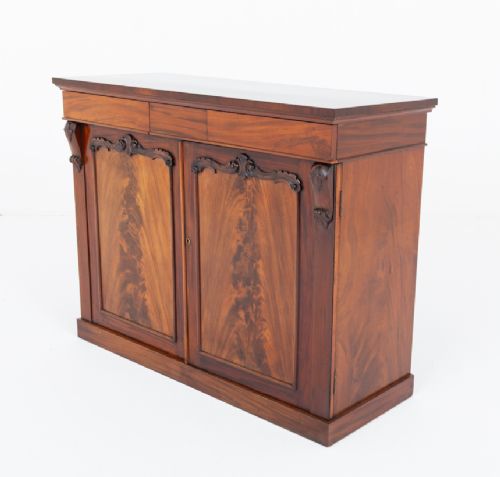
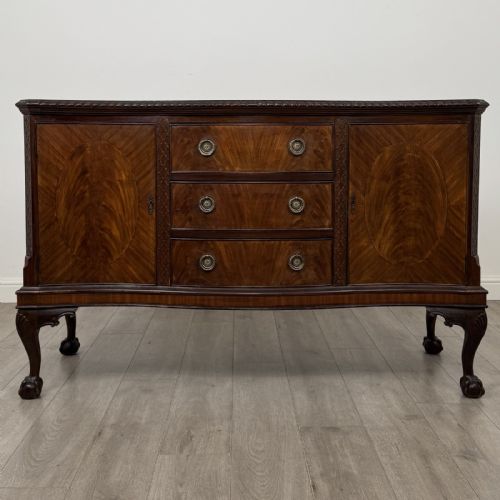
Makers utilised solid timbers alongside flame mahogany veneers, shaping deep cupboards and tiered shelves designed for heavy dining rooms. Forms range from compact chiffoniers to expansive breakfront sideboards with paw feet and panelled doors.
Materials and construction
Cabinet makers constructed these pieces primarily from solid mahogany and applied flame mahogany veneer to drawer fronts and door panels to highlight the grain. Workshops incorporated brass fittings, mirrored glass, and occasional glass panels into the upper sections of larger mirror-back sideboards.
Carpenters joined structural elements using traditional timber joints, mounting heavy doors onto sturdy hinges and setting cabinets upon plinths, bracket feet, or carved paw feet. Carved ornamentation, including scrolls, foliage, and architectural moulding, was worked directly into the solid mahogany framing.
Listings span the eighteenth, nineteenth, and early twentieth centuries, recording periods from Georgian Revival and Regency to Edwardian and Art Nouveau.
Judging the standard
Quality in these sideboards rests upon the selection of timber, particularly the depth and movement found in flame mahogany veneer panels. Superior pieces display crisp hand-carving in the solid mahogany mouldings rather than shallow machine-pressed relief work.
Construction integrity separates standard production from exhibition pieces, evident in the thickness of the timber, the weight of the brass hardware, and the stability of large mirror-back frames. The internal secondary woods and the precision of drawer dovetails reflect the tier of the original workshop.
M. D. Miller & Sons, Nottingham·Gillows
The Carved Mahogany Buffet Sideboard Glossary
- Buffet sideboard
- A large dining room cabinet designed for serving food and storing tableware. These pieces often incorporate tiers, cupboards, and drawers beneath a flat top surface.
- Flame mahogany veneer
- A thin slice of timber cut from the fork of the mahogany tree to create a distinctive flickering flame pattern. Cabinet makers laid this veneer over solid secondary woods on prominent surfaces.
- Chiffonier
- A compact sideboard or low cabinet equipped with enclosed shelving and occasionally a small upper tier or mirror. This form gained popularity during the Regency and Victorian periods.
- Breakfront
- A piece of furniture featuring a central section that projects forward from the flanking cabinets. This architectural arrangement creates depth and breaks up long expanses of timber.
- Pedestal sideboard
- A heavy dining room base comprising two substantial cupboards supporting a central serving surface or drawer. These designs often date from the Regency and William IV eras.
Carved Mahogany Buffet Sideboard: Frequently Asked Questions
What is a carved mahogany buffet sideboard used for?
These large dining room pieces serve as functional storage for crockery, cutlery, and glassware while providing a solid surface for serving food during meals. The upper shelves and mirrors on certain variants also display decorative ceramics or silver.
Historically, dining rooms relied on these cabinets to keep service items close to the table without cluttering the main dining surface.
How do I date a Victorian sideboard?
Dating relies on examining the specific stylistic markers, proportions, and construction methods recorded across the nineteenth century. Early Victorian pieces often retain heavy classical influence, while mid-century examples introduce elaborate carved mirror-backs.
Later Victorian production incorporates larger scale mirror glass and denser machine-tooled ornamentation before the Edwardian era shifts toward revival styles.
Where does flame mahogany come from?
Flame mahogany is derived from the swirling grain patterns found where branches join the main trunk of the tree. Cabinet makers prized this figured timber for prominent door panels and drawer fronts.
Workshops carefully matched these veneer sheets across symmetrical surfaces to create striking visual movement.
How do I fit a large sideboard into a modern room?
Measure both floor space and ceiling height carefully, as these pieces often feature substantial mirror-backs and deep pedestal bases. Positioning the sideboard against a main dining room wall allows the heavy timber and carved details to anchor the space.
Ensure adequate clearance for opening large cupboard doors and heavy drawers without obstructing walkways.