
Carved Mahogany Balloon Back
Carved mahogany balloon back chairs bring graceful Victorian curves and rich timber tones to any dining room.
Carved Mahogany Balloon Back
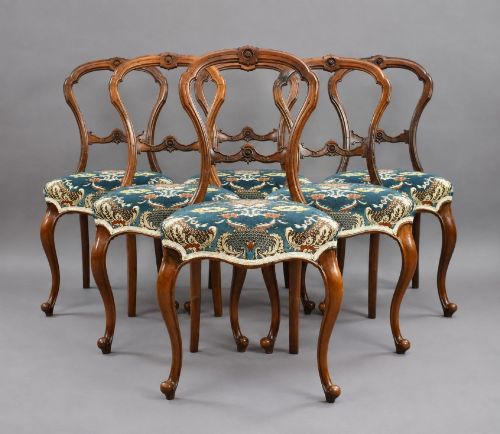
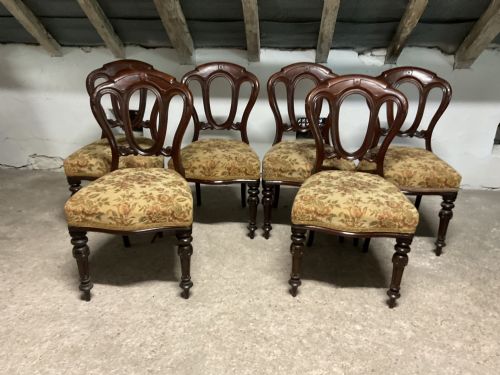
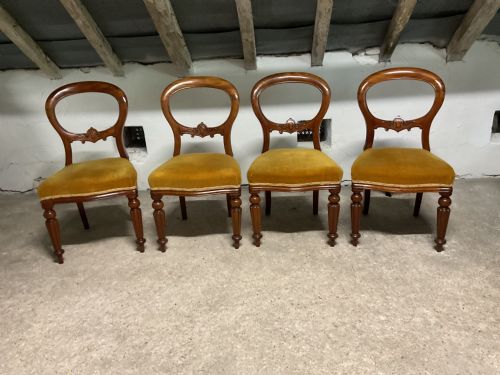
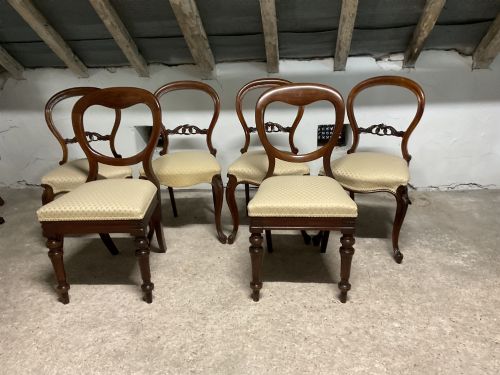
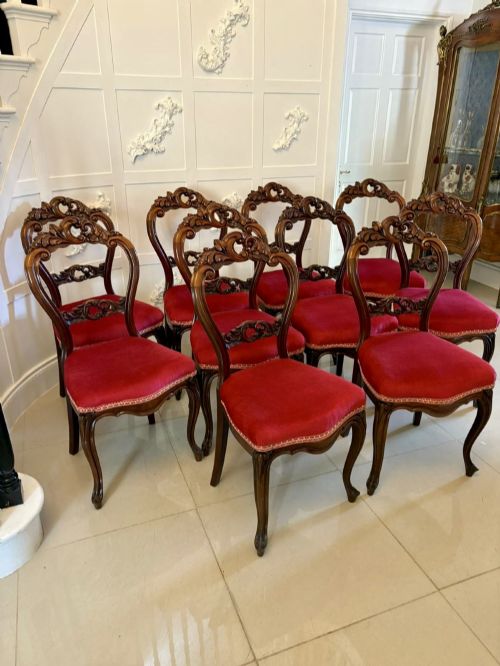
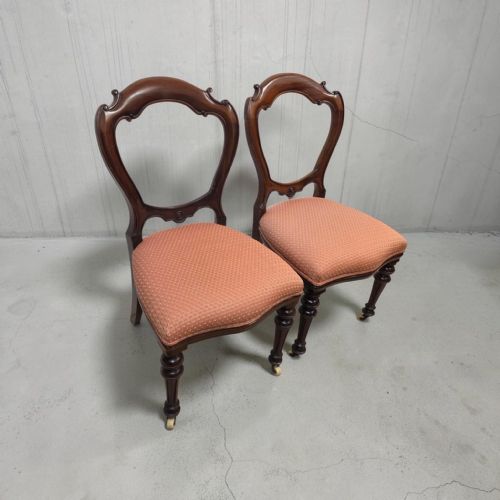
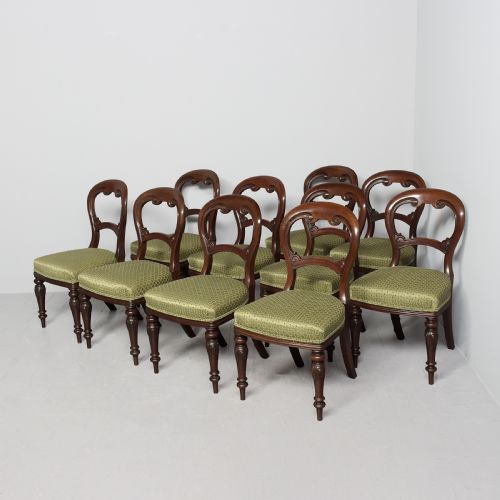
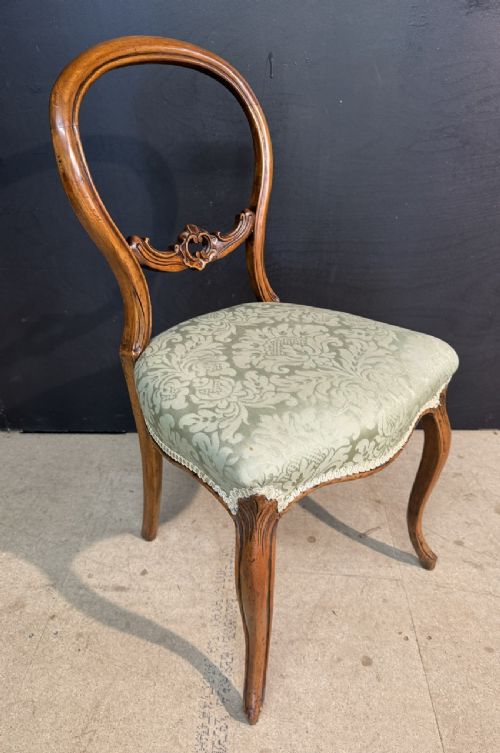
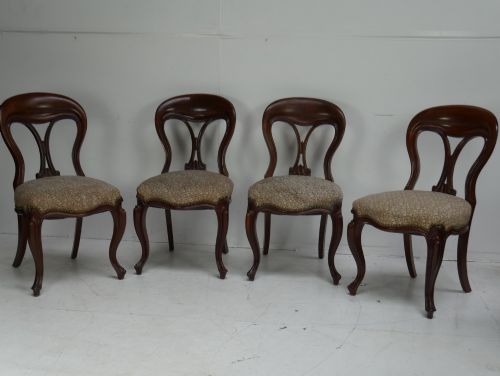
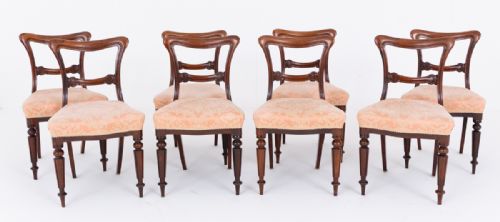
When searching for carved mahogany balloon back, you are looking at domestic seating predominantly shaped during the nineteenth century, featuring the characteristic curved oval backrest that mimics a inflated balloon. These pieces range from single side chairs to large dining sets numbering up to sixteen chairs, alongside occasional and desk variants.
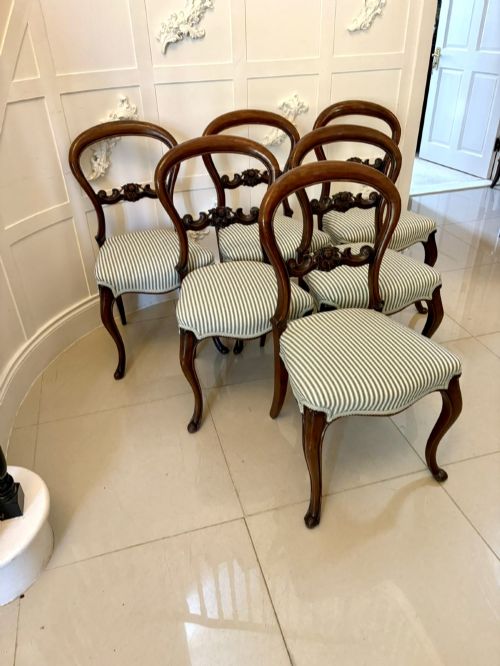
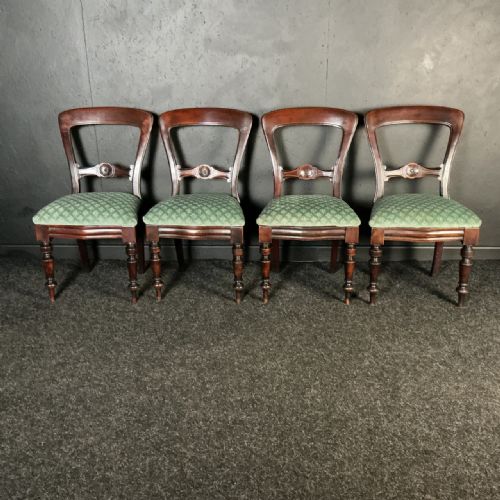
The version you are most likely to meet on this page is the Victorian dining chair, frequently found in matched sets of four, six, or eight. These chairs often incorporate carved mid-rails, scroll motifs, and overstuffed seats upholstered in fabrics such as velvet or brocade.
Materials and construction methods
Cabinet makers utilised dense tropical timber, turning and carving solid pieces to form the continuous flowing curve of the characteristic back frame without losing structural integrity. Mahogany provided the necessary strength for slender back rails and shaped forelegs, occasionally accompanied by alternative hardwoods like rosewood or walnut.
Upholstery techniques involved sprung seat bases covered in textiles like velvet, fabric, or brocade, secured over webbing and stuffing. Drop-in seats and fixed overstuffed serpentine fronts required precise joinery to fit snugly within the mahogany frames.
Listings feature Victorian, Regency, and William IV periods, constructed primarily from mahogany alongside rosewood, walnut, and various upholstery textiles.
Distinctions in craftsmanship and design
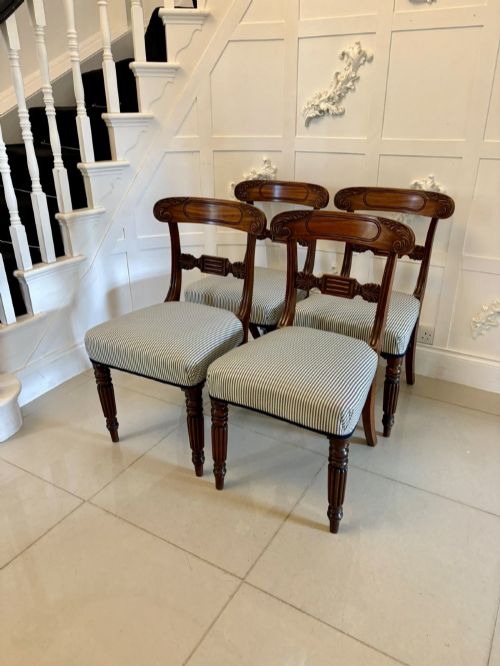
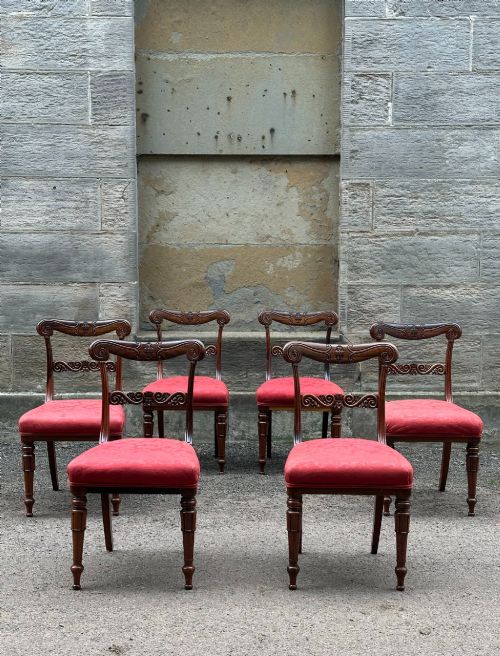
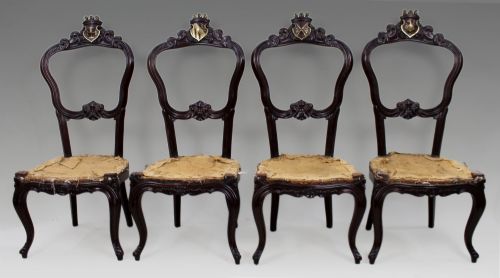
The standard of carving distinguishes standard domestic seating from finer parlour examples, with crisp undercut foliage, scrollwork, and heraldic crests demonstrating superior workshop execution. Grain selection and timber matching across a set indicate the amount of care taken by the maker during initial construction.
Structural robustness relies on the original joinery within the curved back frame and the stability of the leg attachments. Sets that retain matching timber patination and uniform proportions command greater appreciation than assembled groups showing divergent wear.
Gillows·Blyth & Sons
The Carved Mahogany Balloon Back Glossary
- Balloon back
- A chair back shaped in a continuous oval curve resembling an inflated balloon, popular during the Victorian period. This distinctive outline defines the overall silhouette of the seating style.
- Cabriole leg
- A furniture leg that curves out and then in, resembling the leg of an animal. This form appears frequently on the forelegs of mid-nineteenth-century dining chairs.
- Serpentine front
- A seat rail curved with a convex centre flanked by concave ends. This shaping adds visual movement to the front elevation of upholstered chairs.
- Overstuffed seat
- An upholstered seat where the padding covers the wooden frame edges entirely. It creates a plush profile above the supporting rails.
Carved Mahogany Balloon Back: Frequently Asked Questions
How do I date these chairs?
Dating relies on stylistic markers, timber characteristics, and construction methods recorded across nineteenth-century examples. Earlier pieces often display Regency influences, while mid-Victorian items introduce more ornate carving.
Evidence from archives indicates production spanning from the eighteen-forties through to the late Victorian era. Examining the seat construction and leg profiles helps narrow down the manufacturing decade.
Are these chairs comfortable for daily dining?
Most examples provide firm support through traditional sprung or stuffed seat bases designed for nineteenth-century dining habits. The curved backrest offers ergonomic lumbar support suited to upright seating.
Modern comfort levels can depend on the condition of the internal webbing and padding. Many sets have undergone re-upholstery while maintaining their original wooden frames.
Can I mix these with modern tables?
The rich reddish-brown tones of the timber complement various wooden table surfaces, bridging historical and contemporary interiors. Their slender profiles allow multiple chairs to tuck neatly beneath modern dining tables.
Matching timber shades helps integrate antique seating into contemporary room schemes. The classic silhouette provides a striking contrast against minimalist furniture designs.
What is a spear point back?
A spear point variation incorporates specific pointed motifs into the crest rail or internal splat of the chair frame. This distinct detailing marks a departure from standard plain oval hoops.
Such regional or workshop variations offer collectors subtle stylistic deviations within the broader balloon back category. They highlight the decorative versatility employed by nineteenth-century cabinet makers.