
Victorian Mahogany Balloon Back Chairs
Victorian mahogany balloon back chairs combine curved wooden frames with padded seats, bringing mid-nineteenth-century dining rooms into modern interiors.
Victorian Mahogany Balloon Back Chairs
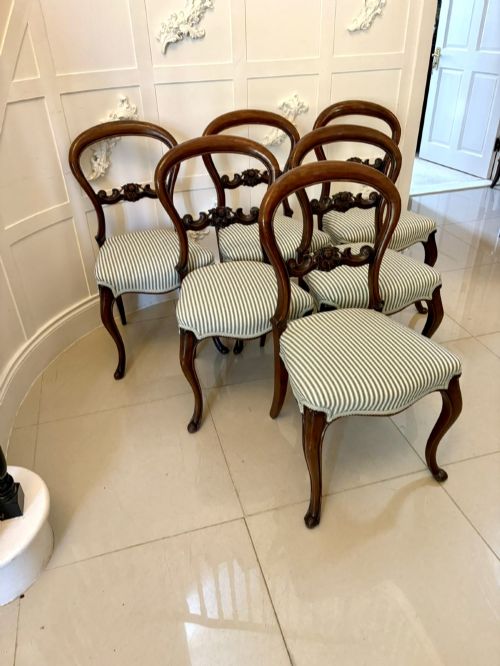
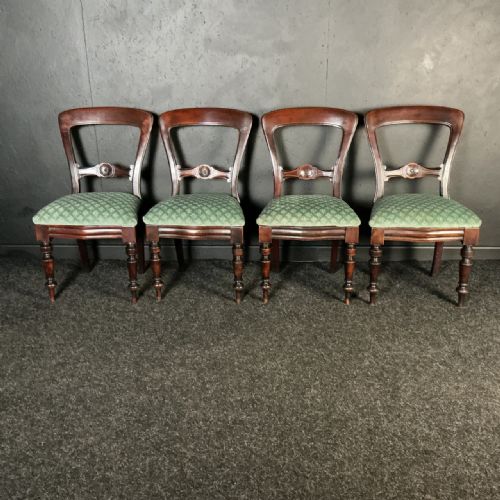
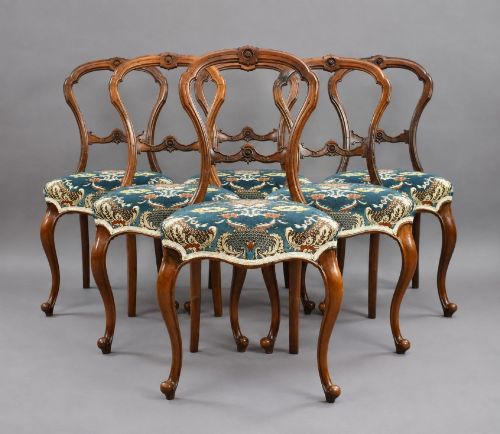
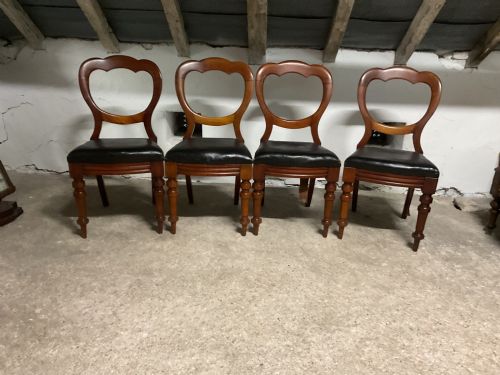
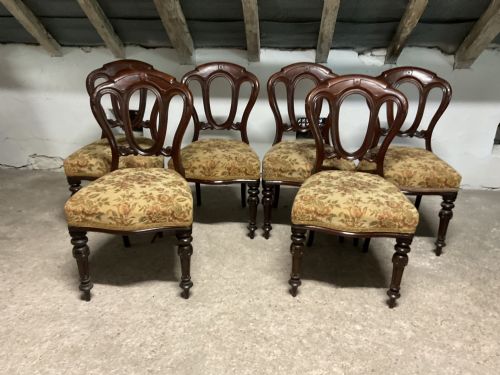
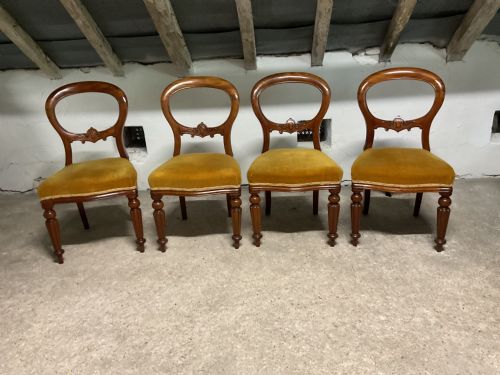
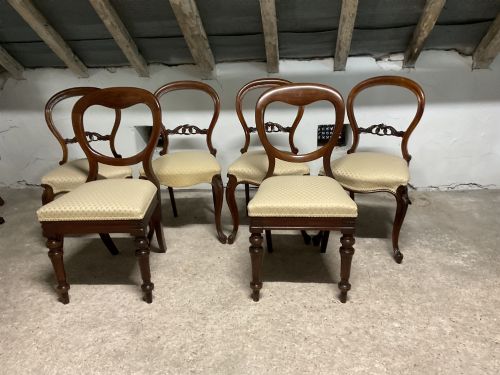
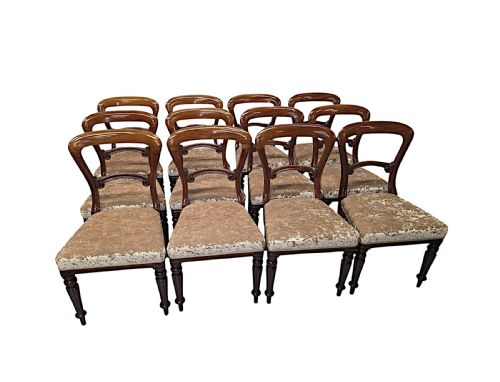
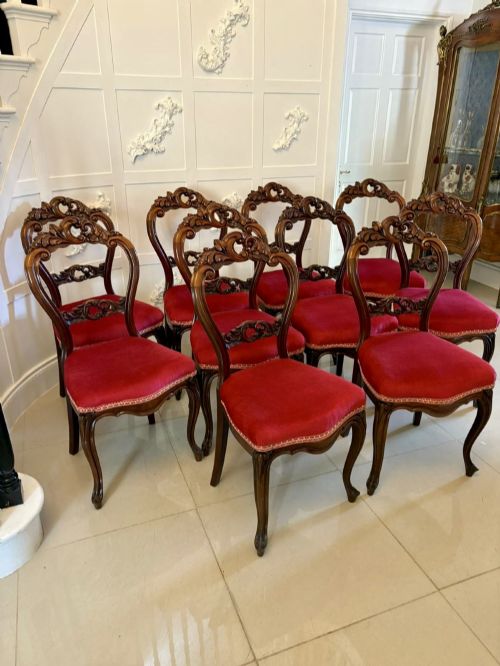
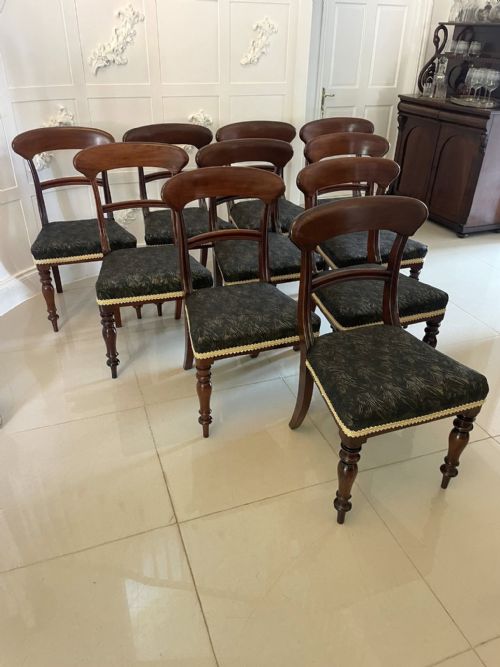
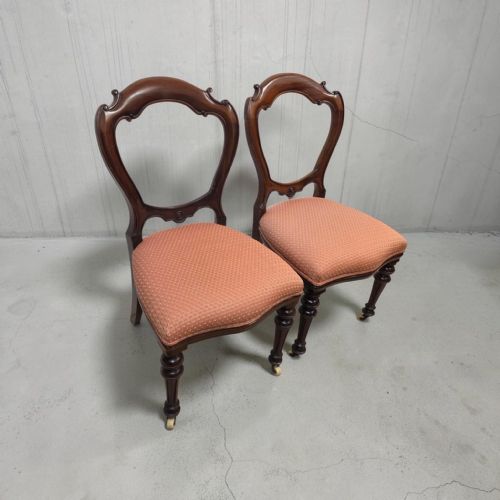
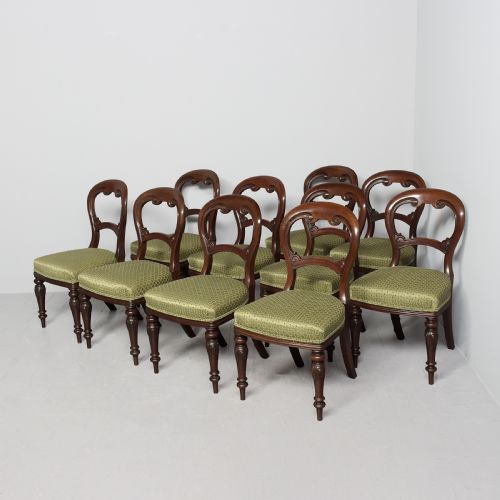
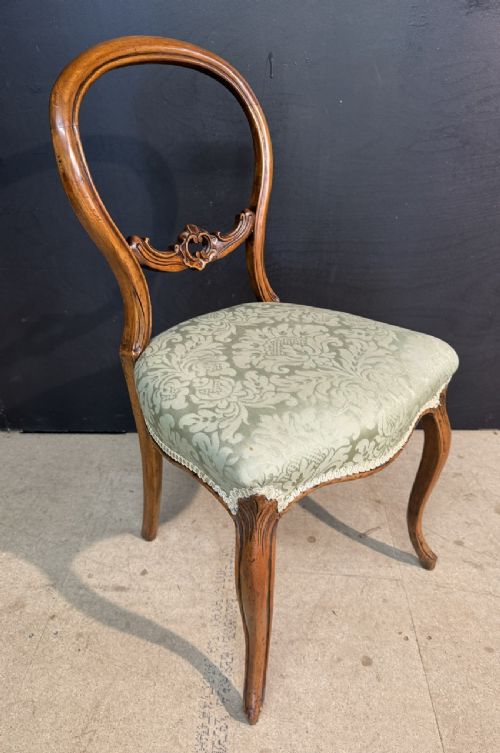
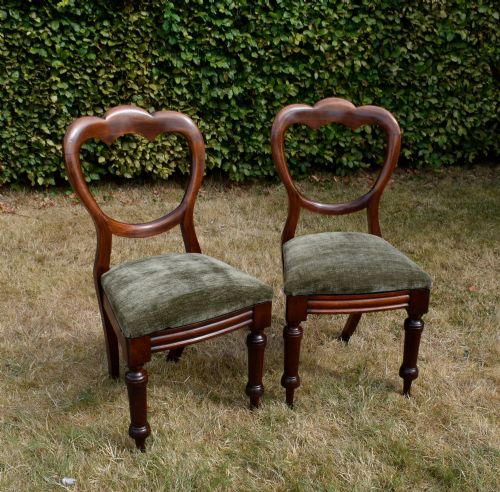
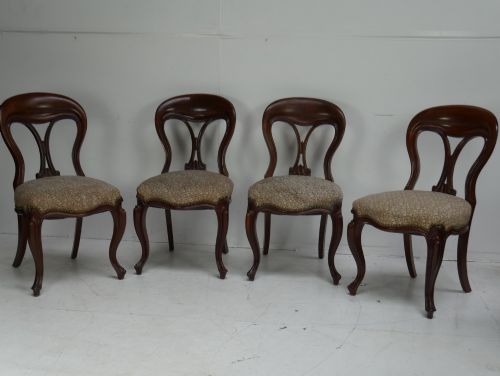
Victorian mahogany balloon back chairs are primarily dining and side seating produced during the nineteenth century, most commonly found in sets of four, six, or eight. The defining feature is the rounded, loop-shaped backrest which echoes the profile of a hot air balloon.
While single chairs and small pairs surface regularly, larger matched sets emerge from the archives and current listings. These items span the broader Victorian era, with dates clustering around eighteen-sixty alongside examples from William IV and later revival periods.
Beyond standard dining forms, variations include armchair adaptations, desk chairs, and occasional seating upholstered in contemporary fabric, velvet, or leather. Mahogany serves as the primary timber, though walnut and rosewood also appear across the selection.
Materials and construction methods
Cabinet makers utilised solid mahogany for the structural frames, steam-bending or carving the distinctive curved backrail from single or joined timber sections. This dense hardwood provided the necessary strength to support the open loop design without fracturing under daily use.
Seats incorporate traditional upholstery techniques, utilising sprung bases or webbing layered with stuffing before receiving a top cover of velvet, brocade, or textile. Fasteners such as brass tacks frequently secure the edges of the fabric to the wooden seat rails.
Some balloon backs feature subtle crestings or heraldic motifs, proving Victorian dining rooms took heraldry very seriously indeed.
Factors influencing distinction
The degree of hand-carved detailing on the backrail and crestings separates standard production models from finer workshop output. Crisp execution of motifs like scrollwork or floral carvings indicates superior craftsmanship during the manufacturing process.
Timber selection and grain matching across a set dictate overall visual harmony. Sets sharing consistent colour, uniform mahogany figure, and robust frame joinery retain greater structural integrity and aesthetic cohesion.
Gillows
The Victorian Mahogany Balloon Back Chairs Glossary
- Balloon back
- A chair backrest shaped in a continuous, rounded loop resembling an inflated balloon. This design gained immense popularity during the mid-nineteenth century.
- Mahogany
- A durable, reddish-brown tropical hardwood favoured by nineteenth-century cabinet makers for its stability and rich grain. It accepts fine carving and polishing exceptionally well.
- Cabriole leg
- A furniture leg that curves outward at the knee and tapers inward toward the foot, often ending in a pad or scroll. The profile mimics the natural leap of an animal.
- Sprung settee base
- A seat construction utilising internal metal coil springs to provide resilience and support. This method replaced simpler pad stuffing to increase comfort.
- Brocade
- A rich, heavy shuttle-woven fabric featuring raised decorative patterns. It is frequently chosen for period upholstery restorations.
Victorian Mahogany Balloon Back Chairs: Frequently Asked Questions
How many chairs came in a typical set?
Dining sets from this period commonly comprised four, six, or eight chairs to suit Victorian dining tables. Larger sets of ten or twelve also appear for more substantial households.
Matching larger quantities becomes more challenging as individual pieces are dispersed over time. Partial sets frequently receive additions or adjustments to complete a functional dining group.
Are these chairs comfortable for daily use?
The curved backrest provides ergonomic support by following the natural spinal contour. Padded seats with sprung or webbed interiors offer a stable platform for prolonged sitting.
Original padding often requires professional reupholstery to restore proper support. Modern cushioning materials placed inside traditional covers maintain period appearance while improving daily comfort.
How do I distinguish genuine Victorian examples?
Examination of the timber, joinery methods, and wear patterns reveals the age of a piece. Nineteenth-century mahogany exhibits deep patination and hand-cut joinery rather than modern mechanical fixings.
Subtle variations in the carving and turning confirm manual production by period artisans. Comparing the timber density and construction details against documented pieces helps verify the era.
What fabric is correct for reupholstery?
Velvet, brocade, and patterned textiles reflect nineteenth-century preferences for rich interior textures. Historic schemes often employed deep pile fabrics secured with brass decorative tacks.
Contemporary reproductions or historic weaves both suit the frames depending on the desired interior aesthetic. The primary consideration is ensuring the fabric weight complements the sturdy mahogany structure.