
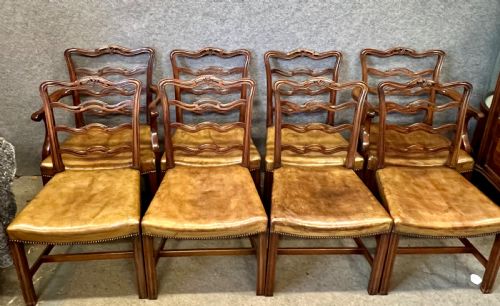


Tan Leather Dining Chairs
Tan leather dining chairs bring warmth and tactile presence to a room, offering enduring utility across centuries of design.
Defining Tan Leather Dining Chairs
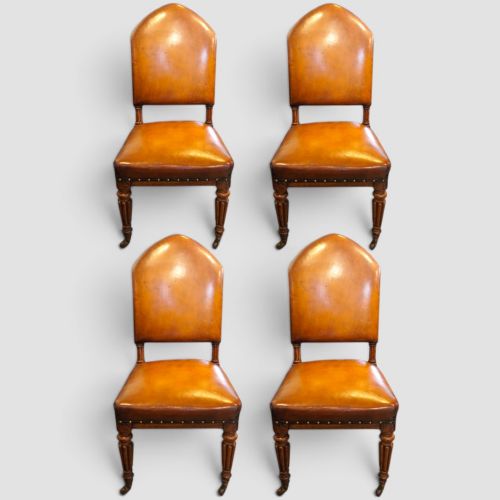
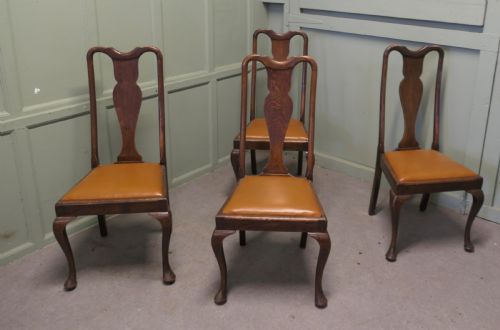
Tan leather dining chairs encompass seating designed for the dining room from the Victorian era through the early twentieth century, utilising robust timbers and supple hides. These pieces emerge in styles ranging from formal revivalism to simpler vernacular forms, reflecting the changing domestic priorities of their periods.
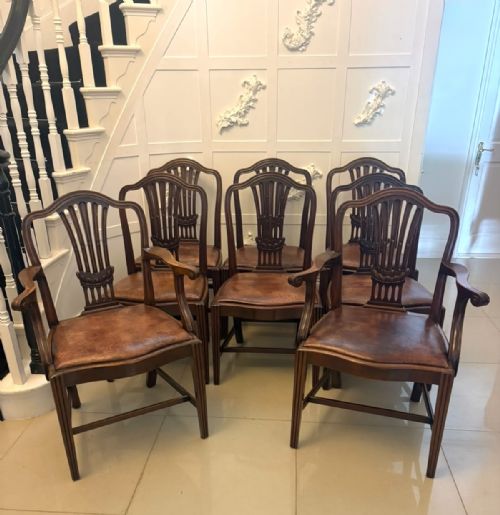
The most frequent examples encountered on this page belong to large sets of mahogany or oak chairs, often produced in revival styles such as Queen Anne, Hepplewhite, and Chippendale. Alongside standard dining chairs, collectors also find carvers and armchairs that complete grand dining room arrangements.
Materials and Construction
Cabinetmakers constructed the frames of these chairs from dense hardwoods including mahogany, oak, and rosewood, chosen for structural stability and rich grain. Joints were traditionally pegged or tenoned to withstand the daily rigours of the dining table.
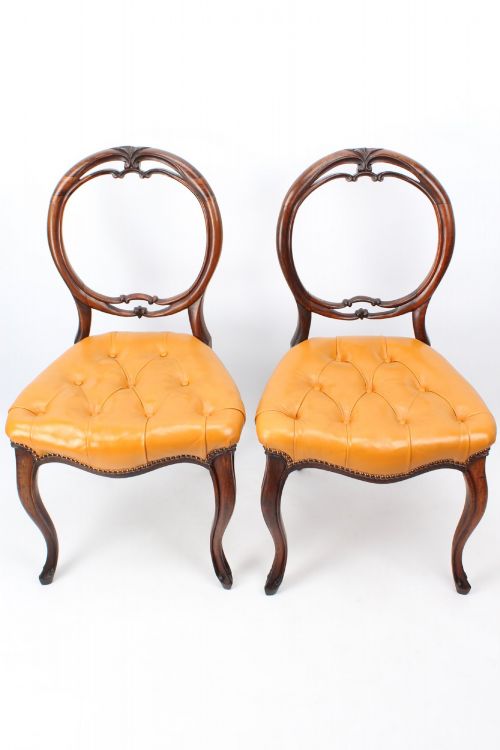
Upholstery involved stretching durable leather over padded seats and backs, occasionally secured with brass decorative tacks. Later Edwardian examples demonstrate hand-dyeing techniques that imparted depth and variation to the hide.
Retail Price Guide 2026
Typical UK retail prices for tan leather dining chairs, calculated from the Sellingantiques database of over a million retail prices indexed since 2003. This retail price guide relies exclusively on Sellingantiques data; no external sources or auction records are used, so the figures do not describe the wider market.
Victorian diners must have possessed remarkably upright postures, judging by the steadfastly supportive wooden backs.
Judging Quality and Character
Superior quality in these chairs rests in the crispness of the timber carving and the architectural integrity of the frame. Sets that retain their original timbers and uniform hide develop a richer patina over generations of use.
Disparities in quality also appear in the consistency of the timber selection across a full set and the finesse of the joinery. Chairs with deeply carved details or balanced proportions command greater appreciation from those seeking formal period elegance.
The Tan Leather Dining Chairs Glossary
- Carver
- An armchair designed to sit at the head of a dining table, featuring supportive armrests matching the side chairs.
- Shield Back
- A chair back shaped like a heraldic shield, popular in Hepplewhite designs and revival periods.
- Balloon Back
- A rounded, continuous backrest curve characteristic of Victorian seating, offering ergonomic support.
- Patina
- The surface sheen and softening of colour developed by wood and leather through age and handling.
Frequently Asked Questions
How do I care for antique leather?
Nourish the hide periodically with specialised leather balms to maintain flexibility and prevent the material from drying out.
Keep these chairs away from direct heat sources and strong sunlight to preserve their natural tone and prevent cracking.
Are these chairs suitable for daily use?
Period dining chairs were built for heavy domestic service using dense hardwoods, making them robust enough for regular seating.
Ensure that joints remain tight and stable before subjecting older frames to heavy daily demands.
How do I identify revival styles?
Revival pieces borrow the distinctive motifs of earlier Georgian or Queen Anne periods while employing the manufacturing methods of their actual date of creation.
Examine the tool marks, timber ageing, and construction techniques to distinguish a nineteenth-century interpretation from an eighteenth-century original.
Can I mix different wood types?
Pairing chairs of differing timber tones requires a careful eye for grain texture and period proportion to maintain visual harmony in a dining space.
Sticking to consistent forms like shield back or balloon back designs helps bridge minor variations in wood colour.