


Brass Stud Dining Chairs
Brass stud dining chairs bring sturdy frames and tactile upholstery together, offering substantial seating suited to traditional and period dining rooms.
Brass Stud Dining Chairs
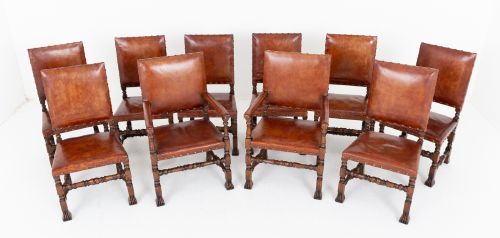
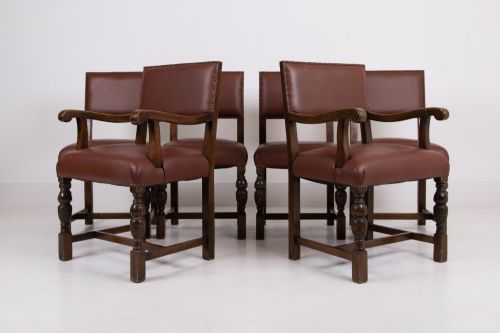
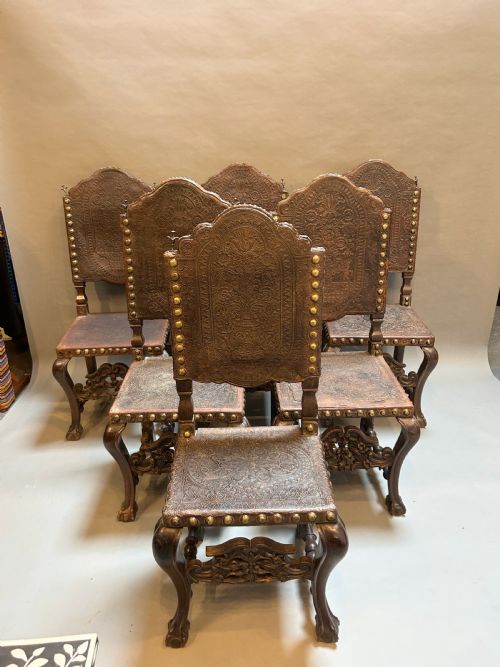
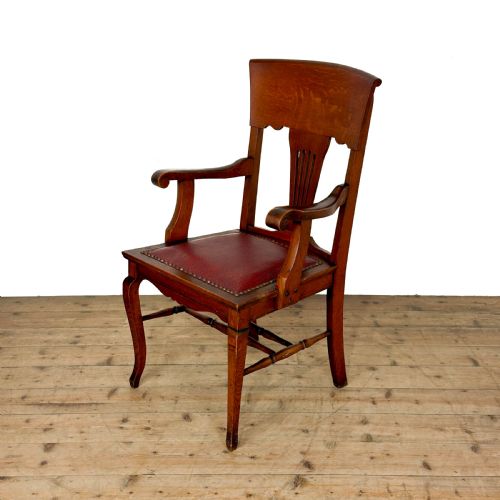
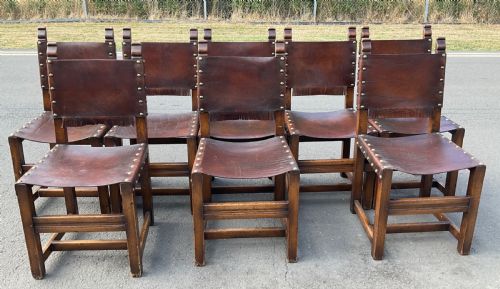
Brass stud dining chairs encompass a range of sturdy seating options spanning the eighteenth century to the 1930s. Buyers frequently encounter sets of oak or mahogany side chairs and carvers featuring upholstered leather or fabric seats.
The selections on this page showcase distinct revival styles, including Jacobean Revival, Spanish Revival, and Gothic Revival forms. Sets frequently appear in quantities of four, six, or eight pieces.
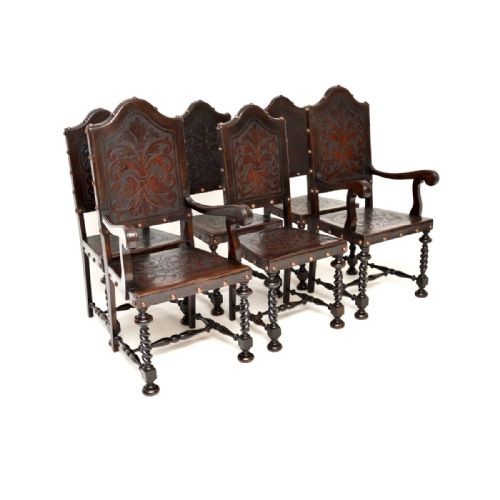
Origin variations include Portuguese baroque influences and French provincial details alongside standard British Edwardian and Victorian dining chairs. Armchairs and salon suites also appear within these groupings.
What varies in quality
Quality differences depend on the density of the primary timber and the crispness of the hand-carved details on the frame. Heavier oak and mahogany structures offer greater longevity than lighter alternatives.
The grade of the leather and the regularity of the individual stud placement indicate the level of craftsmanship involved. Hand-dyed leathers and embossed details represent finer finishing standards.
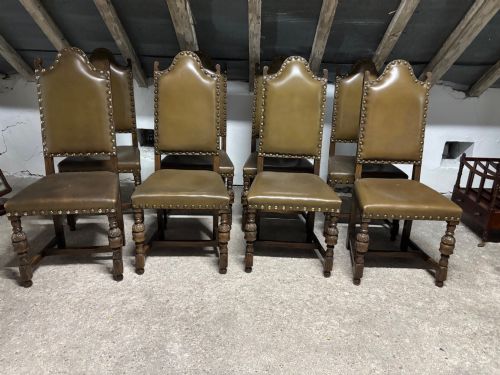
One set retains the original hand-dyed green leather, proving that eighteenth century diners appreciated a splash of colour.
Howard & Co London·George Henry Walton
The Brass Stud Dining Chairs Glossary
- Carver chair
- An armchair designed specifically to sit at the head of a dining table. These typically feature wooden armrests and matching upholstery.
- Side chair
- A dining chair built without arms, intended to fit compactly along the sides of a table. These form the bulk of most dining sets.
- Jacobean Revival
- A nineteenth or twentieth century design style mimicking seventeenth century British furniture. It uses dark oak, turned legs, and high backs.
- Embossed leather
- Leather stamped with raised patterns using metal dies. This technique appears frequently on continental European seating.
- Scroll arm
- An armrest curved outward in a spiral or scroll shape. This detail appears on Victorian mahogany carvers.
Brass Stud Dining Chairs: Frequently Asked Questions
How do I clean brass stud dining chairs?
Wipe wooden frames with a dry cloth and condition leather surfaces using appropriate specialist balms. Avoid harsh chemical cleaners that might loosen the metal studs.
Keep upholstered pieces away from direct heat sources to prevent the leather from drying and cracking over time.
Are these chairs comfortable for daily use?
Many examples feature high backs and padded leather seats designed for extended dining sessions. Solid wood construction provides stable lumbar support.
Original padding varies by period, so check the specific upholstery condition before committing to daily seating.
How can I tell Victorian chairs from Edwardian ones?
Victorian models frequently utilise heavy mahogany with deep scroll arms and dark finishes. Edwardian pieces often lean towards lighter oak frames and simpler revival styles.
Examining the underside and joint construction helps confirm the manufacturing period more accurately than surface appearance alone.
Can I mix different sets around one table?
Mixing styles works well if the wood tones and seat heights share similar proportions. Pairing carvers from one set with side chairs from another creates an eclectic dining arrangement.
Ensure the seat height matches standard table clearances to maintain comfortable dining posture.