

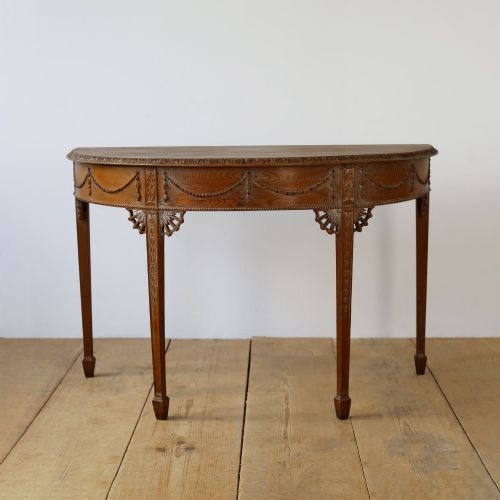
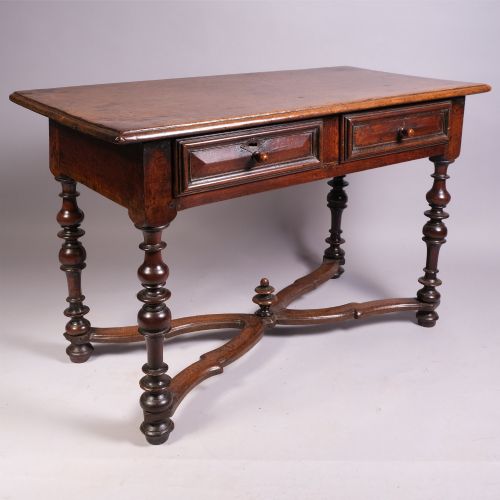
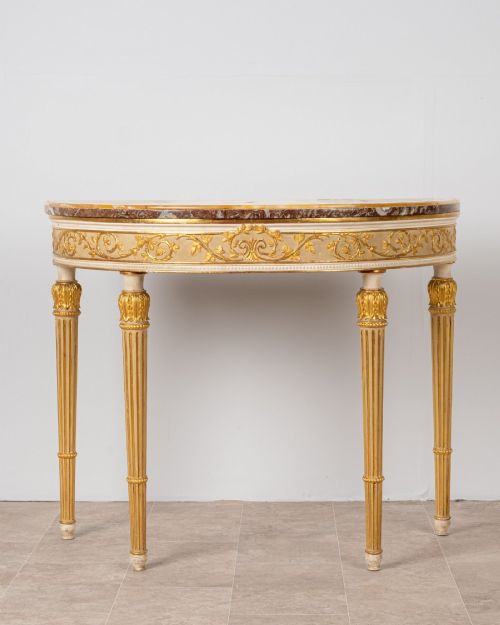
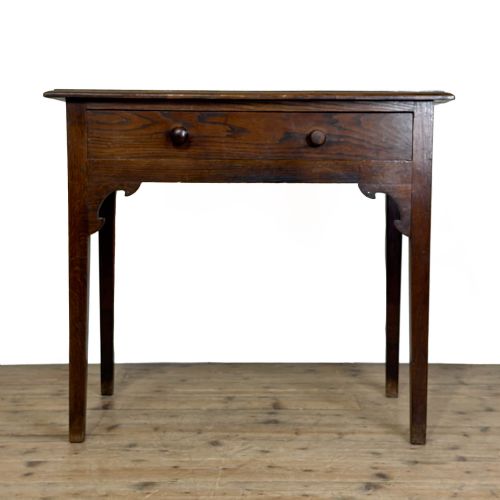
Carved Leg Hall Table
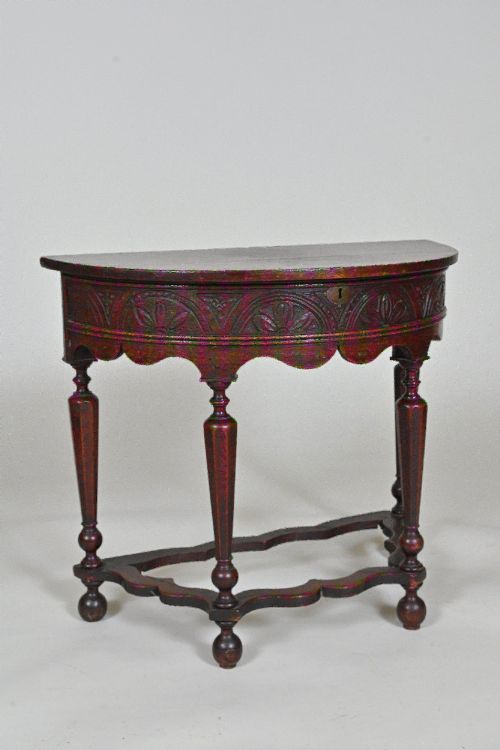
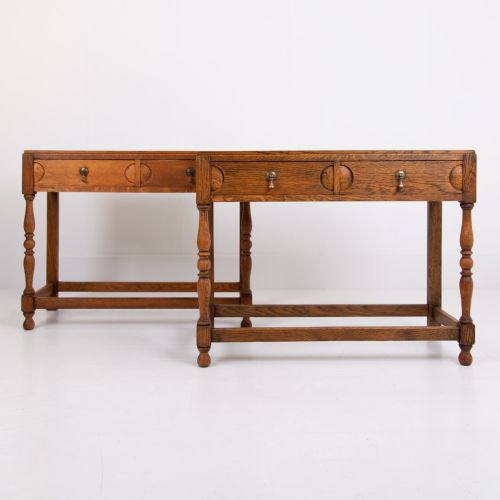
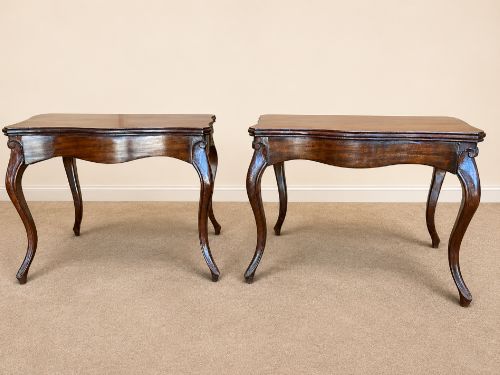
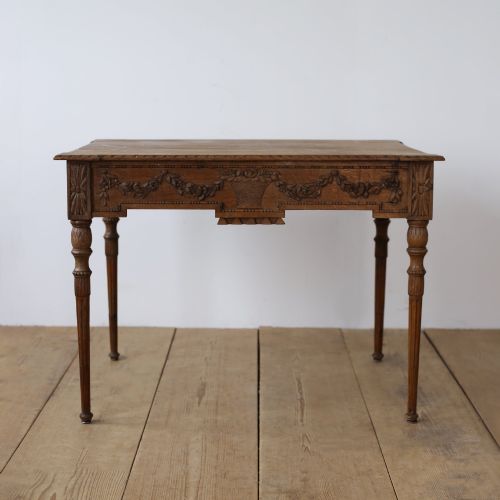
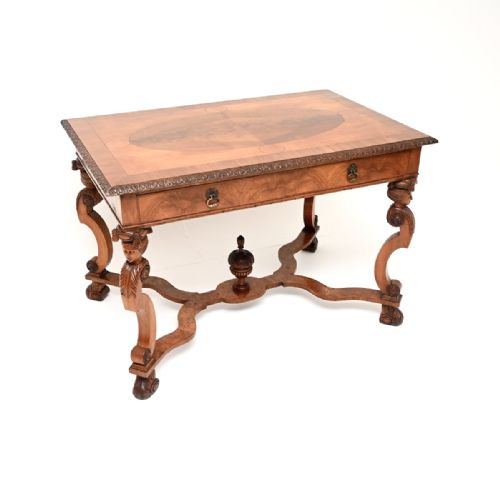
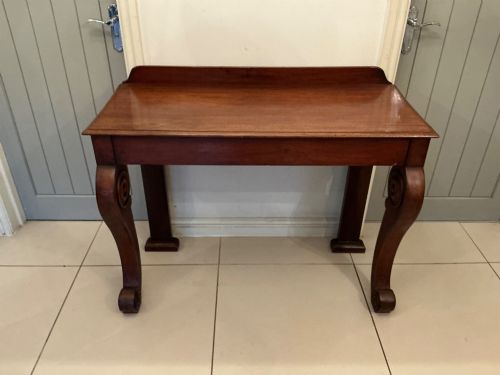
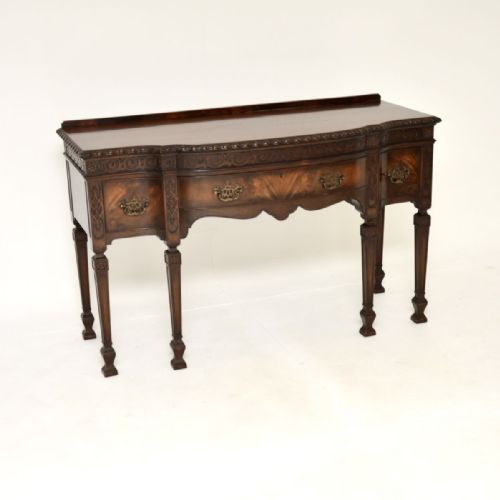
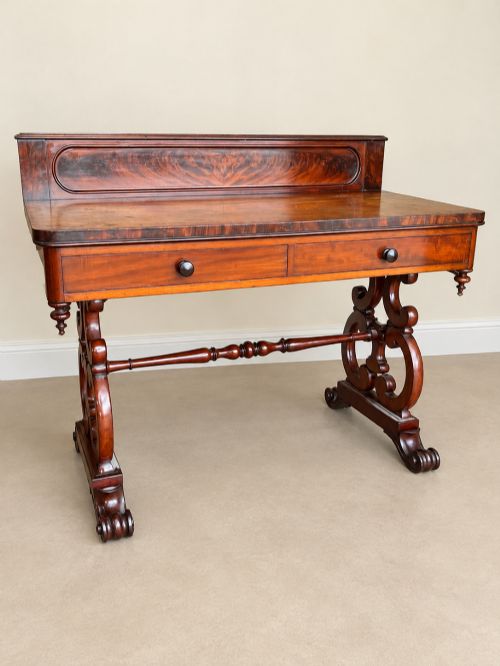
A carved leg hall table brings substantial period character and functional surface space to an entrance, drawing the eye with detailed timberwork.
Carved Leg Hall Table
A carved leg hall table encompasses various forms designed for narrow spaces, frequently appearing as side tables, console tables, and lowboys within the selection. These pieces bridge several centuries of design, ranging from seventeenth-century oak examples to twentieth-century revivals.
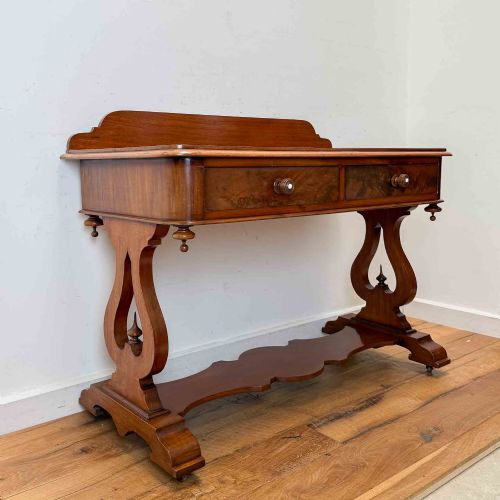
Makers adapted domestic requirements across periods, producing items in formats such as writing tables, washstands, and serving tables. Buyers commonly encounter Edwardian and Georgian iterations alongside robust Victorian and revival pieces.
Materials and construction
Cabinetmakers utilised dense timbers, predominantly oak and mahogany, often selecting figured walnut and burr walnut for decorative surfaces. These woods provided the structural integrity required for heavy use while offering rich grain patterns.
Surface ornamentation relied on manual carving techniques, executed directly into the solid wood or onto applied mouldings. Artisans incorporated brass hardware and occasionally integrated marble tops into console and centre tables.
Carved Leg Hall Table Retail Price Guide 2026
Typical asking prices for carved leg hall table among the pieces listed under this phrase on Sellingantiques today, from the lower quarter to the upper quarter. They describe what is for sale here now, not the wider market.
Gradations of quality
The distinction between ordinary and superior examples rests upon the crispness of the carving and the selection of timber veneers. Master craftsmen achieved depth and movement in floral or geometric motifs, whereas lesser pieces display flat, mechanical incisions.
Proportion and structural honesty dictate overall standing, where pieces retaining their original tops, legs, and drawer linings command greater respect from discerning collectors. Altered heights or replaced structural members diminish historical integrity.
Beresford and Hicks London
The Carved Leg Hall Table Glossary
- Lowboy
- A small oak or walnut table featuring drawers, commonly produced during the seventeenth and eighteenth centuries. These versatile items served multiple domestic functions before finding permanence in halls and reception rooms.
- Console table
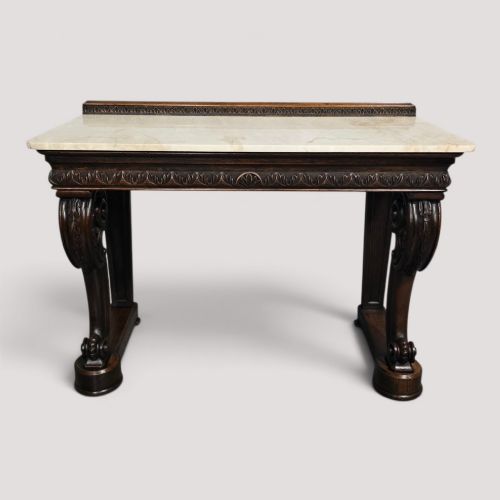
- A table designed to stand against a wall, frequently supported by decorative brackets or carved legs. They often incorporate marble tops and elaborate neoclassical or revival carving.
- Barley twist
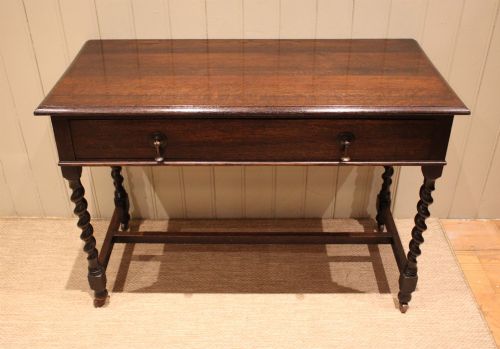
- A cylindrical furniture leg carved in a helical spiral resembling twisted rope. This turning technique gained popularity during the seventeenth century and returned in later Victorian revival pieces.
- Serpentine
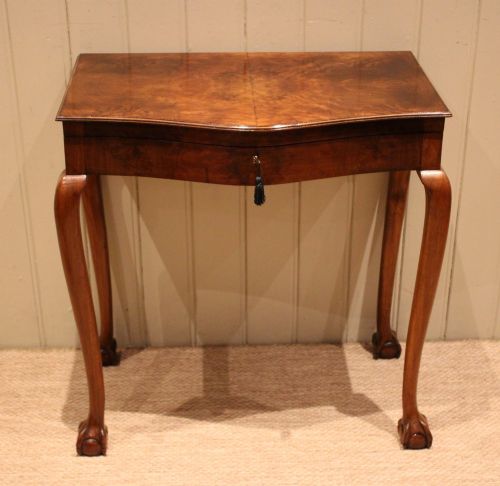
- A furniture front or edge shaped with a central convex curve flanked by concave sweeps. This undulating line required high skill in timber shaping and joinery.
Carved Leg Hall Table: Frequently Asked Questions
What is a lowboy?
A lowboy is a small table with drawers, typically standing on cabriole or straight legs. They originated in the seventeenth and eighteenth centuries primarily as dressing or side tables.
Over time, these adaptable pieces migrated to hallways and reception spaces to hold daily essentials while displaying fine cabinet timbers.
How do I spot a revival piece?
Revival furniture mimics earlier historical epochs, such as the seventeenth-century Jacobean style or the eighteenth-century Queen Anne style, but dates from the Victorian or Edwardian eras.
Inspect the interior construction, tool marks, and timber shrinkage to distinguish a genuine early period piece from a later revival interpretation.
Where should I place a console table?
A console table fits naturally against a hallway or living room wall where floor space is limited. Because many historical versions were designed to stand against architectural surfaces, they anchor entranceways effectively.
Paring a console with a mirror or lighting creates a functional focal point upon entering the home.
Are marble tops original?
Marble tops appear frequently on nineteenth and twentieth-century console and centre tables, providing a durable and decorative surface resistant to wear.
Check the seating of the stone within the wooden frame to ensure it matches the construction methods of the table's period.