



Carved Leaf Mirror
A carved leaf mirror brings organic flourish to an interior, joining wooden frames with gilded foliage and fluid lines.
Carved Leaf Mirror
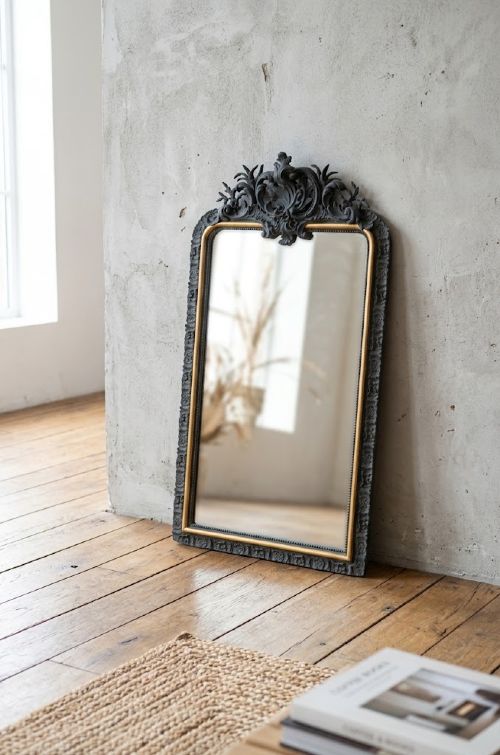
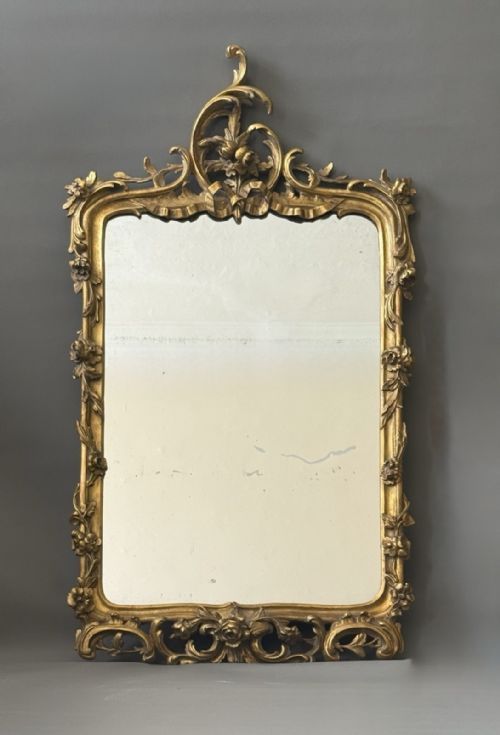
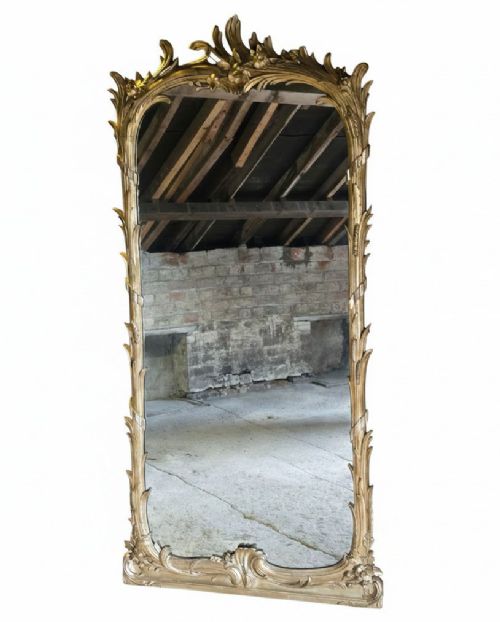
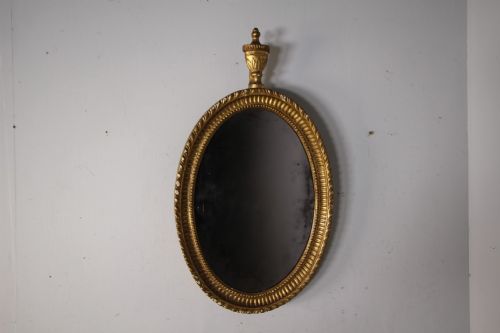
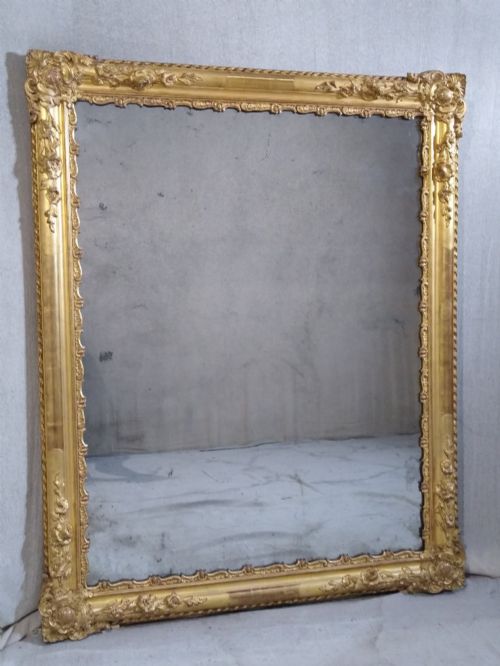
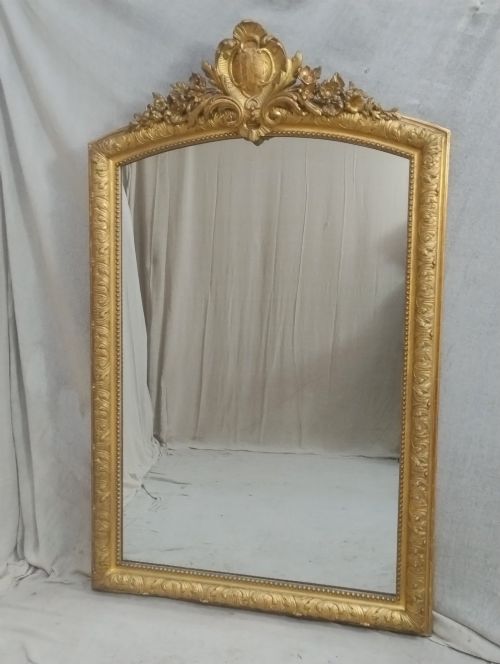
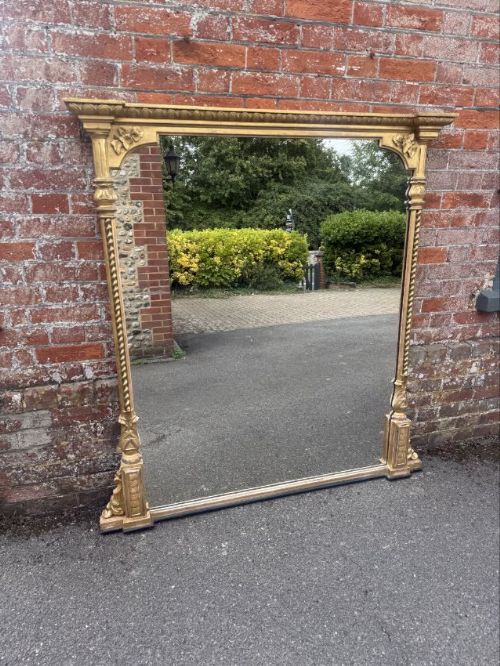
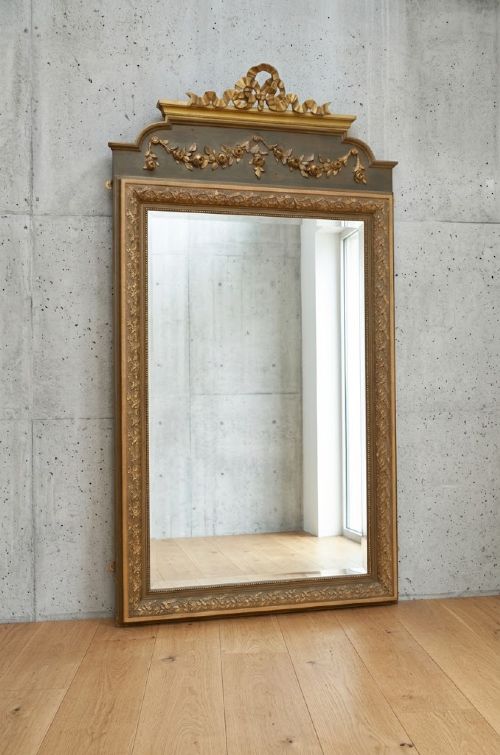
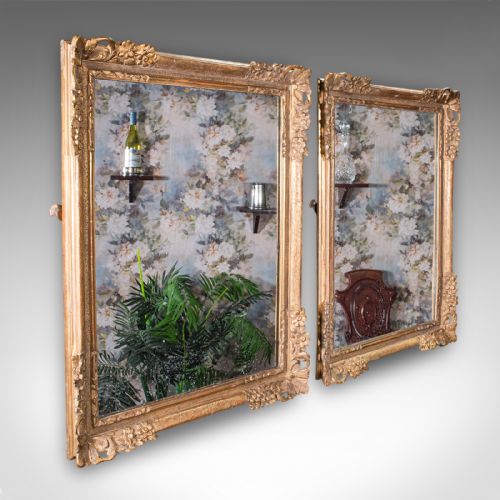
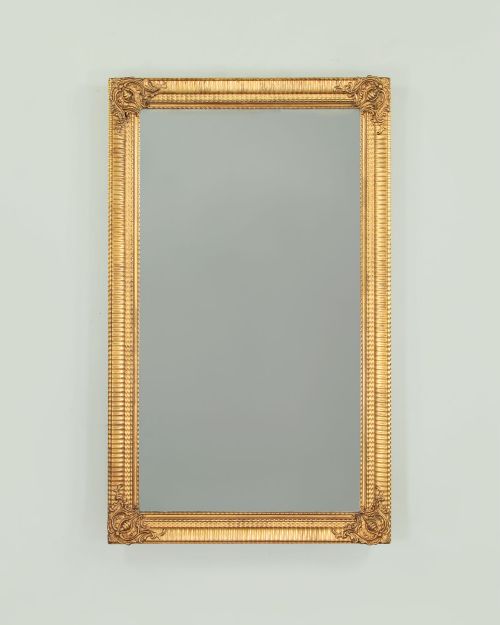
A carved leaf mirror is a wall hanging defined by botanical motifs carved into its wooden or gesso frame. These pieces span the eighteenth, nineteenth and early twentieth centuries, drawing on French and English workshop traditions.
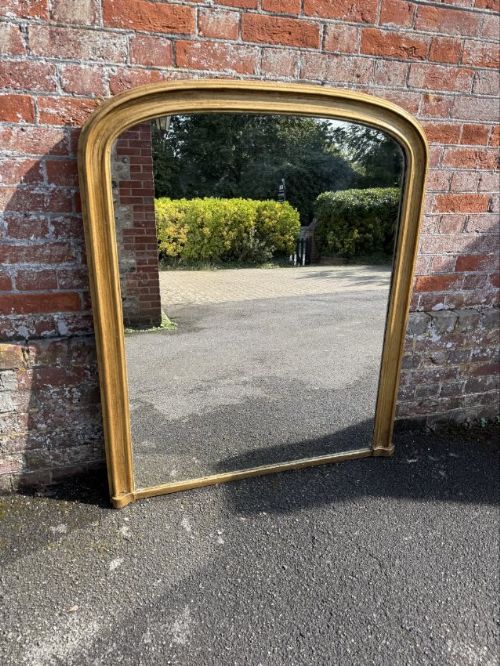
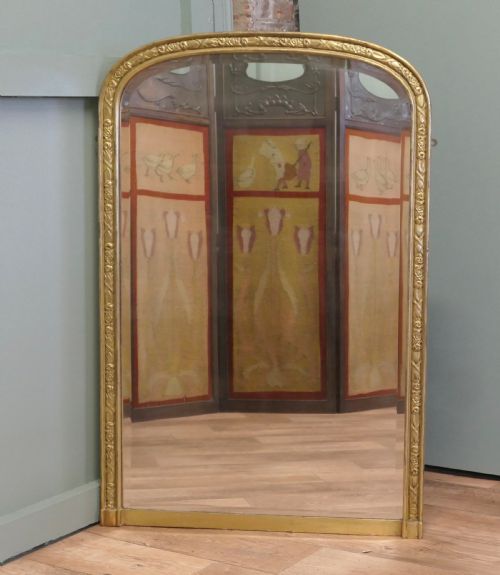
The most common examples on this page are nineteenth century overmantel and wall mirrors finished in giltwood or paint, often featuring laurel, oak or acanthus foliage. They appear in styles ranging from Rococo Revival and Regency to Louis Philippe and Victorian.
Makers produced these mirrors for grand reception rooms, salons and parlours, where large reflective plates bounced light around the room. Today, collectors source them to anchor a mantelpiece or fill a tall wall space with period texture.
How They Were Made
The foundation of these frames is carved wood, frequently built from pine, oak or walnut for structural stability. Artisans applied layers of gesso over the timber base to build up crisp relief details for botanical carvings such as leaves, vines and floral crests.
Guilders applied gold leaf or paint over the prepared gesso surfaces, sometimes burnishing the metal leaf to create contrasting matte and bright areas. Many pieces retain their original mercury glass plates, which display characteristic foxing and age spots.
Some nineteenth century frames hide Masonic symbols amongst their carved oak foliage, adding secret societies to the parlour.
What Varies in Quality
Quality rests in the crispness and depth of the hand carving, where deeply undercut foliage reveals the carver's confidence. Softer, shallower moulding in composition material generally indicates a simpler production than sharp, hand-tooled wooden relief.
The integrity of the original gilding and the preservation of the antique mirror plate determine the visual weight of the piece. Untouched surfaces with original gold leaf and untouched silvered or foxed glass carry greater authenticity than later re-gilding.
The Carved Leaf Mirror Glossary
- Giltwood
- Wood that has been coated with a thin layer of gold leaf. This finish was standard for formal mirrors throughout the eighteenth and nineteenth centuries.
- Gesso
- A plaster mixture applied to wooden frames as a base for gilding or painting. It allowed carvers to achieve fine detail before applying gold leaf.
- Overmantel mirror
- A large horizontal mirror designed specifically to hang above a fireplace mantel. They often feature arched or shaped tops to fit architectural proportions.
- Pier mirror
- A tall, narrow mirror made to hang on the wall space between two windows. These pieces frequently match console tables or architectural piers.
- Foxing
- Age-related spots and discolouration within the silvering of a mirror plate. Collectors prize original foxing as proof of antique glass.
Carved Leaf Mirror: Frequently Asked Questions
How do I hang a heavy carved leaf mirror safely?
These frames carry considerable weight from their timber and gesso construction, requiring secure fixing directly into wall studs or masonry. Professional mirror hangers use heavy-duty wall brackets distributed across the frame width to support the load safely.
Avoid relying on single picture wires for large overmantel or pier mirrors. Distributing the weight prevents stress on the antique joints and protects the plasterwork.
Can I clean the original mirror glass without damage?
Antique mirror plates require gentle maintenance to preserve the silvering and surrounding giltwood surface. Use a soft, dry microfibre cloth to remove dust rather than applying liquid cleaners directly to the glass.
Moisture can seep behind the plate or degrade old gesso and gold leaf. If cleaning fluid is necessary, spray it onto the cloth first, keeping moisture away from the frame edges entirely.
What is the difference between a pier mirror and an overmantel mirror?
Pier mirrors are built tall and narrow to fit the wall space between windows or doors. Overmantel mirrors are wider horizontal pieces designed to sit above fireplace surrounds.
Both forms utilise leaf carving and gilt finishes, but their proportions serve entirely different architectural spaces within a nineteenth century interior.
How do I spot original gilding on a frame?
Original gold leaf exhibits subtle wear patterns, slight tonal variations, and a warm metallic lustre that modern metallic paints fail to replicate. Under magnification, you may spot the microscopic seams where individual gold leaves overlap.
Later re-gilding often appears too uniform and bright, sometimes clogging the fine details of the underlying leaf carvings.