





Carved Indian Wine Table
A carved indian wine table brings dense colonial craftsmanship and richly figured tropical hardwoods straight into a modern sitting room.
Carved Indian Wine Table
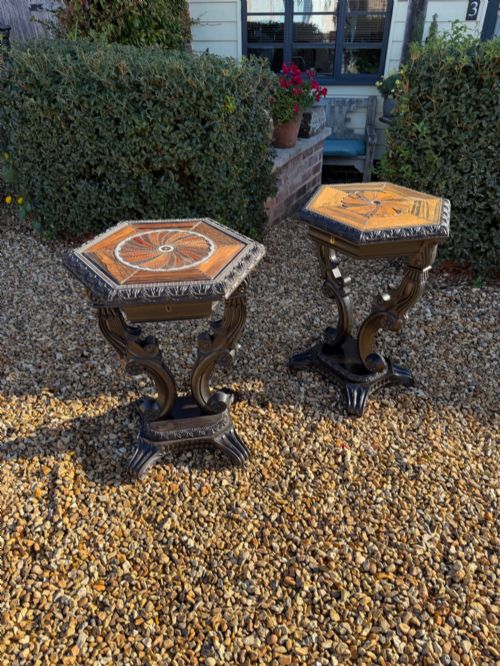
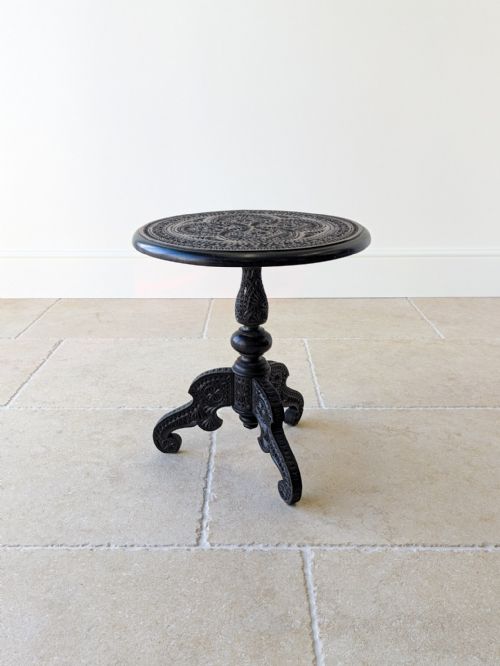
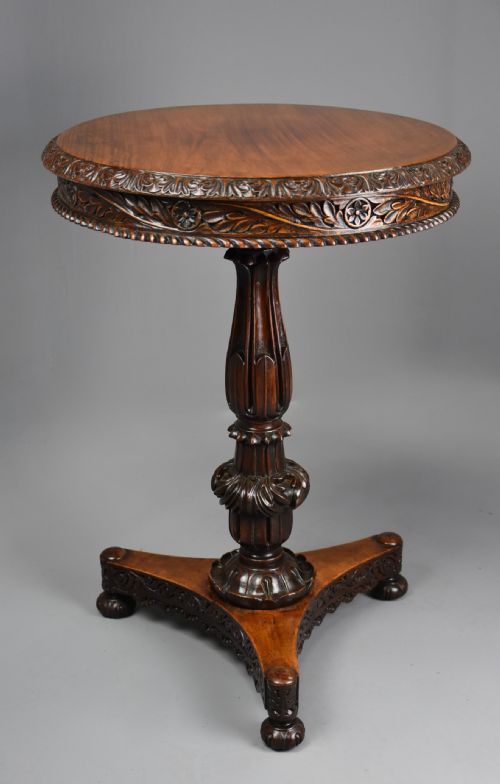
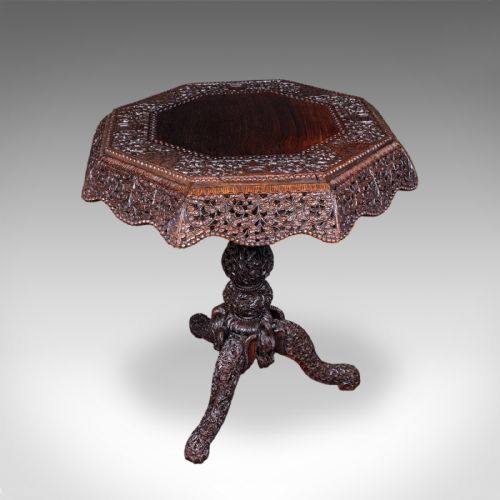
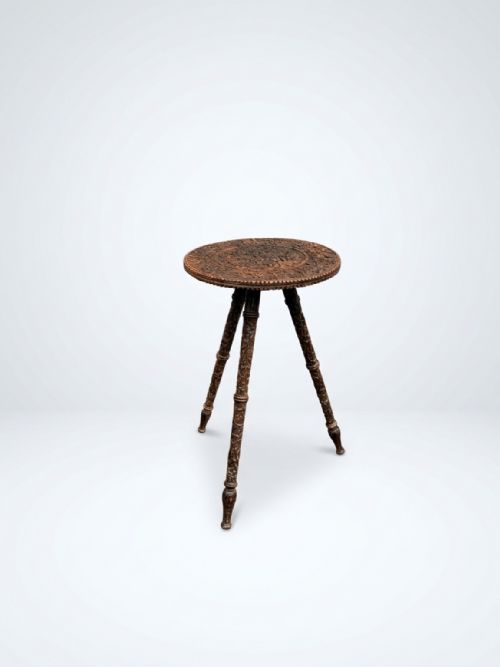
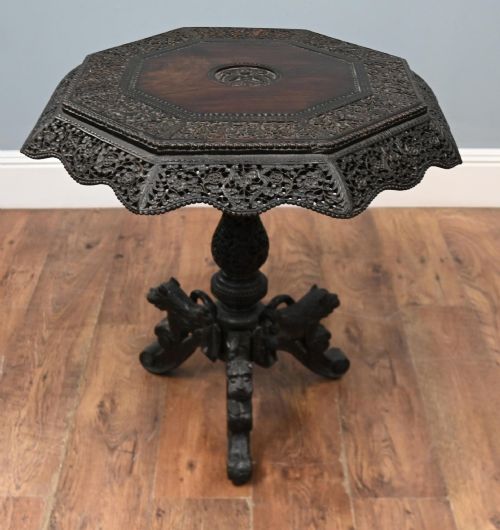
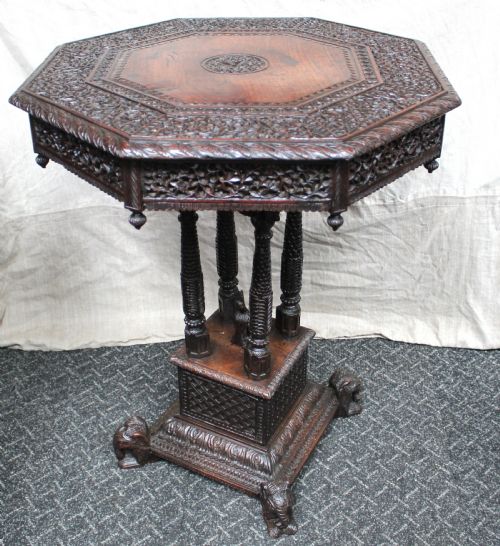
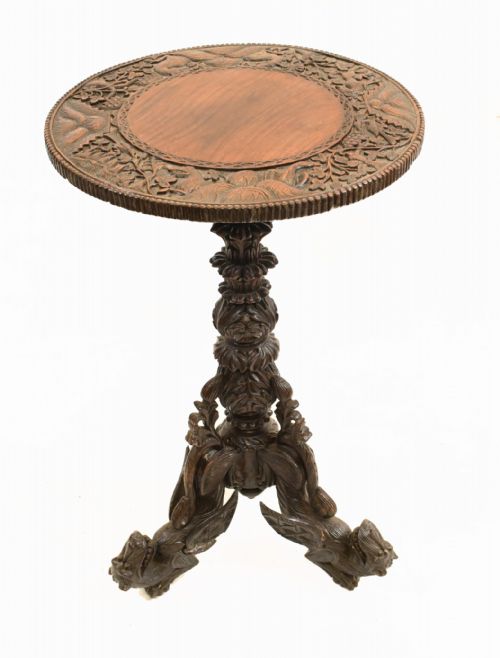
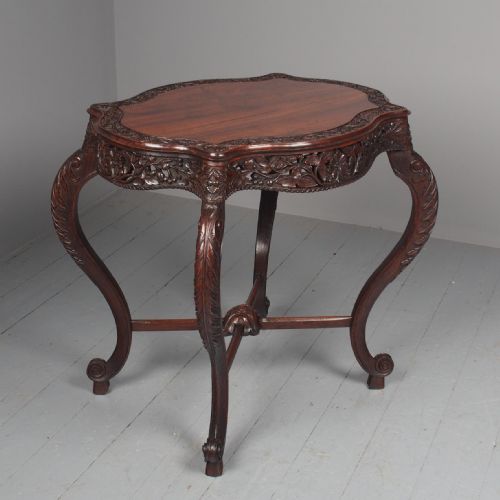
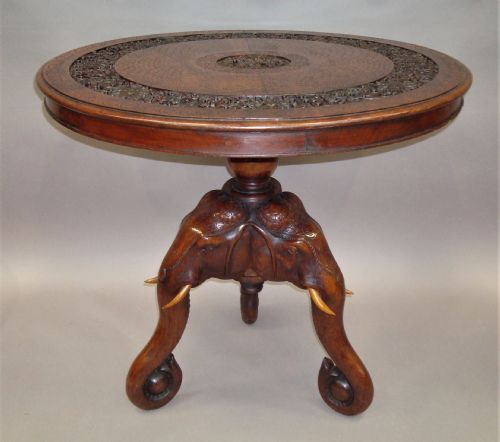
When you search for a carved indian wine table, you encounter intricate occasional and side tables originating from nineteenth-century British colonial trade and craftsmanship. The examples you meet on this page span the Victorian era, displaying regional styles from various parts of the Indian subcontinent and Burma.
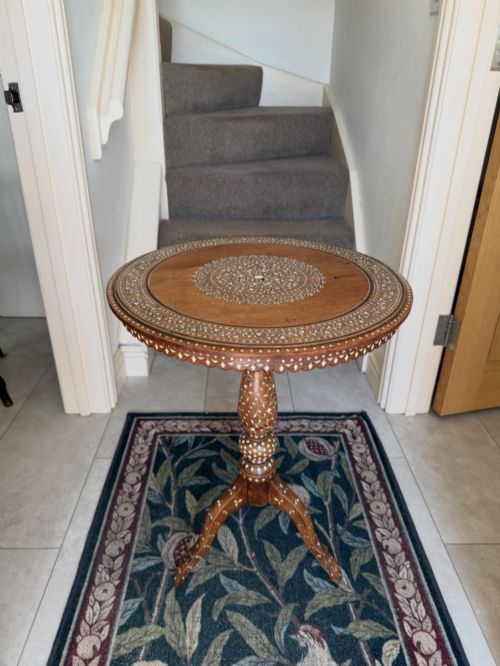
The forms vary from circular tilt-top designs to octagonal and shield-shaped occasional tables, often featuring folding campaign structures or sturdy pedestal bases. Teak, padauk, and ebonised hardwood form the foundation of these versatile domestic pieces.
Makers produced these items within distinct traditions such as Anglo-Indian, Anglo-Burmese, and Hoshiarpur workshops, blending traditional native carving techniques with forms suited to European drawing rooms.
Factors that define quality
The distinction between standard production and exceptional quality rests in the crispness and depth of the hand carving. Finer pieces display sharply defined botanical motifs, figures, and architectural details without the softness found in simpler commercial outputs.
Material selection and decorative complexity also elevate certain examples, particularly those incorporating contrasting specimen woods, bone inlay, or sophisticated folding and tilt-top mechanisms. The structural integrity of the base and the harmony of the proportion separate superior regional pieces from routine workshop items.
Carved Indian Wine Table Retail Price Guide 2026
Typical asking prices for carved indian wine table among the pieces listed under this phrase on Sellingantiques today, from the lower quarter to the upper quarter. They describe what is for sale here now, not the wider market.
The Carved Indian Wine Table Glossary
- Anglo-Indian
- A descriptive term for furniture made in India during the British colonial period, combining local timber and carving skills with European furniture forms. These items often feature dense foliate decoration.
- Tilt-top
- A tabletop hinged to its pedestal base so it can be flipped vertically when not in use. This mechanism allowed tables to be stored flat against a wall in smaller domestic spaces.
- Padauk
- A heavy, durable tropical hardwood with a reddish-brown colour used extensively in nineteenth-century colonial cabinet making. It takes a fine finish and holds intricate carved detail remarkably well.
- Hoshiarpur
- A region in northern India renowned for intricate woodwork, particularly tables featuring dense floral carving and contrasting bone inlay. These pieces frequently incorporate elephant or geometric motifs.
- Campaign furniture
- Portable pieces designed to fold or dismantle easily for travel and military use abroad. These tables feature clever hinges and joints that allow quick assembly.
Carved Indian Wine Table: Frequently Asked Questions
How were these tables used?
Victorian households utilised these small tables as portable surfaces for serving tea, displaying lamps, or holding wine glasses in the drawing room. Their compact footprints and occasional folding designs made them versatile enough to move around the house as needed.
Today, they serve equally well beside a sofa or as standalone lamp stands, bringing texture and historical character to contemporary interiors without dominating a room.
What is an Anglo-Indian table?
An Anglo-Indian table is a piece produced on the Indian subcontinent during the nineteenth century for both the local British colonial market and export back to Britain. These items married traditional native carving traditions with European furniture shapes like occasional tables and tea stands.
They stand out through their dense floral, animal, or geometric relief work executed in durable timbers like teak and padauk.
Are these tables sturdy enough for daily use?
Nineteenth-century colonial tables were built from heavy tropical hardwoods like teak and padauk, making them inherently robust and durable for everyday placement. Their solid timber construction handles normal domestic weight easily, whether supporting a heavy ceramic lamp or a stack of books.
Care should be taken with tilt-top and folding mechanisms to ensure they are locked securely into position before placing items on the surface.