








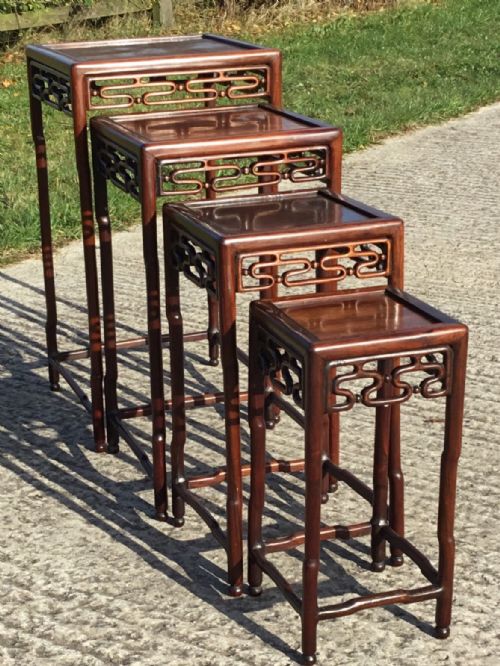
Carved Hongmu Table
A carved hongmu table brings dense Asian hardwoods and intricate Qing Dynasty motifs into domestic spaces, prized for solid joinery and deeply carved panels.
Carved Hongmu Table
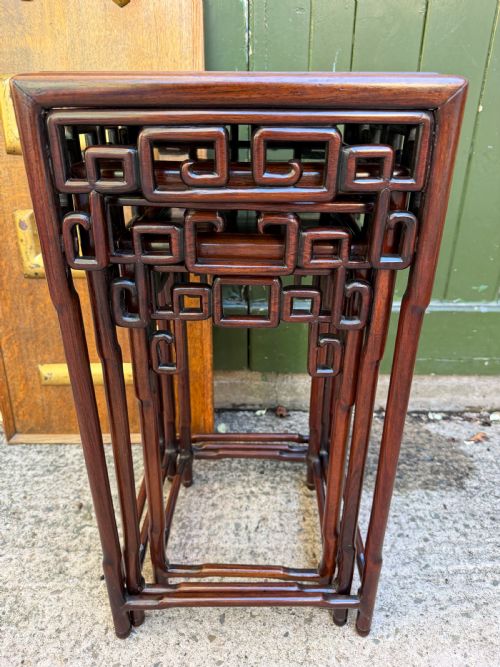
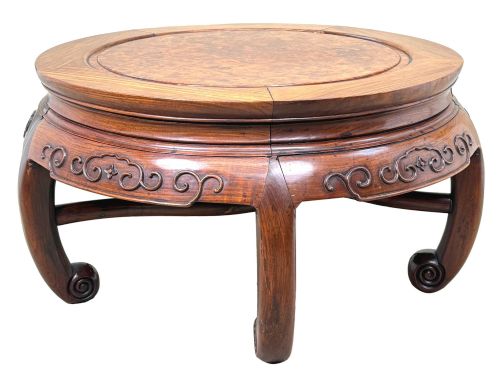
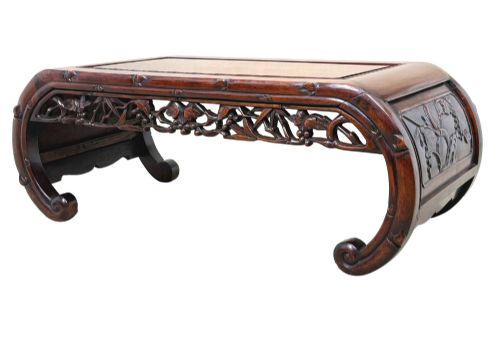
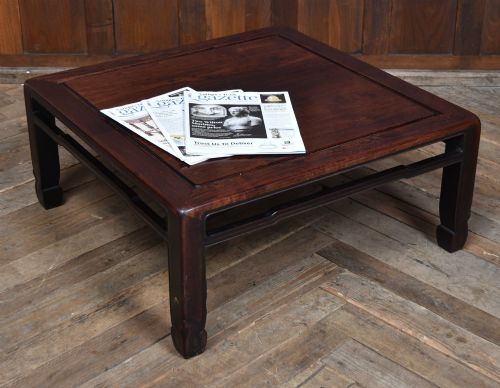
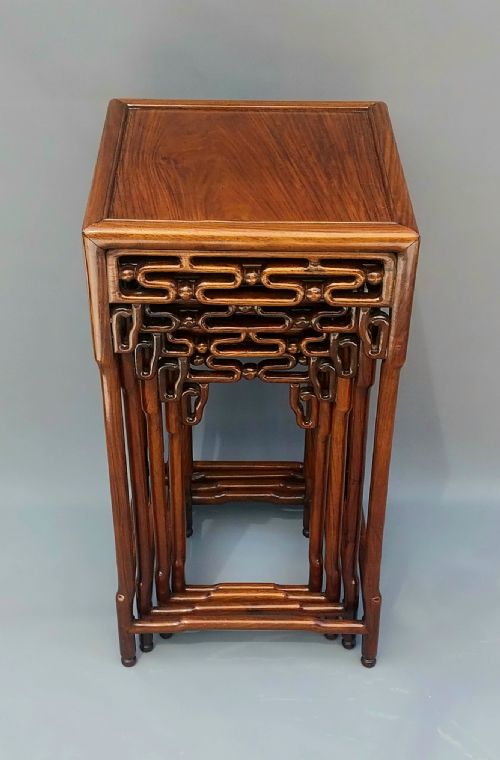
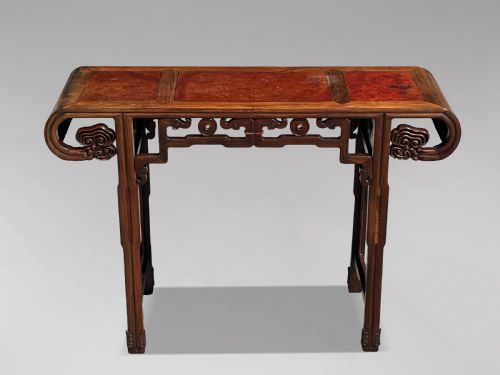
When you search for a carved hongmu table, you meet dense timber furniture originating primarily from the nineteenth century and the Qing Dynasty. The selection spans low kang tables, nests of four tables, tall jardiniere stands, and altar tables.
Most examples on this page date from the late nineteenth century, reflecting traditional Chinese craftsmanship made for both domestic use and export. Forms range from compact occasional tables with inset marble panels to large centre tables and tiered pedestals.
Buyers encounter heavy rosewood, padouk, and other dense Asian hardwoods fashioned into functional surfaces with elaborate openwork carving. These pieces served diverse roles in traditional interiors, acting as scholarly desks, plant pedestals, or low coffee tables.
How they were made
Craftsmen utilised dense tropical timbers such as hongmu and rosewood, renowned for their heavy weight and rich natural colouration. These durable hardwoods allowed artisans to execute deep, crisp relief carving without compromising the structural integrity of the frame.
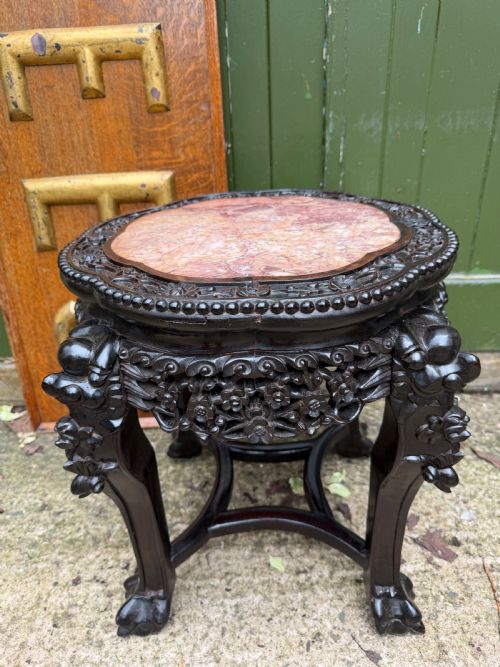
Many tables incorporate inset panels of rouge marble, variegated stone, or mother-of-pearl inlay, contrasting smooth mineral surfaces against heavily carved wooden frames. Joinery relied on traditional interlocking methods rather than metal fixings, ensuring stable construction across complex forms like barrel-shaped stands and nested tables.
Carved Hongmu Table Retail Price Guide 2026
Typical asking prices for carved hongmu table among the pieces listed under this phrase on Sellingantiques today, from the lower quarter to the upper quarter. They describe what is for sale here now, not the wider market.
What varies in quality
The distinction between standard examples and superior pieces rests upon the crispness and depth of the woodcarving. Finer tables exhibit undercut work with distinct botanical or figural motifs, whereas simpler items display shallower, machine-like finishing.
The choice of secondary materials and timber selection significantly influences the grade of an object. The inclusion of unblemished inset marble, scarce amboyna wood, or intricate mother-of-pearl inlay separates high workshop output from domestic utility pieces.
The Carved Hongmu Table Glossary
- Hongmu
- A dense, heavy Chinese hardwood translated literally as red wood. It encompasses several species of tropical legumes prized for dark grain and suitability for intricate carving.
- Kang table
- A low domestic table traditionally used on a heated brick platform for dining or writing. Modern interiors often repurpose these sturdy low forms as coffee tables.
- Jardiniere stand
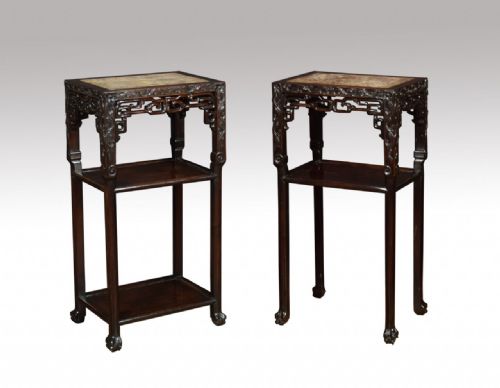
- A tall pedestal or small table designed specifically to elevate plant pots and floral arrangements. These pieces typically feature square or circular tops supported by carved legs.
- Altar table
- A long, narrow table historically placed against a wall for ceremonial offerings. They are characterised by restrained proportions and upturned flanges at the short ends.
- Nesting tables
- A graduated set of occasional tables designed to slide neatly beneath one another. Nineteenth-century examples often feature four tables descending in size.
Carved Hongmu Table: Frequently Asked Questions
How do I style a carved hongmu table?
These versatile pieces work effectively as standalone accent surfaces in modern and traditional rooms alike. Their rich timber tones complement neutral upholstery and provide a focal point for displaying ceramics or lamps.
Keep surrounding furniture simple to let the intricate woodwork stand out. Low kang variants make practical coffee tables, while tall stands suit empty corners.
What is the difference between a plant stand and a side table?
Plant stands and jardiniere stands typically feature taller, narrower proportions designed to elevate decorative items rather than serve everyday functions. Their tops are frequently circular or octagonal to match standard pot dimensions.
Side tables and centre tables offer broader surfaces intended for general use. They incorporate more expansive aprons and accommodate tasks such as writing or serving.
How do I care for antique hardwood furniture?
Protect the dense timber by avoiding direct sunlight and maintaining stable indoor humidity. Excessive dryness can cause traditional joins to loosen over time.
Dust regularly with a soft, dry cloth and avoid silicone-based polishes. Natural wax applied sparingly preserves the deep lustre of the rosewood grain.
Are marble top tables original?
Marble and stone inserts are a characteristic feature of many nineteenth-century Chinese tables and stands. The stone was slotted directly into the wooden frame to provide a cool, smooth surface resistant to moisture from plants or teacups.
Inspect the seating of the stone to ensure it sits flush within the rebated wooden frame. Matching the veining and weight of the marble to the period confirms its authenticity.