


Carved Hardwood Nest Tables
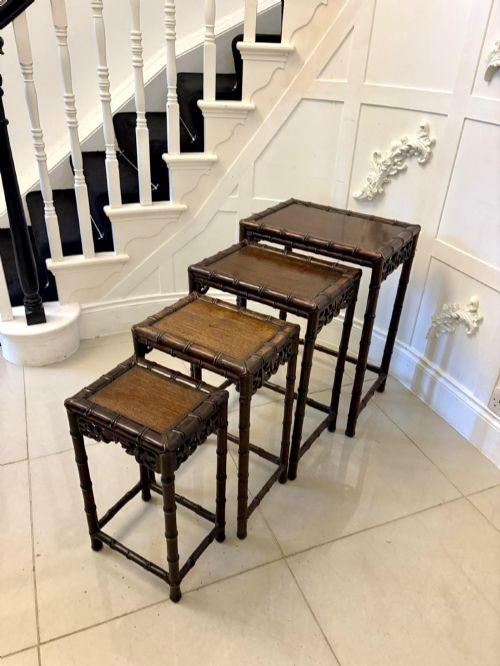
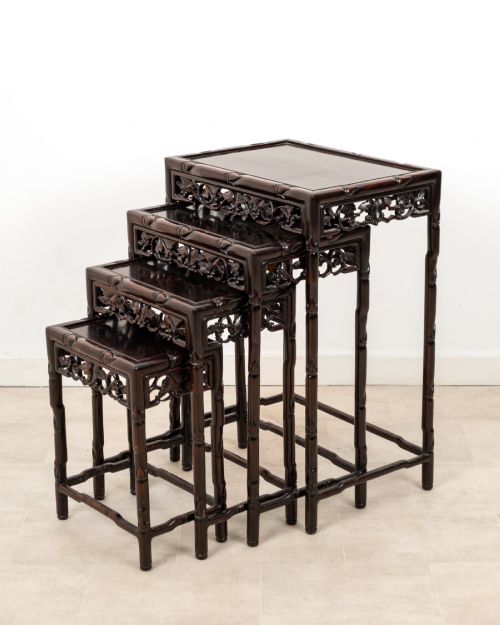
These carved hardwood nest tables offer practical tiered surfaces derived mainly from Chinese Export and Qing Dynasty traditions.
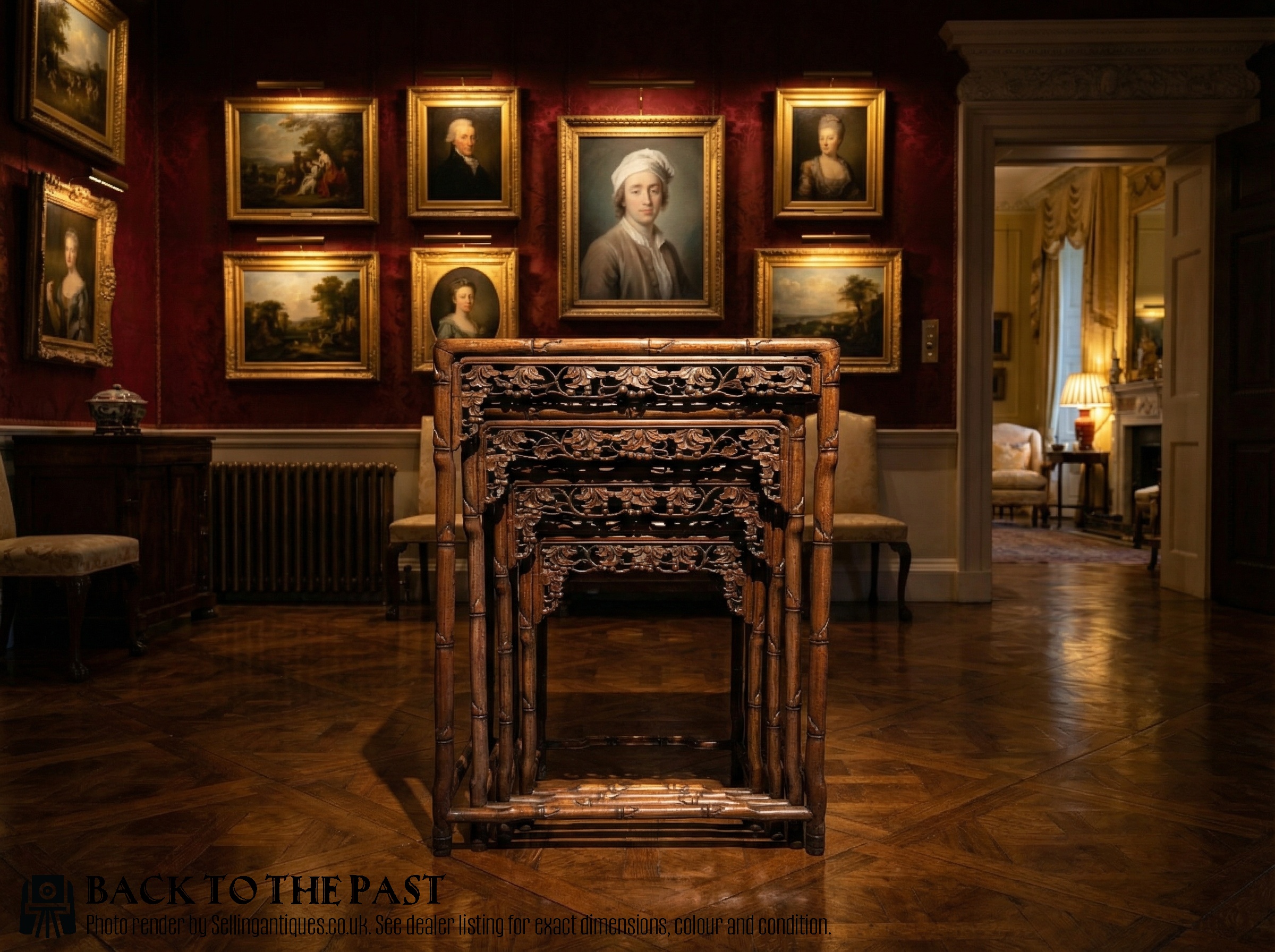
Carved Hardwood Nest Tables
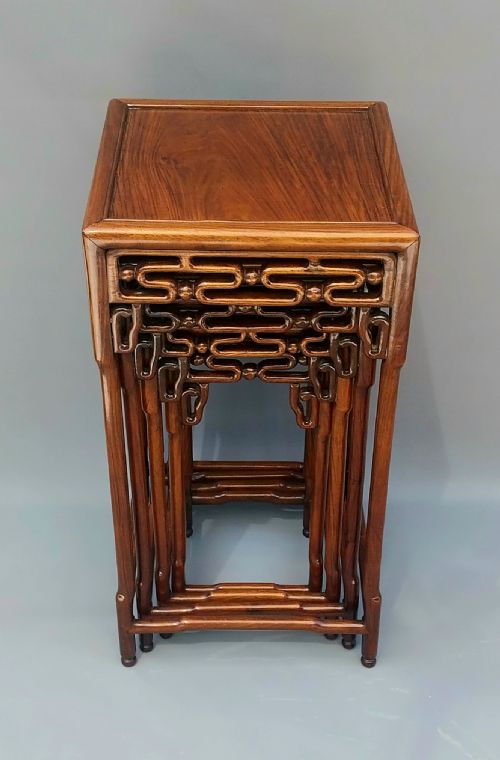
When you search for carved hardwood nest tables, you encounter sets of graduated tables designed to slide neatly beneath one another when not in use. These pieces serve primarily as occasional, side, or coffee tables within a room, offering multiple surfaces without occupying permanent floor space.
The versions you meet most frequently on this page originate from Chinese Export and Qing Dynasty traditions, alongside later nineteenth and early twentieth-century interpretations. Most sets comprise four tables descending in size, though occasionally you find sets of three.
Makers fashioned these to function both as individual stands for lamps or decorative objects and as a collective suite. Their compact design reflects a long history of portable and space-saving furniture manufacture.
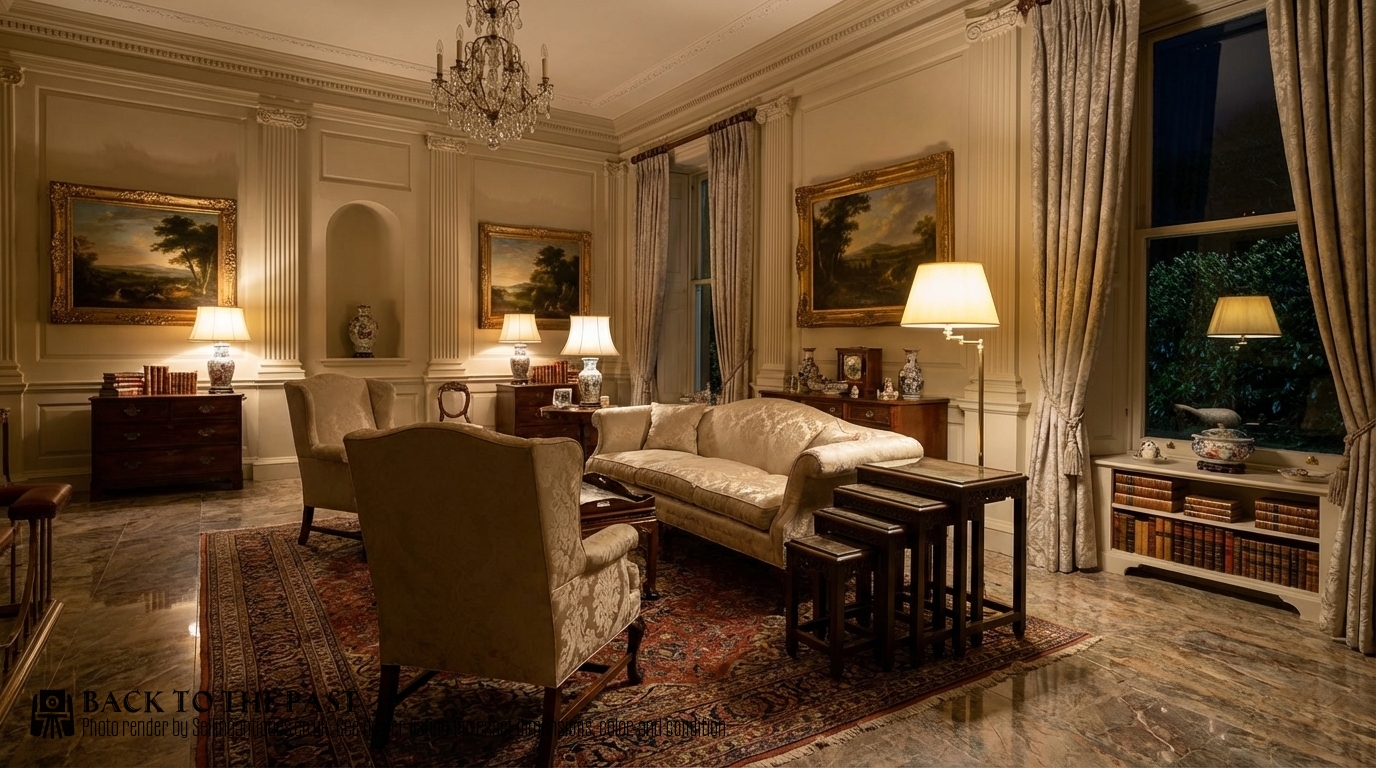
Materials and Construction
Craftsmen utilised dense timbers such as rosewood, hongmu, huanghuali wood, and teak to construct these sets. These heavy hardwoods provided the structural integrity required for repeated sliding and daily use.
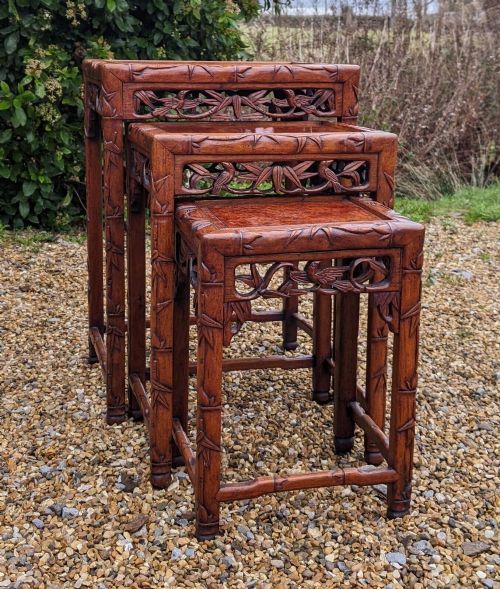
Surfaces frequently display intricate relief carving, particularly along the tops and friezes, sometimes incorporating motifs like dragons. Workshops also combined hardwoods with contrasting panels of burrwood or integrated glass tops in specific variations.
Listings feature woods spanning rosewood, hongmu, huanghuali, teak, and burrwood across the Victorian and Edwardian eras.
Distinctions in Quality
Quality in these tables rests upon the selection and figure of the timber, particularly visible in varieties like huanghuali and rosewood. Rich grain patterns and uniform colour elevate certain examples above standard commercial outputs.
The depth, crispness, and complexity of the hand carving dictate the standing of a set. Well-executed relief work on the friezes and tops demonstrates superior craftsmanship compared to shallow or repetitive stamping.
The Carved Hardwood Nest Tables Glossary
- Hongmu
- A traditional Chinese term designating dense, dark hardwoods used in fine furniture making. These heavy timbers provide durability and take a fine polish.
- Quartetto
- A nineteenth-century term specifically describing a set of four graduated occasional tables designed to nest together. They often appeared in English homes influenced by Oriental taste.
- Chinoiserie
- European artistic style reflecting Chinese motifs and techniques, applied here to hardwood furniture construction. It bridges Eastern manufacturing origins with Western decorative preferences.
- Graduated
- Describing a set of tables where each piece diminishes in height and width to fit inside the next. This engineering allows the complete assembly to occupy the footprint of the largest single table.
Carved Hardwood Nest Tables: Frequently Asked Questions
How were nest tables used originally?
These tables served primarily as versatile surfaces for tea, lamps, or writing within nineteenth-century reception rooms. Servants could easily pull them out from beneath one another to accommodate guests.
Once entertaining concluded, the smaller tables slid back into the main frame to save space. This practical arrangement suited both formal drawing rooms and more intimate domestic interiors.
Are all these tables from China?
The majority originate from Chinese workshops, including Qing Dynasty and Chinese Export pieces made for international markets. You also encounter related styles such as Anglo-Indian production.
Makers across different regions adopted similar graduated designs while utilising local dense hardwoods and regional carving motifs. Each origin brings distinct decorative details to the finished set.
How do I care for hardwood tables?
Maintain these surfaces by keeping them away from direct heat sources and strong sunlight, which can dry out dense timbers. Regular dusting with a soft, dry cloth preserves the polished finish.
Avoid using silicone-based polishes or excessive moisture on antique hardwoods. Traditional wax applied sparingly helps nourish the grain over time.
What does quartetto mean?
Quartetto is an old nineteenth-century designation for a set of four nesting tables. Makers and retailers used this term during the Victorian and Edwardian periods to describe graduated occasional furniture.
You often see this word in nineteenth-century cataloguing for Chinese export sets designed for European homes. It simply denotes the count of four pieces in the nest.