





Vintage Chinese Nest Tables
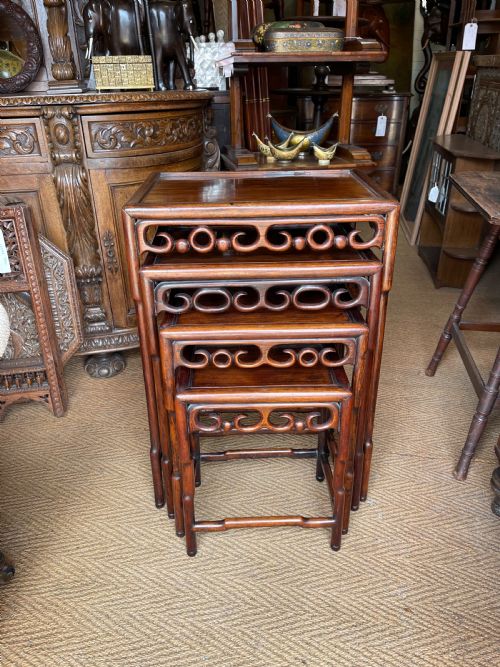
Vintage chinese nest tables are clever sets of graduated surfaces that slide neatly together, offering flexible table space with minimum fuss.
Vintage Chinese Nest Tables
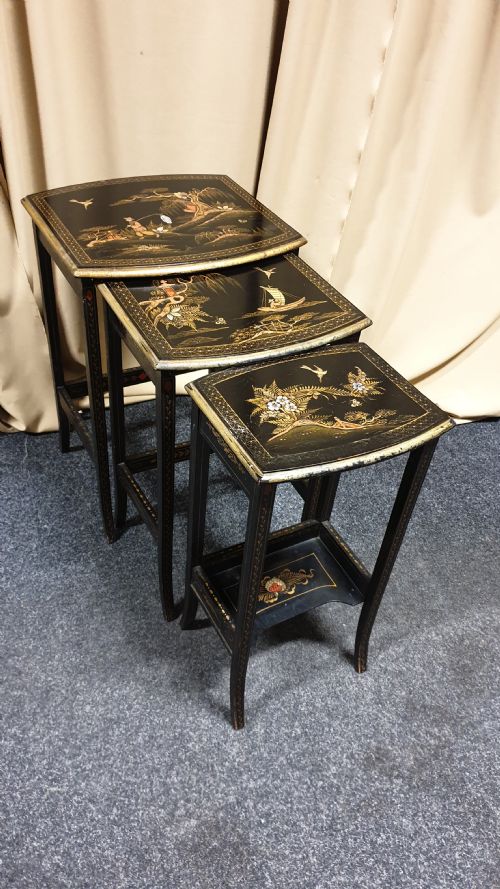
Vintage chinese nest tables group sets of three or four graduated surfaces together so the smaller pieces slide neatly beneath the largest one. These practical sets appear frequently in styles such as Chinoiserie, Chinese Export, and Chinese Qing Style, alongside Anglo-Indian variations. Most examples found here function as occasional tables, side tables, or coffee tables.
The materials span traditional timbers and decorative finishes, with rosewood, hardwood, and teak appearing alongside lacquer, glass, gold leaf, and gilt paint. Dating for these items ranges from the nineteenth century through the early decades of the twentieth century, specifically covering the years nineteen hundred, nineteen ten, nineteen twenty, and nineteen thirty.
Materials and construction methods
Surface decoration frequently involves lacquer applied to wood, sometimes accented with gold leaf or gilt paint, particularly on Chinoiserie and decorated lacquer examples. Glass tops also appear on certain sets to protect the finished wood underneath.
A four-table nest means playing a daily puzzle of sliding furniture like a wooden jigsaw just to hold your tea.
Assessing quality and craftsmanship
Quality shows in the precision of the graduated sizing, ensuring each smaller table slides smoothly into its designated position without binding or wobbling. The crispness of the carved details across the wooden frames also separates finer work from simpler production.
The application of lacquer and gilt paint reveals the skill of the maker through even coverage and durable finishes that withstand regular use. Superior timber selection provides better weight and stability across all tables in the nest.
The Vintage Chinese Nest Tables Glossary
- Nest of tables
- A set of graduated tables designed to fit one beneath another to save floor space when not in use. These sets typically contain three or four individual surfaces.
- Chinoiserie
- European artistic styles reflecting Chinese motifs and techniques, often seen in decorative lacquerwork and gilt paint. This aesthetic heavily influences many vintage sets.
- Lacquer
- A durable resin finish applied in multiple layers and polished to a smooth surface. It often provides a deep background for painted or gilded decoration.
- Rosewood
- A dense, heavily grained hardwood prized for furniture making. Its rich colour and durability suit the slender frames of nesting tables.
Vintage Chinese Nest Tables: Frequently Asked Questions
How do vintage chinese nest tables work?
These sets consist of three or four tables of decreasing height and width designed to slide together into a single compact unit. This arrangement provides extra surface area when entertaining while occupying the floor space of only one table.
The largest table sits on the outside, and each progressively smaller table fits snugly underneath in descending order.
What rooms suit these tables best?
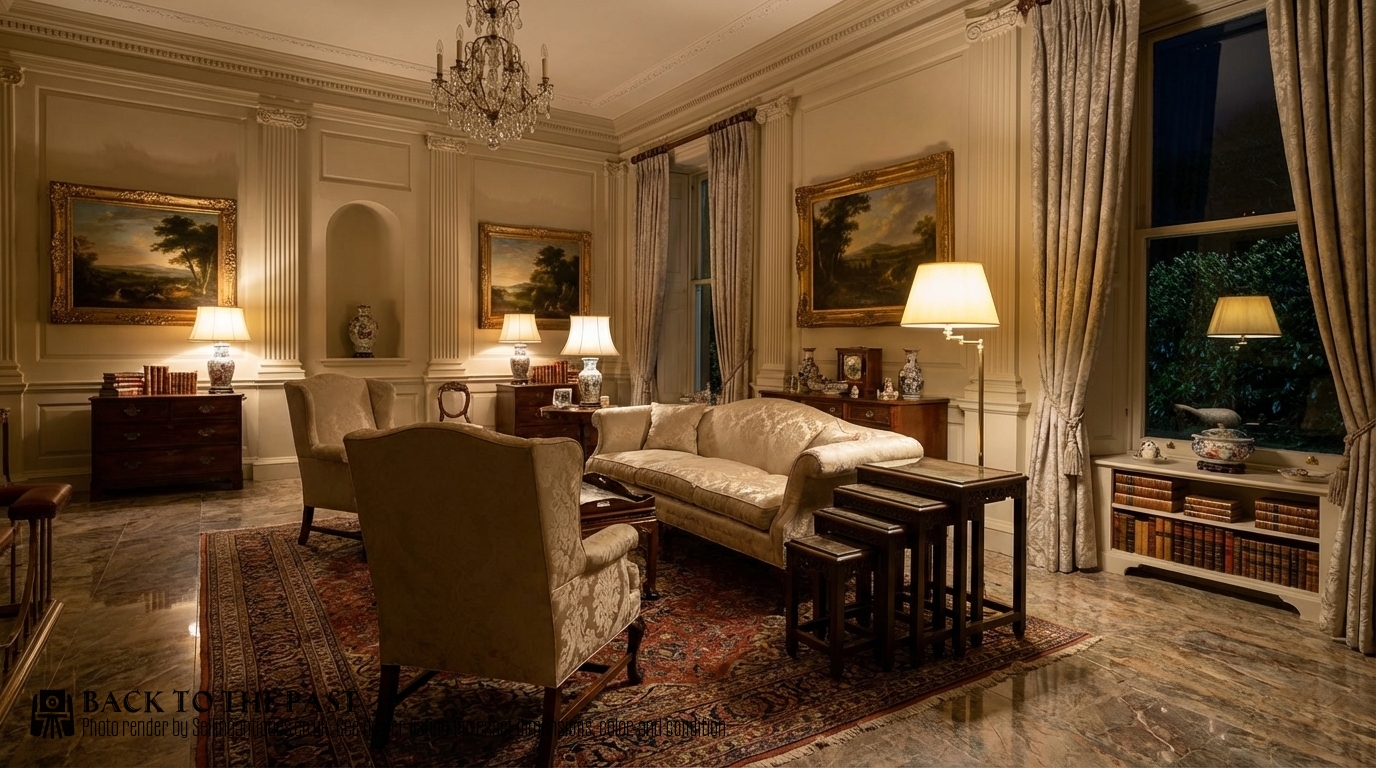
Living rooms and drawing rooms accommodate these sets well because the tables can be separated around a room for drinks or books. When not in use, the nested stack rests neatly against a wall or beside a sofa.
Their compact footprint makes them practical for smaller spaces where permanent occasional tables would crowd the room.
How do I care for lacquered surfaces?
Lacquered wood requires gentle cleaning with a soft, dry cloth to remove dust without scratching the glossy finish. Avoid placing hot cups or damp items directly onto the surface to prevent marking.
Using glass tops where fitted helps protect delicate decorated lacquer and gold leaf from everyday wear.
How do I identify nineteenth century pieces?
Nineteenth century examples often display heavier hardwood or rosewood construction alongside traditional carved motifs and hand-applied lacquer. These older pieces frequently feature traditional joinery methods suited to dense timbers.
Later twentieth century versions from the nineteen twenties and thirties sometimes incorporate alternative finishes or glass table tops.