
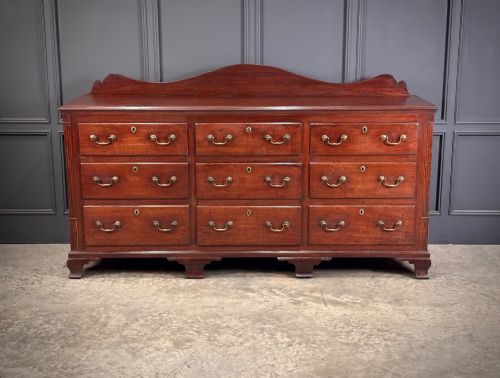
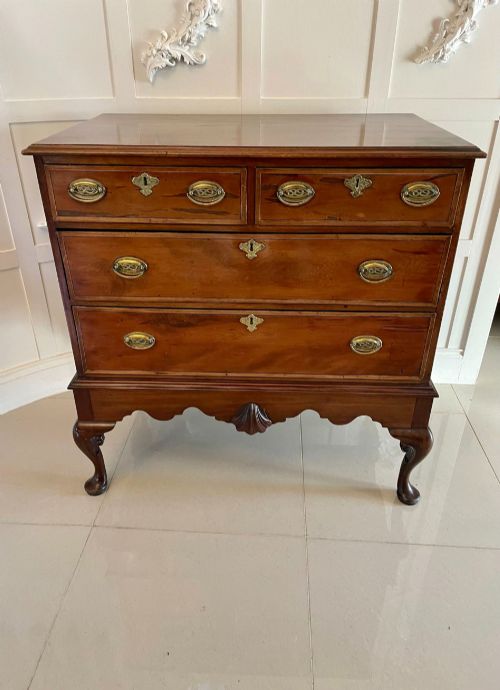
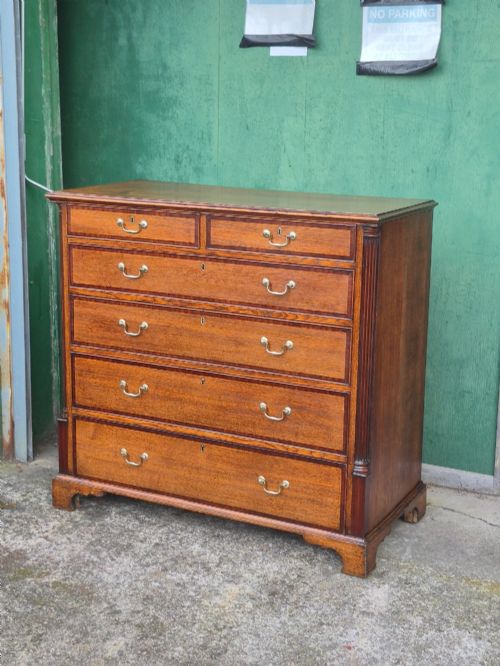
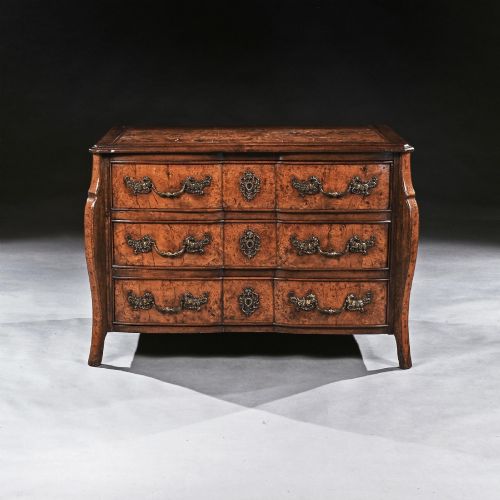
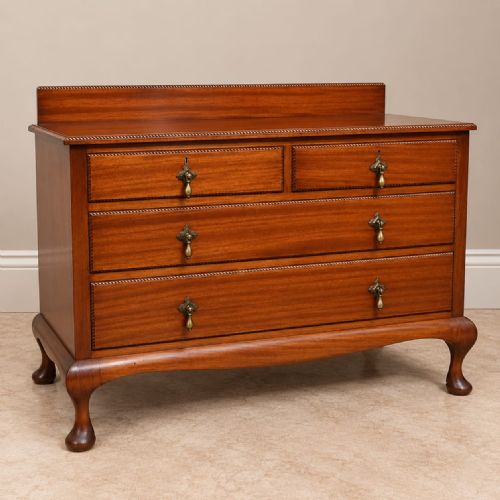
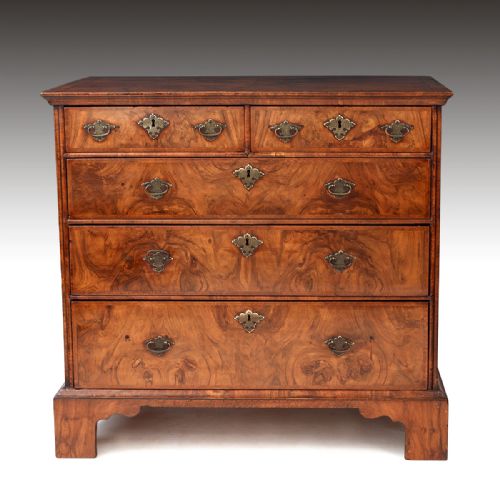
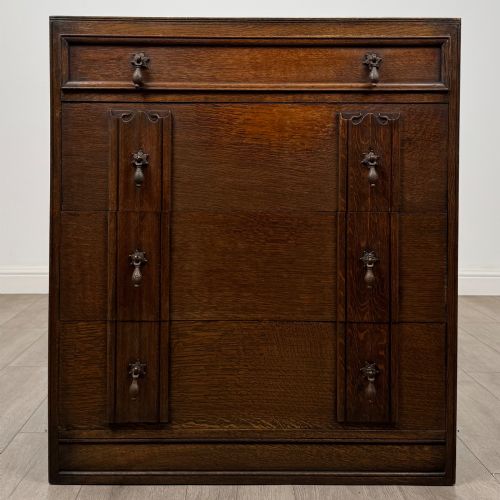
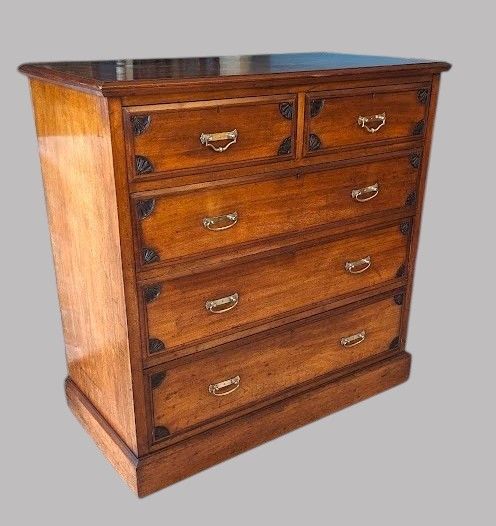
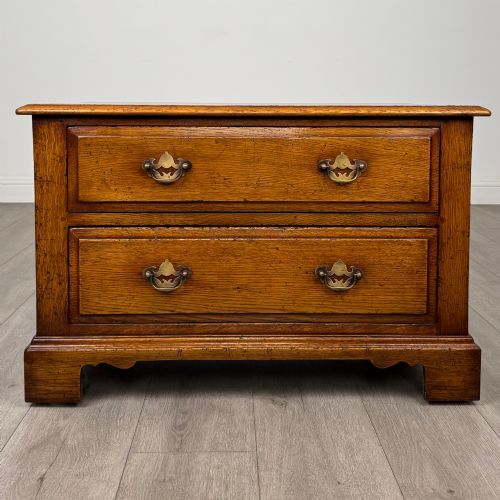
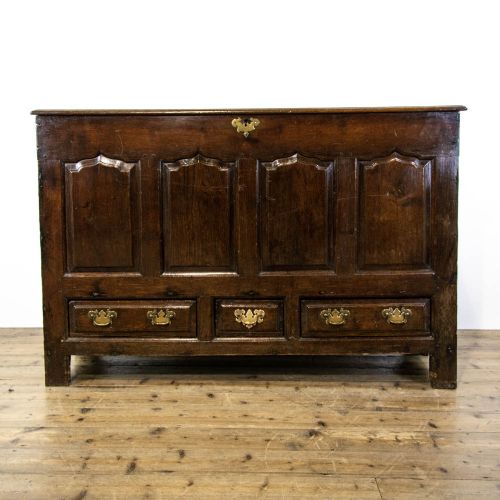
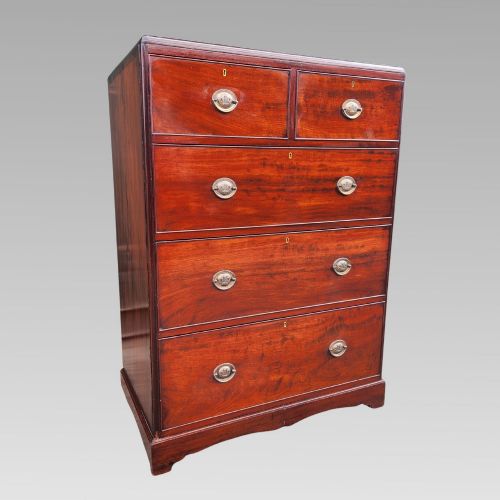
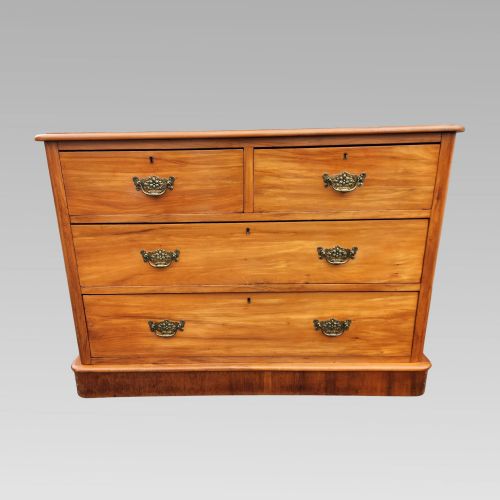


Carved Handle Wooden Chest
A carved handle wooden chest brings enduring utility and timber character into a room, serving primarily for heavy storage.
Carved Handle Wooden Chest
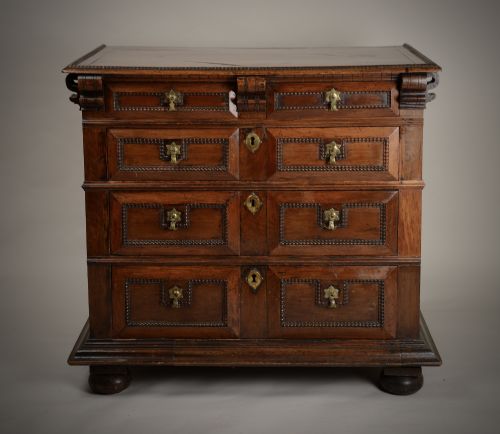
A carved handle wooden chest encompasses substantial storage forms like mule chests, coffers, commodes, and chests of drawers intended for domestic containment. These pieces range from vernacular 17th century oak and walnut iterations to refined Georgian and Victorian mahogany examples.
The buyer meets formal drawer banks alongside country house trunks featuring integrated or applied carved grips. Variations span compact lowboys and tallboys to substantial panelled trunks originating across British, French, and regional workshops.
Materials and construction methods
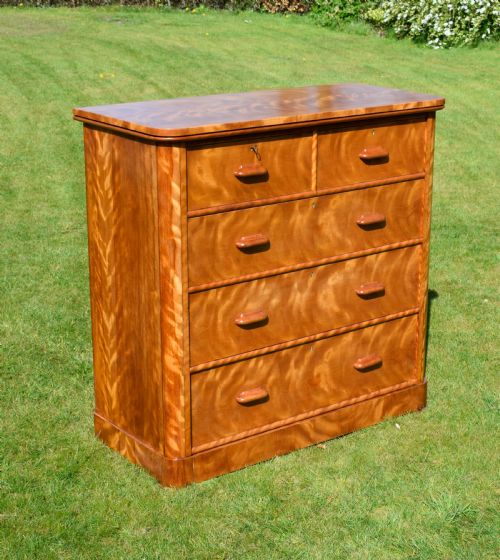
Cabinet makers utilised dense hardwoods such as oak, mahogany, walnut, and satinwood, often pairing structural carcases with decorative veneers like burr walnut or flame mahogany. Secondary timbers included pine and birch.
Joinery relied on traditional pegged mortise and tenon frames for early coffers, while later chests employed precise dovetailed drawer construction. Carved elements were worked directly into the solid timber handles or applied to drawer fronts and panels.
Listings feature woods spanning oak, mahogany, walnut, satinwood, and pine across periods from the 17th century through the Edwardian era.
Evaluating construction and timber standard
Quality rests upon the selection of timber figure, the crispness of the hand-carved detailing, and the integrity of the original dovetailed construction. Superior pieces retain their matching timber grains across drawer facades and robust structural carcases.
Condition of internal drawer linings, original brass or carved wooden hardware, and the depth of the natural patina distinguish finer workshop output from simpler vernacular alternatives.
Maple and Co·Muirhead Moffat and Co
The Carved Handle Wooden Chest Glossary
- Mule chest
- A storage chest featuring one or more drawers built into the base beneath the main compartment. This form evolved during the 17th and 18th centuries in regional British workshops.
- Commode
- A low chest of drawers or cabinet originating from French influence. These pieces often exhibit decorative veneers and polished stone or wood tops.
- Lowboy
- A small table with drawers supported on four legs, commonly utilised as a dressing table or side storage. They frequently appeared in walnut and mahogany during the 18th century.
- Tallboy
- A tall chest of drawers formed by stacking one chest upon another taller base section. They maximise vertical storage capacity while maintaining a compact footprint.
- Dovetail
- A joint formed by interlocking wedge-shaped fingers used to secure drawer corners. Hand-cut dovetails indicate earlier craftsmanship periods before mechanisation.
Carved Handle Wooden Chest: Frequently Asked Questions
How do I date a wooden chest?
Dating relies on examining construction methods, timber species, and handle styles. Early pieces display hand-sawn boards and pegged joinery.
Later Victorian and Edwardian examples utilise machine-sawn timber and standardised hardware fixings.
Where should I place a chest?
These storage pieces suit bedrooms, hallways, or living spaces where they function as focal points and practical linen containers.
Ensure placement avoids direct heat sources to protect the historic timber.
What is a mule chest?
A mule chest combines a top-opening trunk with lower drawer storage. They served versatile household functions for blankets and apparel.
Early vernacular versions appeared frequently in oak.
How do I maintain wood surfaces?
Maintain timber surfaces by applying quality beeswax periodically and buffing gently. Avoid synthetic cleaners that damage historic polishes.
Keep indoor humidity stable to prevent timber splitting.