
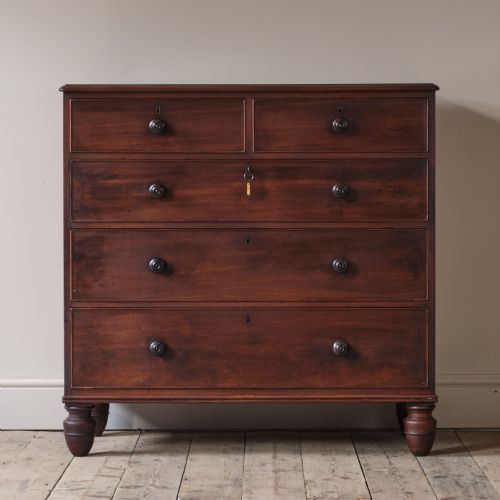

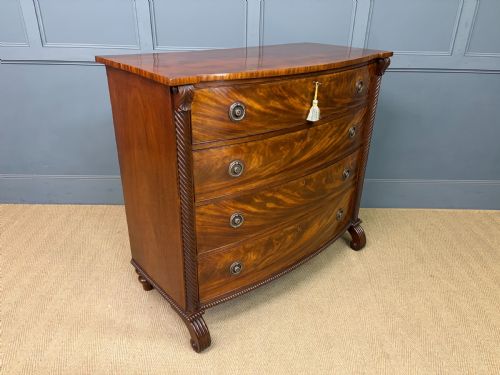
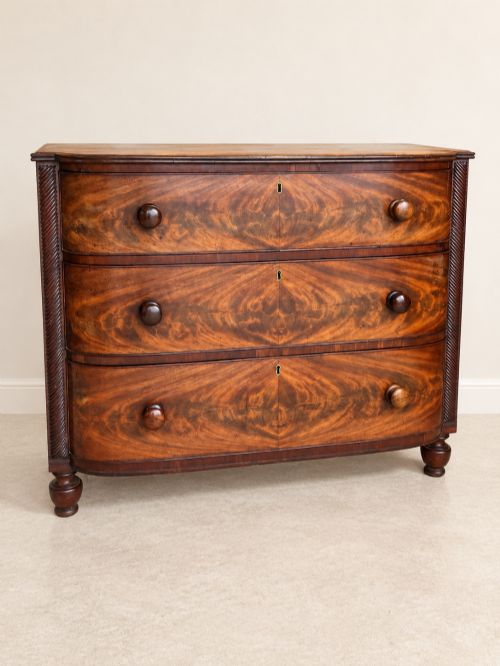
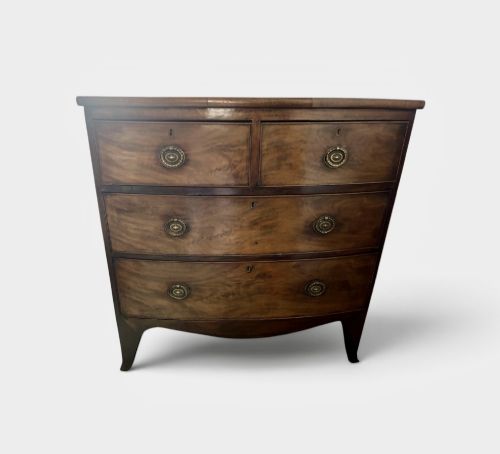


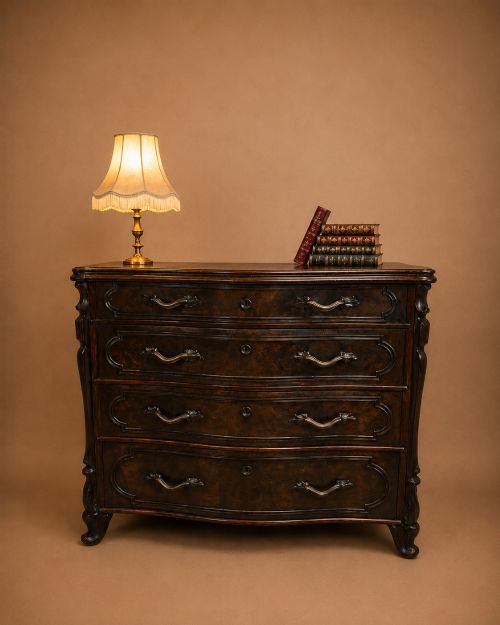
19th Century Bedroom Chest
A 19th century bedroom chest offers practical storage with enduring cabinetwork, providing the sturdy surface and deep drawers that anchor a traditional sleeping chamber.
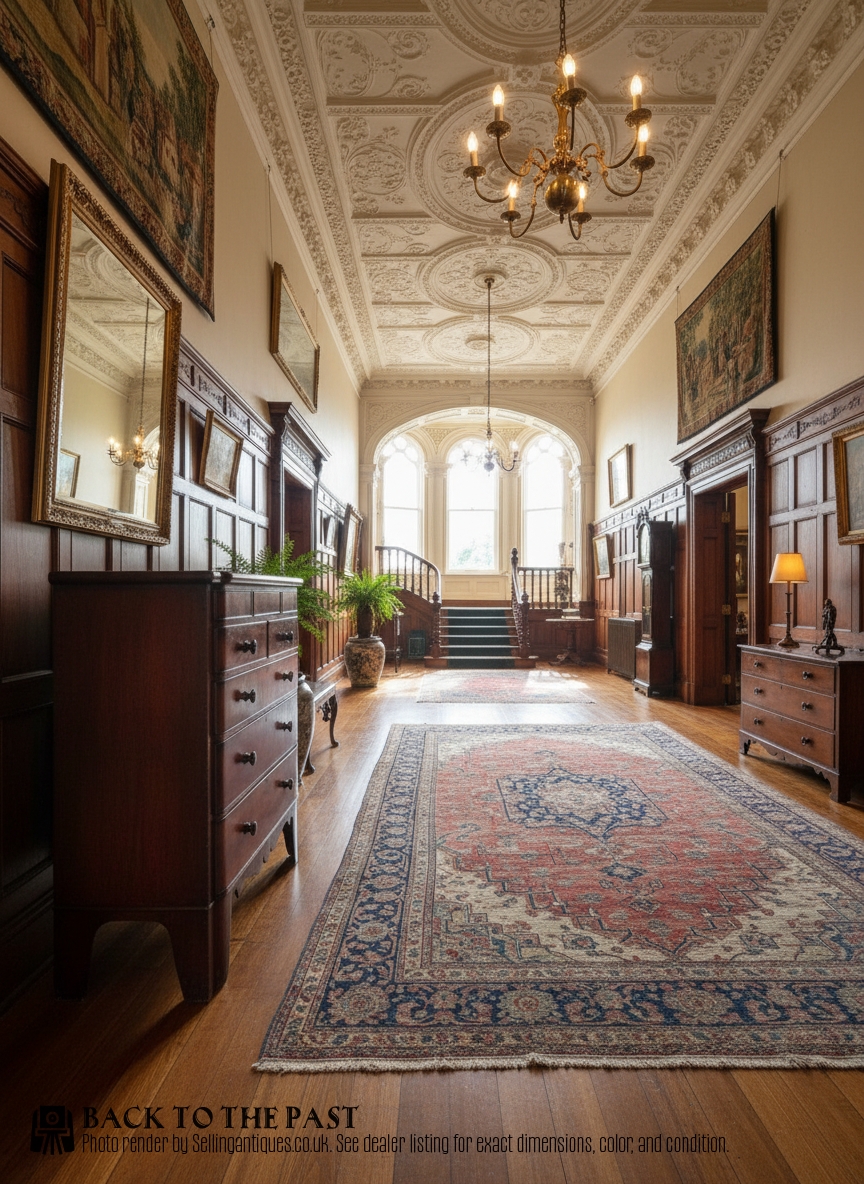
19th Century Bedroom Chest
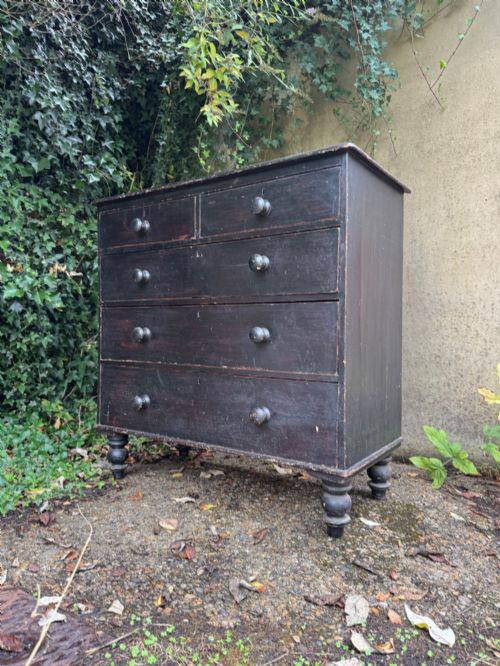
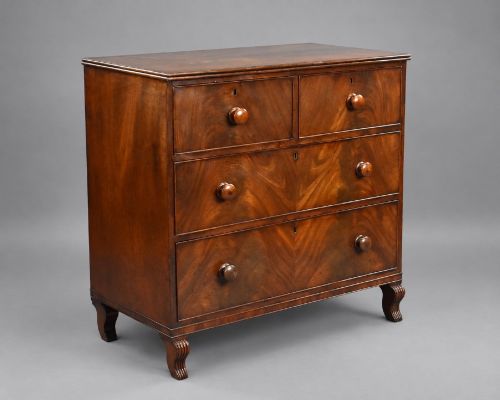
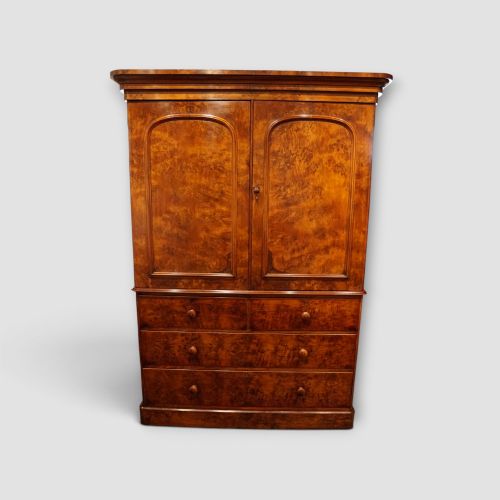
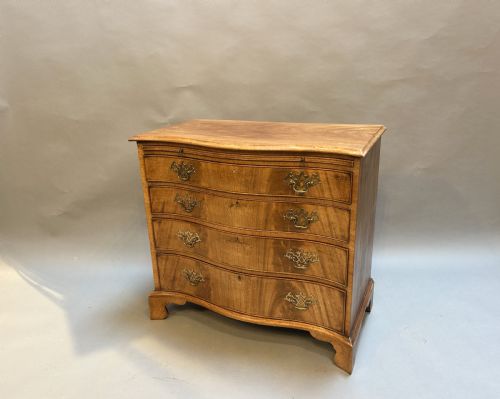
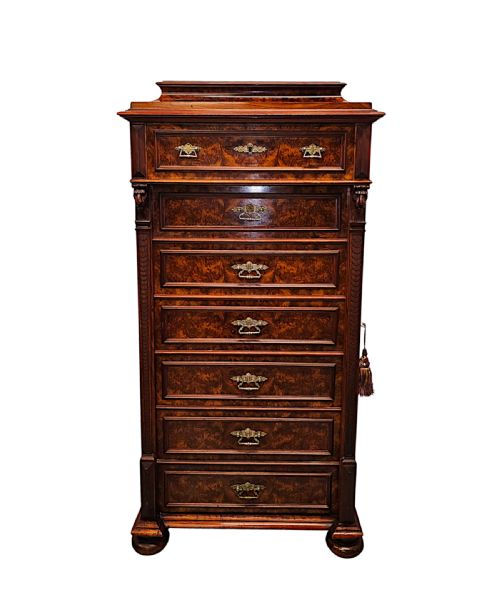
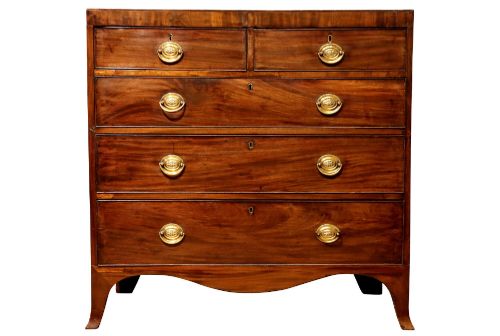
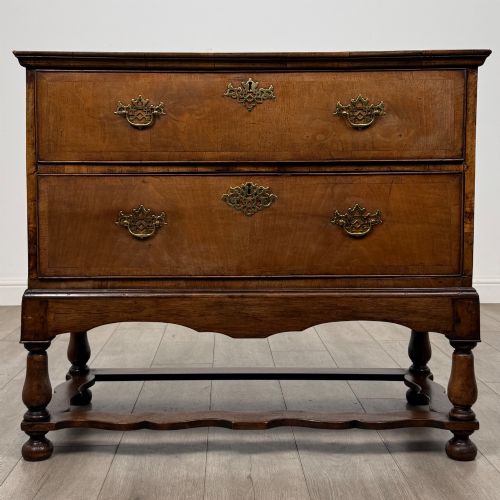
A 19th century bedroom chest encompasses various forms designed for household storage, most commonly seen here as mahogany chests of drawers, linen presses, and bedside chests originating from Georgian, Regency, and Victorian periods. These pieces serve as functional bedroom furniture, utilising horizontal drawer arrangements that range from compact three-drawer nightstands to tall Wellington styles and large serpentine outlines.
Materials and Construction Methods
Cabinetmakers constructed these pieces primarily using solid timbers like mahogany, oak, and pine, frequently applying flame mahogany veneer, burr walnut, and satinwood to primary surfaces for visual depth. Secondary woods provided structural stability for drawer linings and internal framing, while brass hardware, bone escutcheons, and bun handles served as functional fixtures.
Joinery techniques relied on traditional methods suited to heavy daily use, such as tongue and groove construction and precise drawer dovetailing. Surfaces received polish or paint finishes, and specialised forms incorporated candle sconce mounts or locking mechanisms characteristic of Wellington and linen press designs.
Listings feature woods including mahogany, pine, oak, burr walnut, ash, and satin birch alongside brass, bone, and painted finishes.
Distinctions in Execution and Material Selection
Quality separates through the choice of timber and the precision of the veneer work, where figured grains like burr walnut or flame mahogany indicate higher-status commissions. The selection of secondary woods and the neatness of internal drawer construction further distinguish standard workshop output from exceptional cabinetmaking.
Proportion and decorative restraint dictate the aesthetic tier of a piece, with subtle bow fronts, serpentine outlines, and harmonious hardware placements reflecting superior design choices. The integrity of the original timber and the subtlety of mouldings separate well-preserved specimens from heavily altered examples.
T & G Seddon·Maple & Co.·Gillows
The 19th Century Bedroom Chest Glossary
- Bow front
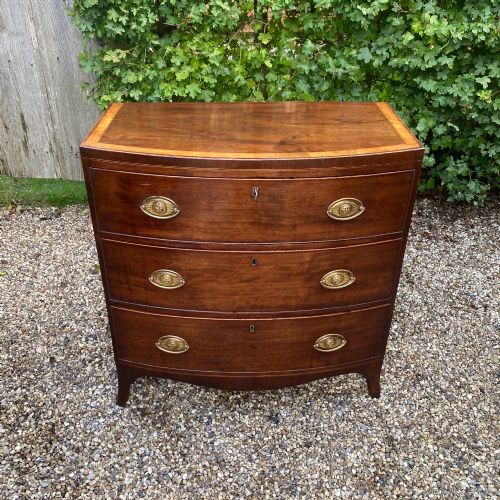
- A convex, curved front to a chest that projects outward in the centre. This shape gained popularity during the Regency and Georgian eras to soften the profile of heavy storage furniture.
- Linen press
- A tall cabinet featuring upper doors enclosing sliding trays or shelves above a base of lower drawers. These pieces were originally designed for storing household linens flat.
- Serpentine outline
- A cabinet front featuring a concave centre flanked by convex outer curves. This flowing contour requires advanced woodworking skill to shape accurately.
- Caddy top
- A raised, moulded tabletop profile resembling the lid of a tea caddy. It adds a distinct stepped edge to smaller chests of drawers and bedside tables.
- Flame mahogany veneer
- A sliced wood veneer displaying a distinctive, flickering grain pattern resembling flames. Cabinetmakers applied this to prominent drawer fronts for decorative effect.
19th Century Bedroom Chest: Frequently Asked Questions
How do I identify a Regency chest?
Regency chests typically display clean architectural lines, mahogany or flame mahogany veneers, and restrained brass ring handles. They often feature bow fronts or bracket feet consistent with early nineteenth-century design.
Proportions tend to be balanced, with less heavy ornamentation than later Victorian pieces, reflecting classical influences of the period.
What is a Wellington chest used for?
A Wellington chest provides tall, narrow vertical storage through a stack of shallow drawers. The locking side stile secures all drawers simultaneously with a single key.
Originally utilised in bedrooms for folded garments or documents, its compact footprint suits smaller spaces while offering substantial storage capacity.
How do Victorian and Georgian chests differ?
Georgian chests generally favor lighter proportions, bracket or ogee feet, and understated cockbeading around drawer edges. Woods like figured mahogany dominate the earlier periods.
Victorian chests frequently present heavier proportions, plinth bases, burr walnut or pine materials, and more robust brass or wooden pull handles.
Where were bedside chests placed?
Bedside chests and nightstands stood adjacent to the bed to hold lighting, reading materials, or personal items within reach. Their three-drawer configuration provided concealed storage in a compact format.
Cabinetmakers scaled these down from full-sized chests to match the height and proportion of nineteenth-century bedframes.