






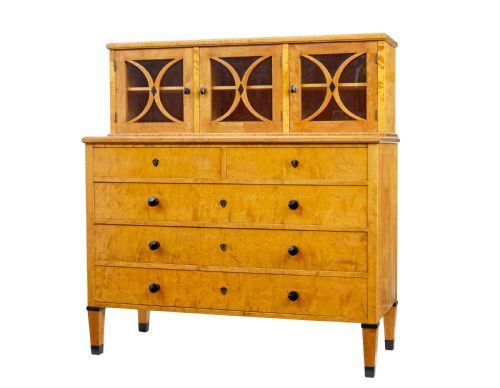
Golden Birch Dresser
A golden birch dresser or chest of drawers brings pale timber and clean lines into a room, originating mostly from Swedish and Victorian workshops.
Golden Birch Dresser
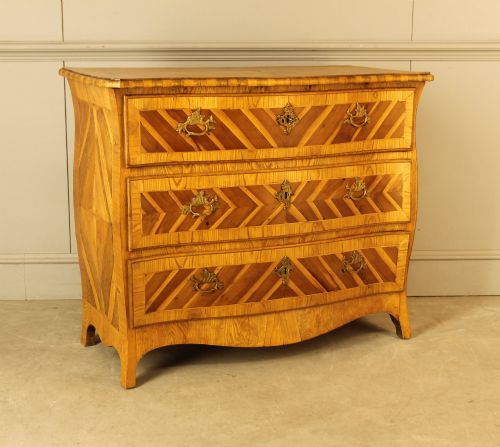
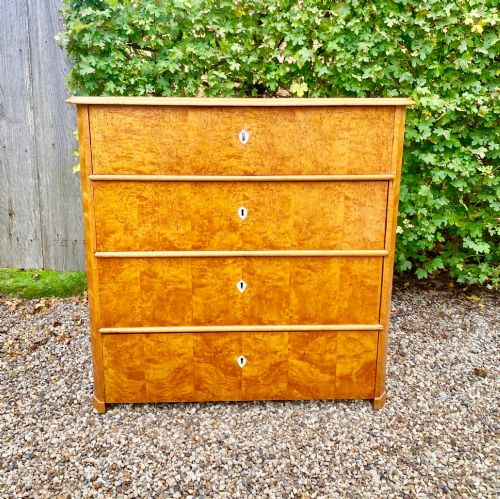
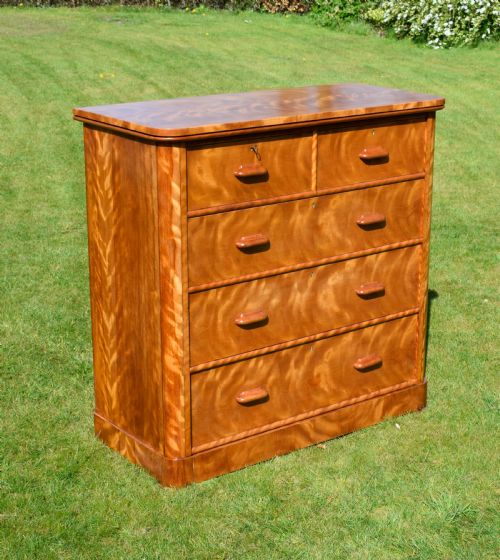
A golden birch dresser search brings up chests of drawers and cabinets spanning the eighteenth and nineteenth centuries. The pieces on this page are predominantly chests of drawers originating from Sweden, alongside Victorian examples from Britain.
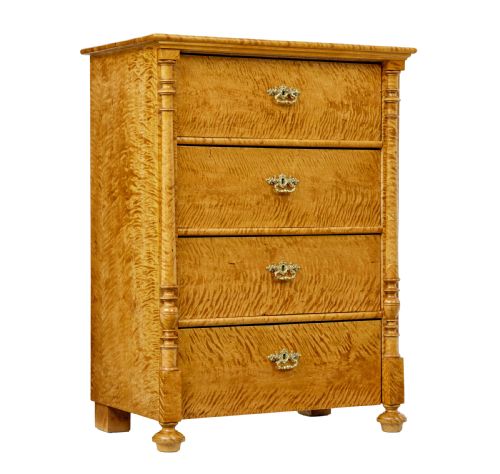
Makers shaped these items in styles ranging from Swedish Rococo and Biedermeier to Empire Revival and Art Nouveau. Formats include straight drawer chests, caddy top designs, bombe profiles, and cabinets mounted on chests.
The timber varies in grain pattern, moving from straight pale birch to tiger birch and flame birch veneer. Secondary woods like pine appear in the construction, while brass hardware provides contrast.
How they were made
Cabinet makers built these carcasses using solid birch, fruitwood, and pine. Artisans applied thin veneers of flame birch and tiger birch to drawer fronts to create striking grain patterns.
Details include ebonised wood accents and brass mounts fitted to drawers and doors. Surface treatments highlight the natural colour of the birch without heavy staining.
Object types include chests of drawers, commodes, and display cabinets spanning Swedish Biedermeier, Rococo, Empire Revival, and Art Nouveau styles.
What varies in quality
The sophistication of the veneer work defines the upper tiers of these pieces. Selecting highly figured tiger birch or flame birch veneer for the primary surfaces demanded greater skill from the maker.
Proportion and execution of style distinguish regional workshops. Swedish Biedermeier and Rococo examples demonstrate precise joinery and sculptural curved fronts that separate them from simpler country pieces.
The Golden Birch Dresser Glossary
- Birch
- A pale hardwood with a fine, uniform grain used extensively for Scandinavian and Victorian furniture. It takes a high polish and accepts veneer remarkably well.
- Tiger birch
- A figured variety of birch featuring dark, undulating stripes that resemble tiger pelt. Cabinet makers prized this timber for prominent drawer fronts.
- Biedermeier
- A influential Central European and Scandinavian style spanning the nineteenth century, known for utilitarian comfort and clean neoclassical lines. Ornamentation remains restrained to showcase the natural wood grain.
- Bombé
- A swelling, outward-curved commode or chest front popular in Rococo design. This undulating shape requires advanced woodworking techniques to construct.
- Caddy top
- A raised, stepped tabletop profile often found on nineteenth-century chests of drawers. It adds vertical emphasis to the upper edge of the case.
Golden Birch Dresser: Frequently Asked Questions
What is a golden birch dresser?
A golden birch dresser or chest of drawers is a storage piece constructed primarily from pale birch timber. These items originate predominantly from nineteenth-century Swedish and Victorian workshops.
Craftsmen utilised figured veneers like tiger birch and flame birch to create decorative surfaces. The forms range from simple straight drawer chests to bombe shapes and cabinet combinations.
How do I identify a Biedermeier chest?
Biedermeier pieces date from the nineteenth century and focus on clean architectural lines rather than heavy carving. They rely on the natural grain of woods like birch for visual impact.
These chests often feature minimal hardware and smooth, polished surfaces. The style prioritises domestic comfort and functional design.
Where were these birch chests made?
The listings on this page are heavily weighted towards Swedish origin, alongside Victorian British examples. Scandinavian makers produced numerous variations in birch, tiger birch, and fruitwood.
Styles span from Swedish Rococo and Biedermeier to Empire Revival and Art Nouveau. Regional preferences shaped the distinctive curved or straight facades.
What is tiger birch?
Tiger birch is a naturally figured timber displaying dark, contrasting stripes across the pale golden background. Artisans reserved this striking wood for prominent areas like drawer fronts.
Furniture featuring tiger birch highlights the decorative potential of native Scandinavian hardwoods. It remains a key identifier for finer nineteenth-century pieces.