



Vintage Birch Dresser
These vintage birch dresser options offer striking grain patterns and robust storage, making them a practical choice for any traditional bedroom.
Vintage Birch Dresser
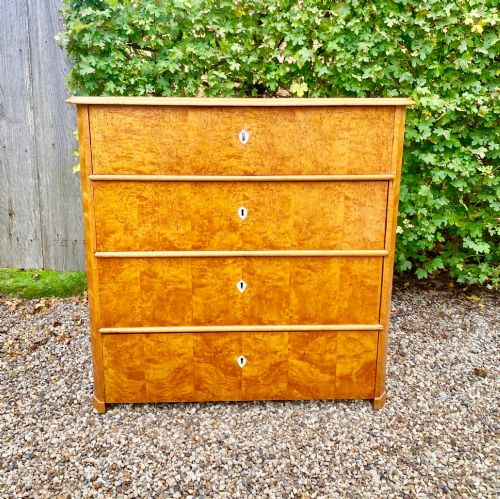
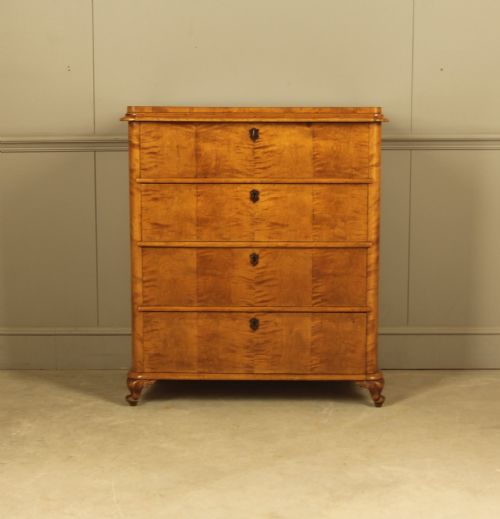
When you search for a vintage birch dresser, you encounter substantial chests of drawers originating predominantly from nineteenth-century Sweden and the Victorian era. These items function as heavy bedroom storage units, traditionally designed with multiple horizontal drawers to hold clothing and household linens.
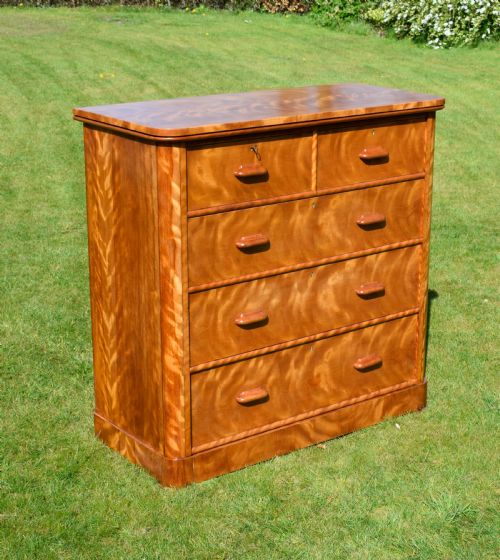
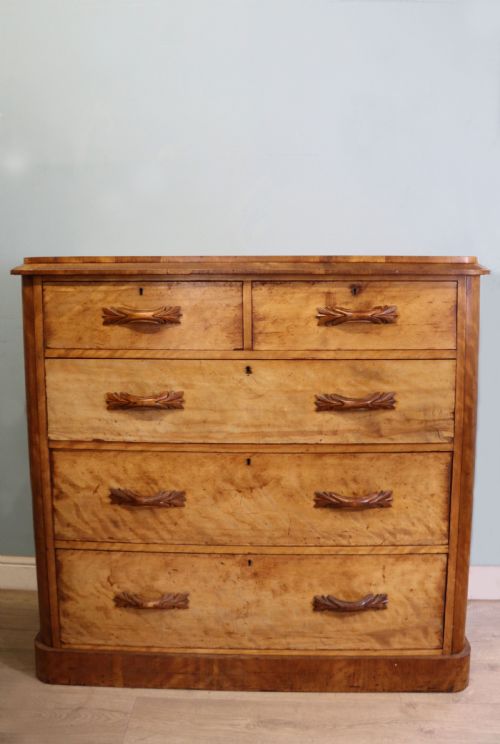
The pieces listed on this page span several decades, featuring nineteenth-century Swedish Biedermeier forms alongside standard Victorian examples and early twentieth-century painted work. You most frequently meet straight-fronted chests and caddy top designs that highlight the natural figure of the timber.
Scandinavian pieces lean towards the clean lines of Swedish design, while British Victorian examples often present with warm satin birch surfaces and occasional bone or brass details. Each chest serves as a focal point in a room, combining utility with distinct period craftsmanship.
How they were made
Cabinet makers utilised solid birch and pine carcases, applying book-matched flame birch veneers to the drawer fronts to create symmetrical patterns across the face of the furniture. The natural grain of the timber receives protection through traditional polishing methods that deepen the warmth of the wood.
Metal hardware such as brass escutcheons and iron drawer pulls secure the operational points of the furniture, while occasional bone inlay adds decorative contrast. Some twentieth-century workshop pieces employ painted pine and simulated birch finishes over the primary structure.
One workshop cleverly painted pine to resemble birch, proving that faux finishes have amused buyers for nearly a century.
What varies in quality
The selection of the timber veneer dictates much of the visual appeal, with highly figured flame birch commanding greater visual presence than plain surfaces. Cabinet makers who carefully matched the grain across multiple drawer tiers achieved a harmonious facade that elevates the stature of the chest.
Construction methods also separate standard utility items from finer workshop output, particularly in the precision of the dovetail joints and the thickness of the secondary woods like pine. Well-executed Caddy top mouldings and crisp turning on structural details indicate higher standards of period joinery.
Gemla Fabrikers
The Vintage Birch Dresser Glossary
- Flame birch
- A distinct figuring of birch timber displaying fiery, undulating patterns caused by the growth of the tree. Cabinet makers slice this wood into thin veneers to display symmetrical designs across drawer fronts.
- Satin birch
- A term applied to certain varieties of birch timber that possess a natural sheen and light, golden colour. It was particularly favoured by Victorian cabinet makers for bedroom furniture.
- Caddy top
- A raised, stepped border along the upper edge of a chest of drawers. This profile adds architectural depth to the top surface.
- Biedermeier
- A prominent Central European and Scandinavian design style dating from the nineteenth century. It prioritises utilitarian comfort and clean, restrained neoclassical lines over heavy ornamentation.
- Dovetail
- A traditional interlocking woodworking joint used to construct sturdy drawer boxes. The precision of these pins and tails indicates the skill of the maker.
Vintage Birch Dresser: Frequently Asked Questions
What is a birch dresser used for?
These chests of drawers provide deep storage capacity for clothing and domestic textiles in bedrooms and dressing rooms. Their flat top surfaces also offer space for mirrors, lamps, and decorative objects.
Historically, they served as essential bedroom furniture for storing folded garments before fitted wardrobes became common in domestic interiors.
How do I clean birch furniture?
Dust the surfaces regularly with a soft, dry cloth to prevent particulate buildup on the polished timber veneer. Avoid harsh chemical cleaners that can strip the historic finish.
Apply a quality furniture wax periodically to nourish the wood and maintain the natural lustre of the satin or flame birch grain.
Are these pieces strictly Swedish?
The selection includes both Scandinavian and Victorian examples, reflecting different regional preferences in nineteenth-century cabinet making. Swedish pieces often display Biedermeier influences with dramatic flame veneers.
Victorian items from the British listings typically feature satin birch and occasionally incorporate decorative bone or brass accents.
How do I identify a Victorian birch chest?
Victorian examples frequently showcase warm satin birch timber and robust construction methods typical of nineteenth-century British workshops. They often feature traditional drawer configurations and simpler structural lines compared to continental counterparts.
Look for evidence of period hand-tooling on the secondary pine timbers inside the drawers to confirm the era of manufacture.