
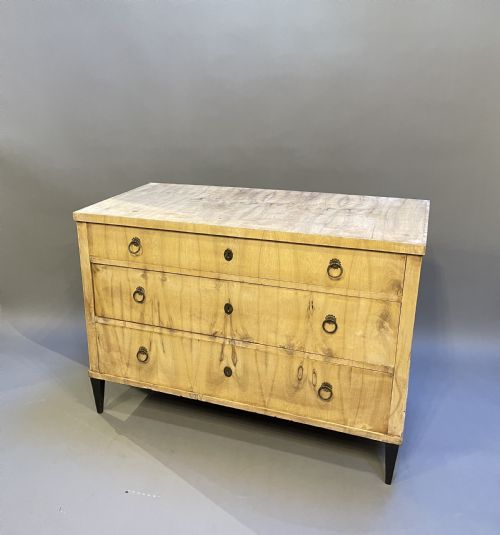


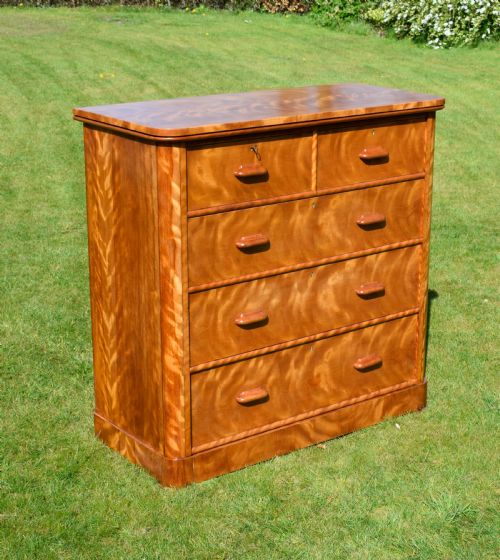


19th Century Birch Commode
A 19th century birch commode brings striking grain patterns and clean continental lines to a room, offering practical storage with distinct character.
19th Century Birch Commode
A 19th century birch commode is primarily a chest of drawers or secretaire originating from Sweden, built during the 19th century and the Victorian period. These pieces span styles from Swedish Biedermeier and Empire Revival to Scandinavian Country, providing functional drawer space with a refined aesthetic.
The version most commonly encountered is the Swedish chest of drawers, often featuring straight drawers or a secretaire drop-front configuration. Workshops frequently utilised native timber to construct these substantial items, which range from simple country forms to elaborate urban designs.
Makers utilised various regional aesthetics, incorporating carved details, inlaid work, or enclosed cupboards positioned at the top. The overall form remains anchored in the traditions of Scandinavian cabinetmaking during the 1800s.
Materials and construction methods
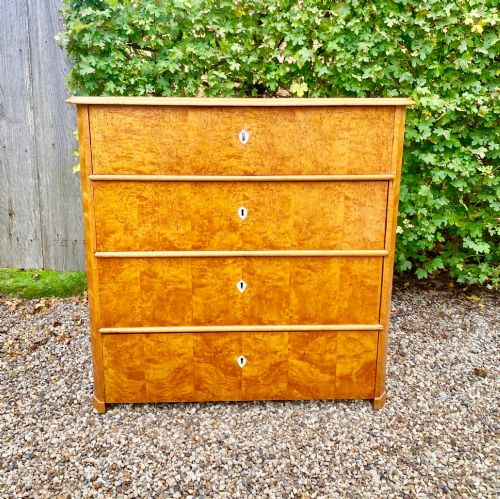
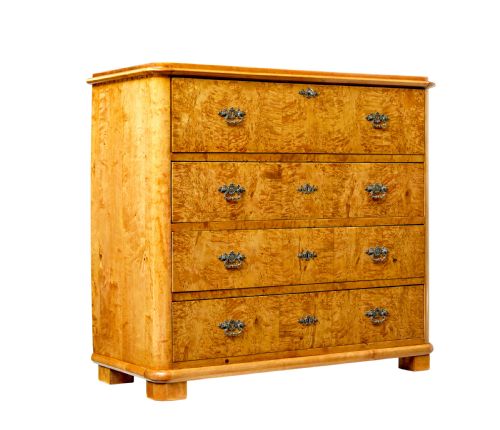
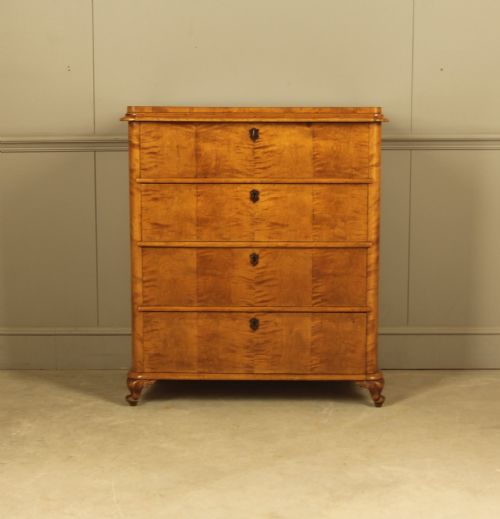
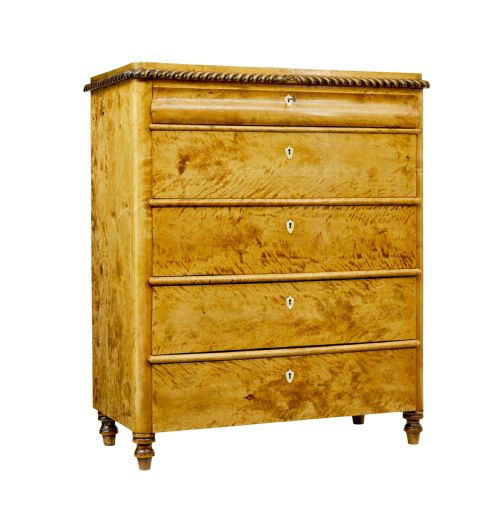
Cabinetmakers constructed these chests using solid pine for internal carcases and secondary woods, applying striking veneers to the primary surfaces. Birch, satin birch, tiger birch, flame birch, and burr birch formed the exterior decorative layers, selected for their dramatic natural figures.
Surfaces were frequently polished to highlight the chatoyant qualities of the timber grain, particularly on flame and tiger birch examples. Hardware typically included brass fittings, while bone details occasionally appeared on specialised interior components.
Joinery methods combined traditional carcase construction with precise veneering techniques to wrap drawer fronts and panels in uninterrupted grain patterns.
Cabinetmakers occasionally incorporated hidden secret compartments inside secretaire drawers to keep private correspondence safe from wandering eyes.
Distinctions in quality
Quality in these pieces depends heavily on the selection and matching of the wood veneer across the drawer fronts. Fine examples display continuous flame or tiger birch figuring that flows symmetrically from drawer to drawer, demonstrating deliberate planning by the cabinetmaker.
The sophistication of the internal compartments, such as fitted secretaire drawers with small pigeonholes and central cupboards, separates standard utility pieces from higher-grade workshop production. Structural integrity in the drawer runners and the crispness of any carved or inlaid decoration further define the tier of the piece.
The 19th Century Birch Commode Glossary
- Biedermeier
- A dominant style in Central Europe and Scandinavia during the mid 19th century, prioritising clean lines and polished veneers over heavy ornamentation.
- Secretaire
- A chest of drawers featuring a pull-down desk flap that conceals a fitted interior of small drawers and compartments.
- Flame Birch
- Timber veneer cut to reveal a distinctive undulating grain pattern that resembles flickering flames across the surface.
- Caddy Top
- A raised, moulded tabletop profile with rounded or stepped edges frequently found on case furniture of this period.
- Tiger Birch
- Wood marked with contrasting stripes and bands that mimic the coat of a tiger, prized for decorative cabinetwork.
19th Century Birch Commode: Frequently Asked Questions
What is a birch commode?
A birch commode is a chest of drawers or storage cabinet made from birch timber, frequently associated with 19th-century Scandinavian and Biedermeier design.
These pieces function as practical bedroom or living room storage while serving as decorative focal points through their distinctive wood grain.
How do I identify a Biedermeier chest?
Biedermeier chests are characterised by restrained neoclassical forms, smooth unadorned surfaces, and prominent use of native wood veneers like birch.
They generally lack heavy carving, relying instead on the natural beauty of the timber grain to provide visual interest.
What is tiger birch?
Tiger birch is a variant of birch wood featuring natural contrasting stripes that resemble animal markings. Cabinetmakers selected this figured timber specifically for drawer fronts and primary display surfaces.
It creates a striking visual texture that defines many mid-19th-century Scandinavian pieces.
How were these chests used?
These pieces served primarily for domestic storage, holding clothing, linens, and personal items in bedrooms and private chambers. Secretaire variants also provided a dedicated writing surface for correspondence and household administration.
Their substantial surfaces often held decorative objects or washstand basins depending on the specific model.