




19th Century Swedish Bureau
A 19th century swedish bureau provides practical storage and a writing surface, bringing refined Scandinavian design into a room.
19th Century Swedish Bureau
A 19th century swedish bureau encompasses versatile secretaires, writing desks, and chests of drawers originating from Scandinavia. These pieces serve as both functional work spaces and storage furniture.
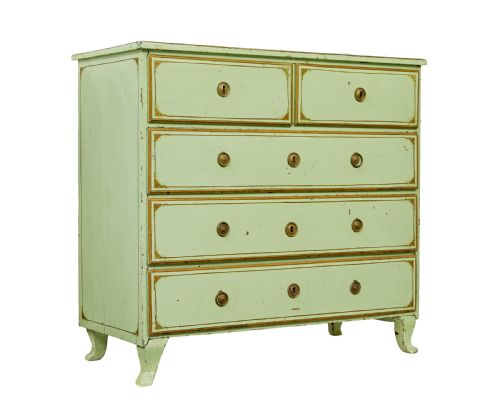
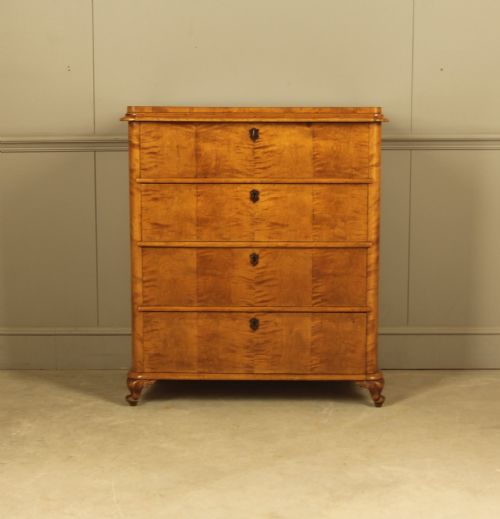
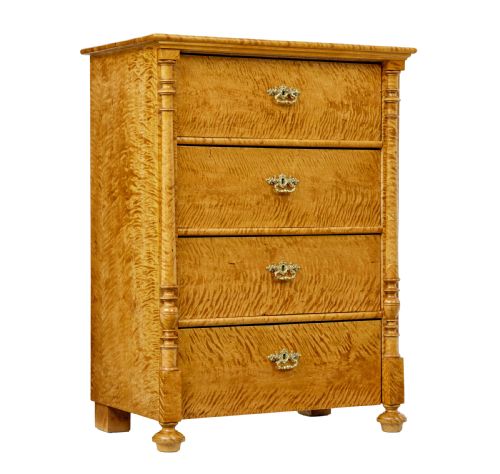
The versions most commonly met on this page include birch and painted pine chests of drawers alongside fitted secretaires. Styles range from simple country pieces to polished Biedermeier and Empire revival designs.
Originating across the nineteenth century, these items reflect the practical domestic needs of Swedish homes. They balance utility with distinct regional aesthetic movements.
What varies in quality
The selection of timber grain and veneer determines much of the visual appeal, with highly figured masur and flame birch marking out more ambitious cabinet work. Plain painted pine pieces represent a simpler, more utilitarian tradition.
Stylistic ambition also divides the range, moving from straightforward Scandinavian country items to sophisticated Biedermeier and Baroque revival forms with complex internal fittings.
The surviving pieces span multiple design movements, including Gustavian, Biedermeier, Baroque revival, and Scandinavian country styles.
The 19th Century Swedish Bureau Glossary
- Secretaire
- A desk featuring a fold-down or pull-out writing flap that conceals small drawers and pigeonholes. This form combines writing utility with drawer storage.
- Biedermeier
- A central European style emphasising clean lines and minimal ornamentation that became particularly popular in Sweden during the nineteenth century. It relies on the natural beauty of wood grain rather than carved decoration.
- Masur Birch
- A decorative timber showing twisted, undulating growth patterns that create a mottled appearance. Cabinetmakers utilised this wood for veneering drawer fronts.
- Escritoire
- A writing desk or cabinet designed for correspondence and paperwork. These units often include specialised compartments for letters and writing implements.
- Caddy Top
- A raised, stepped moulding along the upper edge of a chest of drawers. This detail adds architectural definition to the top profile.
19th Century Swedish Bureau: Frequently Asked Questions
How do I care for a painted pine chest?
Keep painted wooden furniture away from direct sunlight and heat sources to prevent the finish from drying and cracking. Dust regularly with a dry cloth and avoid harsh chemical cleaners.
Wax or polish should only be used if the specific painted surface is sealed and suitable for it.
Where were these pieces used in the home?
Nineteenth-century Swedish households placed these items in bedrooms, studies, and reception rooms. They served as primary storage for clothing, linens, and personal correspondence.
The writing flaps provided a private space for managing household accounts and writing letters.
How do I identify a Biedermeier piece?
Biedermeier furniture is characterised by restrained neoclassical forms and smooth wood surfaces without heavy carving. The focus rests entirely on the grain of woods like birch and walnut.
Hardware remains minimal to let the polished timber dominate the appearance.