

Carved Giltwood Hall Table
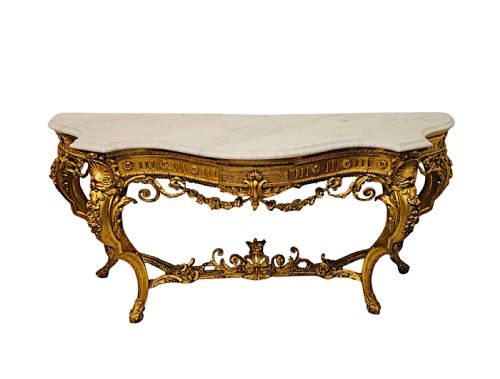
A carved giltwood hall table brings gilded luxury and heavy marble surfaces to an interior, built for grand hallways and principal reception rooms.

Carved Giltwood Hall Table
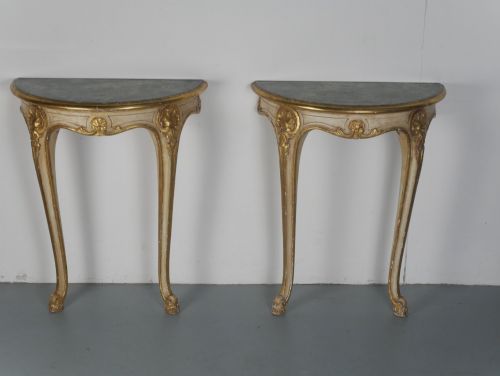
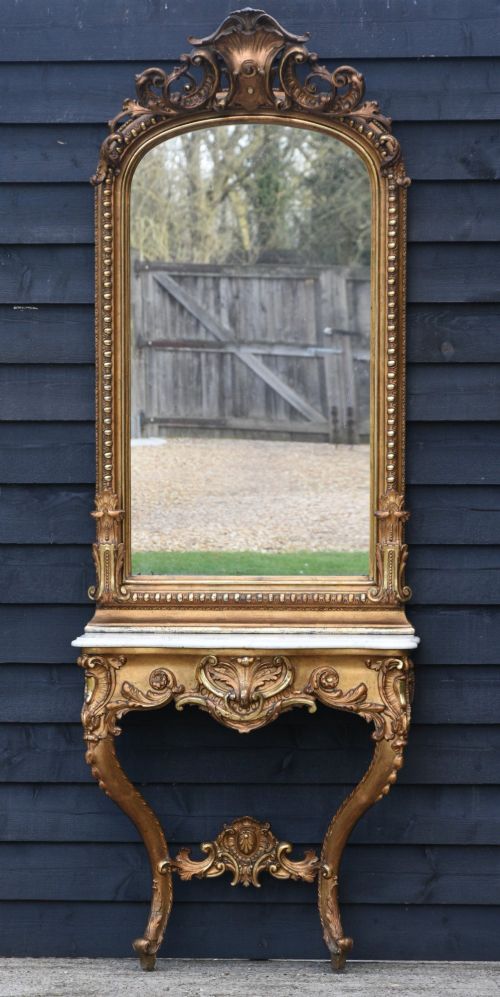
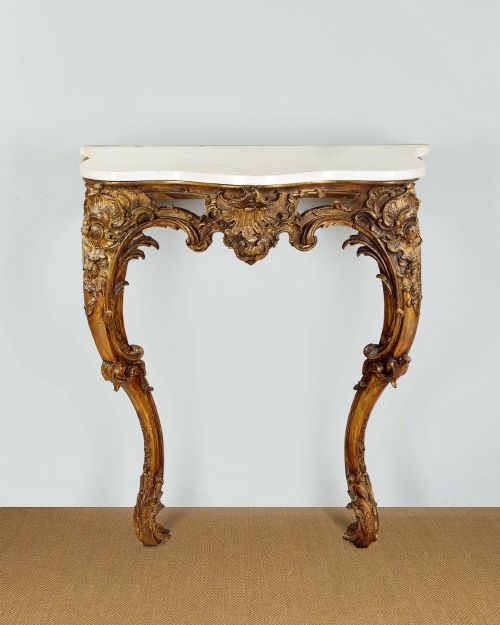
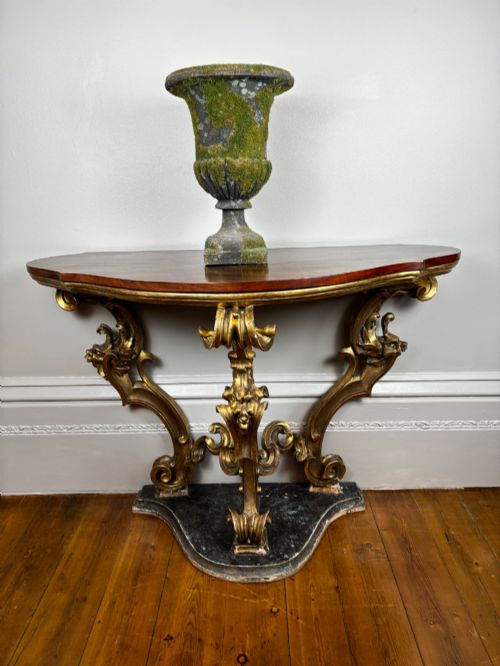
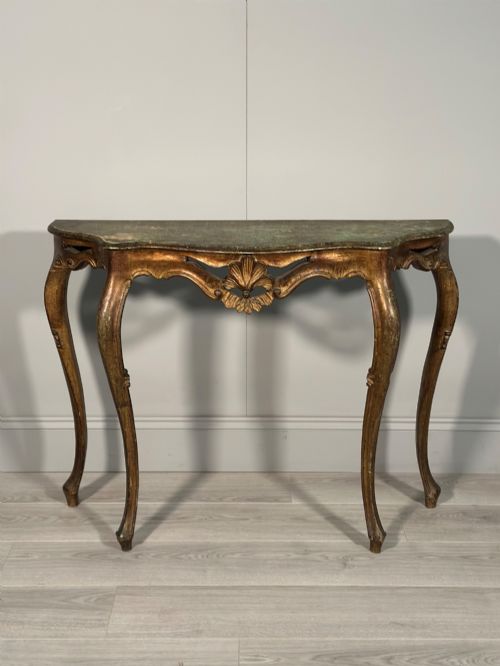
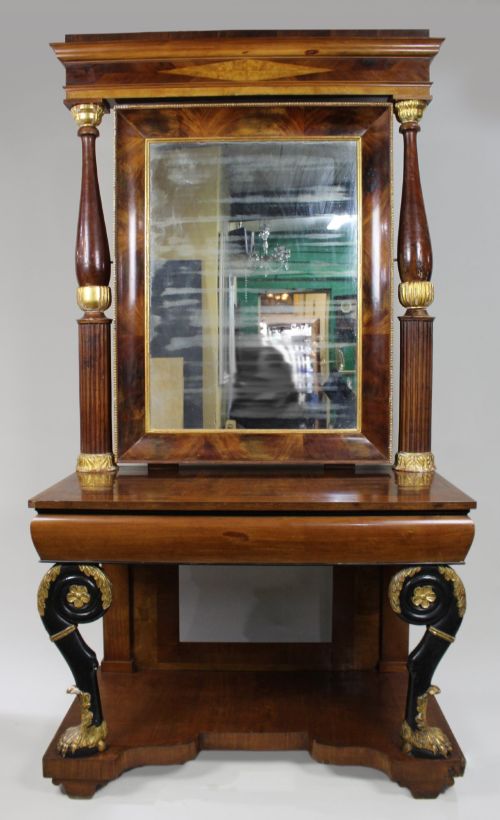
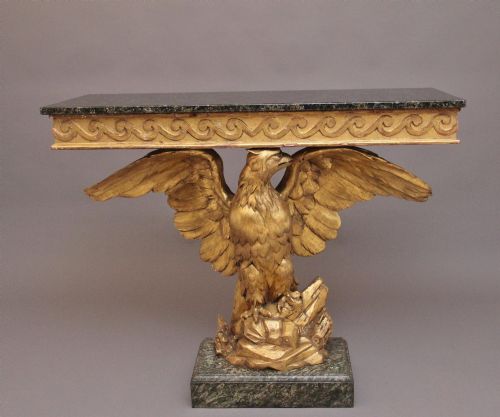
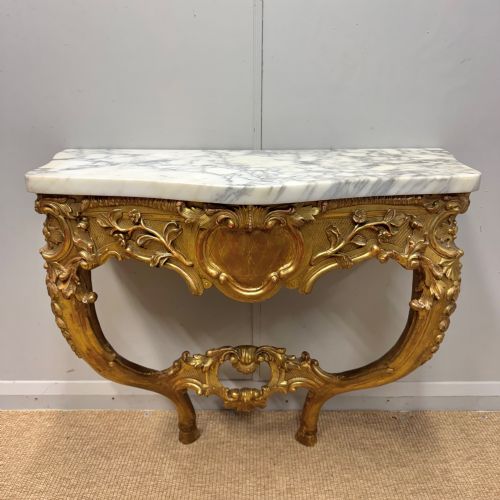
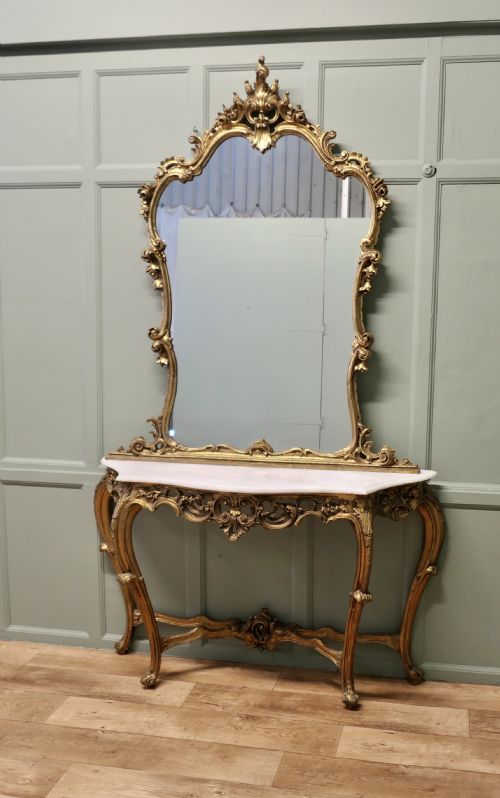
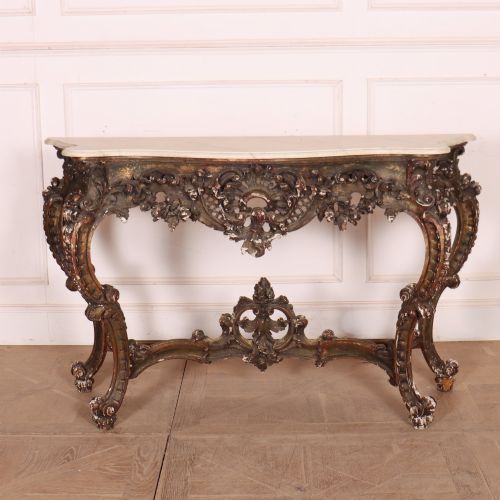
A carved giltwood hall table most commonly appears as a console table designed to stand against a wall, frequently paired with a matching mirror or topped with heavy marble. The selection spans the eighteenth century through to the early twentieth century, taking in Regency, Victorian, and Edwardian interpretations alongside continental European revivals.
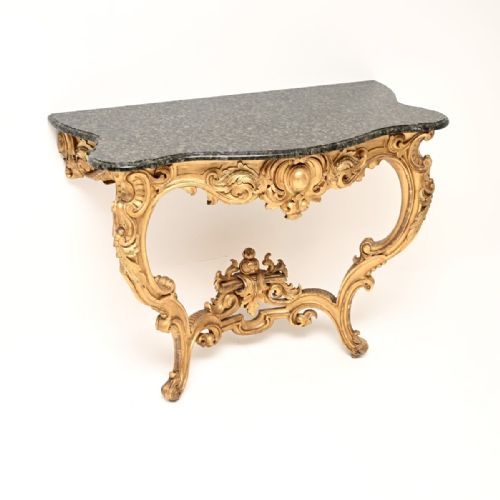
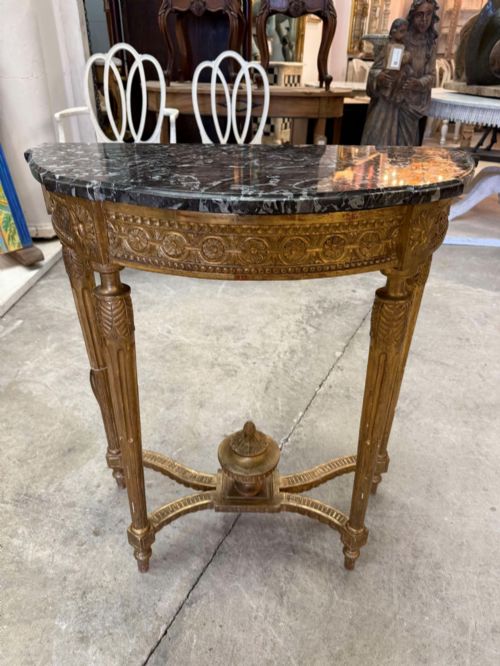
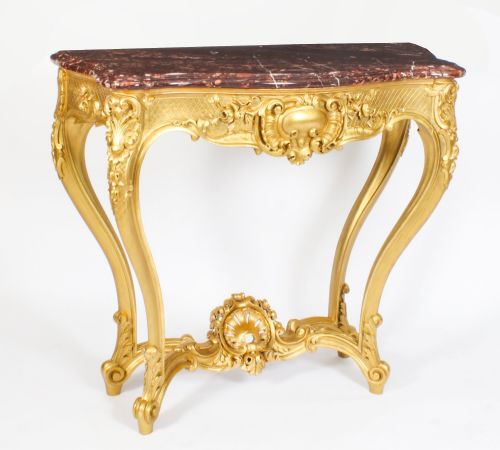
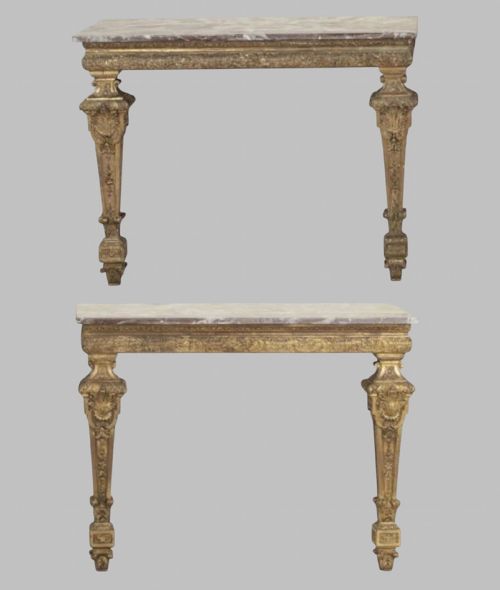
Makers drew on French Rococo, Italian Baroque, and Neoclassical styles, producing serpentine fronts, demi-lune shapes, and rectilinear console designs. Alongside console tables, the inventory includes occasional centre tables and side tables intended for prominent placement in a hall or drawing room.
Materials and construction
The primary wooden structures utilise timber, oak, and other woods as a base for intricate carving and gesso application. Craftsmen laid gold leaf and paint over the prepared gesso and carved wood to achieve the characteristic gilded surface.
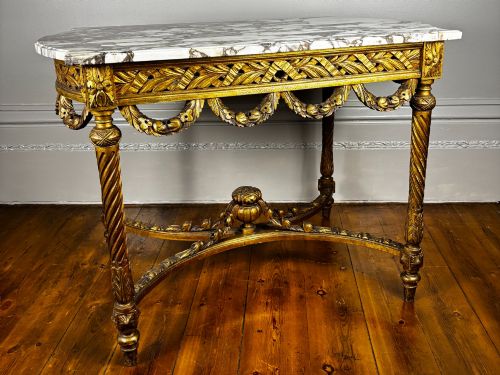
Heavy stone tops in white Carrara, Siena, Breccia, and Rouge marble sit directly upon the carved frames, often secured to accommodate the weight of the slab. Mirror plates accompany several of the console tables, framed in matching carved giltwood.
Carved Giltwood Hall Table Retail Price Guide 2026
Typical asking prices for carved giltwood hall table among the pieces listed under this phrase on Sellingantiques today, from the lower quarter to the upper quarter. They describe what is for sale here now, not the wider market.
Several Italian Baroque tables arrive equipped with carved lion’s paw supports, ensuring the furniture stands firmly on beastly feet.
The markers of execution
Quality rests in the depth and crispness of the hand carving upon the wooden frames and the precision of the gesso application beneath the gold leaf. Tables showing fluid scrolls, defined acanthus leaves, and vigorous figural supports demonstrate superior workshop output.
The choice and thickness of the marble top also dictate standard, with slabs displaying rich natural veining and precise edge profiling marking out the more ambitious pieces.
The Carved Giltwood Hall Table Glossary
- Giltwood
- Wood that has been coated with gold leaf over a prepared surface. This finish defines the reflective appearance of these tables.
- Console table
- A table designed to be fixed against a wall, frequently supported by ornate legs or brackets at the front. They often require fastening to the wall for stability.
- Gesso
- A plaster mixture applied to wood to provide a smooth base for gilding and carving. It allows craftsmen to achieve sharp relief details.
- Demi-lune
- A half-moon shape used for table tops and frames. This form fits flush against a wall in narrow hallways.
- Serpentine
- A furniture outline characterised by a wavy or curving front edge. It adds visual movement to eighteenth and nineteenth-century case pieces.
Carved Giltwood Hall Table: Frequently Asked Questions
How do I style a console table?
Place the table flat against a primary hallway wall, allowing the marble top and gilded frame to anchor the entrance space. Pair it with a matching wall mirror or hang artwork above to balance the proportions.
Keep decorative objects on the surface minimal so the carved wooden details and stone veining remain visible. Ensure the piece is properly secured to the wall if it carries heavy marble weight.
What is the difference between a console and centre table?
A console table is built with a flat back specifically to stand flush against a wall, often supported by front legs and wall brackets. A centre table is finished on all four sides so it can stand independently in the middle of a room.
Console tables dominate hallway placements, whereas centre tables suit open spaces where people walk around the perimeter.
How do I identify a Neoclassical table?
Neoclassical pieces rely on classical architectural motifs, straight tapering legs, and restrained symmetry rather than asymmetrical curves. Look for restrained leaf carving, urn motifs, and geometric discipline in the frame design.
These designs often date from the late eighteenth century or later revival periods around nineteen hundred.
How should I care for giltwood and marble?
Dust giltwood gently with a dry, soft brush to protect the delicate gold leaf surface from abrasion. Avoid liquid cleaners and polishes that can lift or dull the historic gilding.
Clean marble tops using a damp cloth and mild soap, drying the stone immediately to prevent water marks. Protect the stone from acidic spills like wine or citrus.