
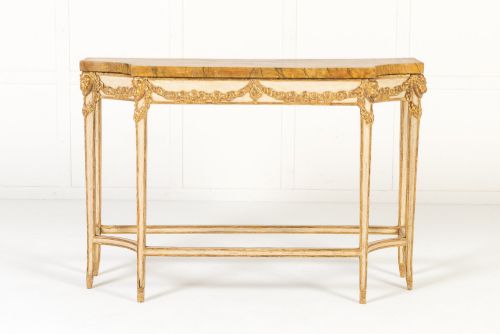
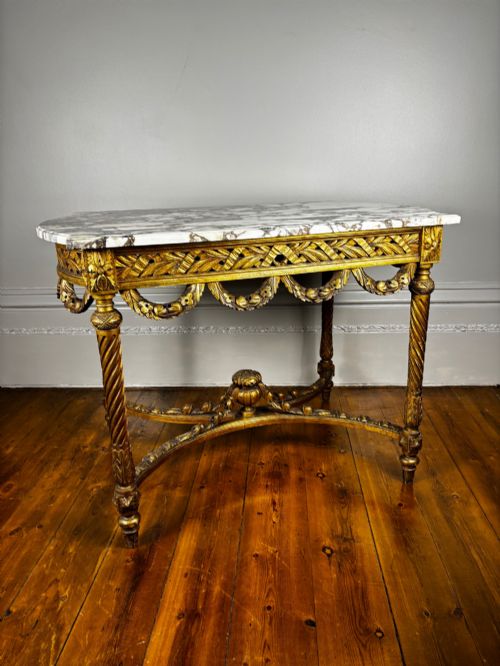
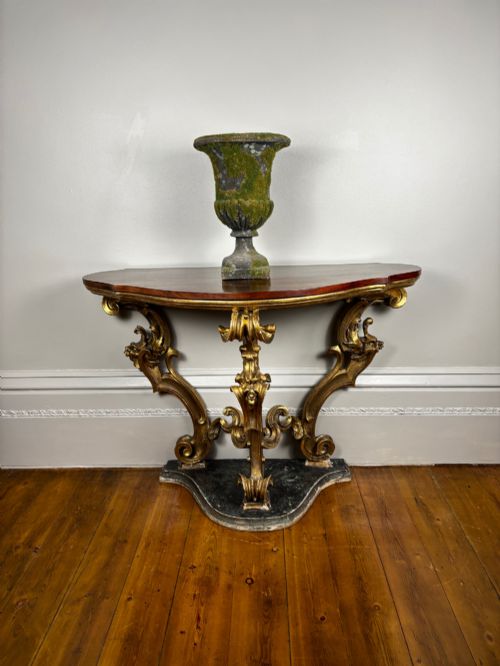
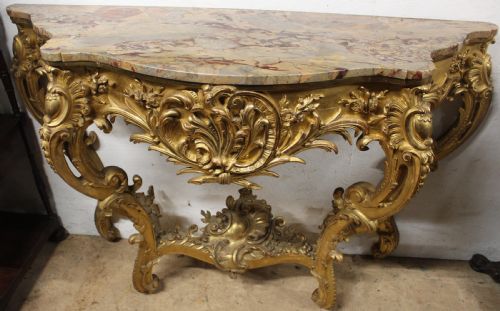
Carved Giltwood Console Table
A carved giltwood console table brings a grand architectural presence to an interior through gilded ornament and stone. This selection spans French and Italian workshops from the eighteenth century onwards.
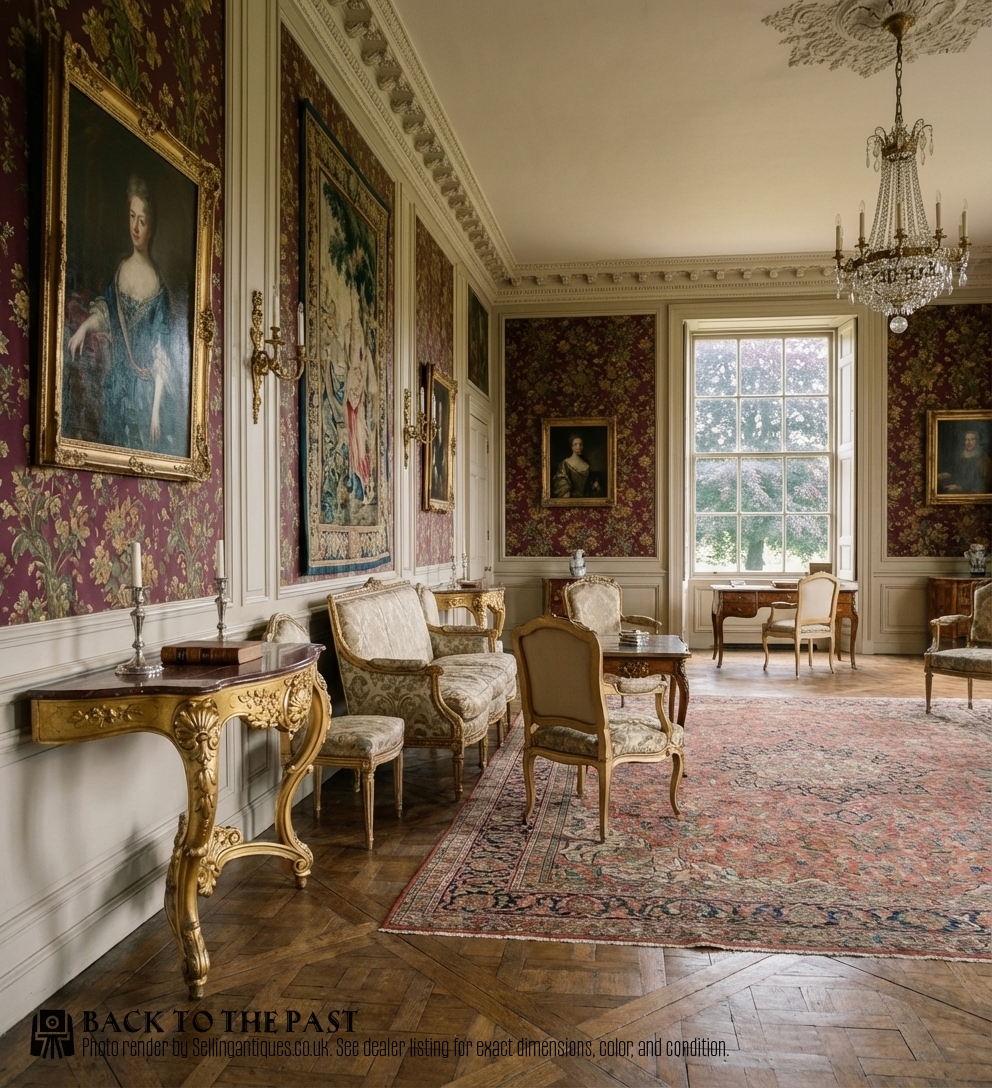
Carved Giltwood Console Table
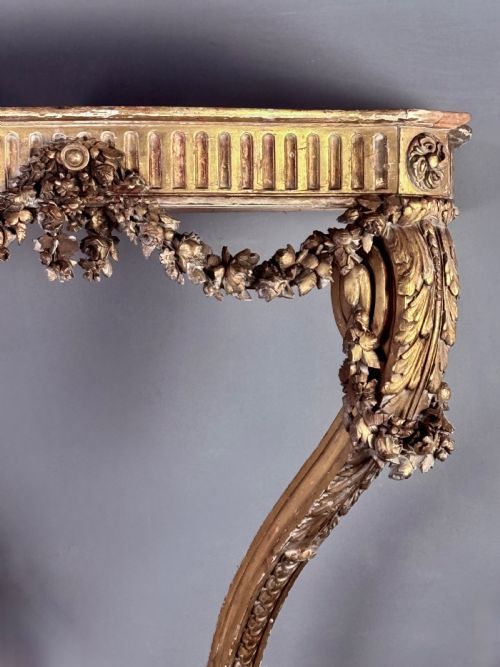
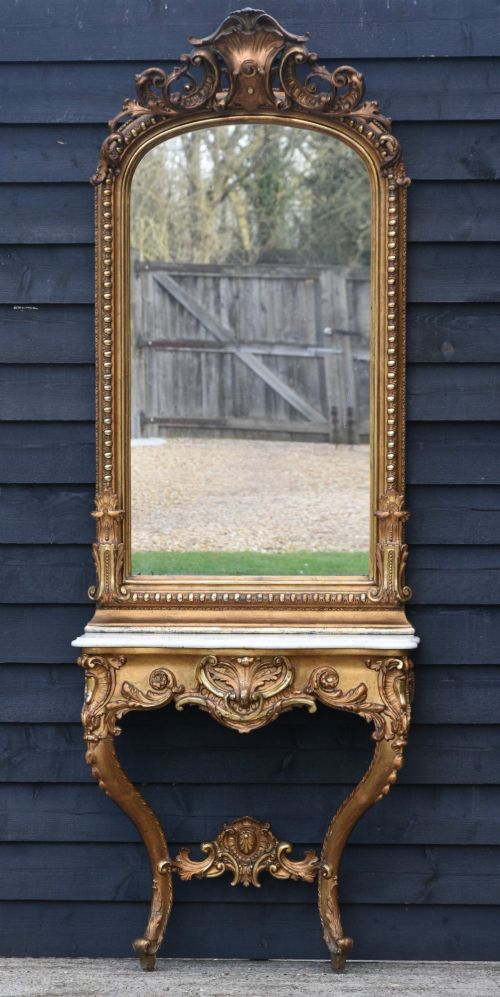
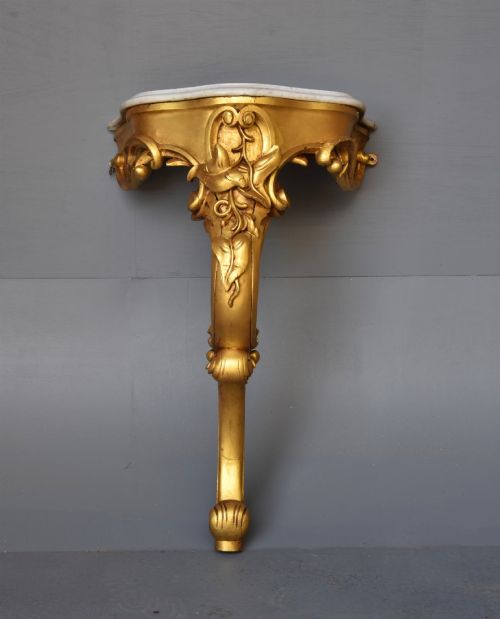
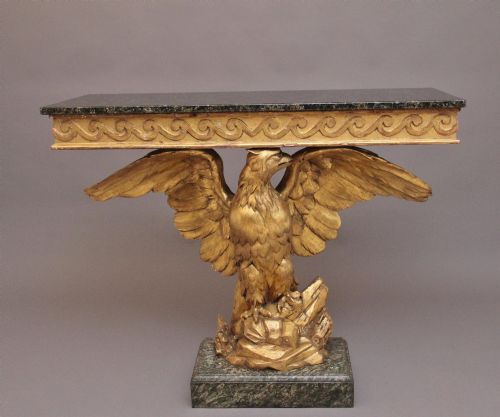
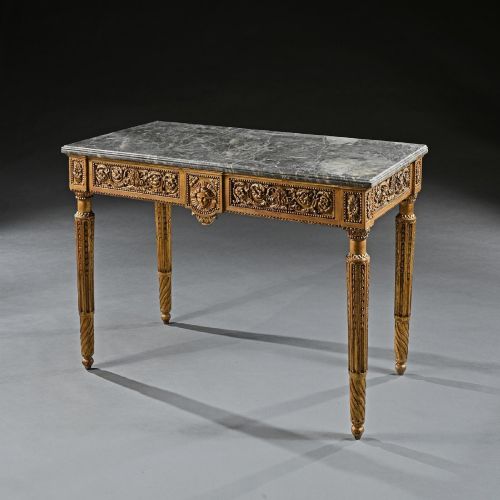
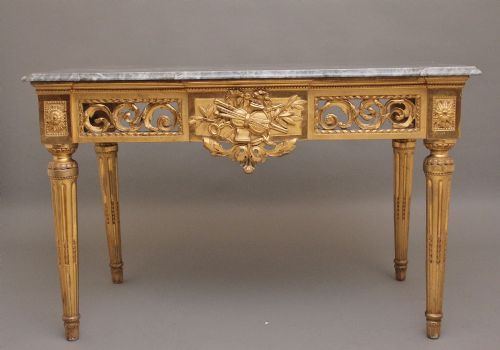
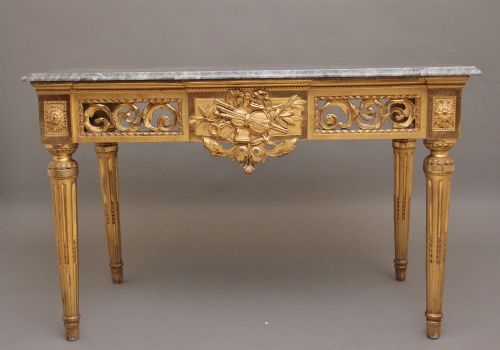
A carved giltwood console table is designed to stand against a wall, frequently paired with a matching pier mirror to reflect light within a grand reception room or hallway. The listings include examples from eighteenth-century Italy and France, alongside later nineteenth-century revivals and early twentieth-century interpretations.
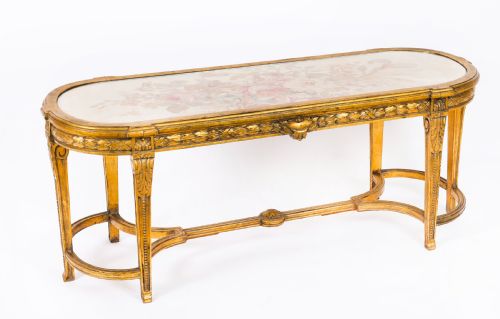
While traditional console tables dominate, variations encompass side tables, centre tables, and occasional writing desks, often retaining the characteristic wall-mounted or bracketed stance of the form. Many pieces incorporate heavy stone surfaces, pairing ornate wooden framing with shaped marble tops.
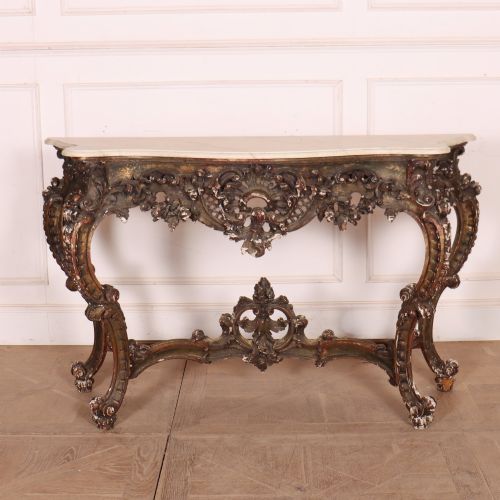
French and Italian stylistic influences prevail, moving from exuberant Rococo and Baroque revival designs to restrained Neoclassical symmetry. Buyers encounter both single tables and matched pairs, ranging from compact serpentine forms to monumental scaled pieces.
Materials and Construction
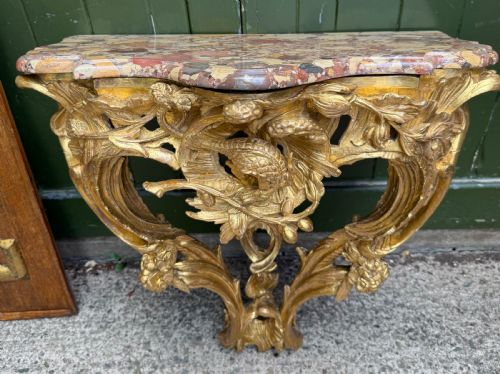
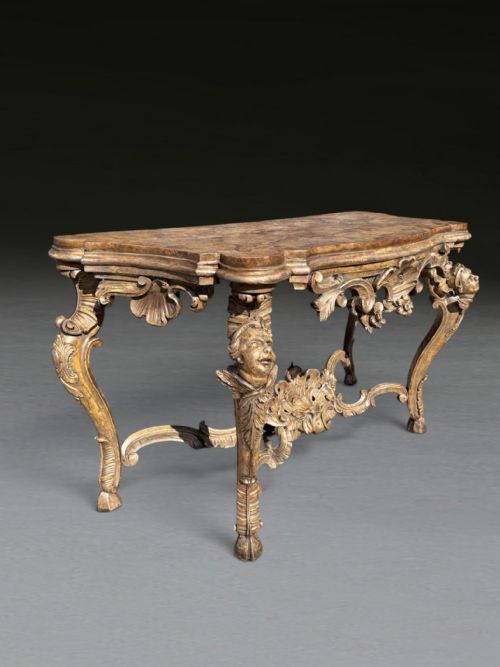
The fabrication relies on carved wood foundations, often overlaid with gesso to create a smooth preparatory layer for subsequent gilding with gold leaf. This combination allows for deep, intricate relief carving along the aprons and cabriole legs.
Heavily figured marble tops, including varieties such as breccia and sienna, sit upon the wooden bases to provide a durable and luxurious upper surface. Paint and painted wood elements occasionally complement the gilding, particularly on regional Italian and French pieces.
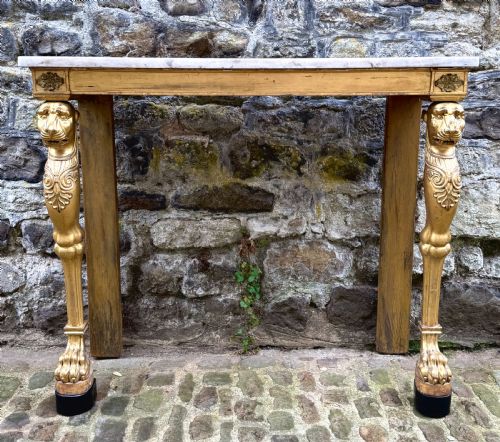
Several Italian tables lean into the dramatic with carved lion’s paw supports ready to hold up the heaviest marble.
Design and Execution
The depth and crispness of the hand-carving distinguish finer examples from simpler production, particularly in the rendering of scrolling foliage, figurative elements, and lion’s paw supports. Superior pieces exhibit confident proportions and harmonious integration between the wooden base and the fitted marble slab.
The application of the gold leaf and the preservation of the underlying gesso layers determine the visual resonance of the surface over centuries. Original matching elements, such as paired pier mirrors or untouched painted decoration, elevate the historical integrity of the piece.
Felix-Alfred Ternisien
The Carved Giltwood Console Table Glossary
- Giltwood
- Wood that has been coated with gold leaf applied over a prepared gesso ground. This finish provides a reflective surface that catches interior candlelight or daylight.
- Console table
- A table supported by wall brackets or console legs, traditionally designed to stand flat against a wall. They frequently feature decorative aprons echoing architectural woodwork.
- Pier mirror
- A tall mirror designed to hang on the wall space between windows, frequently positioned directly above a console table. The combination creates a unified decorative scheme.
- Breccia
- A type of variegated marble composed of angular rock fragments embedded in a finer matrix. It appears frequently as the contrasting top surface on Italian and French tables.
- Rococo revival
- A nineteenth-century design movement that reinterprets the asymmetric scrolls, shell motifs, and naturalistic curves of the eighteenth-century French style.
Carved Giltwood Console Table: Frequently Asked Questions
Where should I place a console table?
These tables suit hallways, drawing rooms, or living areas where wall space allows them to anchor a room visually. Their shallow depth ensures they do not obstruct walkways while providing a surface for display.
Pairing a table with a matching wall-hung mirror enhances the vertical proportion of a room, echoing the traditional eighteenth-century arrangement found in grand interiors.
How do I care for giltwood furniture?
Giltwood requires gentle maintenance to protect the delicate gold leaf and gesso layers from moisture and abrasion. Dusting should be performed with a soft, dry brush rather than liquid cleaners.
Keeping the table away from direct heat sources and strong sunlight preserves the stability of the timber frame and the brilliance of the gilded surface.
Are the marble tops original?
Many tables retain their heavy stone slabs, which include varieties such as sienna and breccia marble fitted specifically to the wooden base. The weight of the stone typically keeps it securely in place without permanent fixings.
Examining the underside and the seated edge reveals how the marble interacts with the wooden framing, helping to confirm its period context.
How do I distinguish eighteenth-century pieces from later revivals?
Eighteenth-century examples display hand-cut joinery, aged timber patination, and deeply carved gesso details that reflect the working methods of the period. Tool marks and the natural wear of the wood provide clues to their age.
Nineteenth-century revival pieces often feature heavier proportions and standardised construction techniques associated with revival movements like Rococo Revival or Napoleon III production.