




Carved Gilt Bench
A carved gilt bench brings gilded warmth and seating presence to a room, drawing on centuries of French and English revival design.
Carved Gilt Bench
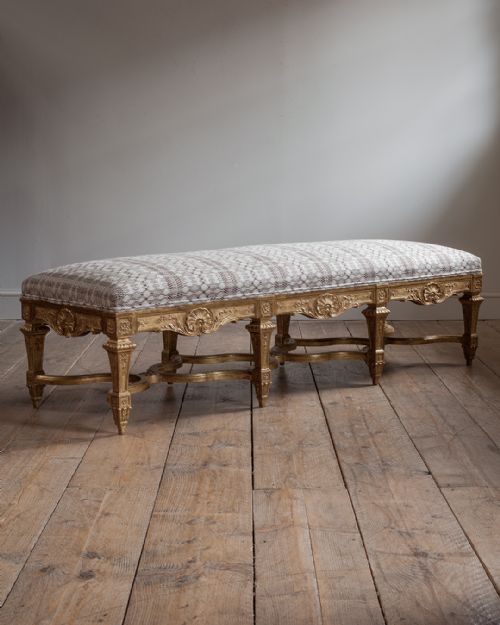
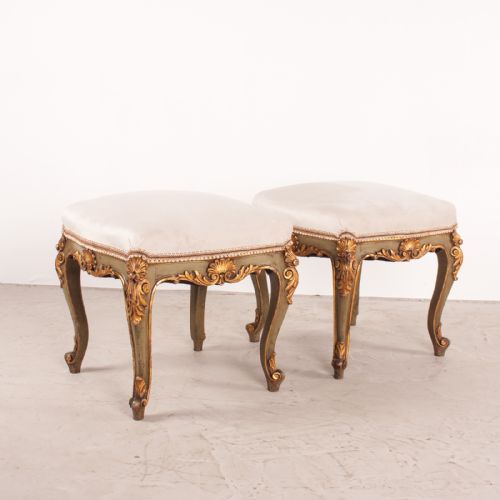
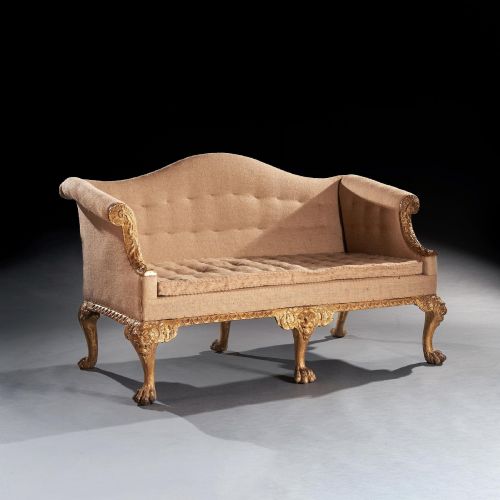
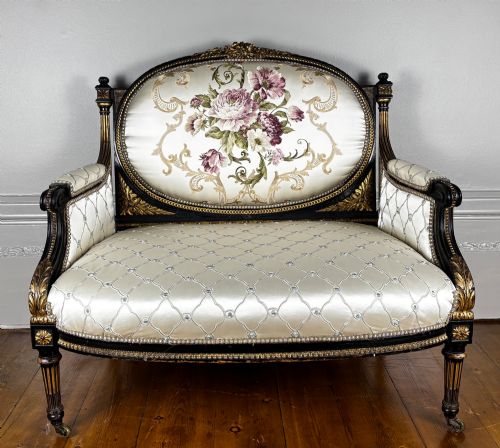
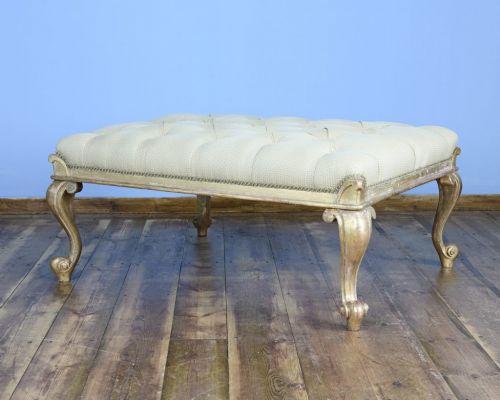
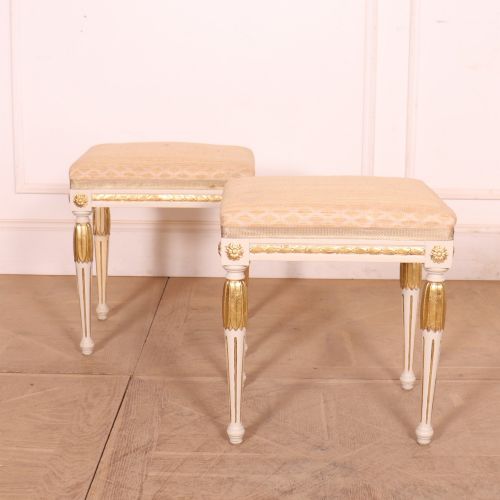
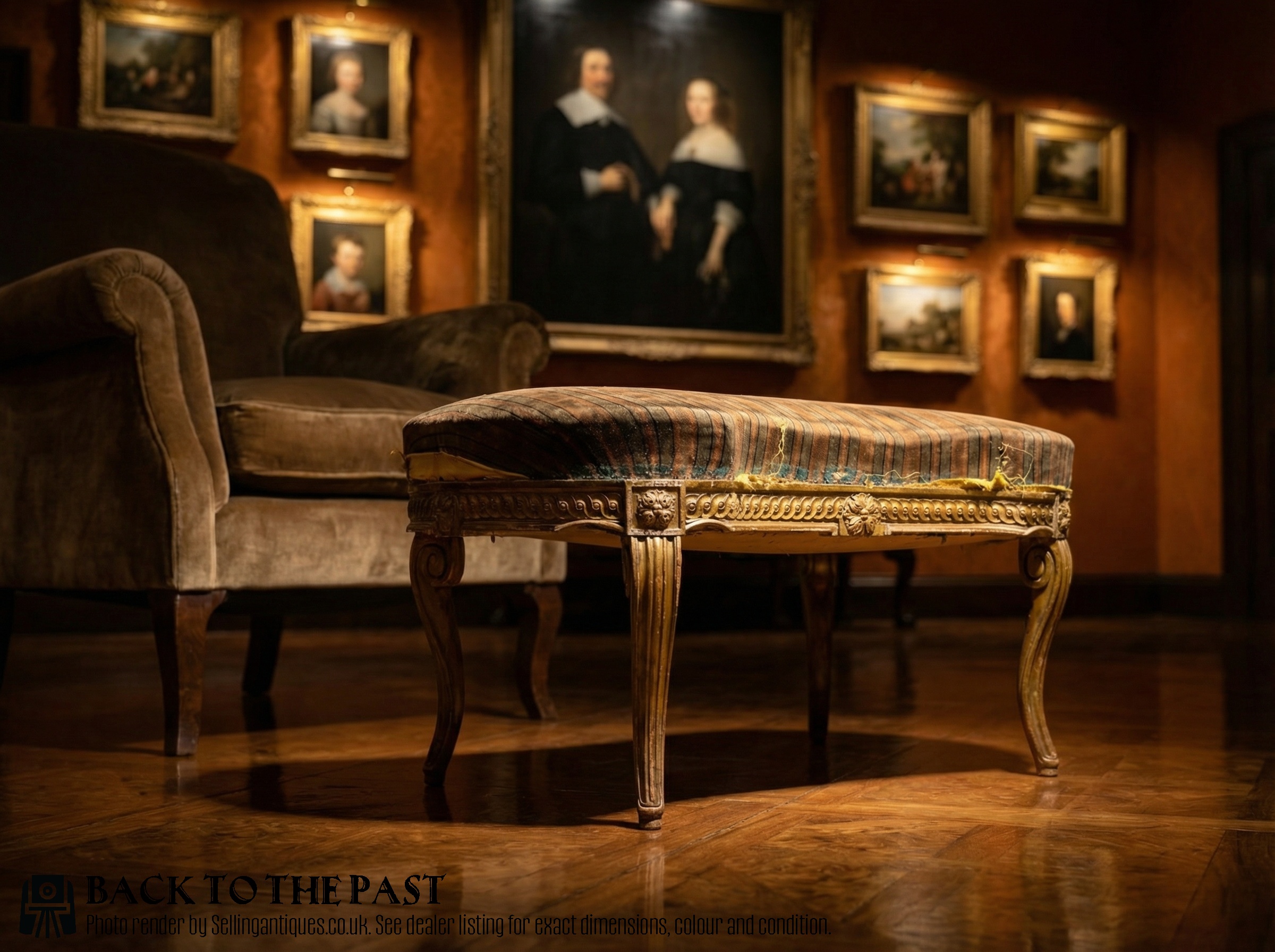
A carved gilt bench encompasses a range of seating forms designed for formal rooms, appearing primarily as French and English settees, window seats, and stools from the eighteenth and nineteenth centuries. Buyers searching for a carved gilt bench frequently encounter pieces executed in revival styles such as Louis XV and Louis XVI, alongside Regency and Neoclassical interpretations.
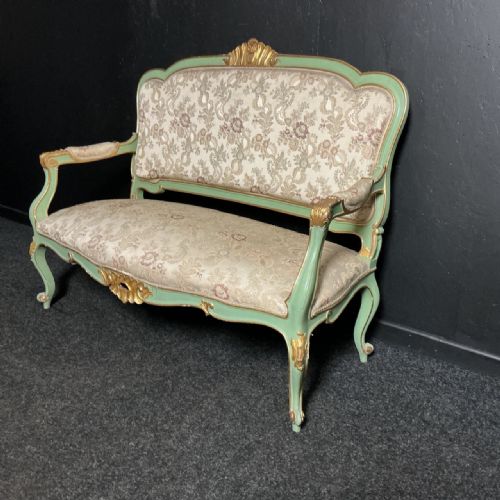
The selection ranges from grand country house sofas upholstered in silk and fabric to smaller French canapés, duet stools, and Italian gesso curule stools. Wood structures receive giltwood, gold leaf, painted wood, or parcel gilt treatments, often paired with cane or textile seats.
Origins span France, England, Italy, and Sweden, with nineteenth-century interpretations dominating the available forms alongside eighteenth-century and twentieth-century examples.
What varies in quality
The refinement of the wood carving dictates the initial visual impact, distinguishing fluid, hand-shaped foliage and crisp mouldings from mechanical or shallow execution. The application of gold leaf and gesso reveals the artisan's hand, where burnished surfaces interact with light differently than flat metallic paint.
Proportion and scale separate standard seating from exceptional examples, particularly in the sweep of a settee back or the balanced geometry of an X-frame curule stool. The integrity of the underlying timber frame and the quality of the surviving upholstery materials determine the overall execution.
Several stools double as historical workout equipment for nineteenth-century aristocrats who misjudged their fencing stamina.
Giles Grendey·Miles & Edwards·John Tesch
The Carved Gilt Bench Glossary
- Giltwood
- Timber coated with gold leaf or gold leaf applied over a prepared gesso ground. This finish provides the characteristic metallic brilliance seen on revival and neoclassical frames.
- Canapé
- A decorative French upholstered settee with an exposed wooden frame. These pieces often feature carved rails and padded backs reflecting Louis XV or Louis XVI aesthetics.
- Curule stool
- An X-shaped seating form derived from ancient Roman magistrate seats. Nineteenth-century interpretations frequently employ gilt finishes and elaborate cross-frame construction.
- Parcel gilt
- A surface treatment where selected portions of a wooden object are highlighted with gold leaf while the remaining areas display painted or polished wood.
- Japanned
- A European imitation of Asian lacquerwork created using resin varnishes and decorative finishing techniques. This finish appears on English and continental seating from various periods.
Carved Gilt Bench: Frequently Asked Questions
What is a giltwood settee?
A giltwood settee is an upholstered two-seat or multi-seat bench featuring a wooden frame covered in gold leaf. These seating forms served formal reception rooms and parlours.
Craftsmen shaped the timber frames with decorative carvings and applied metallic leaf to create a luxurious appearance suited to period interiors.
How do I identify Louis XV style?
Louis XV style seating displays asymmetrical curves, cabriole legs, and naturalistic floral carvings. The overall silhouette avoids straight lines in favour of flowing contours.
This aesthetic revival emerged strongly during the nineteenth century, producing giltwood canapés and stools inspired by earlier French royal furniture.
Where were window seats placed?
Window seats were designed specifically for placement in deep window bays or hallways. They offered convenient seating while taking up minimal floor space.
These narrow benches often incorporated upholstered tops and carved wooden frames finished in gilt or painted details.