


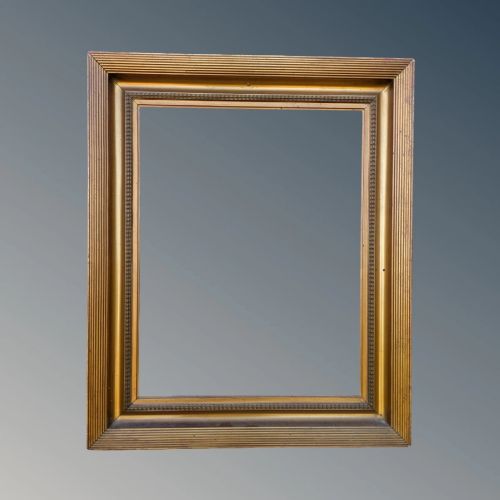

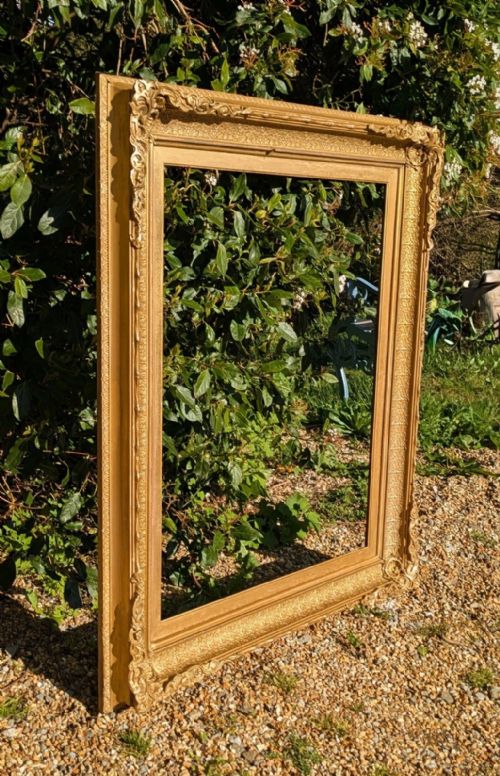

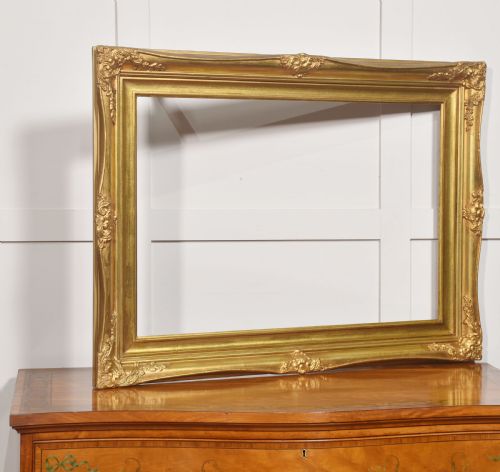
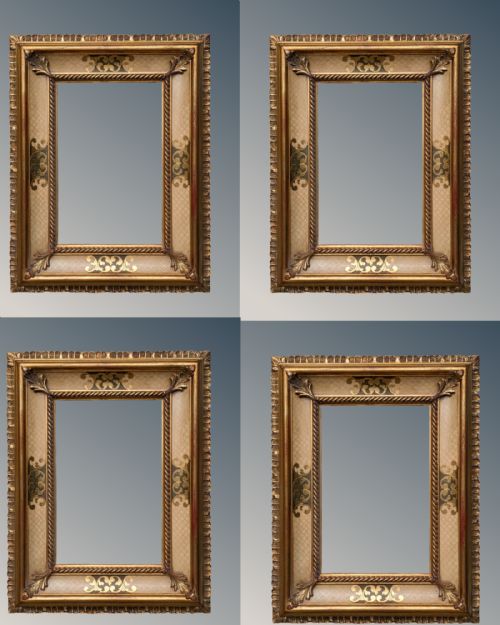
Carved Gilded Picture Frame
A carved gilded picture frame brings warmth and deep reflection to a room, holding centuries of craftsmanship within its luminous borders.
Carved Gilded Picture Frame
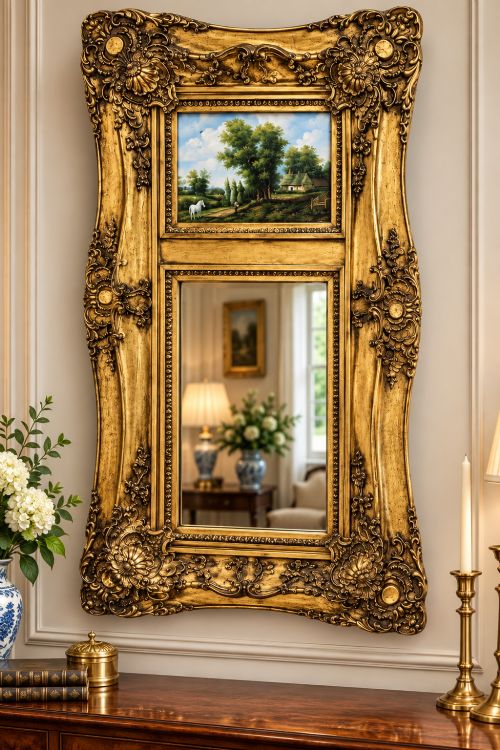
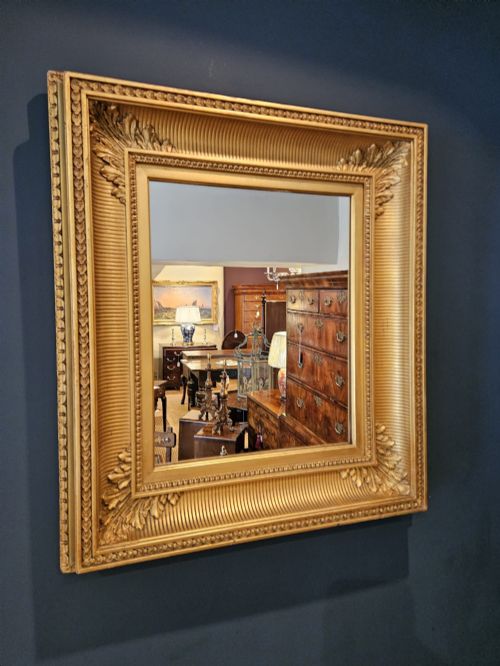
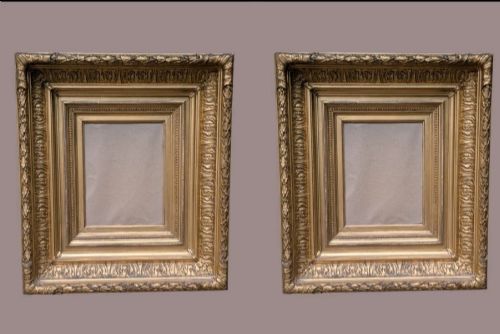
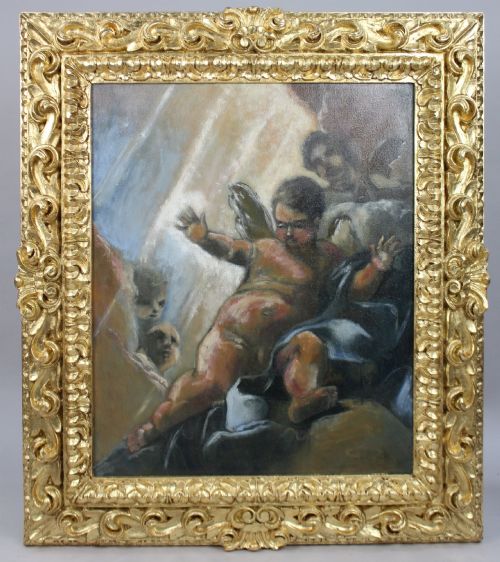
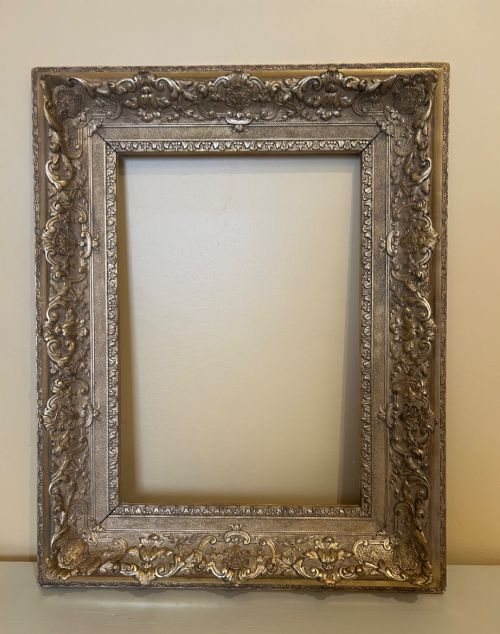
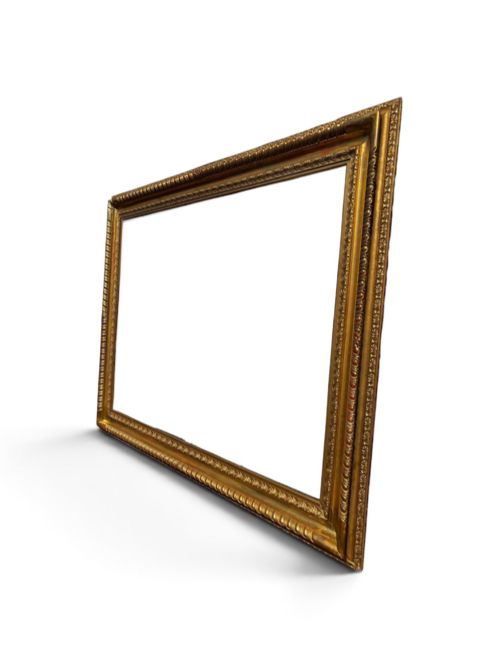
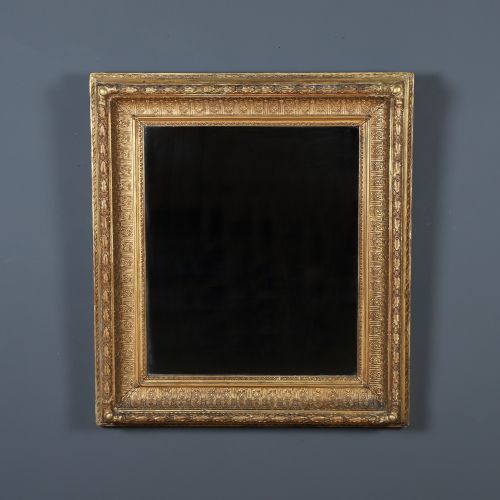
When searching for a carved gilded picture frame, collectors encounter pieces designed to house oil paintings, mirrors, and portraits from various historical epochs. These objects serve as focal points in domestic interiors, combining structural timber or gesso with reflective metallic finishes.
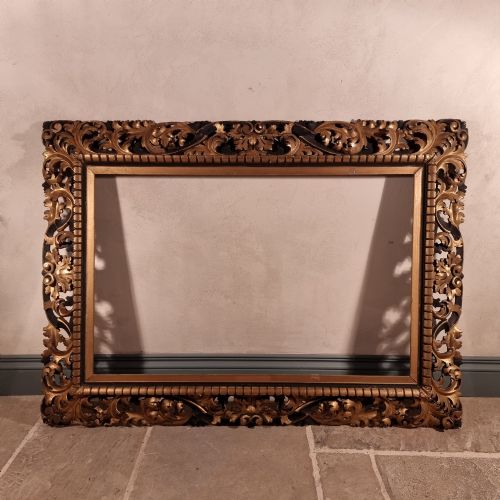
The selections span from seventeenth-century cassetta forms to nineteenth-century revival styles and twentieth-century interpretations. Victorian examples frequently incorporate deep profiles and vegetal decoration, while earlier iterations lean towards Italian Renaissance or Baroque sensibilities.
Most items on offer originate from the nineteenth century, often presenting substantial proportions suited for overmantle mirrors or significant canvas artworks. Buyers also find smaller swept frames and miniature settings designed for intimate portraits.
How they were made
Maker's hands shaped these objects using timber foundations overlaid with prepared gesso layers. Carvers worked directly into the wood or built up intricate relief decoration in plaster before applying surface finishes.
Gilding involved the careful application of thin gold leaf onto a prepared bole, burnishing the metal to achieve either a mirror polish or a matte sheen. Artisans utilised contrasting textures to give depth to acanthus leaves, floral motifs, and scrollwork.
Materials recorded across the inventory include giltwood, gesso, gold leaf, timber, glass, and oil on canvas.
What varies in quality
The definition and crispness of the hand-carved relief dictate the visual success of the piece, separating masterwork ornamentation from mechanical repetition. Depth of moulding and the weight of the timber carcass also determine structural integrity over generations.
The preservation of the original gold leaf and underlying gesso layer dictates historical value and visual harmony. Patina accumulates naturally over decades, whilst poor restoration or heavy regilding obscures the subtleties of the original artisan's hand.
The Carved Gilded Picture Frame Glossary
- Gesso
- A plaster mixture applied to wood frames to provide a smooth, absorbent surface for subsequent gilding and carving. It allows artisans to shape intricate relief details before the application of gold leaf.
- Swept frame
- A frame style featuring dynamic, curving scrollwork and undulating profiles popular during revival periods. The corners and centres typically swell outward with elaborate vegetal or rococo motifs.
- Bole
- A prepared clay layer applied beneath gold leaf to provide a warm reddish or yellow tone to the gilded surface. It also serves as the smooth base required for burnishing the metal.
- Overmantle
- A large mirror or framed artwork designed specifically to hang on the wall directly above a fireplace mantel. These pieces utilise expansive proportions to anchor the surrounding room architecture.
Carved Gilded Picture Frame: Frequently Asked Questions
How do I date a gilded frame?
Dating relies on examining the underlying timber construction, the composition of the gesso, and the specific decorative vocabulary of the period. Stylistic cues such as acanthus leaf proportions or rococo revival symmetry provide further chronological markers.
Secondary indicators include the fastening methods at the corners and the physical wear patterns on the gold leaf. Earlier pieces often reveal hand-tooled preparation layers beneath losses in the metallic finish.
Can I put a modern mirror inside?
Many historical frames arrive housing new glass or serving as wall mirrors rather than holding original oil paintings. Replacing mirror glass is a common practice that adapts these decorative objects for contemporary domestic use.
It remains important to ensure the rebate depth and weight capacity of the antique timber structure safely accommodate the new glass pane. Professional framers can secure the mirror safely without harming the original gesso borders.
What is the difference between gesso and wood frames?
Wood frames rely entirely on carved timber for their decorative surface, whereas gesso frames utilise a sculpted plaster layer over a wooden carcass. Gesso permits sharper, more delicate relief work than carving directly into dense timber.
Combinations of both materials appear frequently, where a solid wooden structure supports built-up gesso ornamentation. Understanding this construction helps identify the period and regional origin of the piece.