


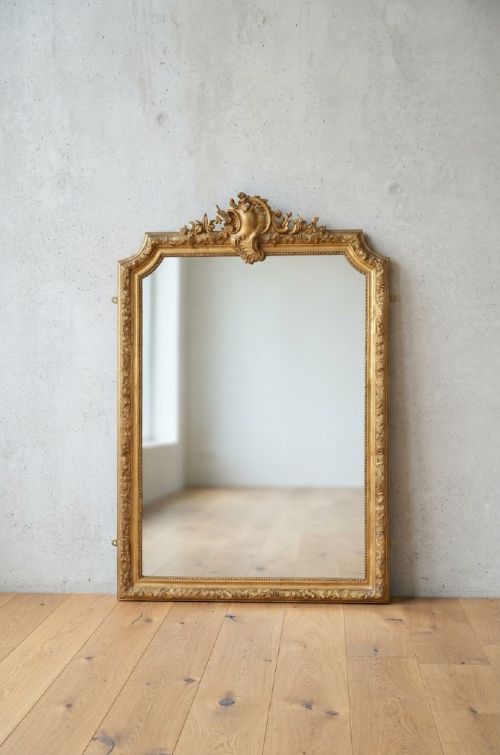
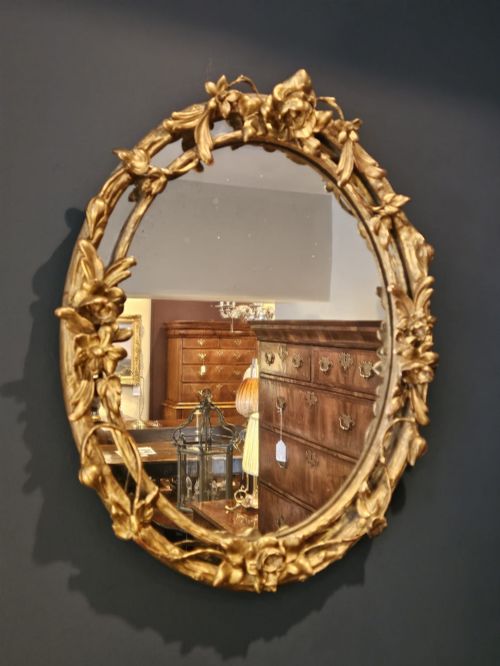
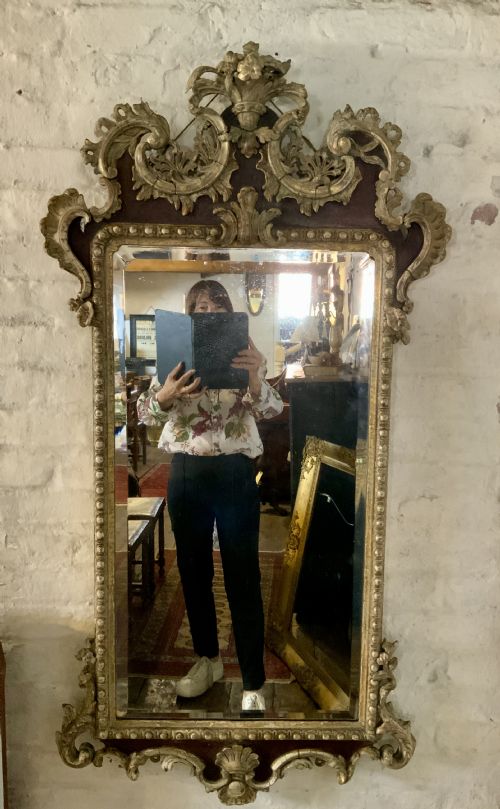
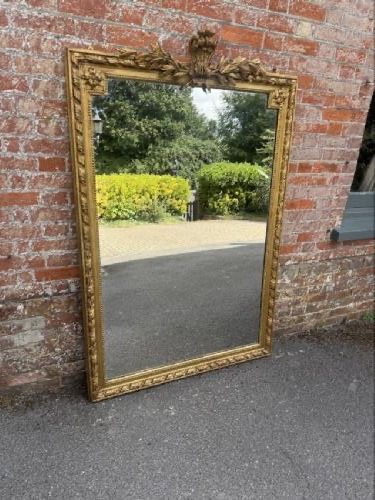
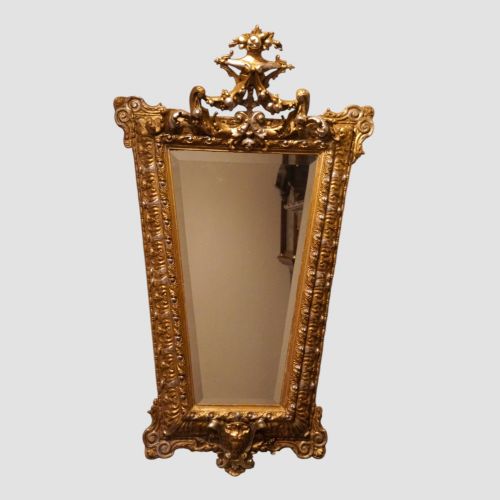
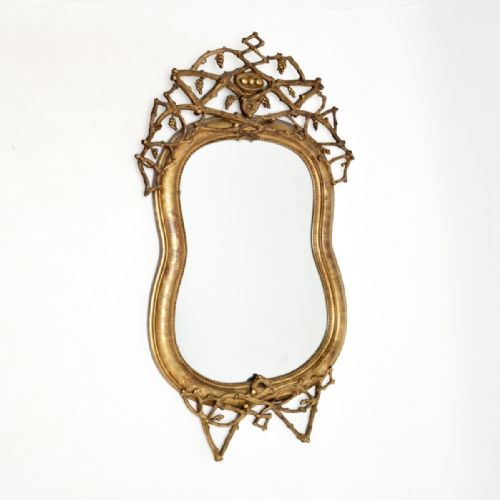
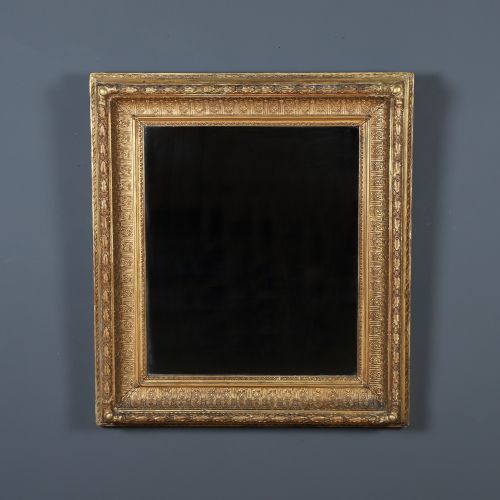

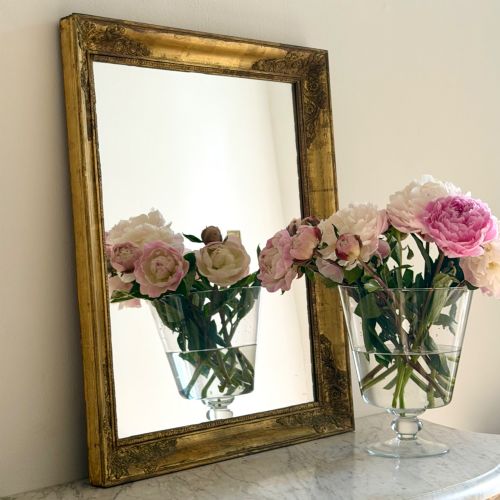
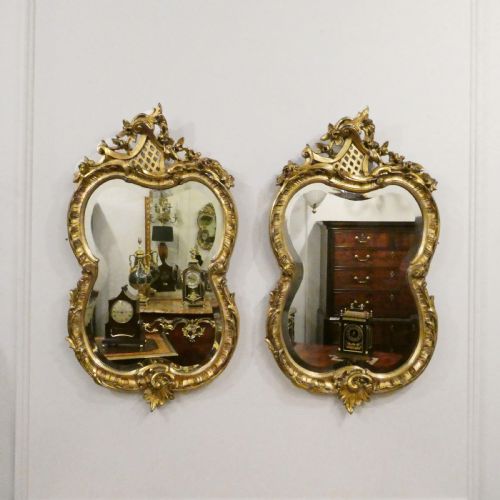


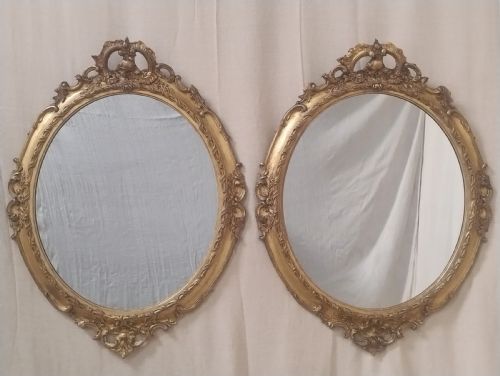
Carved Gilded Accent Mirror
A carved gilded accent mirror brings warmth and reflective depth to a room, drawing the eye with detailed ornamentation and radiant leaf.
Carved Gilded Accent Mirror
A carved gilded accent mirror serves as a decorative focal point in a room, combining reflective glass with ornate wooden frames. When searching for a carved gilded accent mirror, buyers encounter numerous examples originating from the nineteenth century alongside eighteenth-century models and early twentieth-century revivals.
The selections span distinct regional interpretations, notably Italian, French, and English workshops. Forms range from compact wall mirrors and convex hall glasses to large overmantels designed for placement above fireplace mantels.
Stylistic influences heavily lean towards Rococo, Baroque, and Regency revivals, often incorporating elaborate scrollwork, foliate cresting, and cartouche silhouettes. These pieces function equally well in traditional interiors or as contrasting accents in modern spaces.
How they were made
Craftsmen shaped the core frames from timber, such as pine, walnut, or oak, before applying layers of gesso to create a smooth, responsive surface for carving intricate details. Artisans then hand-carved motifs like acanthus leaves, rose vines, and ribbon bows directly into the wood or built them up in the gesso layer.
The golden finish was achieved by laying extremely thin sheets of gold leaf over a prepared bole base, which were subsequently burnished to yield a deep, luminous glow. Some variants combined this gilding with silver-gilt elements or parcel-gilt details on exposed wooden grains.
Mirror plates in older pieces were frequently hand-blown or cast before being silvered, occasionally displaying faint foxing or engraved details that distinguish them from modern float glass.
Convex mirrors were historically nicknamed bank mirrors because their wide-angle reflection allowed shopkeepers to watch customers from a single desk.
What varies in quality
Quality rests upon the crispness and depth of the hand-carved ornamentation, where skilled articulation of foliage and scrollwork separates superior pieces from softer, mass-produced castings. The dexterity shown in undercutting the wooden or gesso details dictates how lively the frame appears under changing light.
The integrity of the original gilt surface determines historical value, as untouched gold leaf patinates with a soft warmth over decades, whereas heavy modern re-gilding can obscure underlying fine details. Additionally, the preservation of the original mirror plate contributes to authenticity and visual character.
John Belchier
The Carved Gilded Accent Mirror Glossary
- Gesso
- A plaster-like mixture applied to wooden frames to provide a smooth ground for gilding and fine carving. This material allowed makers to achieve sharp relief details.
- Giltwood
- Timber covered with a thin layer of gold leaf or gold paint. It forms the primary visual body of these decorative mirrors.
- Overmantel
- A large horizontal mirror designed specifically to hang above a fireplace mantel. These pieces anchor the proportions of a chimney breast.
- Convex mirror
- A round mirror with a bulging spherical glass surface that reflects a wide, panoramic view of the interior. They often feature gilt ball-studded frames.
- Cartouche
- An ornamental frame resembling a rolled-up piece of paper or parchment, frequently seen in Rococo designs. It provides an asymmetrical, dynamic border for the glass.
Carved Gilded Accent Mirror: Frequently Asked Questions
Where should I hang a carved gilded accent mirror?
These mirrors suit spaces where they can reflect natural light, such as opposite a window or above a hallway console table. They also anchor living rooms when positioned above a fireplace.
Ensure the wall fixings match the weight of the timber and gesso frame to support the piece securely.
How do I clean a antique gilt frame?
Dust the carved surfaces gently with a soft, dry brush to prevent accumulating dirt in the recessed details. Avoid using liquid cleaners, water, or commercial polishes on the gilded areas.
moisture can lift the delicate gold leaf and underlying gesso from the wood substrate.
Are original mirror plates usually flawed?
Older mirror plates frequently display small dark spots, bubbles, or light distortion known as foxing. These natural signs of ageing confirm the glass was manufactured by older historical methods.
Many collectors prize this gentle degradation for the authentic character it lends to the reflection.
How can I tell a Victorian copy from an 18th-century original?
Eighteenth-century examples often exhibit hand-cut joinery, older pine or hardwood bases, and subtle tool marks left by the carver. Nineteenth-century revival pieces may use standardised construction methods while still maintaining high craftsmanship.
Examining the backboards, fixings, and the composition of the gesso helps clarify the period of manufacture.