
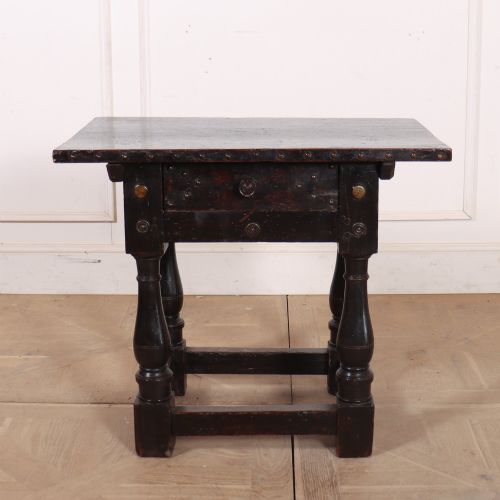
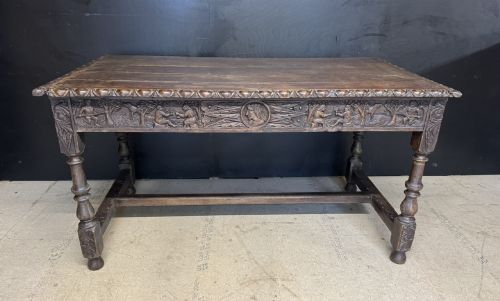
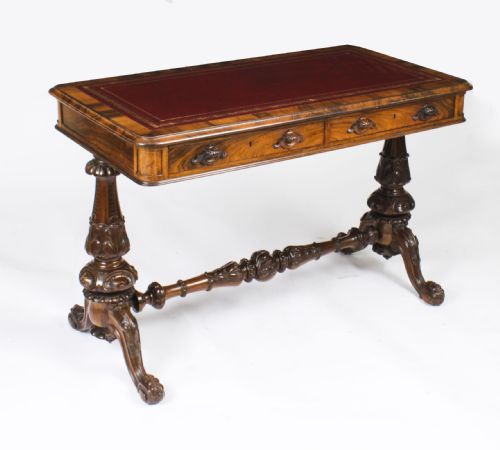
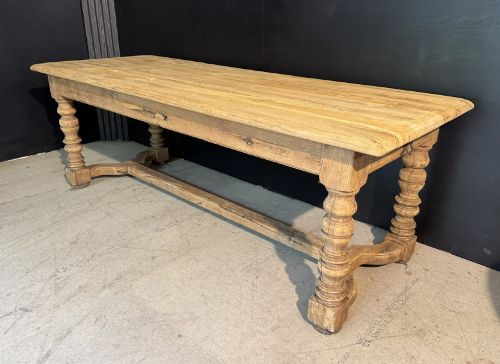


Carved Frieze Drawer Table
These carved frieze drawer table pieces combine practical storage with decorative joinery, offering a functional surface rooted in centuries of craftsmanship.
Carved Frieze Drawer Table
A carved frieze drawer table combines a flat surface with one or more integrated storage compartments built directly into the upper rail beneath the top. When searching for a carved frieze drawer table, buyers encounter a variety of forms including side tables, writing desks, library tables, and refectory dining tables.
The examples available span several centuries, with origins stretching from the seventeenth-century Flemish workshops through the Regency, William IV, and Victorian eras up to the early twentieth century. Common timber foundations include oak, walnut, and mahogany, often enhanced by decorative carving along the structural frieze.
How They Were Made
Cabinetmakers constructed these tables using solid hardwoods such as oak, walnut, and mahogany, occasionally applying flame mahogany or rosewood veneers to the primary surfaces for visual depth. Structural joints relied on traditional hand-cut joinery, while drawer linings frequently utilised secondary timbers.
Carving was executed by hand directly into the solid wood of the frieze or applied as distinct decorative elements. Metal hardware, including brass handles and key escutcheons, completed the construction alongside occasional iron fixtures.
Listings feature oak, walnut, mahogany, rosewood, and padouk, spanning periods from the 17th century to the early 20th century.
What Varies in Quality
The standard of execution in the carved frieze work sets finer examples apart, distinguishing crisp, deep chisel work from softer or more mechanical detailing. Depth of relief and symmetry across the front rail reflect the skill of the original maker.
Timber selection and grain figure also determine quality, with well-figured rosewood or flame mahogany veneers and dense, mature oak demonstrating superior material grade. The integrity of the drawer construction, including smooth operation and original internal partitions, further defines the better pieces.
Edwards and Roberts·William Trotter
The Carved Frieze Drawer Table Glossary
- Frieze
- The horizontal structural member situated directly beneath the top of a table, frequently housing one or more drawers. In many antique pieces, this area serves as the primary location for decorative carving.
- Flame Mahogany Veneer
- A thin slice of mahogany timber cut from the fork of the tree where branches meet, creating a distinctive flamed or feathery grain pattern. This veneer was applied to primary surfaces to achieve a dramatic visual effect.
- Refectory Table
- A long, narrow dining table traditionally used in communal dining halls. Surviving examples often incorporate sturdy timber frames and integrated frieze storage.
- Library Table
- A freestanding table designed for scholarly use, typically finished on all four sides so it could sit in the centre of a room. These pieces frequently feature multiple frieze drawers for stationery storage.
Carved Frieze Drawer Table: Frequently Asked Questions
How do I date a carved frieze drawer table?
Dating relies on examining the timber species, construction methods, and stylistic cues present in the carving and hardware. Earlier pieces from the seventeenth and eighteenth centuries often show pegged joinery and hand-sawn timbers, whereas nineteenth-century examples reflect Regency, William IV, or Victorian design idioms.
Secondary woods inside the drawers and the style of the handles also provide reliable clues to the period of manufacture.
Can I use these tables as a desk?
Many of these tables, particularly writing and library tables from the Regency and Victorian periods, were originally designed for reading and correspondence. Their integrated frieze drawers make them well suited for modern desk use while retaining period character.
Checking the kneehole clearance and surface height ensures comfortable daily use with a chair or laptop.
What is the difference between a side table and a library table?
Side tables are generally built to stand against a wall, meaning the back finish may be simpler or left plain. Library tables are finished on all sides so they can be placed in the middle of a room.
Library tables also tend to be larger and more substantially built to accommodate heavy volumes and writing materials.
How should I care for antique wood surfaces?
Maintenance involves keeping the timber away from direct heat sources and sudden humidity changes to prevent splitting or warping. Regular dusting with a soft, dry cloth preserves the finish without building up residue.
Application of traditional beeswax can nourish older hardwoods like oak and mahogany when the surface appears dry.