



Renaissance Style Table
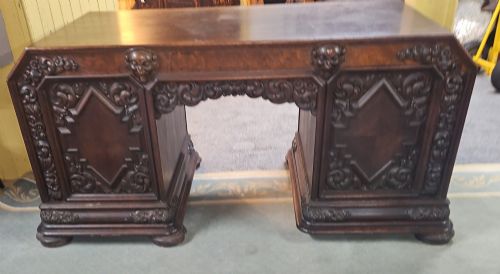
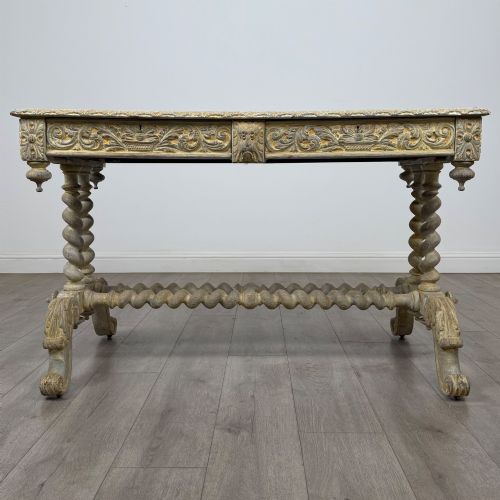
These pieces are a renaissance style table, built to bring historic weight and rich carving into a room.
Renaissance Style Table
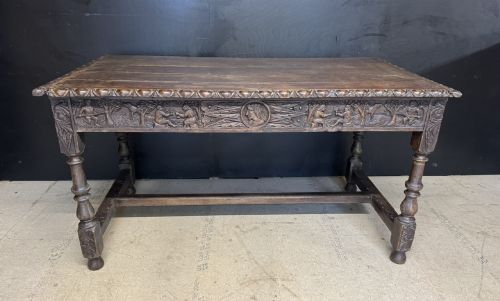
A renaissance style table draws upon centuries of design, taking heavy cues from sixteenth-century proportions and ornamentation. When searching for a renaissance style table, buyers encounter formats ranging from centre tables and side tables to occasional pieces.
The material record spans centuries, with nineteenth-century revivals sitting alongside seventeenth-century works and later iterations. Walnut and oak dominate the forms, often accompanied by fruitwood, iron, and giltwood.
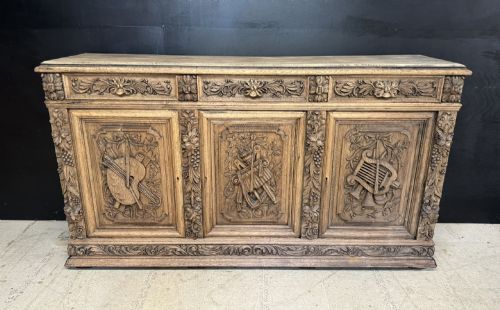
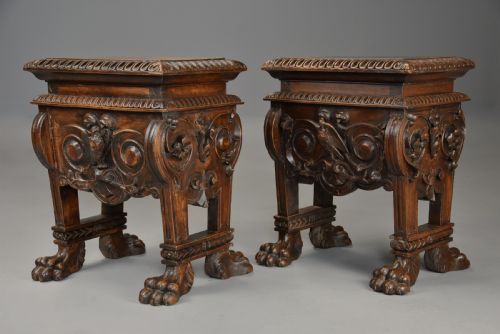
Regional variations appear across the inventory, with Italian Renaissance Revival, French Renaissance Revival, and Florentine treatments defining the aesthetic. These works often manifest as centre tables or side tables with substantial architectural presence.
Judging quality in revival furniture
Quality rests in the crispness of the carved detail and the integrity of the timber selection. Master carvers achieved depth and shadow in walnut and oak without splintering the grain.
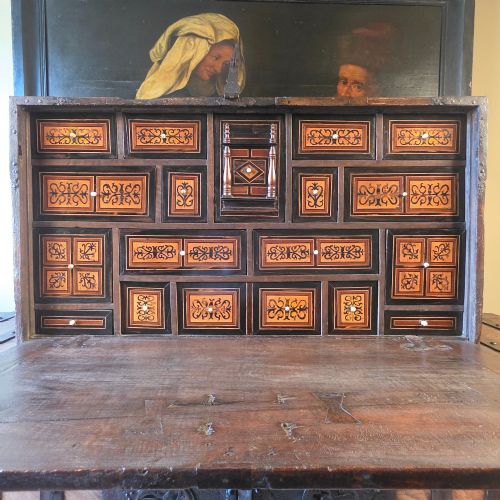
Inlaid elements such as bone and contrasting fruitwoods reveal the precision of the workshop. Smooth joins and harmonious proportions separate standard production items from superior examples.
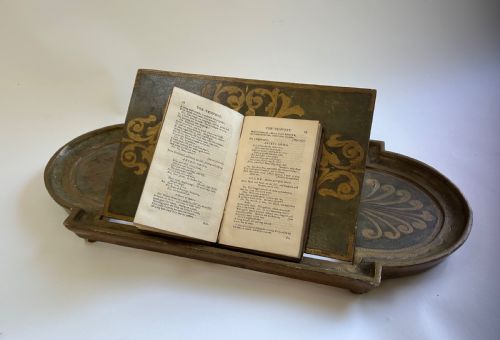
Tables occasionally share space with bone-inlaid table caskets and medieval-leaning book stands.
The Renaissance Style Table Glossary
- Renaissance Revival
- A nineteenth-century movement that revived the architectural and decorative motifs of the fifteenth and sixteenth centuries. It heavily influenced furniture design across France, Italy, and England.
- Giltwood
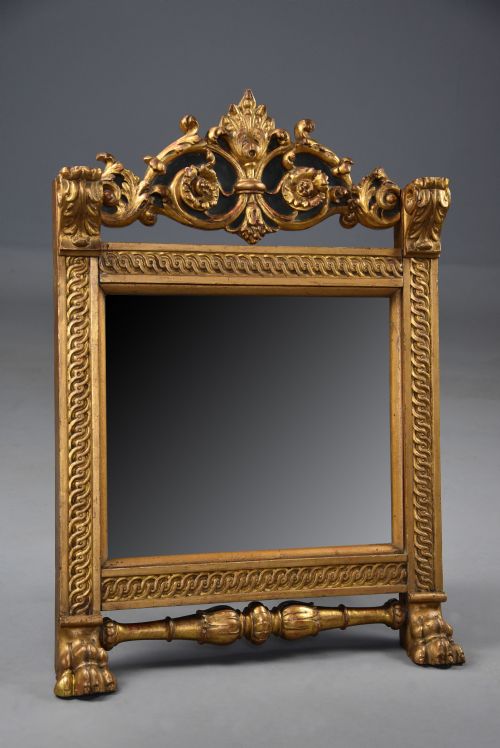
- Timber treated with gold leaf or gold paint to create a luminous surface finish. It appears on decorative frames and tables to highlight carved details.
- Bone inlay
- A decorative technique involving small pieces of bone fitted into recesses carved in wood. This method creates geometric or figurative patterns against a dark timber background.
- Centre table
- A freestanding table designed to be viewed from all sides rather than pushed against a wall. These pieces often anchor large rooms.
Renaissance Style Table: Frequently Asked Questions
How do I place a renaissance style table?
These tables demand space to let their heavy carving and rich timber tones stand out. Position a centre table in the middle of a room or use an occasional table beside heavier seating.
Keep surrounding decor relatively restrained to let the architectural lines and inlay work remain the focal point of the interior.
What timber was used for these?
Walnut and oak form the primary structural materials for the majority of these pieces. These hardwoods provided the necessary strength for heavy carving and large tabletops.
Secondary woods like fruitwood appear alongside bone and giltwood for decorative inlay and surface contrast.
How do I distinguish Italian from French styles?
Italian interpretations frequently incorporate elaborate bone inlay and polychrome details influenced by Florentine traditions. These examples often lean towards architectural symmetry and classical proportions.
French revival pieces tend to display deep, exuberant carving in walnut or oak, reflecting the grandeur of sixteenth-century French court furniture.
Are these pieces strictly from the sixteenth century?
The majority of these tables date from the nineteenth century during the height of the Renaissance Revival movement. Makers of this later period consciously copied or adapted sixteenth-century forms and techniques.
Genuine sixteenth-century pieces exist alongside seventeenth-century works, while the revival pieces capture the same historicist spirit.