
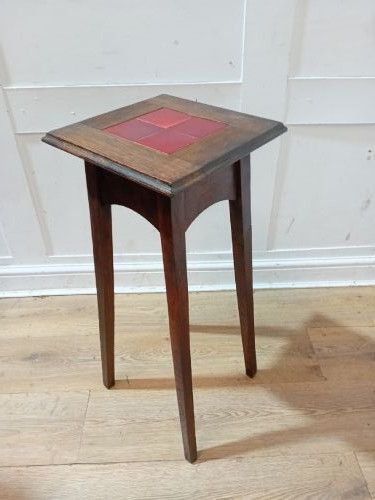


Ceramic Pedestal Table
These ceramic pedestal table pieces combine sturdy supports with decorative surfaces, offering distinctive forms for display.
Ceramic Pedestal Table
A ceramic pedestal table brings together elevated supports and glazed surfaces, appearing across Victorian, Arts and Crafts, and Art Deco periods.
The selections on this page incorporate forms such as plant stands, jardinières, and decorative tables utilising porcelain, majolica, and pottery.
These items originate from various decades spanning the nineteenth and twentieth centuries, reflecting changing domestic tastes in display furniture.
Materials and construction
Maker methods combine ceramic and porcelain elements with structural supports in oak, brass, copper, and ebonised wood.
Surfaces frequently feature hand-painted details, transfer printing, or applied cabochons such as Ruskin pottery inserts.
Several stands double as indoor garden furniture designed specifically to elevate ferns out of drafty Victorian floor sweepings.
Assessing craftsmanship
Excellence in these objects rests upon the precision of the ceramic glaze, the balance of the pedestal structure, and the integration of mixed media like brass and gilt.
Pieces showing hand-painted artistry or distinct period styling display greater ambition than simpler utilitarian forms.
The Ceramic Pedestal Table Glossary
- Jardiniere
- A large ornamental pot or stand for holding plants or flowers. These items often form the primary ceramic component of a pedestal table.
- Majolica
- A type of earthenware decorated with opaque coloured glazes over a tin-enamelled background. This technique produces vibrant surfaces seen on nineteenth and twentieth-century examples.
- Cabochon
- A polished gemstone or ceramic insert shaped in a convex form without facets. They appear as decorative highlights on Arts and Crafts metalwork and stands.
- Ebonised
- Wood finished to resemble ebony through staining or painting. This dark treatment provides a sharp contrast to porcelain and ceramic inserts.
- Transfer printed
- A decoration method using a paper or tissue to transfer a design from an engraved copper plate onto ceramic. This process allowed consistent blue and white patterns on pottery.
Ceramic Pedestal Table: Frequently Asked Questions
What is a ceramic pedestal table?
A ceramic pedestal table is an elevated display piece featuring pottery, porcelain, or majolica elements combined with wood or metal supports. These items serve as plant stands, jardinières, or decorative occasional tables.
Pets and heavy foot traffic near these stands require caution due to the delicate nature of glazed ceramic components and mixed-material frames.
How do I date these tables?
Dating relies on stylistic markers from periods like Victorian, Arts and Crafts, and Art Deco, alongside material choices such as brass mounts or ebonised wood. Examining the base construction and glaze characteristics helps determine the era.
Comparing construction techniques with documented pieces from the nineteenth and twentieth centuries narrows the production window.
Where were these pieces used?
Historically, these stands occupied prominent positions in drawing rooms and halls to display plants, centrepieces, or decorative bowls. Their elevated design drew the eye to specific ornamental objects.
In modern interiors, they function effectively as standalone display pedestals or corner accent tables in living spaces.
How do I care for my table?
Maintenance involves dusting wooden and metal frames gently and wiping ceramic surfaces with a dry or slightly damp cloth. Avoid harsh chemical cleaners that might damage historic glazes or patinated brass.
Placing felt pads beneath heavy ceramic bowls or plants prevents scratching the glazed top during repositioning.