
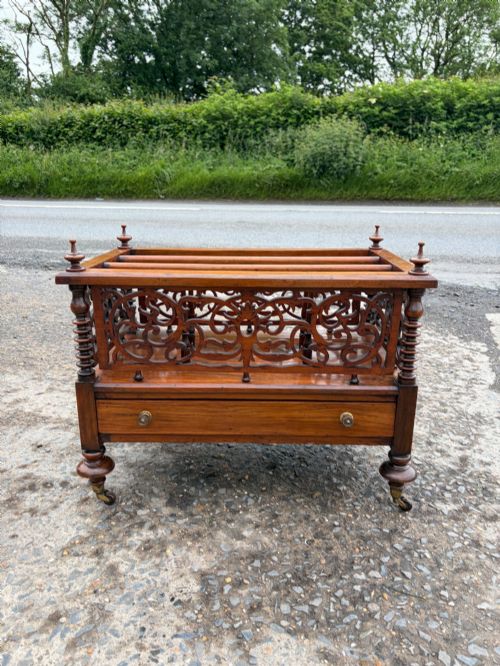


Carved Fretwork Canterbury
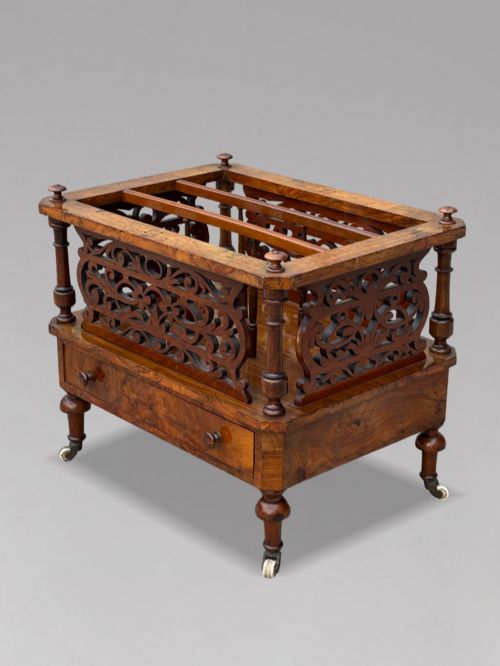
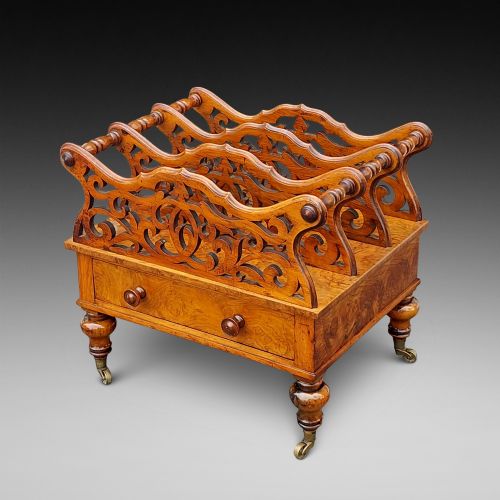
These carved fretwork canterbury designs are Victorian pieces meant for holding sheets of music or periodicals with style.
Carved Fretwork Canterbury
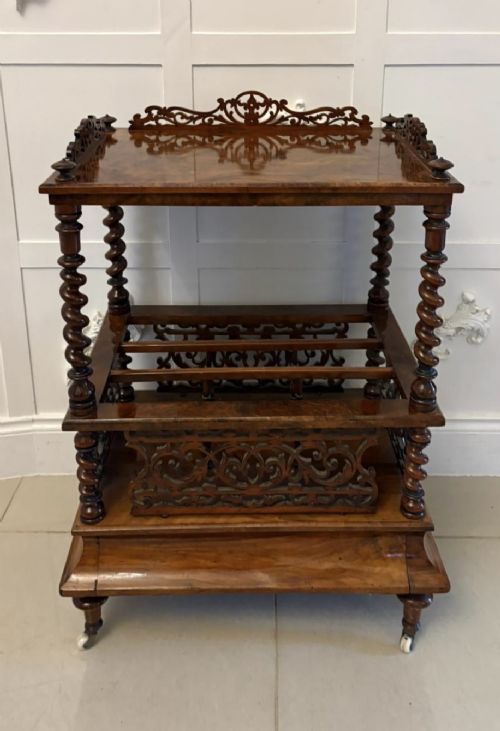
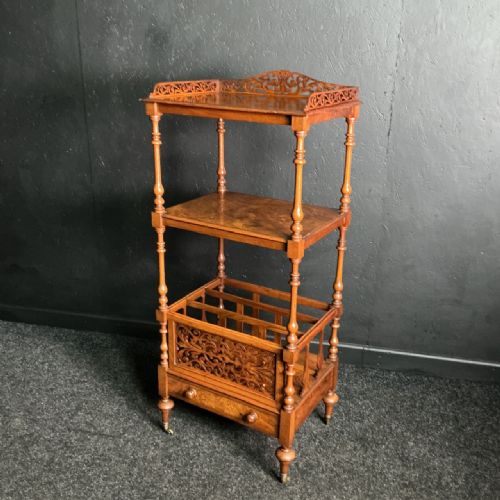
A carved fretwork canterbury is a dedicated receptacle for music sheets, magazines, or books, often combining multiple functions into a single piece of furniture. When you search for carved fretwork canterbury, you encounter pieces designed primarily during the Victorian period, spanning the mid to late nineteenth century. These items range from simple magazine racks and music canterburys to more elaborate combinations involving occasional tables and whatnots.
The versions most commonly met on this page are constructed from rich timbers such as burr walnut, walnut, mahogany, and rosewood. Many incorporate pierced scroll divisions or specific inlay work alongside the characteristic fretwork panels. Some examples double as footstools or ottomans, demonstrating the multifaceted nature of Victorian cabinet making.
Materials and Construction
The construction relies heavily on choice hardwoods like walnut, burr walnut, rosewood, and mahogany, selected for their rich grain and durability. Cabinet makers utilised these timbers to build sturdy frames capable of supporting partitioned compartments for heavy folios and books. Surface decoration frequently involved intricate inlaid details and pierced fretwork scrolls.
Metal components such as brass castors appear on freestanding examples to allow easy movement across carpets and wooden floors. Ceramic elements occasionally contribute to the detailing of castors or feet. The joinery combines traditional framing techniques with delicate fret-cut panels that define the visual character of the piece.
The inventory records multiple functional combinations, including music racks, occasional tables, footstools, and multi-tiered whatnots.
Assessing Quality and Finish
The distinction between standard and superior examples lies in the selection of timber and the precision of the fretwork. Burr walnut and figured rosewood veneers indicate higher status pieces commissioned for principal rooms. The depth and crispness of the carved details and pierced scrolls reveal the skill of the original maker.
Structural integrity also separates the grades, particularly in the joints of the vertical divisions and the stability of any attached lower drawers or shelves. Pieces that retain their original brass castors and retain a deep, warm polish demonstrate superior preservation. The complexity of form, such as combining a whatnot tier with a rack, generally marks a more ambitious piece of furniture.
The Carved Fretwork Canterbury Glossary
- Canterbury
- A low stand or rack designed originally for holding sheet music or books, usually fitted with upright divisions. The form dates from the late eighteenth century and remained popular through the Victorian era.
- Fretwork
- Ornamental perforated carving or pierced woodwork creating open patterns. It appears frequently on panels and partitions of Victorian furniture.
- Burr Walnut
- Timber taken from the wart or growth on a walnut tree, yielding highly figured and swirling grain patterns. Cabinet makers prized it for decorative veneering.
- Whatnot
- An open set of tiered shelves used for displaying ornaments or books. They often appear combined with canterbury bases in nineteenth-century designs.
- Gothic Revival
- An architectural and decorative style drawing inspiration from medieval forms. Pieces in this style feature pointed arches and heavy foliate carving.
Carved Fretwork Canterbury: Frequently Asked Questions
What is a canterbury used for?
A canterbury serves as a tidy stand for holding sheet music, folios, and current periodicals near a piano or seating area.
Many nineteenth-century examples also incorporate lower drawers or tabletop surfaces for additional domestic storage.
How do I date a victorian canterbury?
Dating relies on identifying timber choices, such as burr walnut or rosewood, alongside characteristic decorative motifs like pierced fretwork.
Construction methods and the presence of original brass castors also help narrow the origin to the mid or late nineteenth century.
Can I use a canterbury as a side table?
Many surviving examples function successfully as lamp tables or occasional tables while retaining their original divider partitions.
Their sturdy walnut or mahogany tops provide sufficient surface area for daily items alongside their traditional storage role.
What woods were used for these pieces?
Cabinet makers predominantly selected walnut, burr walnut, mahogany, and rosewood for their rich tones and suitability for fine carving.
Satinwood also appears occasionally in specific nineteenth-century examples to provide contrasting lighter tones.