


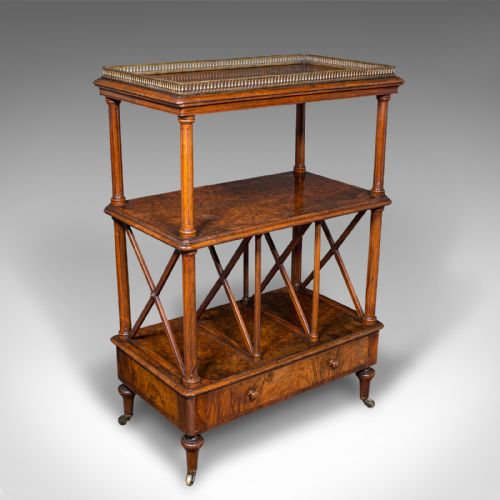

Burr Walnut Music Rack
A burr walnut music rack brings figured timber and partitioned storage together in a piece designed to hold sheet music and periodicals.
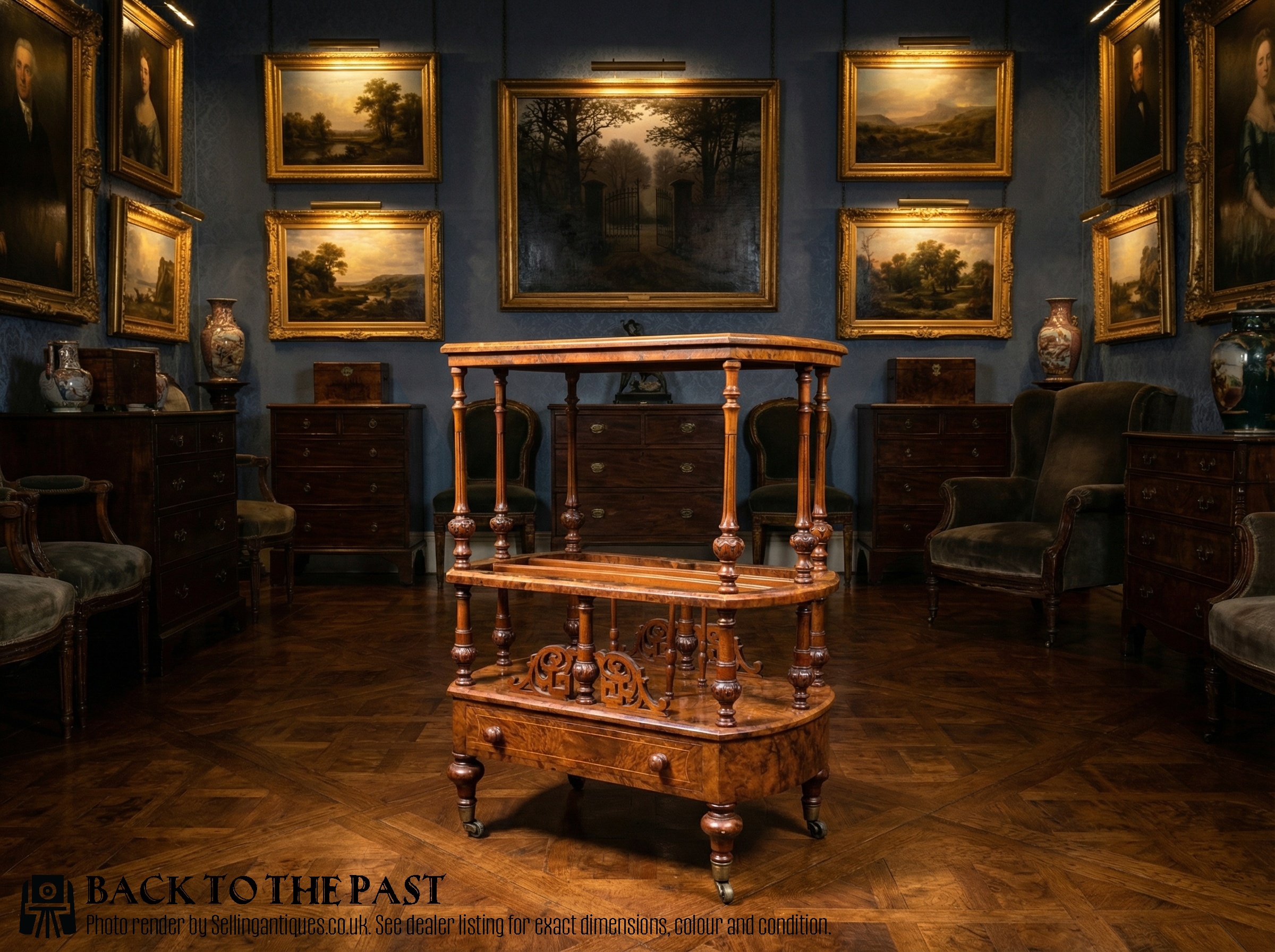
Burr Walnut Music Rack
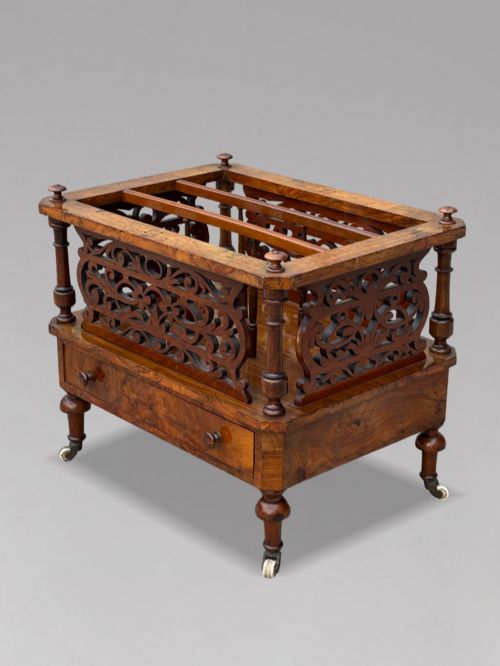
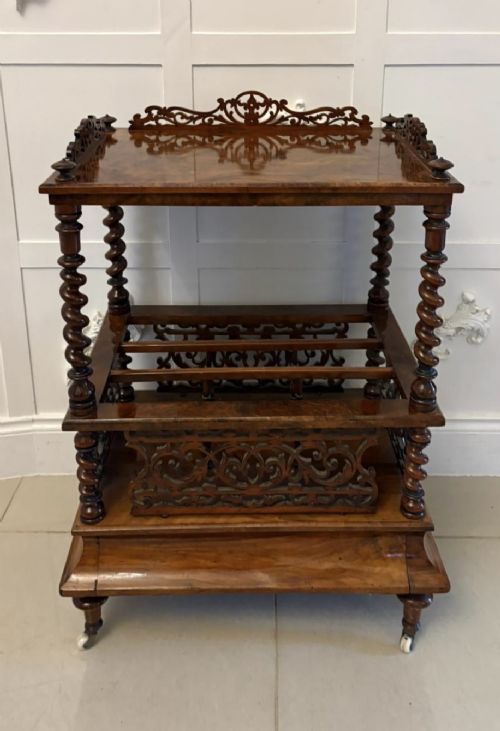
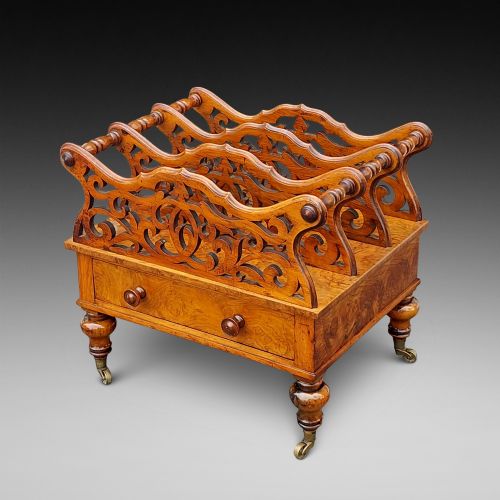
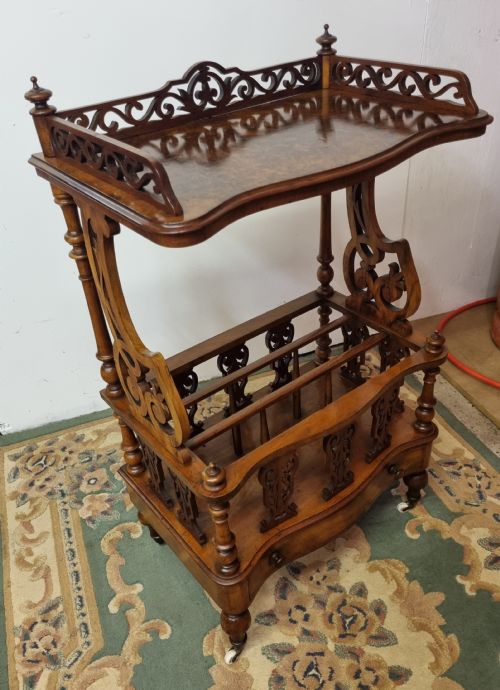
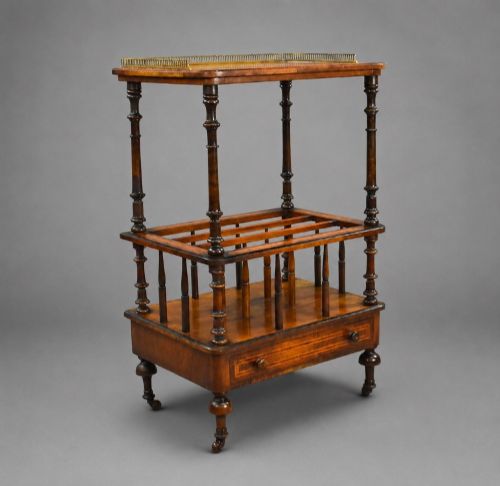
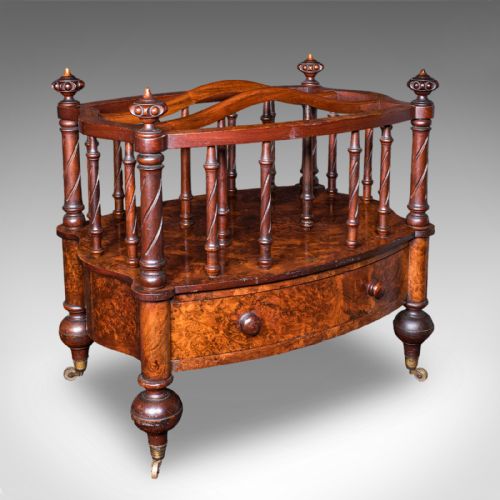
A burr walnut music rack, predominantly encountered as a Victorian Canterbury or whatnot table, provides compartmentalised storage for papers while serving as an occasional or lamp table.
The evidence shows these pieces span the nineteenth century, with origins largely rooted in the Victorian era alongside occasional Regency examples.
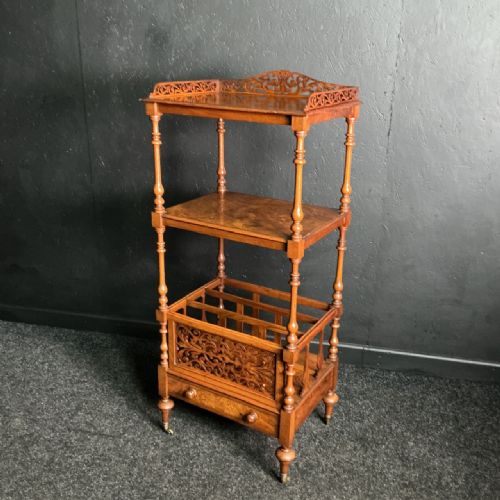
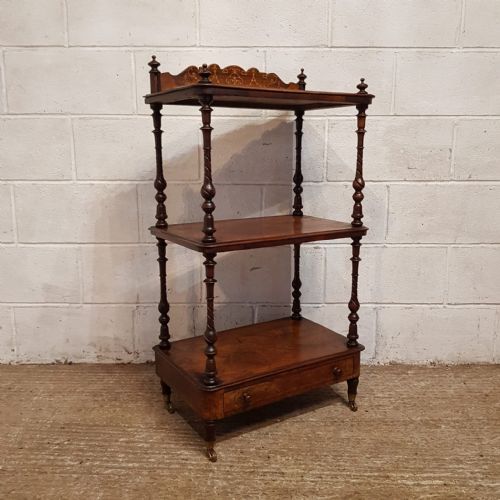
Makers utilised various forms including serpentine shapes, oval tables, and multi-tiered etageres fitted with drawers or pierced fretwork.
How they were made
Craftsmen applied figured burr walnut veneers over solid timber carcases, often incorporating boxwood, ebony, and marquetry wood inlay to accent the surfaces.
Structural elements frequently incorporated brass details, ceramic castors, and turned supports, whilst specific compartments relied on fine pierced fretwork partitions.
One recorded piece abandoned the music entirely to double as a bracket clock.
What varies in quality
The distinction between standard and superior pieces rests on the complexity of the figuring within the burr walnut and the precision of the inlaid marquetry.
Execution of fine fretwork partitions, the inclusion of integrated drawers, and the substance of proportions distinguish the finer nineteenth-century examples.
Shoolbred
The Burr Walnut Music Rack Glossary
- Canterbury
- A low stand featuring partitioned vertical sections designed for holding music sheets, newspapers, and magazines. These pieces frequently incorporate a low drawer beneath the main compartments.
- Burr walnut
- A highly figured timber harvested from the wart-like growths on walnut trees, prized for its swirling grain patterns. It was sliced into thin veneers for nineteenth-century cabinet work.
- Whatnot
- An open set of freestanding shelves supported by columns or slender uprights, utilised for displaying decorative items. In many instances, the lower section integrates a Canterbury.
- Marquetry
- The art of applying decorative veneer pieces of various woods to a structure to form pictorial or geometric designs. It appears on the surfaces of many Victorian items.
- Fretwork
- Ornamental woodwork perforated with patterns, often pierced through thin panels. This technique creates the delicate dividers seen on music stands and rack partitions.
Burr Walnut Music Rack: Frequently Asked Questions
What was a burr walnut music rack originally used for?
These pieces served primarily to store sheet music near a piano or parlour instrument, whilst the upper surfaces functioned as side or lamp tables for everyday items.
Over time, owners also utilised the partitioned sections for newspapers and periodicals as household reading material expanded during the nineteenth century.
How do I tell a Victorian Canterbury from a Regency one?
Victorian examples appearing in the records frequently exhibit rich burr walnut veneers, elaborate marquetry inlay, and serpentine or oval forms typical of mid-nineteenth-century taste.
Regency pieces tend to display cleaner architectural lines and different timber emphases, reflecting the earlier design vocabulary of that distinct period.
Can I use a music rack as a modern magazine table?
The vertical divisions originally built for sheet music accommodate contemporary magazines, newspapers, and journals rather well in a modern living space.
The solid construction and flat top surfaces allow the furniture to function as an occasional lamp table or bedside stand without modification.
What is the difference between a Canterbury and a whatnot?
A Canterbury specifically concentrates on partitioned vertical storage for papers and scores, often sitting lower to the ground on castors.
A whatnot is primarily a multi-tiered display stand with shelves, though cabinetmakers frequently combined both forms into a single hybrid piece.