





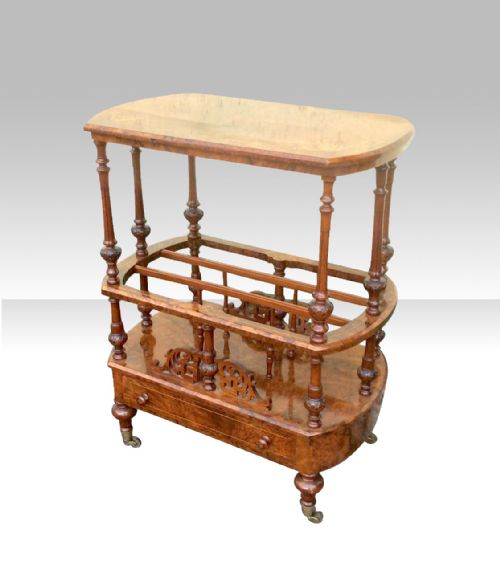


Victorian Walnut What Not
A Victorian walnut what not brings tiered display space to a room, offering open shelving or compartments for books, music, and decorative objects.
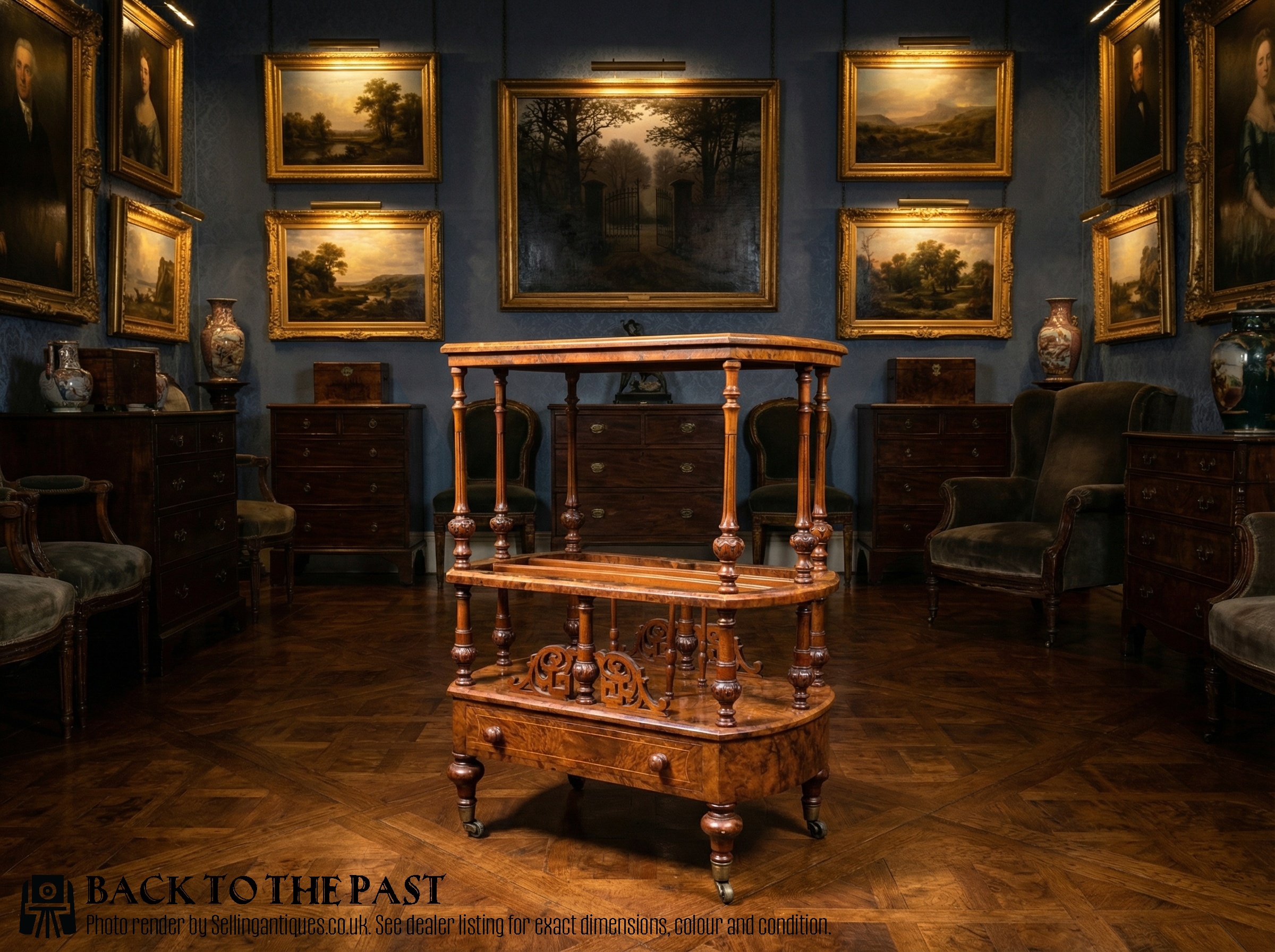
Victorian Walnut What Not
A Victorian walnut what not is a multi-tiered open piece of furniture designed for display and storage in nineteenth-century interiors. These pieces appear in various forms, including corner shelves, etageres, and combination pieces that integrate shelving with magazine racks or music cabinets.
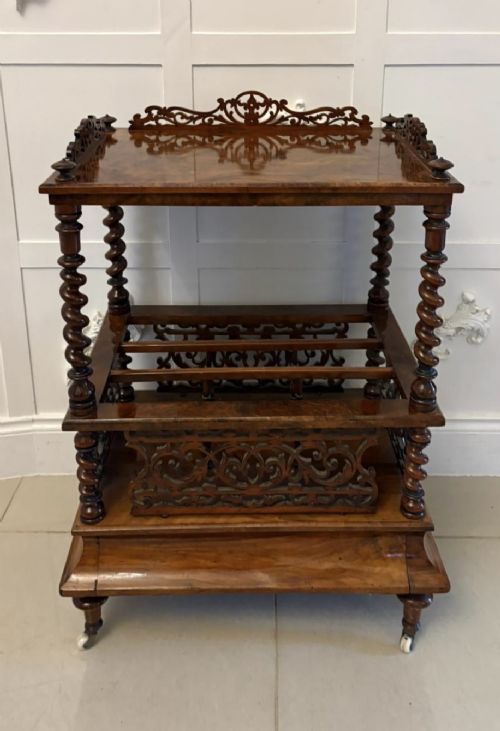
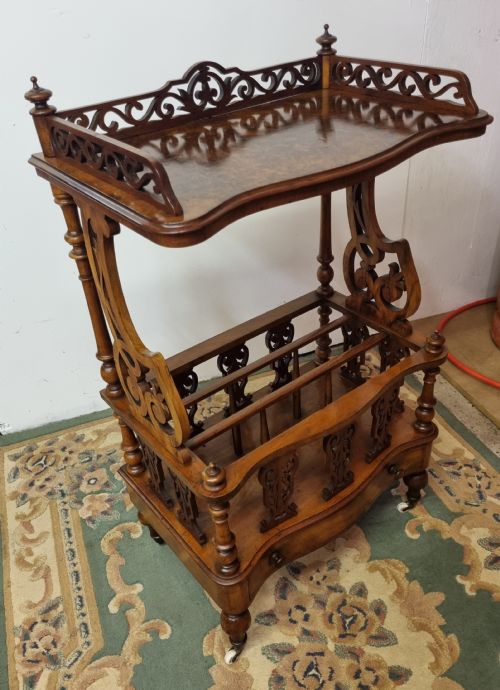
The version most commonly met on this page is the burr walnut Canterbury what not, which combines tiered display shelves with vertical partitions for folios or periodicals at the base. These multifunctional items reflect the domestic habits of the period, providing compact storage alongside surfaces for ornaments and lamps.
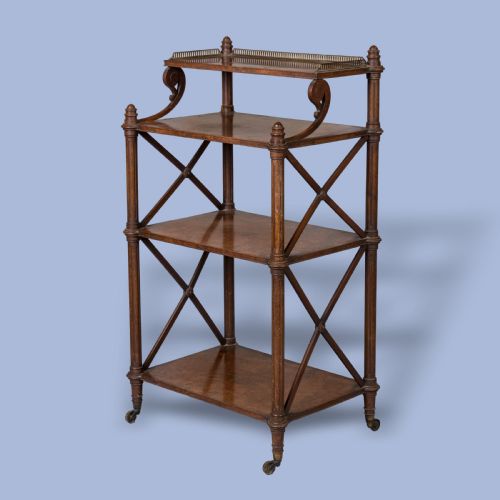
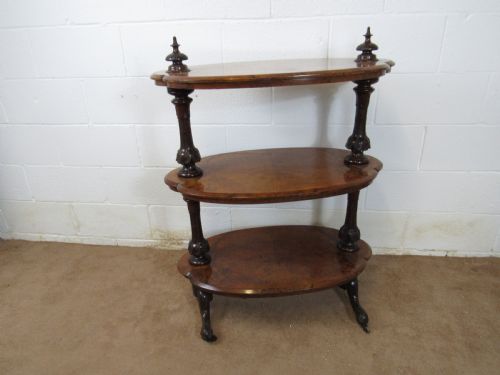
Originating primarily within the Victorian era, specifically around the mid-nineteenth century, these furnishings utilise the rich grain of walnut timber. Makers adapted the form to suit different room layouts, producing freestanding serpentine shapes, slim multi-tier vertical stands, and space-saving corner units.
What varies in quality
The selection of timber grain dictates much of the visual merit, with dense, highly figured burr walnut veneers commanding greater attention than plain stock. The intricacy of marquetry work and the precision of inlaid details separate standard production items from exhibition pieces.
Proportion and structural ambition also define the grade, distinguishing simple three-tier corner shelves from grand serpentine or multi-tier freestanding examples. Finer pieces incorporate carved ornamentation, turning, and integrated functional elements such as drawers or music compartments executed with particular care.
Some versions double as musical companions, holding your folios while quietly minding the corner.
Holland and Sons·T Wilson of London
The Victorian Walnut What Not Glossary
- Whatnot
- An open piece of furniture with multiple tiers for displaying ornaments, books, or small objects. It gained popularity during the nineteenth century as domestic spaces accumulated decorative items.
- Canterbury
- A low piece of furniture featuring vertical partitions, originally designed for holding sheet music, folios, or periodicals. In combination pieces, it forms the base tier beneath standard whatnot shelving.
- Etagere
- A French-derived term for a piece of furniture consisting of a set of open shelves for display. These pieces share a close relationship with the English whatnot format.
- Burr Walnut
- Timber sliced from the growth warts or burls of walnut trees, producing highly decorative, swirling grain patterns. Cabinet makers used veneers of this material on prominent exterior surfaces.
- Marquetry
- The art of applying pieces of veneer to a structure to form decorative patterns or pictures. Makers utilised contrasting woods to create floral or geometric designs on tabletops and shelves.
Victorian Walnut What Not: Frequently Asked Questions
What is a Victorian walnut what not?
A Victorian walnut what not is a multi-tiered display stand made from walnut during the nineteenth century. These items provide open shelving for ornaments and books.
Many examples incorporate additional functions, such as lower Canterbury sections for magazines or corner designs that fit into room angles.
How were these pieces used?
These pieces served primarily for the display of decorative ceramics, glass, and small ornaments in Victorian parlours and drawing rooms. The upper shelves held ornaments while lower sections accommodated reading materials.
Combinations with music cabinets or magazine racks allowed households to store folios and sheet music neatly beneath display surfaces.
How do I care for burr walnut furniture?
Burr walnut requires gentle cleaning with a soft, dry cloth to remove dust without harming the delicate veneer. Avoid placing the wood in direct sunlight or near heat sources to prevent cracking.
Applying occasional appropriate furniture wax helps maintain the lustre of the polished surface without building up residue.
How can I tell the period?
Dating relies on construction methods, timber choices, and stylistic markers typical of the nineteenth century. The presence of solid walnut framing combined with burr walnut veneers points towards Victorian manufacturing techniques.
Hardware such as ceramic castors and the integration of specific styles like French Napoleon III or Gothic Revival offer further chronological clues.