




Edwardian Magazine Table
An Edwardian magazine table brings orderly charm to a sitting room, holding periodicals within easy reach while anchoring a room with period timber.
Edwardian Magazine Table
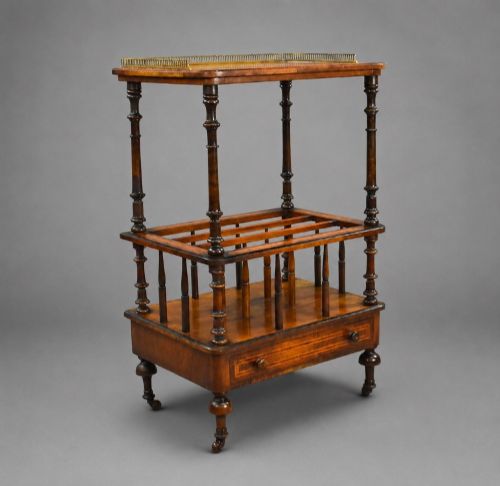
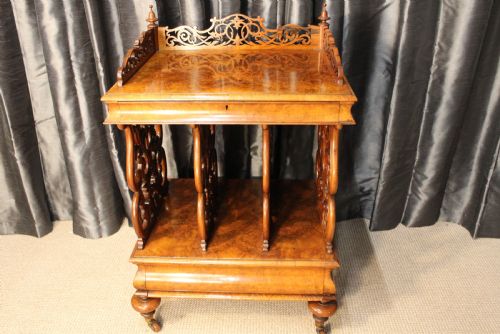
An edwardian magazine table serves as a functional piece of furniture designed to keep periodicals and books close to hand in a sitting room. These items often double as occasional tables, offering a surface for a lamp or a cup while incorporating dedicated compartments for reading material.
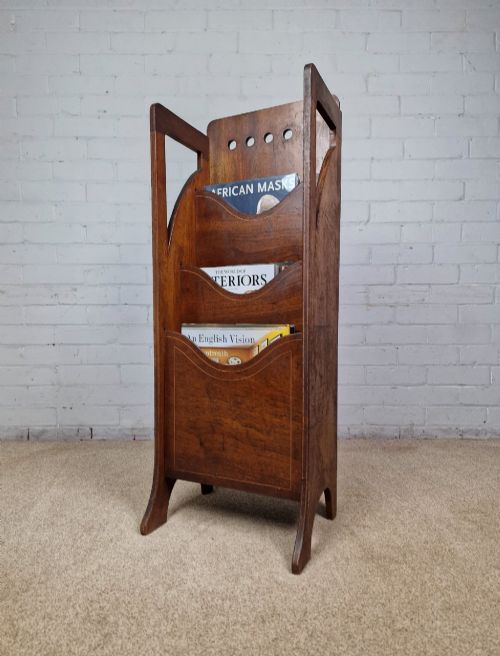
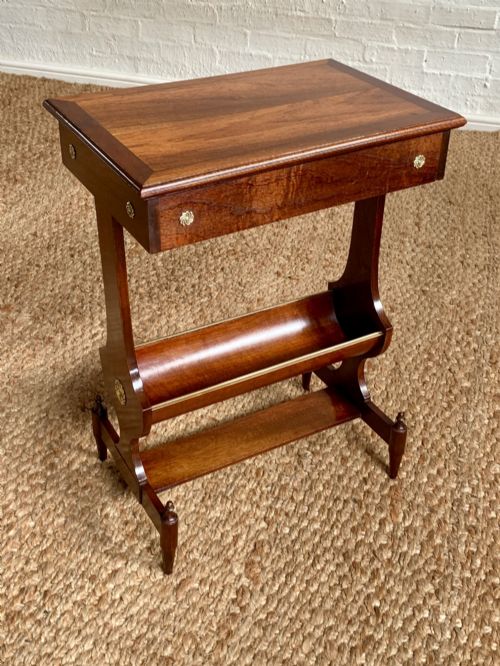
The pieces appearing on this page span several decades and stylistic revivals, with forms ranging from traditional canterburys to library book troughs and low coffee tables. Walnut and mahogany dominate the selection, frequently enhanced by decorative inlay or brass details.
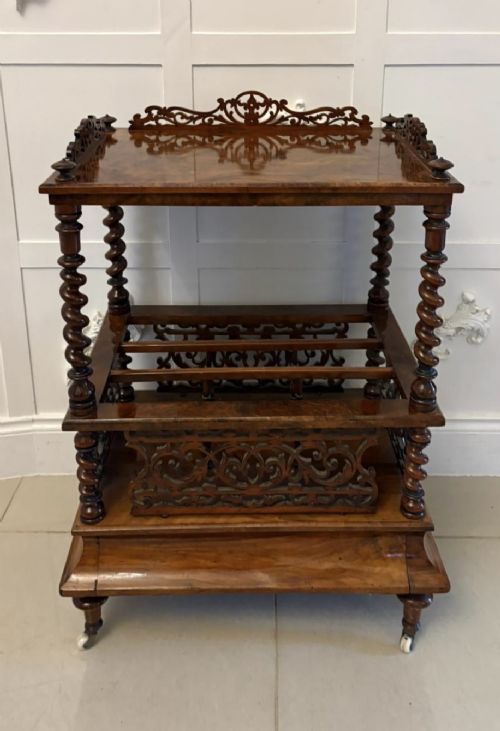
Buyers will encounter traditional canterburys featuring compartmentalised racks beneath the main surface alongside low occasional tables adapted for magazine storage. These multi-purpose designs reflect the domestic habits of the period, where convenience and formal entertaining met in the drawing room.
How they were made
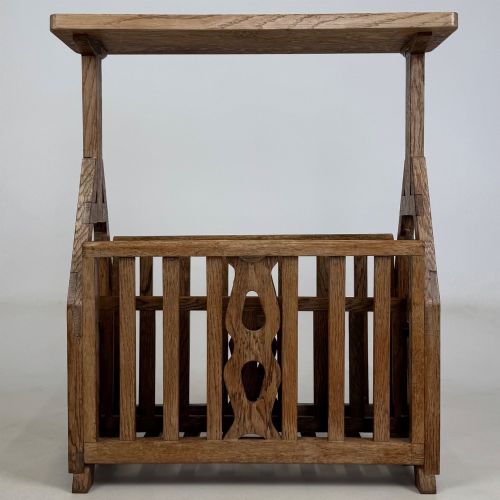
Cabinet makers utilised choice hardwoods such as mahogany and burr walnut, often applying satinwood stringing or intricate marquetry to elevate the visual appeal of the timber. Selected pieces incorporate oak or teak frames, demonstrating sturdy joinery suited to daily domestic use.
Detailing often included turned legs, brass castors for ease of movement, and ceramic or leather accents. Open slatted partitions formed the magazine compartments, balanced against solid top surfaces constructed to bear the weight of lamps and decorative objects.
Object forms span across canterburys, what-nots, book troughs, side tables, and low coffee tables.
What varies in quality
Excellence in an edwardian magazine table rests upon the choice of veneer and the crispness of any inlaid decoration. Pieces featuring finely figured burr walnut or delicate painted motifs command attention through superior material selection.
Construction integrity defines the upper tier of these items, visible in tight joints, smoothly running drawers, and original brass hardware. Subtleties in proportion and the retention of a warm, polished finish distinguish a master cabinet maker's output from utilitarian workshop production.
The Edwardian Magazine Table Glossary
- Canterbury
- A low stand with vertical partitions designed for holding sheet music, books, or magazines. It frequently includes a small drawer at the base.
- Burr walnut
- A wood harvested from the burl growth of a walnut tree, prized for its swirling, highly decorative grain patterns. Cabinet makers typically applied it as a veneer.
- Whatnot
- A set of open shelves supported by slender pillars, used for displaying ornaments or holding books. Many examples incorporate magazine storage sections.
- Library book trough
- A small tabletop or floor-standing trough designed to hold a selection of volumes upright. These items keep active reading material accessible in studies and sitting rooms.
- Marquetry
- Decorative woodwork where pieces of various coloured veneers are fitted together to form pictorial patterns. This technique frequently appears on tabletops and drawer fronts.
Edwardian Magazine Table: Frequently Asked Questions
How do I use a magazine table today?
These tables fit easily beside a sofa or armchair, serving their original purpose of holding current reading material while providing a surface for drinks or lighting.
Their compact footprints allow them to function well as lamp tables in smaller sitting rooms where space is at a premium.
Are these tables sturdy enough for daily use?
Constructed from hardwoods like mahogany, walnut, and oak, these pieces were built to withstand active household environments.
While antique veneers benefit from sensible care and coasters, the underlying frames remain robust for contemporary living.
How do I care for walnut veneer?
Maintain walnut surfaces by dusting regularly with a soft, dry cloth and avoiding placement near direct heat sources or strong sunlight.
Occasional application of high-quality beeswax nourishes the timber and preserves the depth of the polished grain.