
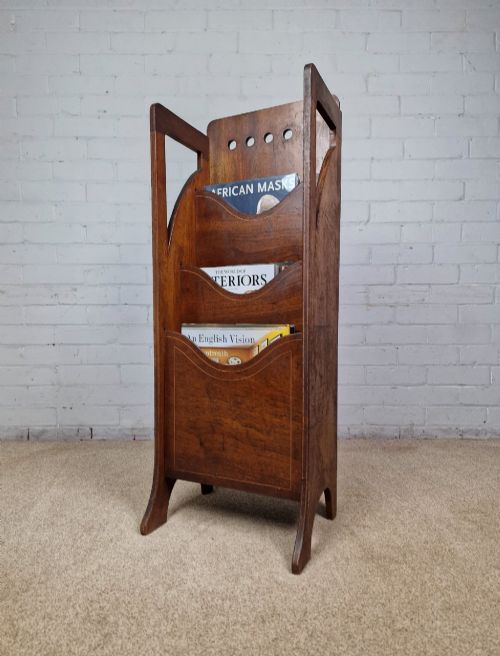
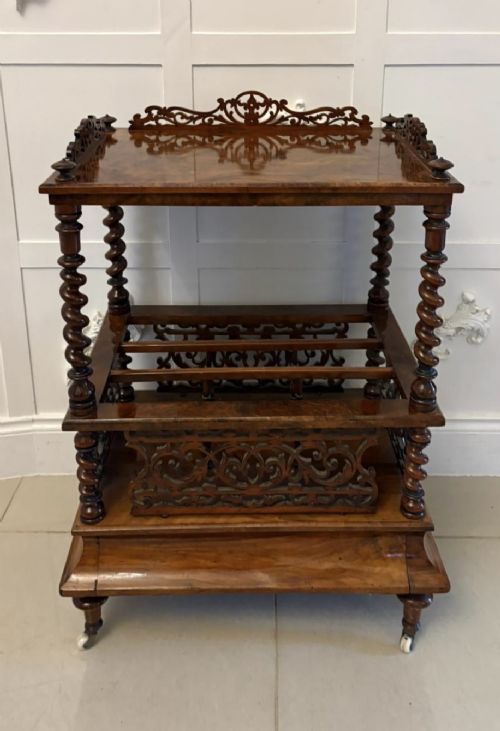
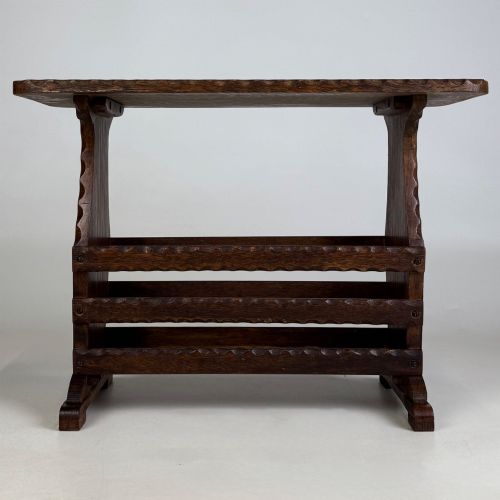
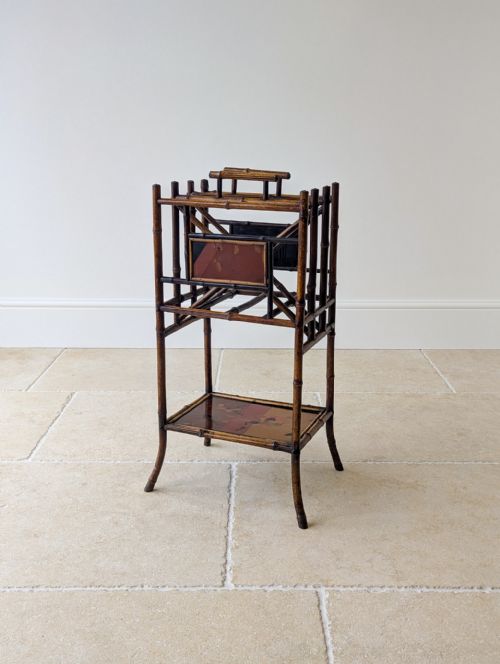


Vintage Magazine Rack Table
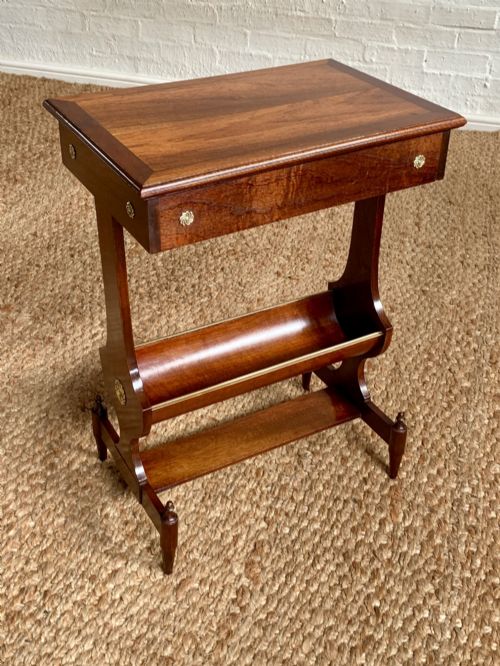
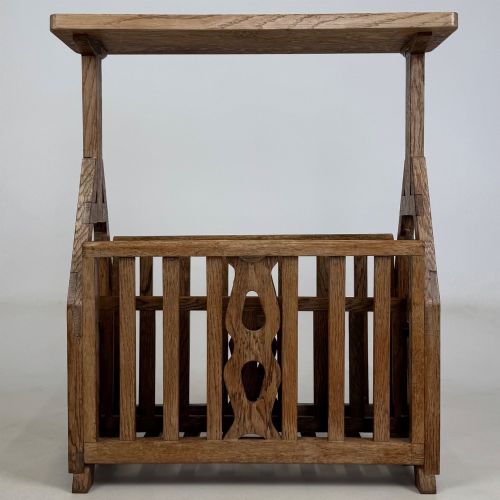
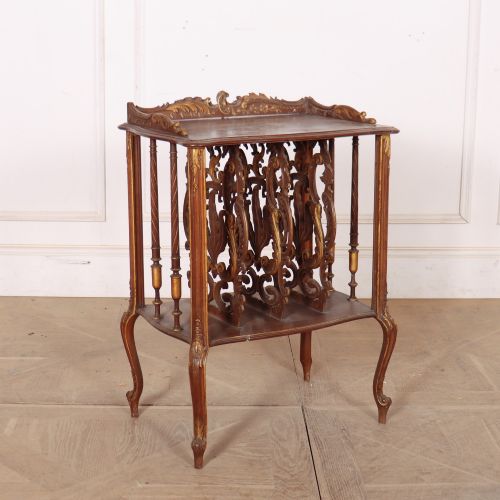
A vintage magazine rack table combines surface space with compartment storage, offering a practical piece of living room furniture for periodicals.
Vintage Magazine Rack Table
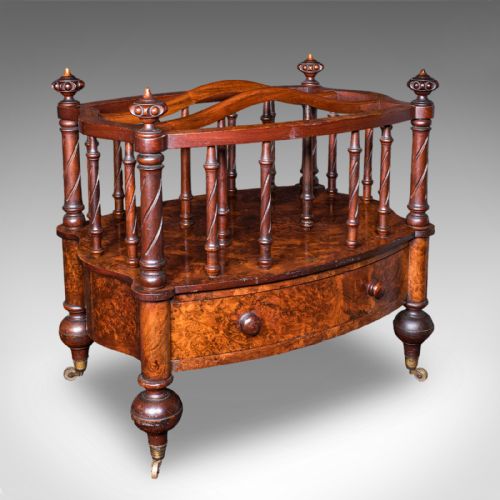
A vintage magazine rack table merges a functional side table with partitioned storage for newspapers, journals, and books. Buyers searching for a vintage magazine rack table frequently encounter traditional canterburys alongside occasional tables and book stands.
The selections span multiple historical periods, notably the Victorian era, the Edwardian period, and the Regency style. Makers from the nineteenth and early twentieth centuries produced these pieces in forms ranging from freestanding canterburys to folding reading tables.
Common material choices include mahogany, burr walnut, rosewood, oak, and bamboo. Many examples incorporate lower tiers or small drawers beneath the main surface to increase utility in the living room.
How they were made
Cabinet makers utilised dense hardwoods such as mahogany, rosewood, and walnut, frequently selecting burr walnut veneers for rich grain patterns. Joinery techniques included dovetailed drawers and turned spindles supporting the upper table surfaces.
Alternative constructions employed exotic materials like bamboo, sometimes combined with brass fixtures or hand-painted panels. Metalwork components appeared in brass kidney-shaped frames and structural mounts.
What varies in quality
The refinement of timber selection and inlay work marks the distinction between standard items and superior examples. Fine pieces display meticulously matched burr walnut veneers and delicate marquetry rather than plain secondary woods.
Structural complexity also dictates quality, with multi-functional designs featuring integrated drawers, lower shelves, or folding reading mechanisms commanding greater attention than basic open racks.
The Vintage Magazine Rack Table Glossary
- Canterbury
- A low, freestanding stand with partitioned sections designed to hold sheet music, newspapers, or periodicals. Originating in the late eighteenth century, this form often includes a drawer at the base.
- Burr walnut
- A highly figured timber veneer taken from the wart-like growths on walnut trees. Cabinet makers prized it for its swirling grain patterns on table tops and cabinet fronts.
- Aesthetic Movement
- A late nineteenth-century design style that emphasised artistic value over moral or narrative purpose. Pieces from this movement frequently utilised bamboo and Japanese-inspired motifs.
- Rosewood
- A dense, heavy timber with a dark, richly grained appearance often utilised in nineteenth-century furniture. It takes a high polish and provides a stable base for intricate carving.
- Book trough
- An open-topped container designed to hold volumes upright on a table or desk surface. Edwardian libraries frequently employed these portable timber stands.
Vintage Magazine Rack Table: Frequently Asked Questions
What is a canterbury?
A canterbury is a low stand featuring vertical partitions specifically built to hold newspapers, magazines, or sheet music. Many versions also incorporate a small drawer beneath the compartments.
These pieces served as tidy storage solutions near seating areas in nineteenth-century drawing rooms.
How do I use a magazine rack table today?
You can place one beside a sofa or armchair to hold current reading material while providing a surface for a lamp or cup. The compartmentalised sections keep periodicals organised and upright.
They also function effectively as lamp tables or occasional tables in living spaces.
What woods were used for these tables?
Cabinet makers built these pieces using timbers such as mahogany, walnut, burr walnut, oak, and rosewood. Some examples utilised tiger bamboo or brass for lighter, exotic designs.
Choice of timber typically reflected the prevailing fashion of the period during which the item was constructed.
How do I identify a Victorian piece?
Victorian examples often feature dense timbers like burr walnut and rosewood, sometimes decorated with marquetry inlay or heavy carving. The construction typically reflects nineteenth-century cabinet making standards.
Examining the secondary woods and interior drawer construction helps confirm the nineteenth-century origin.
Did they make bamboo magazine racks?
Yes, makers produced bamboo stands, particularly during the Aesthetic Movement in the late nineteenth century and the early twentieth century. These often included hand-painted panels or brass fittings.
Such pieces offered a lighter, more exotic alternative to traditional heavy mahogany or walnut furniture.