
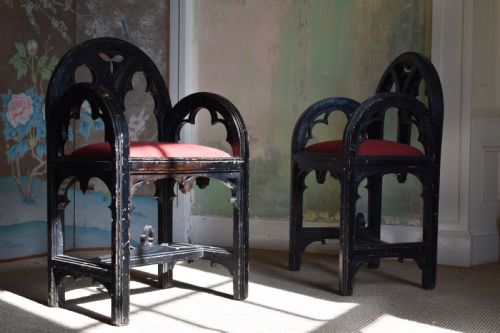


Carved Ebonised Seating
Carved ebonised seating delivers dramatic dark finishes and crisp sculptural detail, bringing striking contrast and period character to any interior.
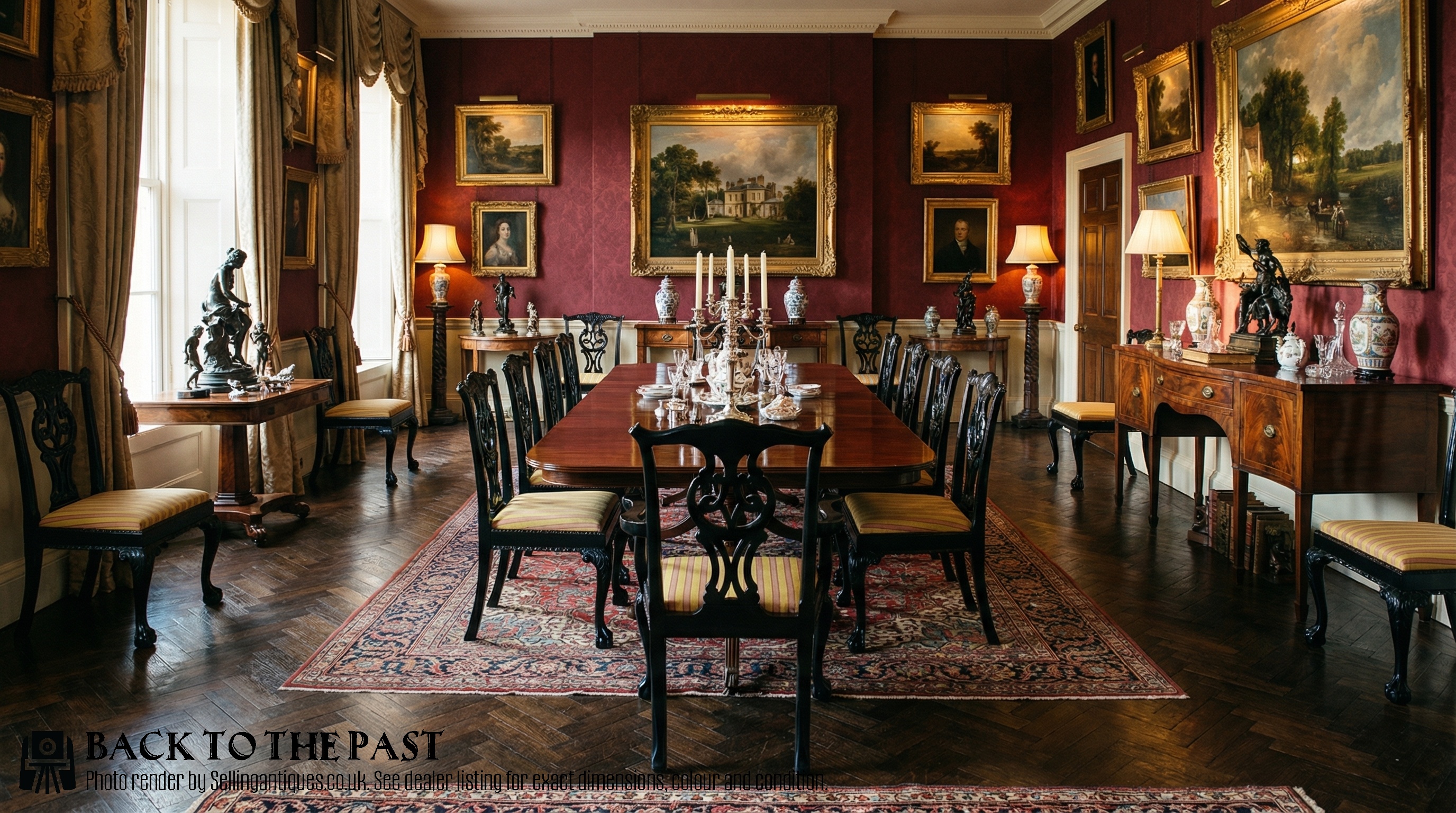
Carved Ebonised Seating
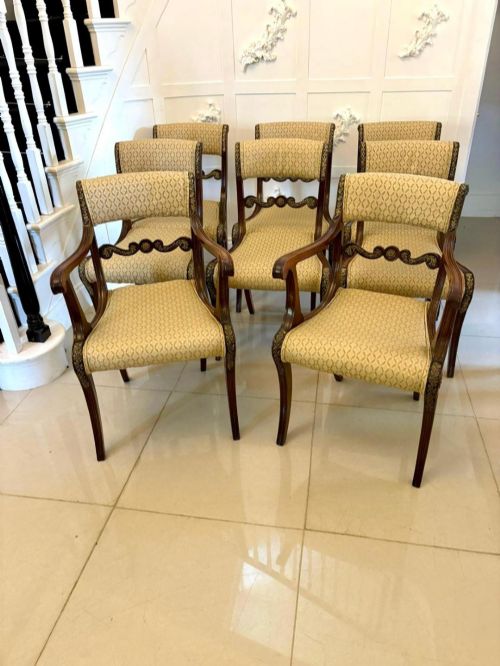
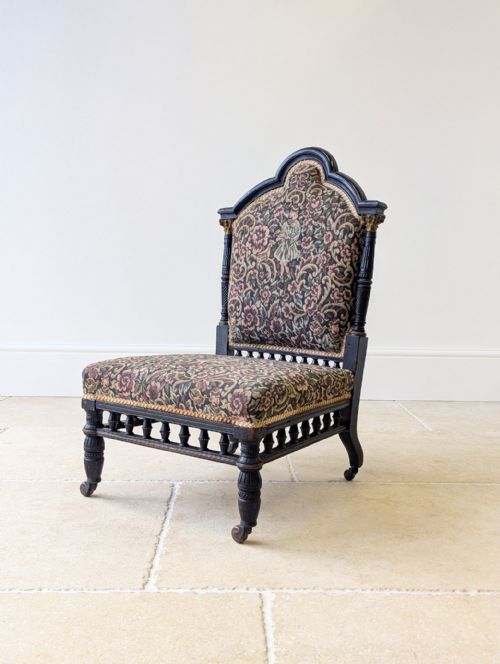
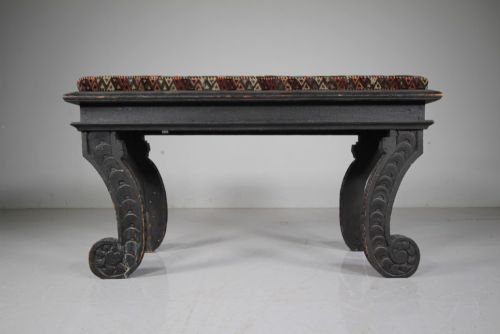
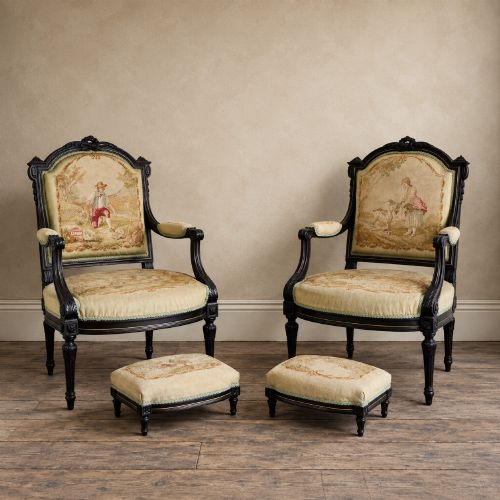
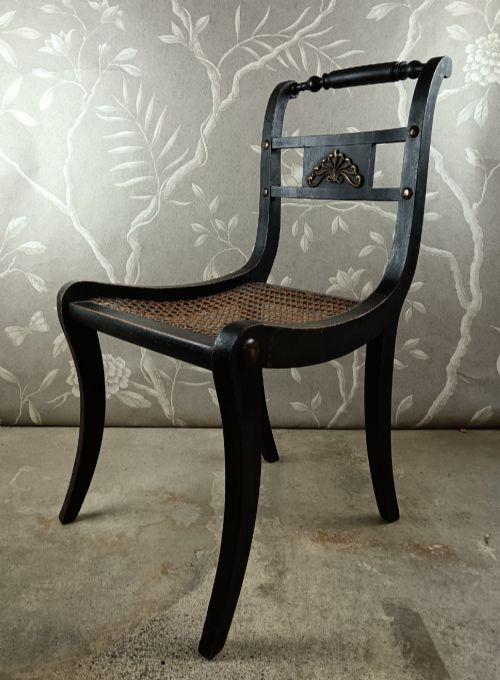
Carved ebonised seating encompasses chairs, benches, and stools finished with a dark, often black stain designed to imitate expensive ebony. The selection draws heavily from Victorian and Regency periods, alongside specific design movements like the Aesthetic Movement and Gothic Revival.
Originating from English and French workshops, these items range from formal dining sets to intimate low salon chairs and prayer chairs. The dark finish unifies disparate timbers while highlighting the precision of the underlying carving.
Materials and construction
The dark surface is achieved through ebonising, a chemical or staining process applied to close-grained timbers like beech or fruitwood to replicate solid ebony. Underlying frames are constructed using traditional joinery methods appropriate to periods spanning the nineteenth century.
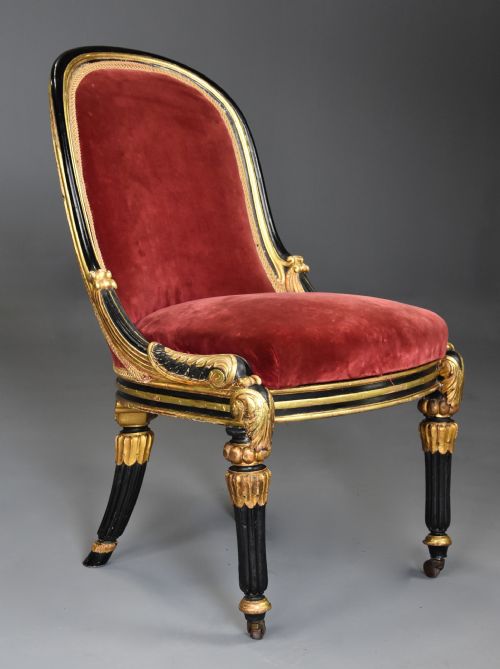
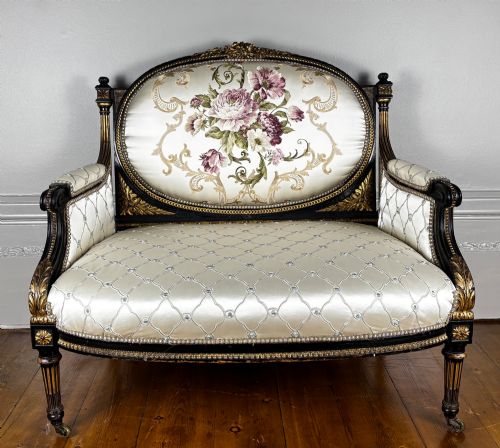
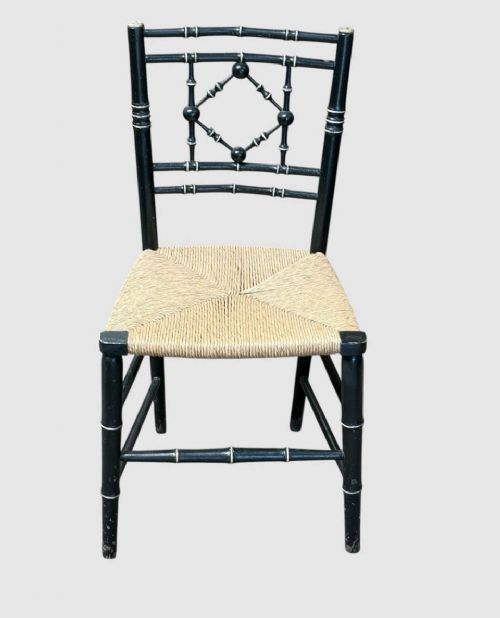
Carved details are executed directly into the wooden framework, sometimes accented with gilt highlights or brass inlay. Seating surfaces utilise cane, woven textiles, velvet, tapestry, or plain fabric for upholstery.
Structural integrity relies on sound internal framing, whether supporting a cane panel or layered upholstery materials such as webbing and stuffing.
Miniature chaise longues offered nineteenth-century occupants a place to recline with extraordinary spatial economy.
Judging quality
Quality reveals itself in the crispness and depth of the carved ornament, where hand-tooled execution displays sharp lines and considered relief rather than soft, moulded edges. The consistency and depth of the ebonised finish also indicate the care taken during original production.
Proportion and structural robustness distinguish superior pieces, particularly in forms subject to heavy use like dining chairs and armchairs. The integration of auxiliary materials, such as genuine cane work or quality gilt highlights, further elevates a piece.
Maker attribution and design provenance, reflected in stylistic adherence to movements like the Aesthetic Revival or Regency, separate standard commercial output from exemplary workshop commissions.
Bruce J. Talbert·Lamb of Manchester·Maple & Co
The Carved Ebonised Seating Glossary
- Ebonised
- Wood treated with a stain or chemical process to turn it black, imitating costly ebony. This finish was especially popular during the nineteenth century for furniture requiring a dramatic, uniform dark surface.
- Aesthetic Movement
- A late nineteenth-century design style emphasising artistic expression, often featuring simplified forms, Japanese-inspired motifs, and ebonised finishes. It rejected heavy Victorian ornamentation in favour of refined linearity.
- Parcel Gilt
- Wood or metal partially decorated with gold leaf or powder. This technique highlights specific carved details against a contrasting ebonised background.
- Trafalgar Sabre Leg
- A curved, outwardly splaying chair leg characteristic of Regency furniture. It adds dynamic movement and stability to dining and side chairs.
- Prie Dieu
- A devotional prayer chair featuring a low seat and an upper rest for the arms or knees. Examples are frequently upholstered in velvet or needlework.
Carved Ebonised Seating: Frequently Asked Questions
What periods do these pieces come from?
The selection spans the nineteenth century, encompassing Regency and Victorian eras alongside specific decades like the eighteen-eighties and eighteen-nineties.
Stylistic influences range from Gothic Revival and Louis XVI styles to the Aesthetic Movement.
How do I maintain ebonised wood?
Keep ebonised surfaces away from direct sunlight and excessive moisture to prevent the dark finish from fading or lifting.
Dust gently with a soft, dry cloth and avoid harsh chemical polishes that can degrade the staining.
Where were these chairs used historically?
These chairs served formal dining rooms, drawing rooms, and specialised spaces like halls or antechambers.
Smaller items like salon chairs and prayer chairs were designed for intimate domestic interiors and private reflection.
How do I distinguish Regency from Victorian examples?
Regency pieces often display classical restraint, sabre legs, and architectural lines influenced by ancient Greece and Rome.
Victorian items tend toward heavier carving, varied revival styles, and the distinct artistic linearity of the late nineteenth century.