
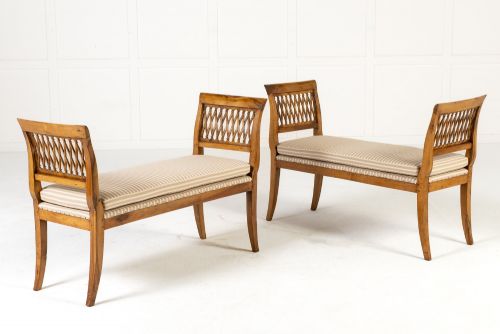
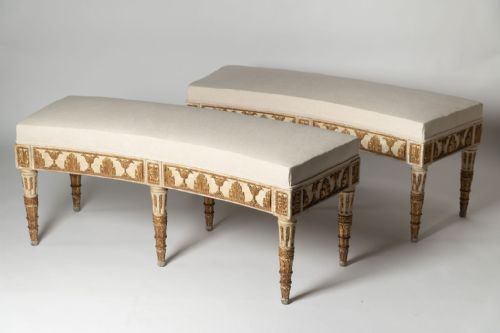
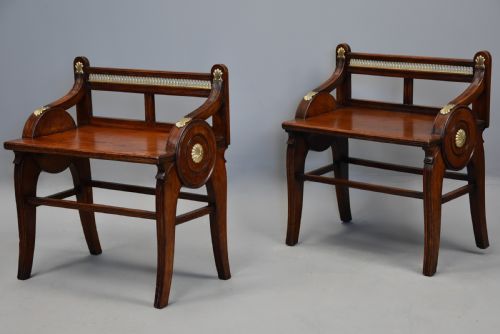

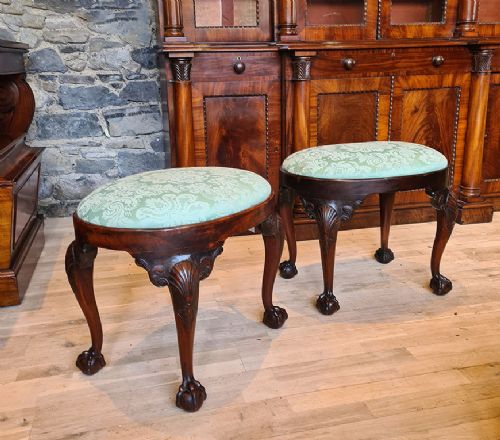


Pair Window Benches
Pair window benches bring symmetrical elegance to a long corridor or the foot of a bed.
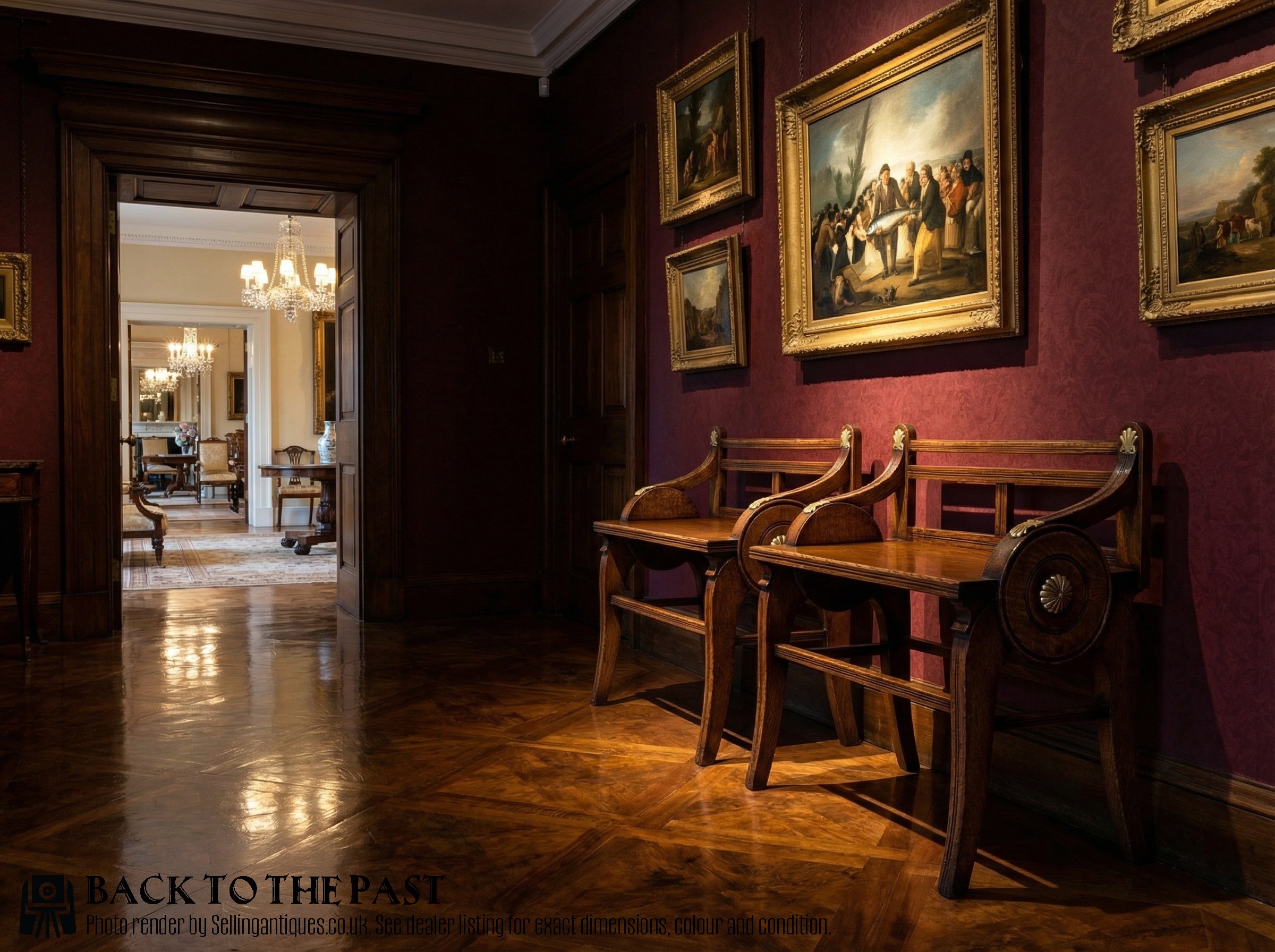
Pair Window Benches
Pair window benches are matching long seats and window seats designed to fit beneath sills or provide balanced seating in hallways and reception rooms. When searching for pair window benches, buyers encounter pieces originating from the eighteenth and nineteenth centuries, including Victorian, Regency, Georgian, and Aesthetic Movement designs. These examples often take the form of window seats, low stools, and hall benches created in matched pairs.
The materials and styles span French walnut, mahogany, oak, satin birch, and rosewood, alongside upholstered variations in leather and fabric. Many of these seating forms incorporate brass mounts, buttoned leather, or fluted legs to achieve their decorative effect.
How they were made
Cabinetmakers constructed the frames of these benches using solid timbers such as mahogany, oak, walnut, rosewood, and satin birch. Carpenters shaped these woods into structural rails and legs, frequently employing fluting or brass mounts for architectural definition.
Upholstery techniques applied to the tops involved traditional stuffing covered in leather, fabric, or buttoned burgundy leather secured with brass-studded detailing.
A few seventeenth-century ancestors probably watched servants wait patiently while the nobility argued about tax reform.
What varies in quality
The standard of timber selection and joinery marks the primary difference between ordinary and superior examples. Finer pieces demonstrate crisp carving on mahogany, walnut, or oak frames and precise execution of details like fluted legs and brass mounts.
The integrity of the original frame structure and the quality of the upholstery materials, whether buttoned leather or woven fabric, heavily influence the overall refinement of the piece.
James Shoolbred & Co.
The Pair Window Benches Glossary
- Window Seat
- A long seating bench specifically proportioned in height and length to sit beneath a domestic window recess.
- Biedermeier
- A Central European style dating from the nineteenth century characterised by clean lines and blonde woods like satin birch.
- Aesthetic Movement
- A late nineteenth-century design style focusing on artistic visual qualities rather than narrative or historical revivalism.
- George III
- A British stylistic period spanning the eighteenth century, known for classical proportions and the prominent use of mahogany.
Pair Window Benches: Frequently Asked Questions
Where should I place pair window benches?
These matched benches suit narrow hallways, large landings, or the base of a bedroom bed where balanced seating is practical.
They also sit naturally beneath tall period windows to create a defined seating area.
How do I identify nineteenth-century benches?
Examine the timber species, construction methods, and decorative motifs such as brass mounts or buttoned leather.
Period characteristics often align with Victorian, Regency, or Aesthetic Movement design vocabularies.
Are these seats comfortable for daily sitting?
Many include upholstered pads in fabric or leather that offer cushioned support for regular use.
Firmness varies depending on whether the padding uses traditional stuffing or modern replacement materials.
What is the difference between hall benches and window seats?
Hall benches often feature firmer wooden or upholstered tops designed for transitional spaces like corridors.
Window seats typically present lower profiles and softer upholstery suited to relaxed interior spaces.