



Curved Window Seat
A curved window seat sits neatly in a bay, offering a low perch tailored to the architecture of older rooms.
Curved Window Seat
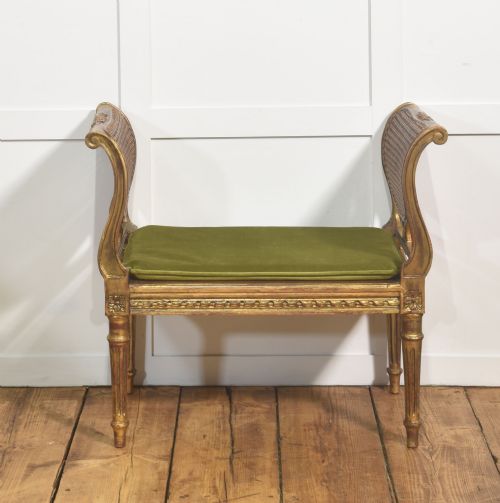
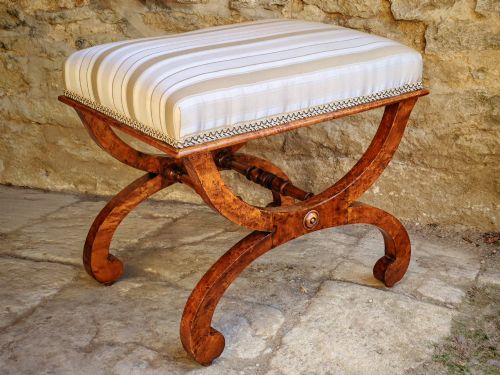
A curved window seat provides a specialised form of seating designed to follow the sweep of a bay window or circular alcove. These pieces emerge in various forms across the Georgian, Regency, Victorian, and Edwardian periods, frequently appearing as low stools, benches, or daybeds.
The versions most commonly met on this page span the nineteenth and early twentieth centuries, reflecting styles from Louis XVI revival to Moorish and Aesthetic movements. Makers adapted their designs to suit domestic architecture, producing curved frames in mahogany, satinwood, and giltwood.
Buyers look for these items to fit specific architectural spaces where standard rectangular furniture fails. The selection combines practical seating with distinct period character, drawing on historical forms ranging from simple painted woodwork to elaborate gilt frames.
How they were made
Makers shaped solid timbers such as mahogany, satinwood, and rosewood to form the curved rails and frames required for bay window furniture. Joinery techniques allowed timber to follow continuous arcs without losing structural integrity.
Surface treatment varied from polished mahogany and simulated rosewood to giltwood and painted finishes. Upholstered sections utilised traditional webbing and stuffing beneath fabrics like velvet, cane, or modern upholstery textiles.
Edwardian and Victorian periods account for the majority of the painted and upholstered seating options here.
What varies in quality
Quality rests in the precision of the curved timber framing and the fluidity of the line. Superior pieces maintain robust structural joints within difficult serpentine or semicircular forms.
The refinement of the surface work distinguishes fine examples, whether through crisp carving on giltwood frames, neat caning, or the careful selection of figured satinwood and mahogany veneers.
Marsh, Jones and Cribb
The Curved Window Seat Glossary
- Giltwood
- Wood that has been coated with gold leaf or a metallic substitute. This finish appears frequently on formal revival seating.
- Cane
- Woven rattan or plant material forming a porous panel for seats or backs. It provides a light texture often seen on Edwardian and earlier frames.
- Satinwood
- A durable timber with a golden sheen used for fine furniture veneers. It brings a bright, reflective surface to dressing stools and window seats.
- Aesthetic Movement
- A late nineteenth-century design style prioritizing visual beauty over narrative content. Pieces from this movement often feature distinct decorative details.
- Simulated rosewood
- Paintwork applied to a secondary timber to imitate the grain and colour of rosewood. This technique offered a decorative finish at a lower cost than solid exotic wood.
Curved Window Seat: Frequently Asked Questions
Where do curved window seats fit best?
These seats suit bay windows and curved architectural alcoves where straight furniture leaves awkward gaps. Their curved footprints allow them to hug the interior perimeter of a room.
They also function well at the foot of a bed or beneath a low landing window, providing functional seating without blocking light.
How do I identify a Regency piece?
Regency seating often draws inspiration from classical antiquity, featuring clean lines and dark woods like mahogany or simulated rosewood. Look for understated classical motifs and balanced proportions.
These designs frequently prioritize architectural form over heavy carved ornamentation, reflecting early nineteenth-century tastes.
What is the difference between a stool and a settee?
Stools built for windows lack backs and provide low, open perches designed not to obscure the glass. Settees and daybeds include backs or armrests for longer periods of reclining.
Both forms adapt to curved spaces, but stools remain lower and more compact.
Are these seats suitable for daily use?
Period seating handles regular sitting provided the underlying joinery and webbing remain secure. Many surviving examples retain sturdy hardwood frames built for long-term domestic service.
Upholstery fabrics and cane panels may require periodic renewal depending on the level of wear they receive.