
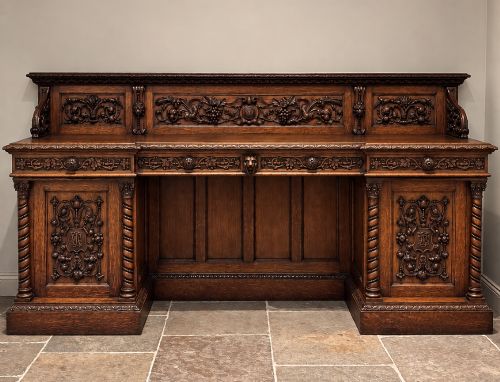

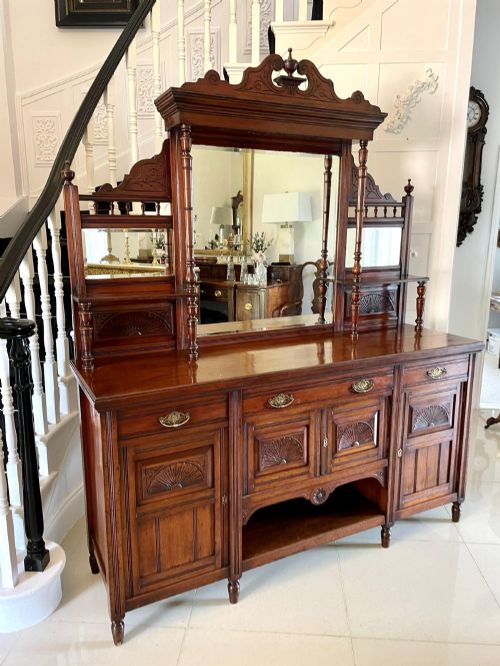
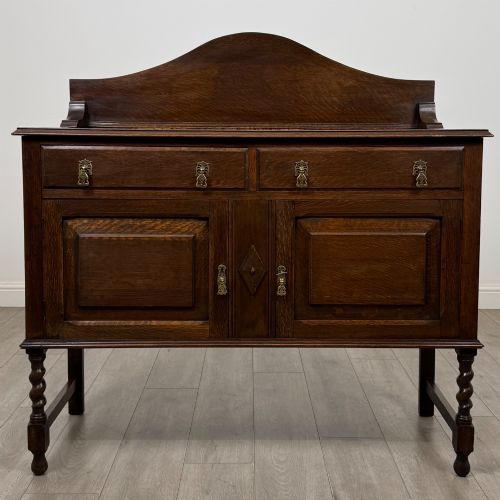
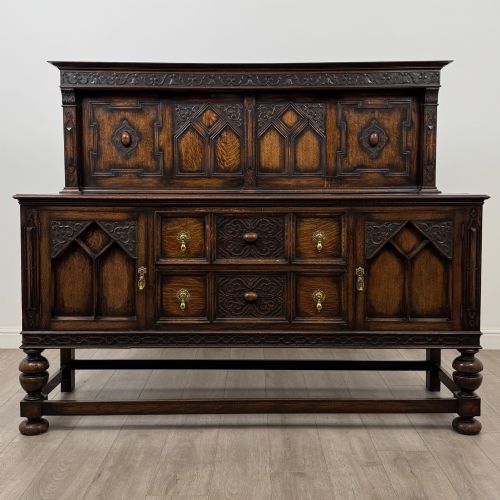
Carved Dark Wood Credenza
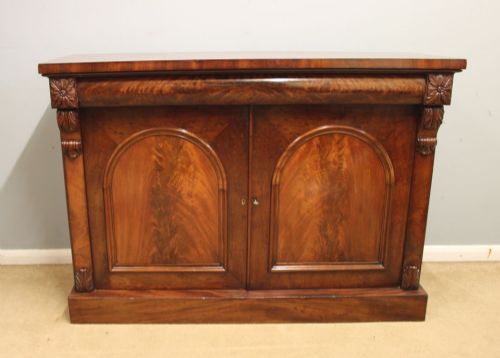
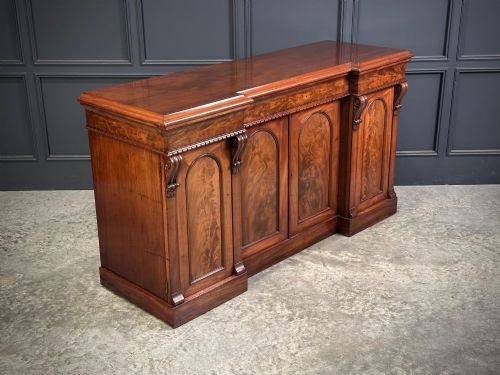
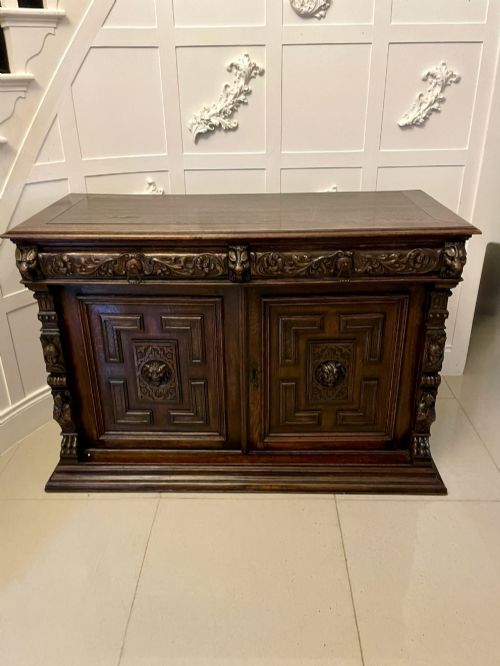
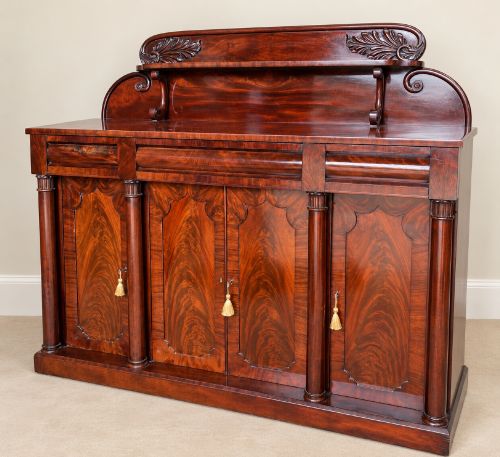
A carved dark wood credenza brings presence and deep grain to a room, offering substantial storage built with historical timber.

Carved Dark Wood Credenza
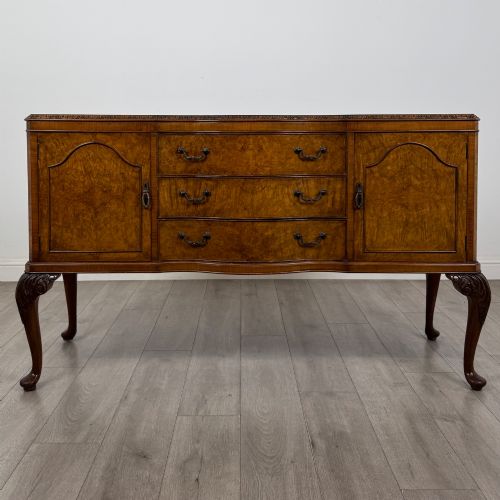
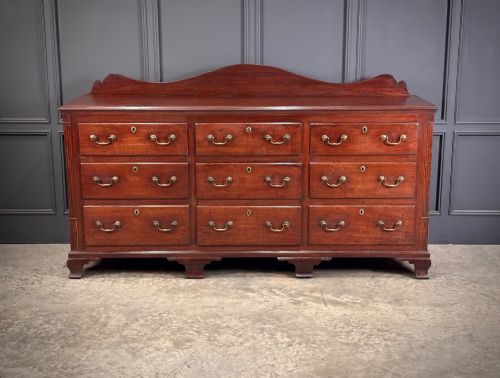
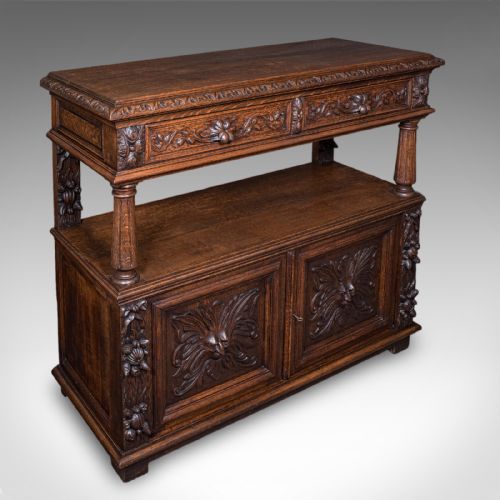
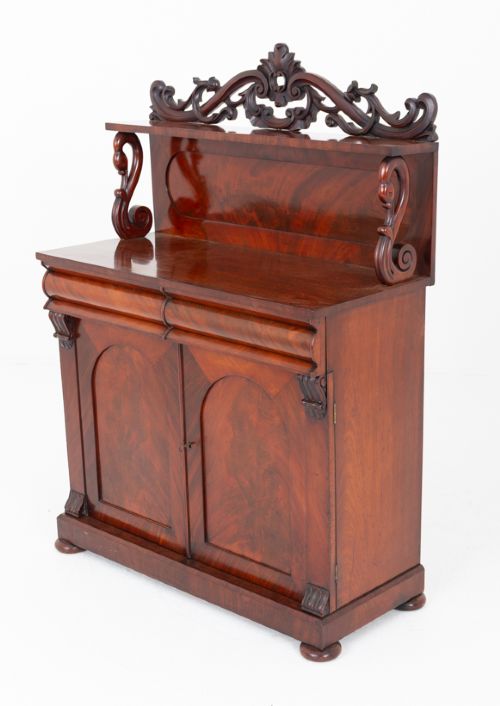
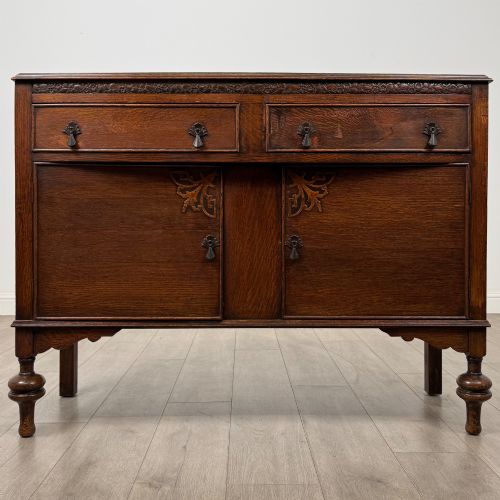
A carved dark wood credenza search reveals substantial timber storage furniture spanning several centuries, though buyers here will predominantly encounter Victorian and Edwardian sideboards, buffets, and cabinets. These forms function as large serving pieces or display units, anchoring dining rooms and hallways with significant presence.
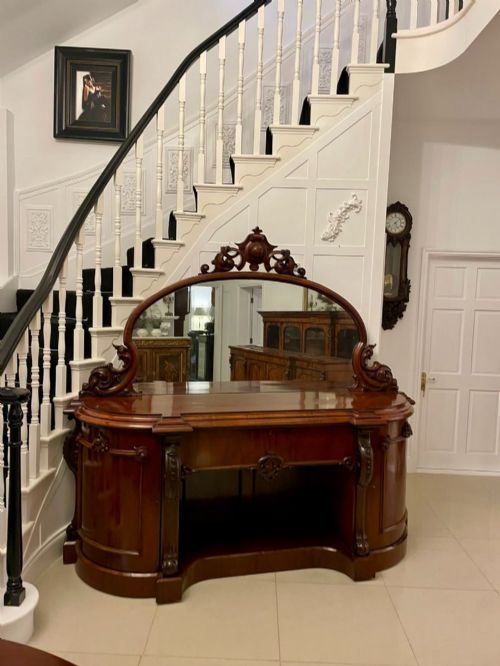
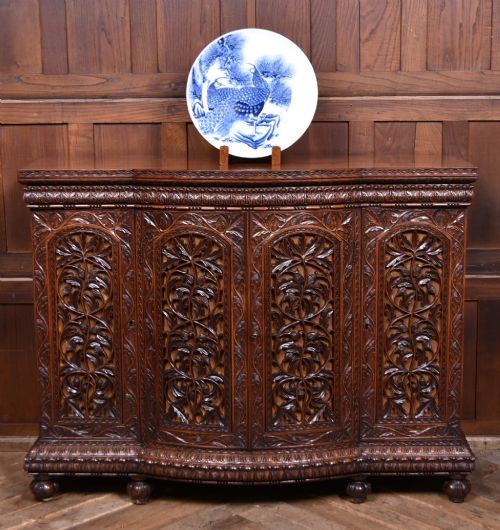
The material palette is dominated by rich timbers like mahogany, oak, and walnut, frequently enriched with deep carving and architectural details such as mirror backs. Pieces range from austere early styles to heavily ornamented Victorian and Jacobean revival designs built to command attention in a formal interior.
How they were made
Cabinet makers utilised dense, durable hardwoods including mahogany, oak, walnut, rosewood, and padouk, selected for deep colour and striking grain patterns like flame mahogany and burr walnut. These timbers were worked by hand and machine to form heavy structural carcasses and panelled doors.
Surface ornament relied on deep relief carving, barley twist turnings, and applied mouldings, often paired with brass hardware and integrated glass panels. Backboards frequently incorporated bevelled mirrors, while internal arrangements included sturdy timber shelving and banks of drawers.
One particularly dedicated Victorian maker added a mirror back so large it essentially turned the dining room into a hall of mirrors.
What varies in quality
Quality rests in the selection of the timber and the depth of the carving, where pieces executed in figured flame mahogany or dense burr walnut outshine plain utility builds. Superior examples display crisp, hand-chiselled relief work rather than shallow, mechanical stamping.
Construction integrity separates the finest items, evident in tight joinery, substantial timber thickness, and original brass fittings that remain firm in their mounts. The sophistication of the overall design, such as balanced proportions on large mirror backs and breakfront formats, dictates the upper tier.
The Carved Dark Wood Credenza Glossary
- Chiffonier
- A compact sideboard popular in the nineteenth century, typically featuring enclosed lower cupboards and a raised shelf or mirror superstructure.
- Flame mahogany
- Timber cut from the fork of the mahogany tree to create a distinctive, flickering flame-like grain pattern. It was highly prized for principal display surfaces.
- Barley twist
- A decorative turning technique resembling a twisted rope, commonly found on the upright supports of Edwardian and Jacobean style furniture.
- Mirror back
- A tall wooden superstructure incorporating a mirror, designed to sit atop a sideboard or console table to reflect light and objects in the room.
Carved Dark Wood Credenza: Frequently Asked Questions
What rooms suit a dark wood credenza?
These pieces suit dining rooms, grand hallways, and spacious living areas where their dark timber and substantial proportions anchor the interior.
They provide deep surface space for serving or display, while enclosed cupboards and drawers conceal dining linens or household items.
How do I care for antique dark wood?
Maintain the timber by dusting regularly with a soft, dry cloth and avoiding placement near direct heat sources or strong sunlight.
Apply a traditional beeswax polish occasionally to nourish the grain and preserve the rich patina built up over centuries.
How do I distinguish Victorian from Edwardian pieces?
Victorian pieces generally feature heavy proportions, deep hand-carving, and darker finishes with ornate mirror backs or Gothic revival influences.
Edwardian furniture often displays lighter oak construction, simpler lines, and revival styles such as Jacobean or Adam, frequently utilising barley twists.
What is flame mahogany?
Flame mahogany is a decorative veneer cut where branches join the main tree trunk, producing a dramatic, flickering pattern across the wood.
Cabinet makers reserved this striking timber for the primary doors and drawer fronts of high-status sideboards and cabinets.