


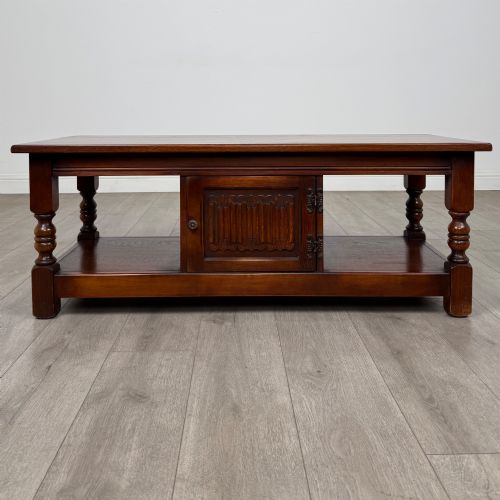
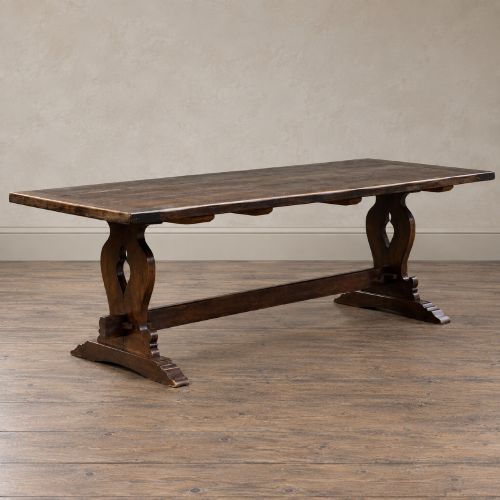
Carved Dark Oak Table
A carved dark oak table brings centuries of substantial timber and deep patination into a room, offering a sturdy surface shaped by revivalist cabinet-makers.
Carved Dark Oak Table
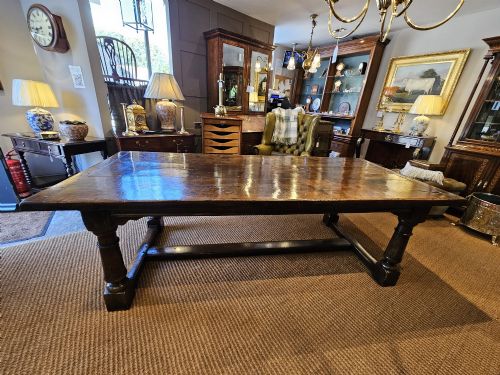
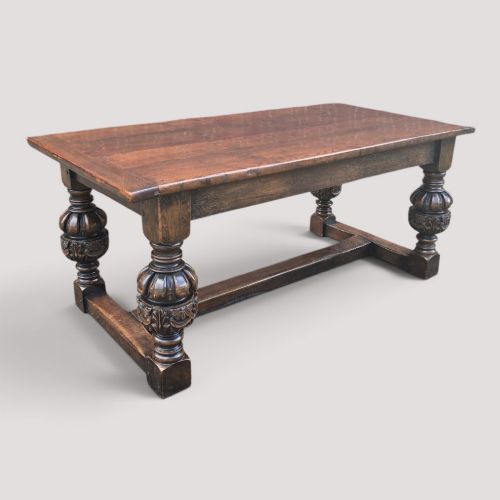
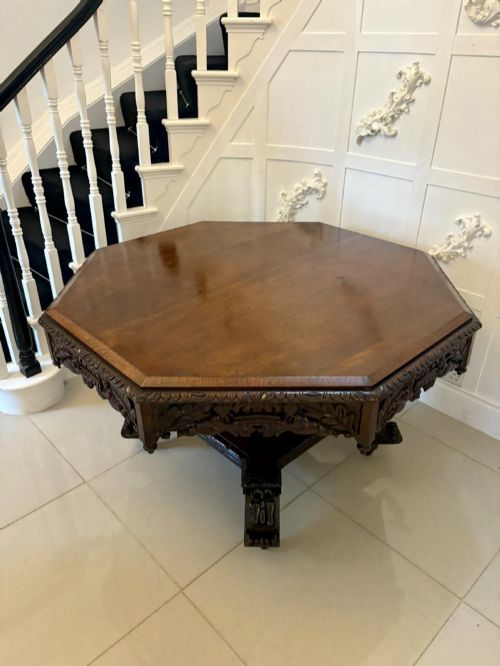
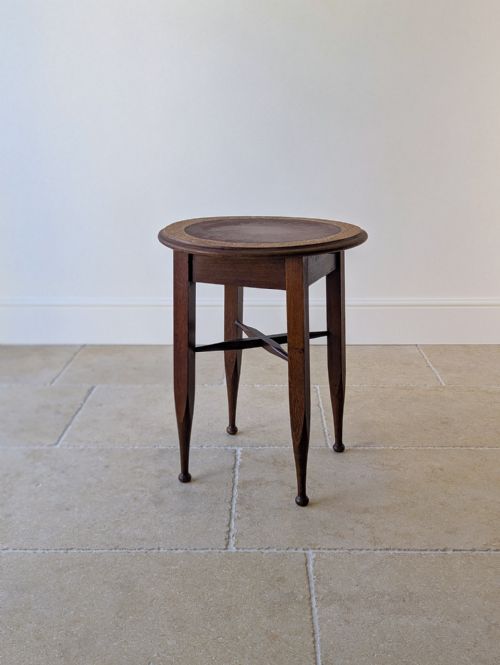
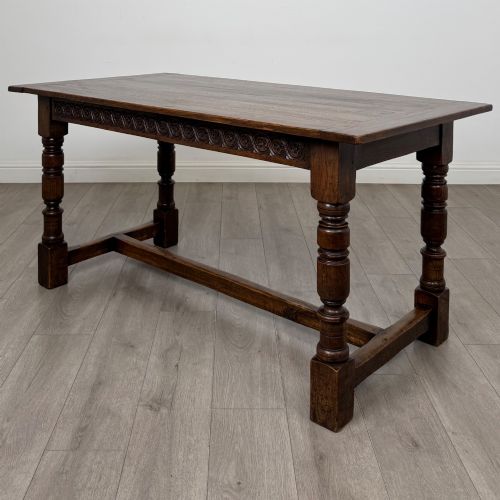
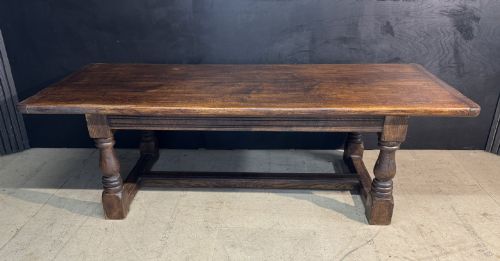
A carved dark oak table spans several distinct eras, appearing most frequently in Edwardian interpretations alongside Victorian, Georgian, and seventeenth-century originals. Buyers searching for a carved dark oak table encounter forms ranging from massive refectory dining boards to compact side tables, gateleg designs, and occasional pieces.
The material integrity defines the category, utilising solid timber often finished with rich, dark patination that highlights hand-chiselled detailing. Pieces frequently incorporate revivalist movements such as Jacobean, Gothic, and Arts and Crafts, bringing historical ornamentation into domestic spaces.
How they were made
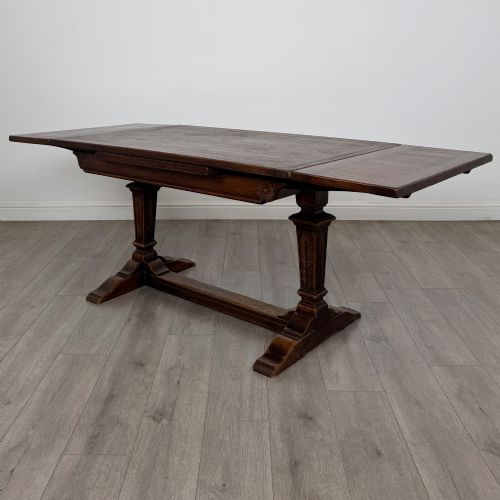
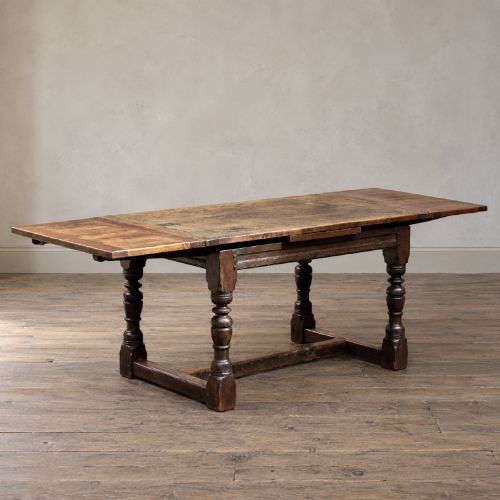
Construction relies heavily on solid oak timber, selected for its density and durability, joined using traditional methods suited to heavy furniture. Joinery often includes draw-leaf mechanisms, trestle supports, and gateleg frames designed to bear substantial weight.
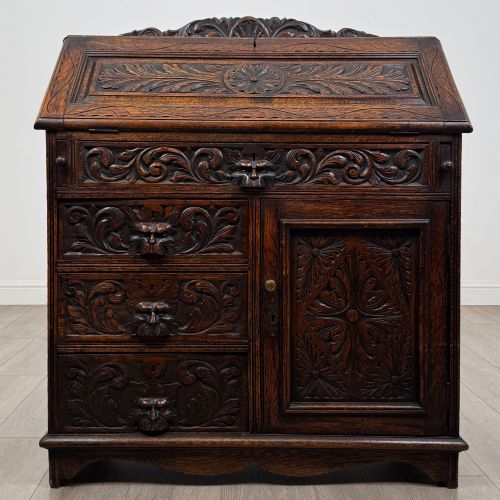
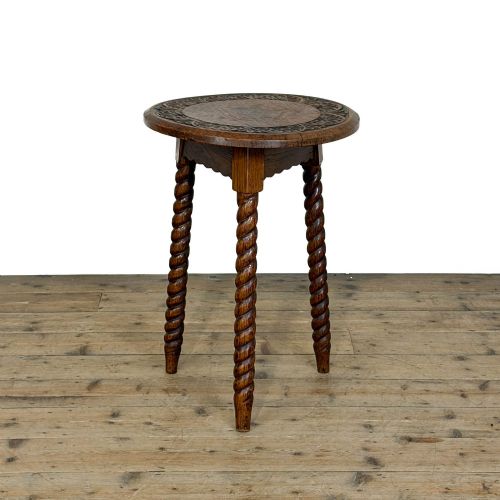
Carving is executed directly into the wood, displaying motifs like linenfold, fruiting vines, and Green Man masks. Secondary materials such as brass, iron, and wood inlay appear in hardware, hinges, and decorative accents.
Carved Dark Oak Table Retail Price Guide 2026
Typical asking prices for carved dark oak table among the pieces listed under this phrase on Sellingantiques today, from the lower quarter to the upper quarter. They describe what is for sale here now, not the wider market.
A solitary fruit bowl demands a detailed carved vine to hold your daily apples.
What varies in quality
Depth and crispness of the hand-carved ornamentation separate standard production items from superior examples. Sharp, deep relief work on friezes and legs indicates skilled craftsmanship.
The quality of the timber grain and the depth of the dark patination dictate visual success. Heavier proportions and integrated mechanisms, such as smooth-running draw leaves or gateleg actions, elevate the construction.
George Wadham
The Carved Dark Oak Table Glossary
- Refectory table
- A long, narrow dining table traditionally used in monastic refectories and adapted into domestic dining rooms.
- Draw leaf table
- An extending table with hidden leaves stored beneath the main top that pull out to lengthen the surface.
- Gateleg table
- A drop-leaf table featuring hinged legs that swing out to support the folded leaves when raised.
- Linenfold
- A style of carved wooden panelling that resembles folded vertical folds of fabric.
- Barley twist
- A decorative turning technique shaped like a spiral rope, popular in seventeenth-century and Victorian furniture.
Carved Dark Oak Table: Frequently Asked Questions
How do I date a carved dark oak table?
Dating relies on identifying construction methods, hardware types, and stylistic revival cues visible in the carved motifs. Seventeenth-century originals show hand-pegged joints and distinct tool marks, whereas Victorian and Edwardian revival pieces often use standardised screws and machine-assisted joinery alongside historical decorative styles.
Examining the underside and drawer construction helps clarify the period. Oak colour and patination deepen over centuries, though revival workshops frequently applied dark finishes to mimic earlier ages.
How were refectory tables used historically?
Refectory tables originally served communal dining halls in monasteries and large estates, accommodating numerous guests for substantial meals. Their long, narrow proportions allowed servers to reach diners easily from the sides.
Over time, these large boards transitioned into domestic dining rooms. They remain practical focal points for large gatherings and everyday meals.
What is a draw leaf mechanism?
A draw leaf mechanism consists of two sliding leaves positioned beneath the main table top. When pulled outward, the main top drops slightly into place, creating an extended surface without requiring loose boards.
This clever engineering allowed households to adapt table lengths quickly for guests. The joints remain sturdy when extended, supporting the weight of heavy oak.
How do I maintain dark oak furniture?
Maintaining dark oak involves keeping the timber away from direct heat sources and excessive moisture to prevent warping. Regular dusting with a soft cloth preserves the surface without buildup.
Applying occasional appropriate wax feeds the grain and maintains the rich, dark lustre. Avoid harsh chemical cleaners that strip the historic patination.