

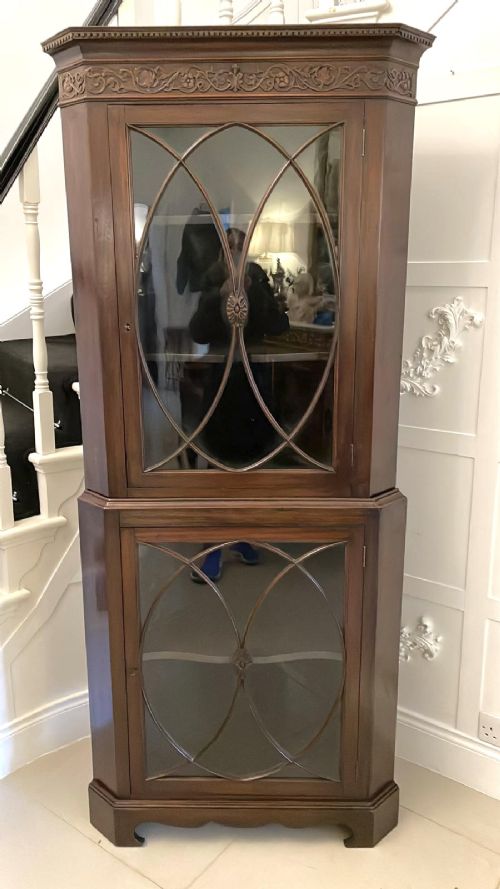
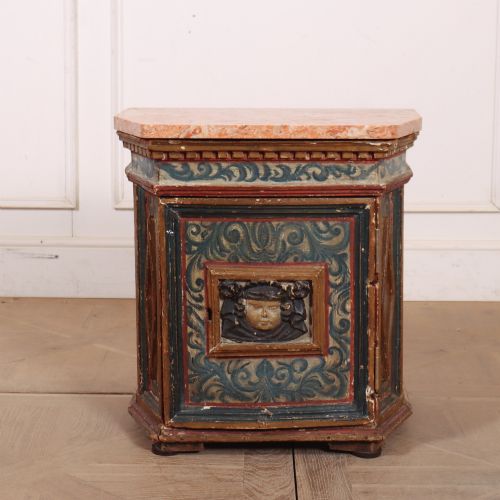
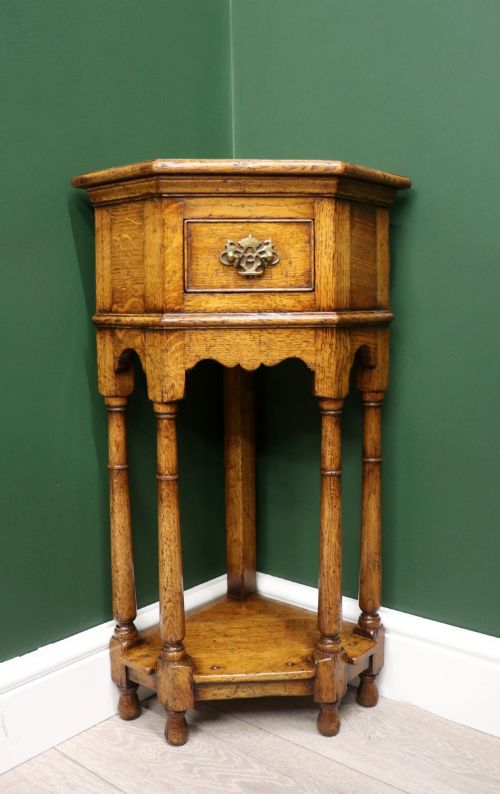
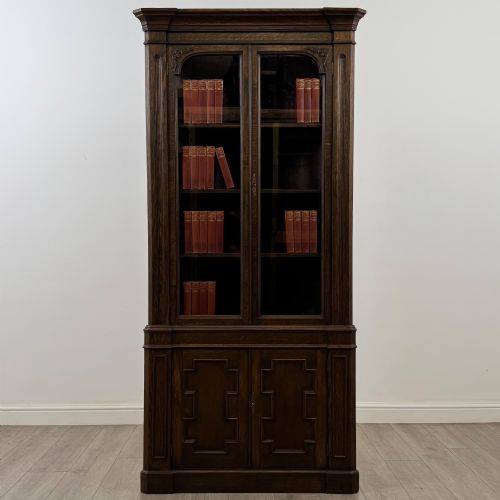
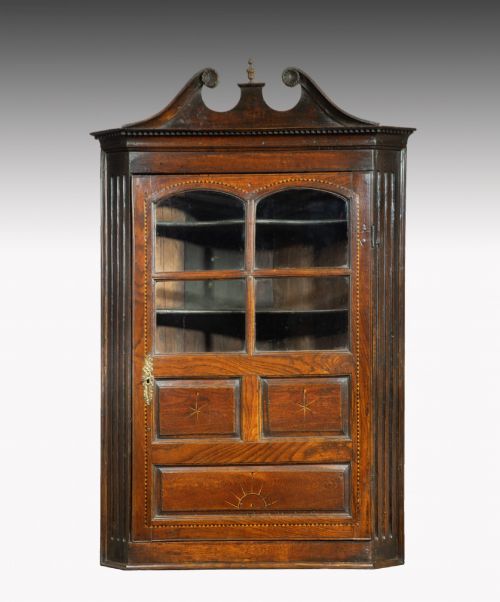
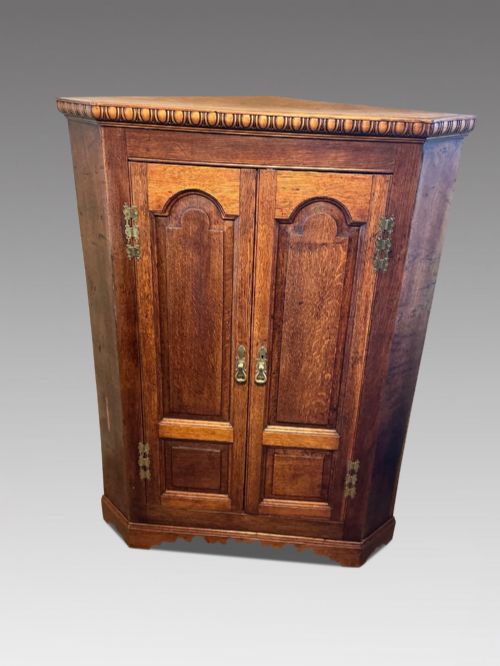
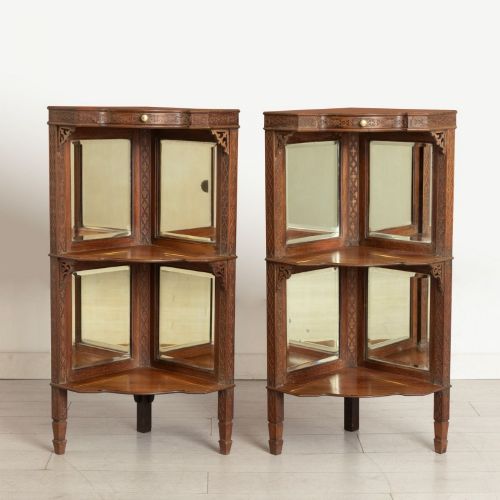

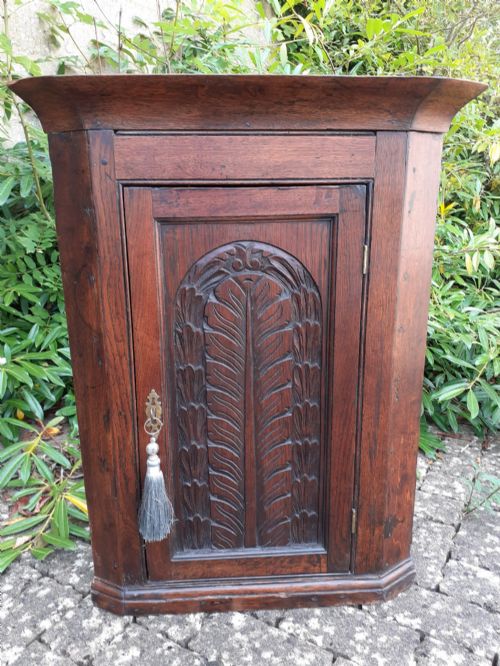


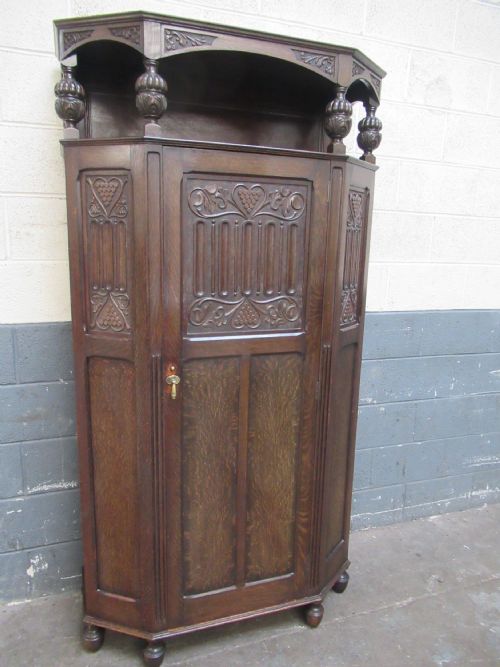


Carved Corner Cabinet
When you search for a carved corner cabinet, you are looking for a space-saving architectural furniture piece designed to bring display and storage to unused room intersections.
Carved Corner Cabinet
A carved corner cabinet bridges the practical need for storage with the clever utilisation of awkward domestic angles, frequently appearing as either wall-hanging cupboards or robust floor-standing units.
The pieces represented in this selection span the eighteenth and nineteenth centuries, taking forms that range from simple country oak wall cupboards to elaborate Victorian display cabinets.
Makers and craftsmen across various regions adapted these versatile forms to fit domestic interiors, producing everything from modest hanging units to tall, architectural display pieces.
How They Were Made
Construction relies heavily on sturdy timbers such as oak, mahogany, and walnut, often shaped to fit snugly into ninety-degree wall junctions.
Carving techniques bring surface texture to the timber panels, accompanied by brass hardware, glass panels for display, and occasionally ormolu mounts.
Cabinet makers utilised traditional joinery methods to build strong frames that could support the weight of heavy doors and internal shelving over centuries of use.
Listings feature timbers including oak, mahogany, walnut, pine, teak, and rosewood across Georgian, Victorian, and Edwardian periods.
What Varies in Quality
The standard of carving distinguishes routine cabinet work from exceptional pieces, with crisply defined motifs showing far greater artisanal skill than flat or hurried decoration.
Timber selection and grain matching dictate the visual weight of a piece, particularly in walnut and figured mahogany where natural patterning creates rich surface depth.
Structural integrity depends on original hinges, sound internal shelving, and tight joints that maintain alignment within the wall angle.
Edwards & Roberts·Goodhall Lamb and Heighway
The Carved Corner Cabinet Glossary
- Astragal glazed
- A method of dividing glass panes within a door using thin timber or metal bars, commonly seen on eighteenth and nineteenth-century display cabinets.
- Hanging cupboard
- A wall-mounted cabinet designed to be secured directly to room studs, freeing up valuable floor space beneath.
- Whatnot
- An open set of tiered shelves used for displaying decorative objects, frequently adapted to fit triangular corner spaces.
- Ormolu
- Finely chased and gilt bronze mounted to wooden furniture surfaces, providing decorative contrast against dark hardwoods.
- Traceried
- Architectural window-style openwork or carved patterns reminiscent of Gothic ecclesiastical design.
Carved Corner Cabinet: Frequently Asked Questions
How were corner cabinets used?
These cabinets served to store china, glassware, or provisions while efficiently occupying unused room angles.
Their triangular footprint allowed homeowners to maximise interior space in parlours, dining rooms, and hallways without obstructing movement.
Are hanging or floor standing better?
Hanging models suit smaller rooms or kitchens by utilising wall space above other furniture, while floor standing units provide greater interior volume and presence.
Choice depends entirely on ceiling height, floor clearance, and the weight of items intended for storage.
How do I date an oak corner cabinet?
Dating relies on construction traits, hinge types, and carving styles, with eighteenth-century pieces often showing pegged joinery and hand-planed backboards.
Revival pieces from the Victorian era frequently employ machine-cut elements and distinct period-revival motifs like Green Man carvings.
Do they fit standard room corners?
Most historic cabinets are built to standard ninety-degree angles, though wall plaster irregularities in older properties sometimes require minor adjustments during hanging.
Measuring the exact wall depth and door swing clearance ensures the cabinet fits flush without striking adjacent mouldings.