
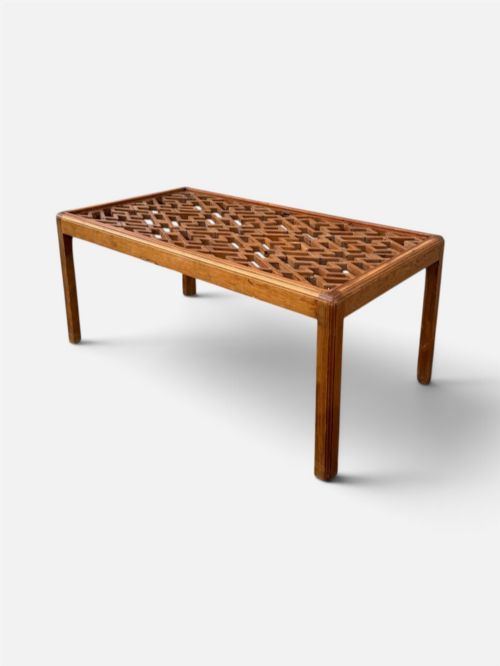


Carved Chinese Coffee Table
A carved chinese coffee table brings low, grounded form and intricate woodwork into a room, drawing on centuries of Asian craftsmanship.
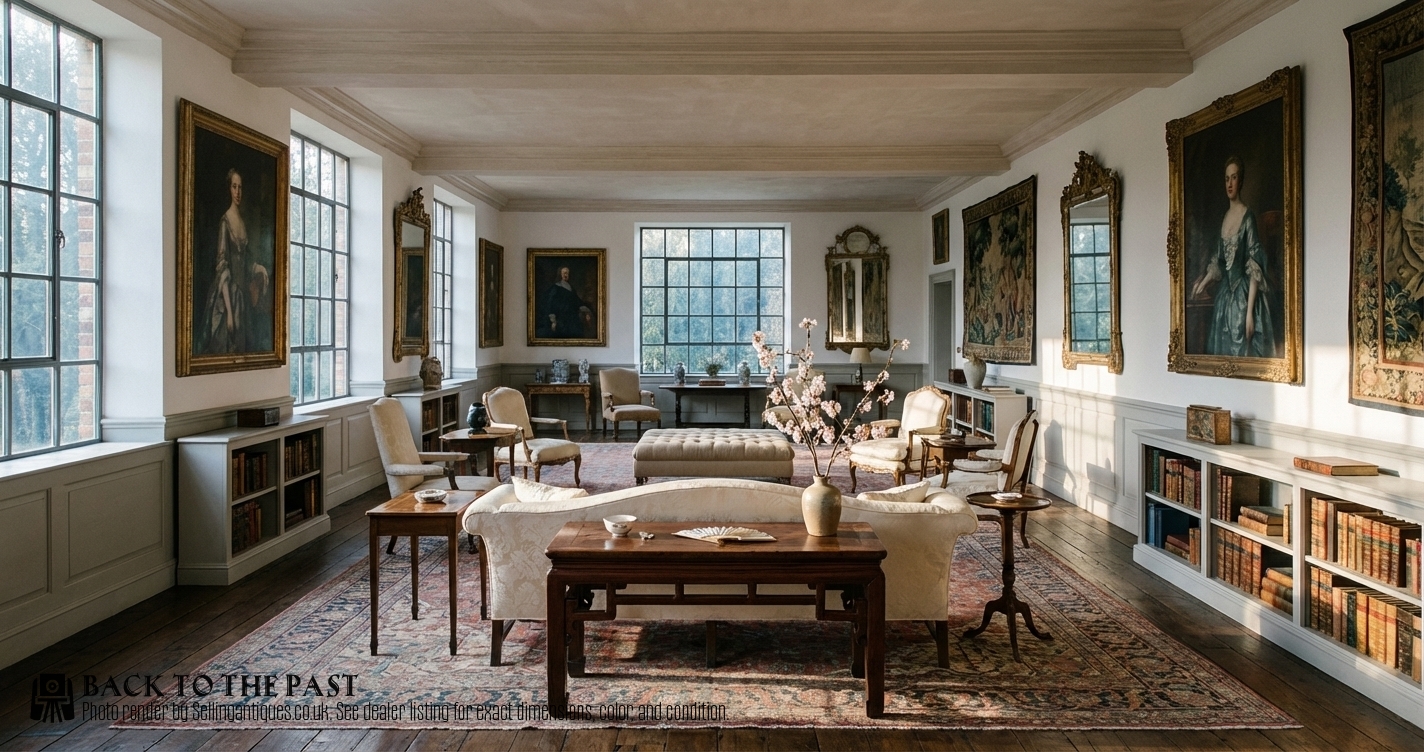
Carved Chinese Coffee Table
A carved chinese coffee table encompasses a range of low-slung surface furniture derived from traditional forms such as the kang or opium table, alongside adapted chests and nesting sets. These pieces emerge predominantly from the nineteenth century and the early twentieth century, spanning Qing Dynasty traditions and later export styles.
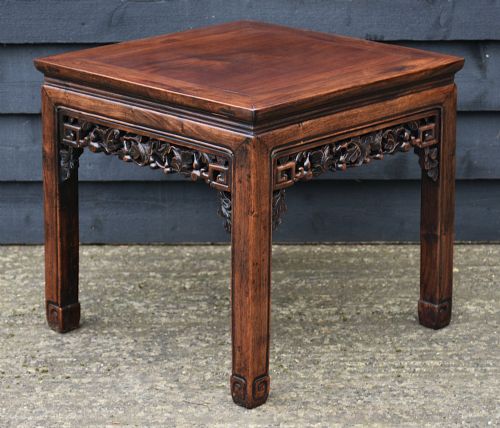
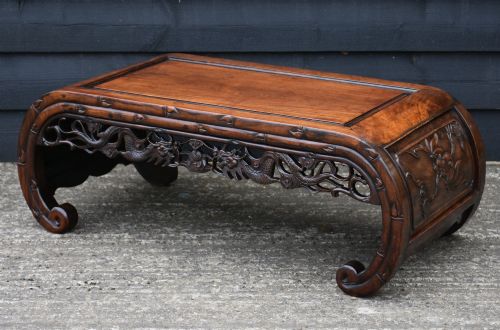
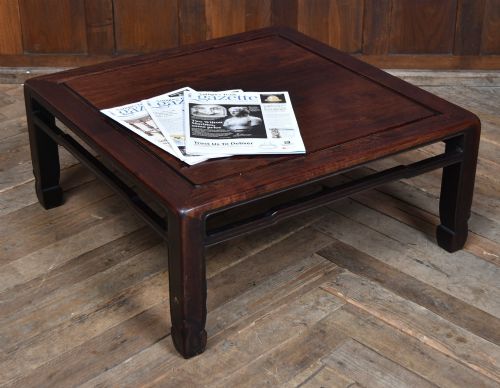
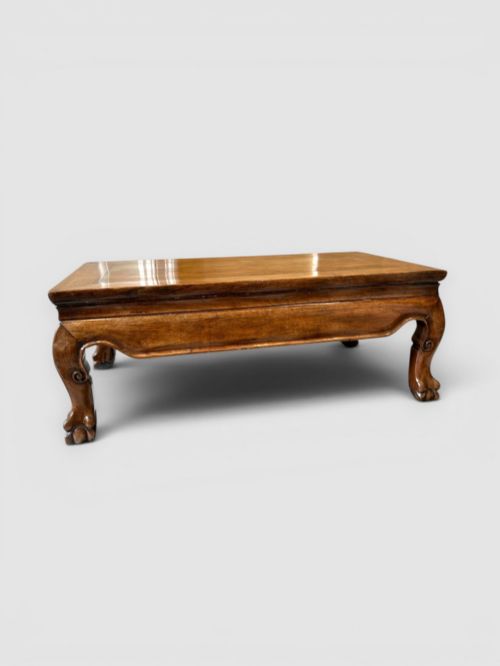
The version most commonly encountered is the low rectangular or square hardwood table, often detailed with scroll ends, dragon motifs, or fretwork panels. Alongside these, buyers frequently find nests of tables, round reception tables, and camphorwood trunks repurposed for modern living.
Materials and Technique
Construction relies heavily on dense timbers including rosewood, padouk, hongmu, teak, and elm, selected for their structural stability and rich natural grain. Artisans employed traditional joinery methods that allowed the timber to expand and contract with environmental changes without the heavy reliance on metal fixings.
Carving and surface decoration define the aesthetic, ranging from deep relief work depicting dragons and foliage to applied soapstone panels and contrasting red, black, or ebonised lacquer finishes. Some examples incorporate glass tops or marble insets to protect the timber surface while maintaining visibility of the craftsmanship below.
Camphorwood chests were lined to keep out insects, meaning tables made from them still carry a faint, clean botanical scent.
Standards of Execution
Quality rests in the crispness of the hand-carved detail and the selection of the timber, where dense, heavy hardwoods with a deep patina command attention. The depth and fluidity of relief work, particularly around scroll ends and dragon motifs, distinguish individual workshops.
Integrity of construction also separates tiers of pieces, seen in tight joints, balanced proportions, and the condition of original lacquer or polished wood surfaces. Tables that retain their structural firmness without excessive replacement parts represent the upper tier of surviving examples.
The Carved Chinese Coffee Table Glossary
- Kang table
- A traditional low platform table originating from northern China, traditionally used for sitting, dining, or sleeping on a heated brick bed. These low forms form the direct template for many modern coffee tables.
- Hongmu
- A category of dense, dark, fragrant tropical hardwoods prized in Chinese furniture making. It translates literally to red wood.
- Padouk
- A heavy, durable timber with a distinctive reddish-brown tone used extensively in fine Asian cabinet making. It patinates richly over time.
- Fretwork
- Openwork carving or joinery forming geometric or linear patterns. It appears frequently on panels beneath table tops.
- Chinoiserie
- European decorative art style reflecting Chinese artistic influences, applied here to describe transitional export pieces and lacquer finishes.
Carved Chinese Coffee Table: Frequently Asked Questions
How were opium tables used originally?
These low platforms served as central pieces in traditional domestic spaces for resting, drinking tea, and social gathering. People sat on mats or cushions placed directly on the floor around them.
Over time, their modest height and balanced proportions made them natural candidates for adaptation as coffee tables in Western interiors.
What is the difference between a kang table and a low table?
A kang table specifically references the traditional domestic platform style, often featuring distinctive scroll ends or inward-curving legs. General low tables encompass a broader category of occasional and reception surfaces.
Both serve the same functional purpose in modern rooms but originate from slightly different traditional domestic contexts.
How do I care for antique hardwood tables?
Maintaining these surfaces requires simple dusting with a dry cloth and avoiding placement near direct heat sources or strong sunlight. Hardwood and lacquer react to dramatic shifts in humidity.
Applying a traditional wax polish occasionally helps nourish the timber and preserve the natural patina without sealing the grain.
Are nested tables traditional Chinese forms?
Nesting table sets gained significant popularity during the late nineteenth and early twentieth centuries to meet export demand for versatile furniture. They combine traditional joinery and carving styles with modular space-saving utility.
Craftsmen built them in graduated sizes so smaller tables slide neatly beneath the primary surface.
How can I tell a 19th-century table from a later one?
Nineteenth-century examples generally display deeper hand-carving, heavier dense timbers like padouk or rosewood, and a distinct natural patina built up over decades. Tool marks and joinery details often reveal older hand-working techniques.
Twentieth-century pieces frequently utilise lighter construction, differing lacquer compositions, or incorporate inset elements like glass panels from the outset.