
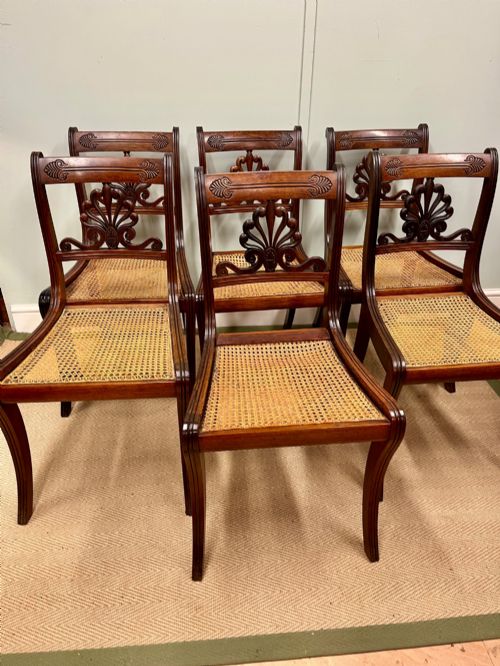
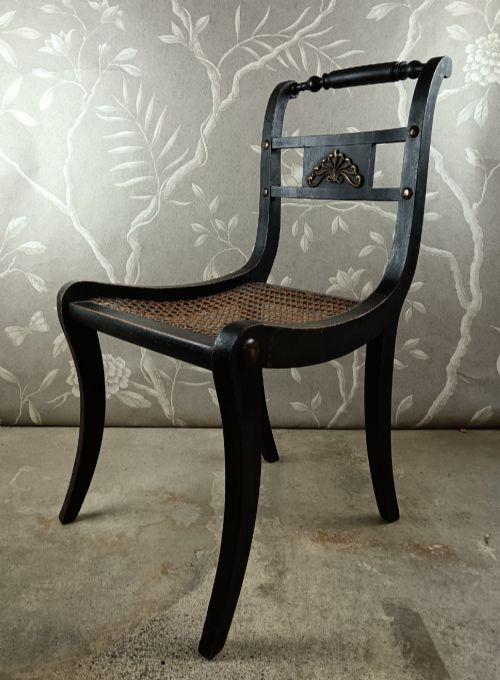
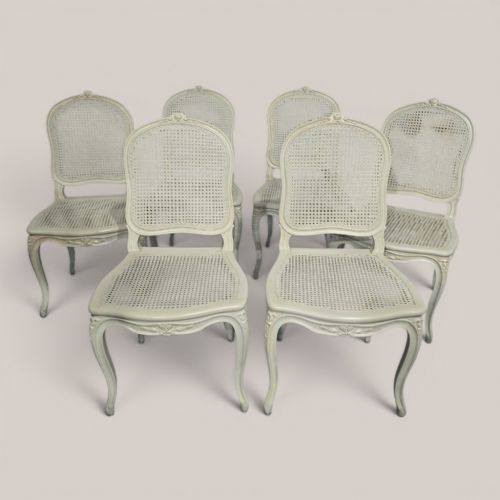
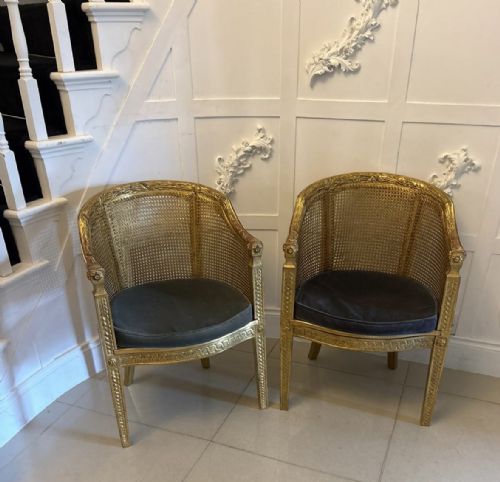



Carved Cane Side Chairs
These carved cane side chairs combine open wooden frames with woven plant seating, offering light mobility and historical presence across multiple centuries.
Carved Cane Side Chairs
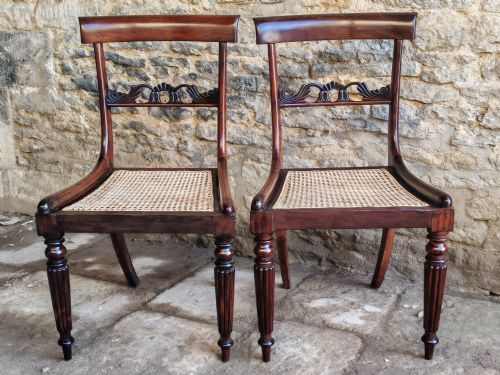
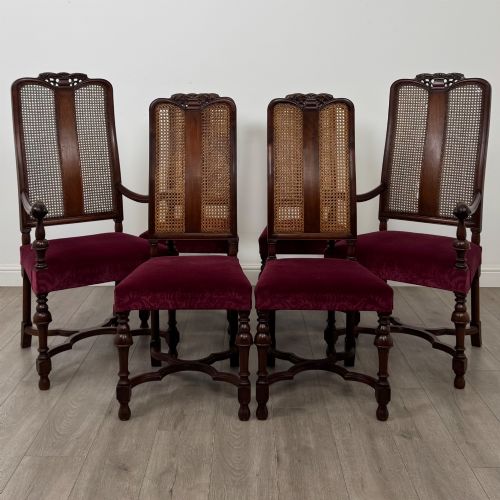
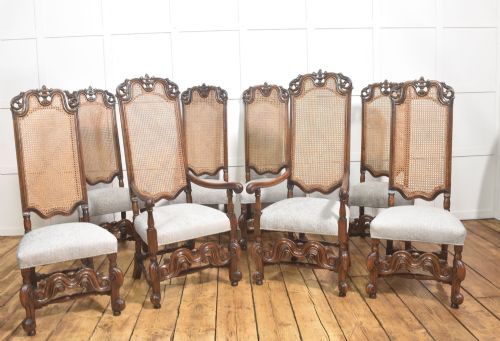
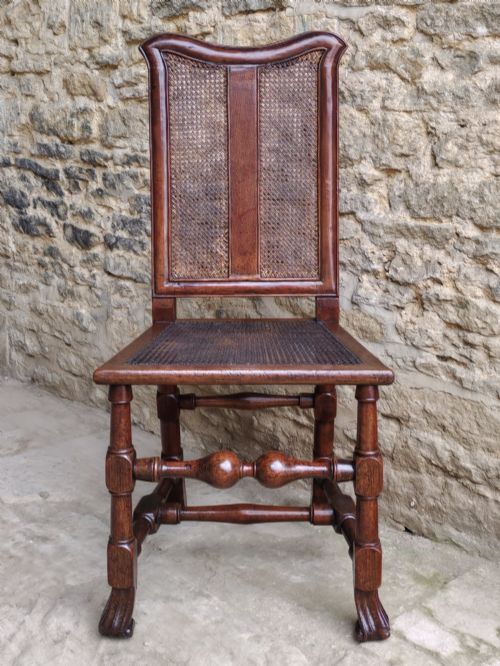
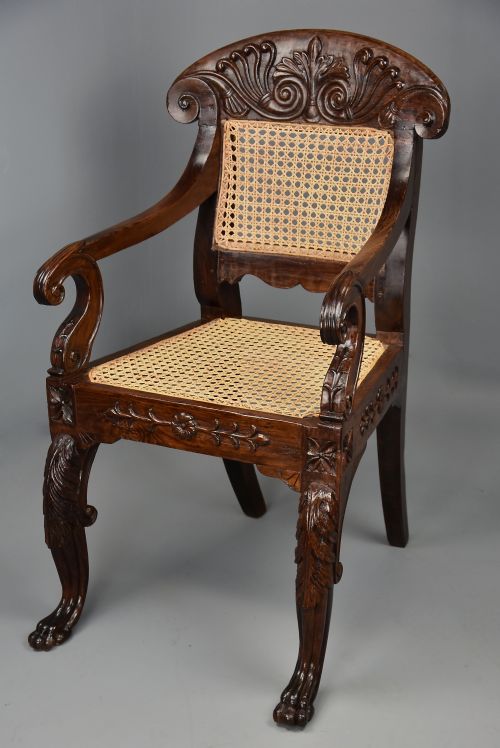
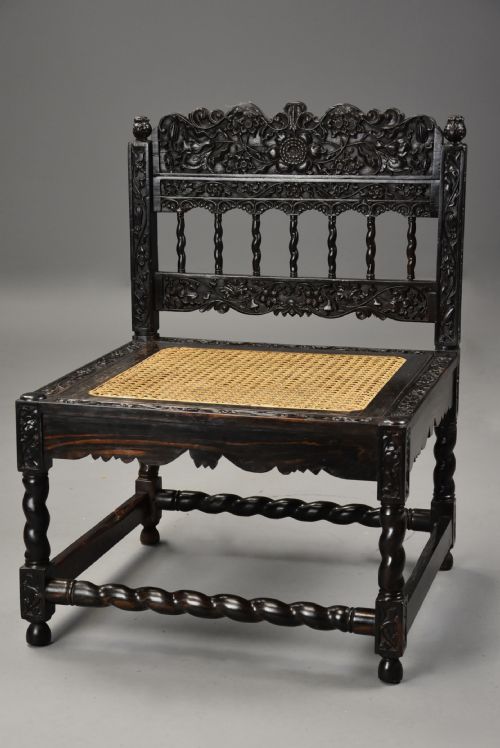
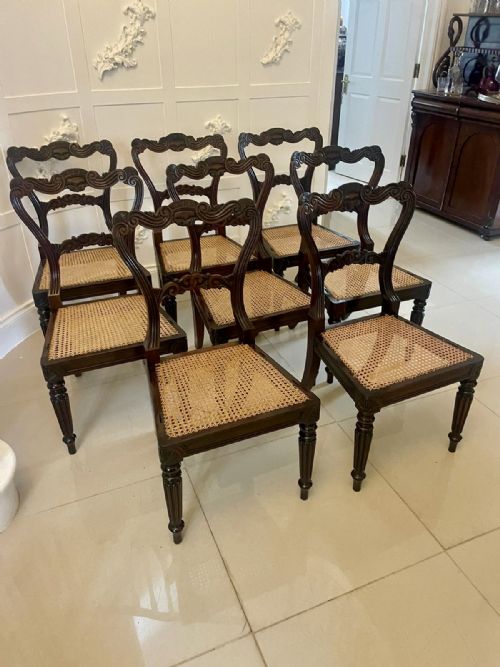
Buyers seeking carved cane side chairs encounter formats spanning the seventeenth century through the twentieth, including Regency, Victorian, and revival styles. The selection ranges from single seating pieces to full dining sets constructed in oak, walnut, mahogany, and rosewood. Alongside standard side chairs, listings include armchairs, bergères, and hall chairs with woven cane panels.
Origin points vary widely within these listings, stretching from English workshops to French, Portuguese, and Anglo-Indian makers. Formats shift between high-back formal models, low chairs, and occasional seating with integrated cane seats and backs.
Materials and construction
Frames rely on hardwoods such as solid oak, walnut, mahogany, padouk, and ebony, shaped through carving, turning, and joinery. Artisans applied surface treatments including ebonisation, gilding, lacquer, and polish to enrich the timber grain.
Seating and back inserts utilise natural rattan cane woven through pre-drilled holes in the wooden framework. Certain pieces incorporate bone inlay, fabric upholstery, or attached cushions alongside the woven cane.
Listings feature woods spanning native oak and walnut to exotic rosewood, padouk, and ebony.
Judging quality in carved cane chairs
Quality rests on the crispness and depth of the timber carving, alongside the selection of dense, richly figured woods like rosewood and walnut. Heavy, solid construction and refined proportions distinguish superior examples from simpler provincial work.
The tightness and uniformity of the hand-woven cane work indicate the level of craftsmanship invested in the piece. Original surface finishes and integrated decorative details such as bone inlay further elevate a chair's standing.
Heals of London·Waring & Gillow·Gillows
The Carved Cane Side Chairs Glossary
- Cane
- Woven material made from the outer skin of rattan palms, utilised for resilient and flexible seat and back panels.
- Bergère
- An enclosed upholstered armchair featuring wooden framing, often paired with cane panels to the back and sides.
- Carolean
- A seventeenth-century English design style characterised by ornate scrollwork, crown motifs, and turned wooden framing.
- Klismos
- An ancient Greek chair shape featuring concave curved legs and a sweeping, scimitar-curved backrest.
- Padouk
- A heavy tropical hardwood displaying a reddish-brown tone, employed in Anglo-Indian and colonial furniture production.
Carved Cane Side Chairs: Frequently Asked Questions
How are carved cane side chairs cleaned?
Dust the wooden frame regularly with a dry cloth and clean the woven cane using a slightly damp sponge to maintain moisture.
Avoid soaking the natural rattan fibres to prevent warping or splitting over time.
Can these chairs be used daily?
Many solid timber examples withstand regular use, though delicate antique frames benefit from mindful placement.
Lighter occasional chairs suit low-traffic areas better than heavy dining sets.
How do I identify a revival style?
Revival pieces combine historical motifs from periods like the seventeenth century with nineteenth-century manufacturing methods.
Examining the internal joinery and secondary timbers helps separate older originals from later interpretations.
What is the difference between side and armchairs?
Side chairs feature armless, compact frames designed to tuck neatly beside tables or walls.
Armchairs incorporate structural elbow rests, offering wider proportions intended for lounging.