
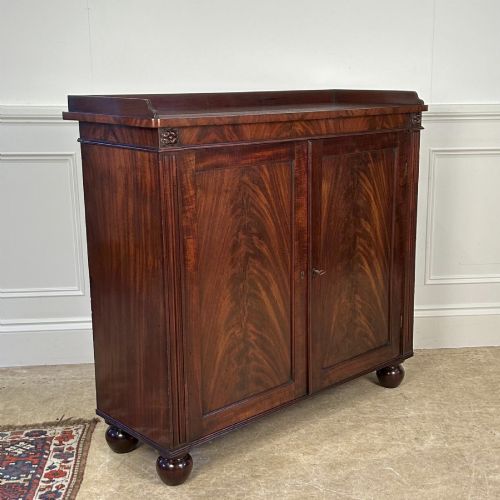
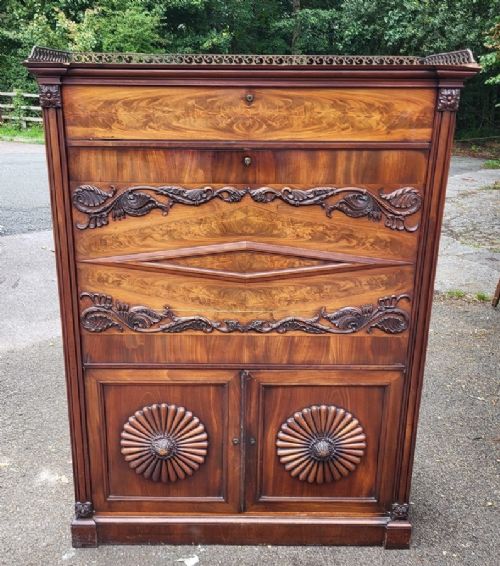
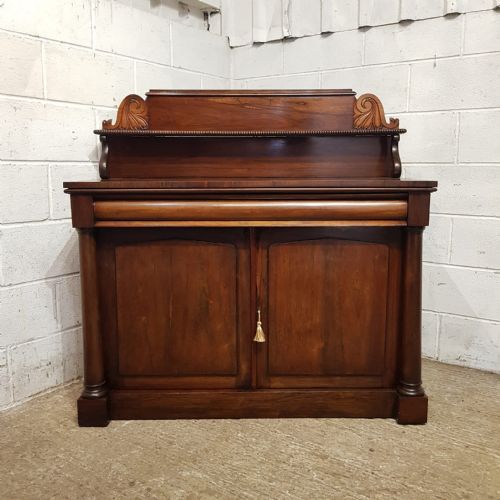
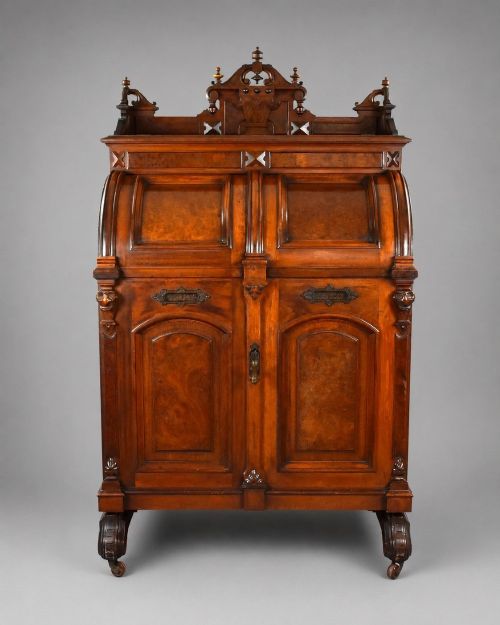
Carved Bureau Cabinet
A carved bureau cabinet is a substantial writing desk and storage piece, offering drop-front functionality paired with upper shelving and rich decorative detailing.
How They Were Made
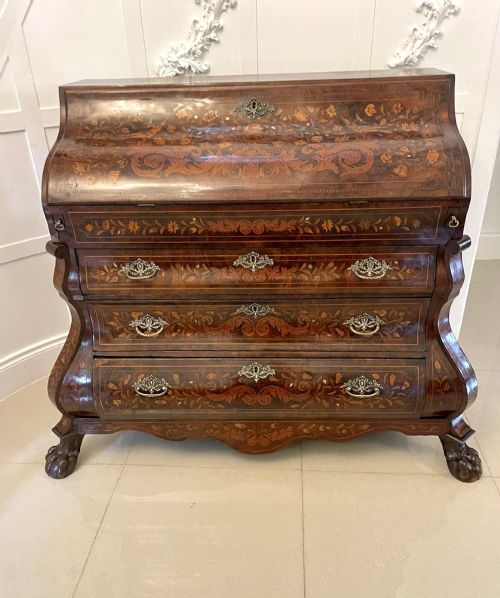
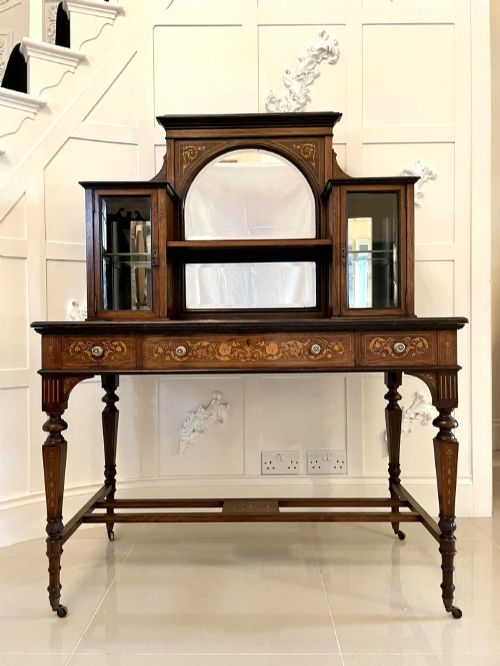
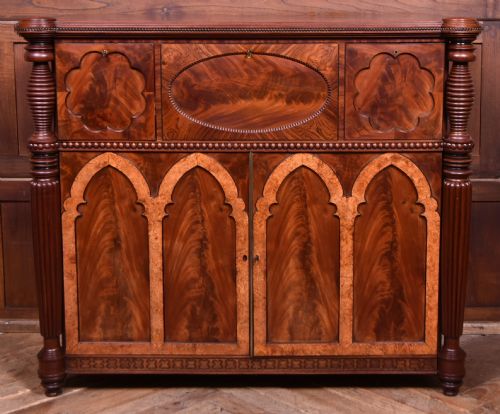
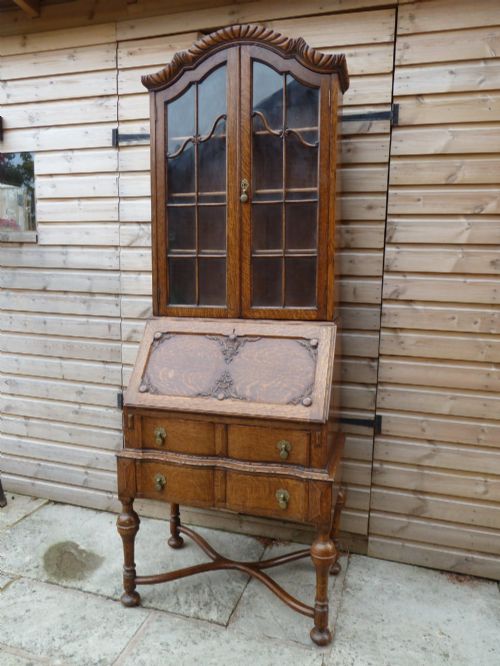
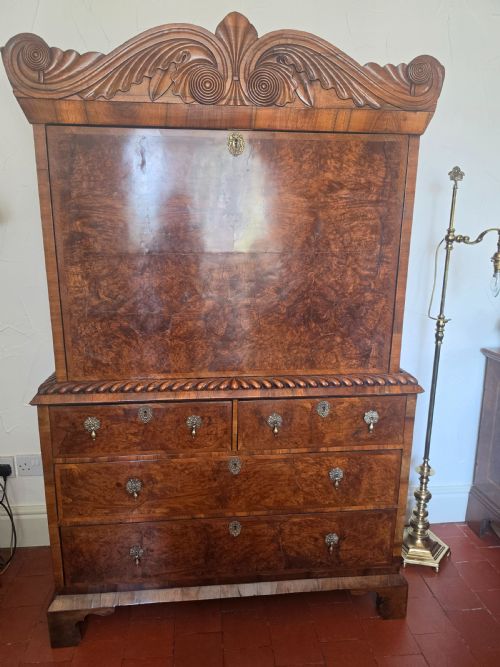
These pieces rely on dense hardwoods like oak, walnut, mahogany, and rosewood, frequently enhanced by burr walnut veneers or floral marquetry inlay. Brass hardware, glass paneling, and leather writing inserts provide functional contrast to the wooden construction.
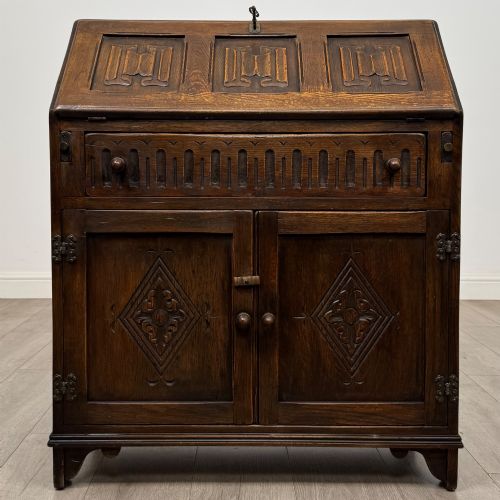
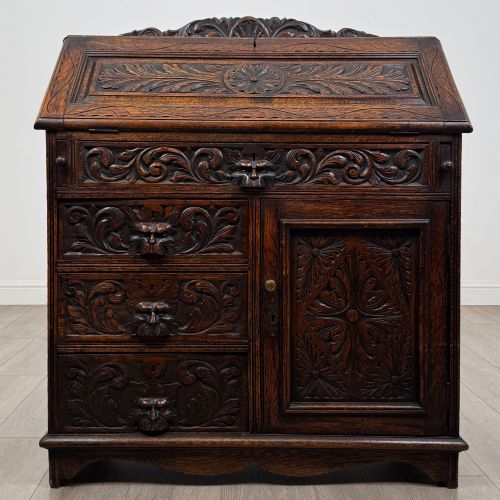
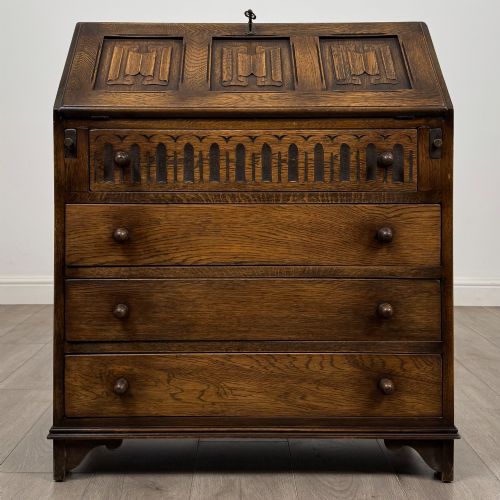
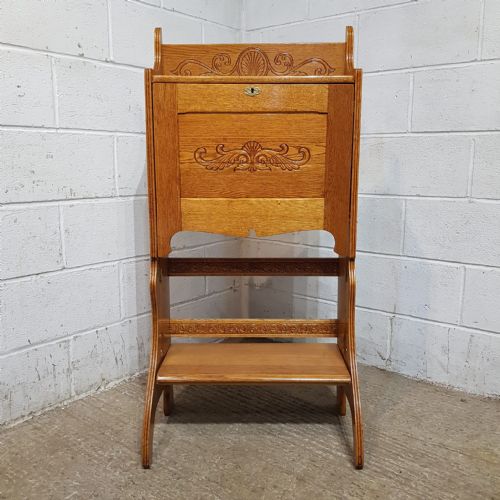
Cabinetmakers utilised traditional joinery alongside hand-carved ornamentation, such as the distinctive linenfold panels and green man motifs seen on oak examples. French polishing and precise veneering techniques finished the surfaces to highlight the natural grain patterns.
What Varies in Quality
The upper tier of craftsmanship shows in the crispness of the hand carving, the alignment of figured veneers like burr walnut, and the integration of secondary timbers within the drawers. Finer examples display meticulous marquetry work and robust internal pigeonholes with secret compartments.
Simpler versions rely on plain oak or standard mahogany without elaborate ornamentation, reflecting regional vernacular workshops rather than metropolitan cabinet-makers. The integrity of the fall-front hinges and the smoothness of the writing slide mechanisms also separate standard production from exceptional work.
Listings feature oak, walnut, mahogany, and rosewood constructions, spanning the seventeenth century through the Edwardian period.
Gillows
The Carved Bureau Cabinet Glossary
- Bureau
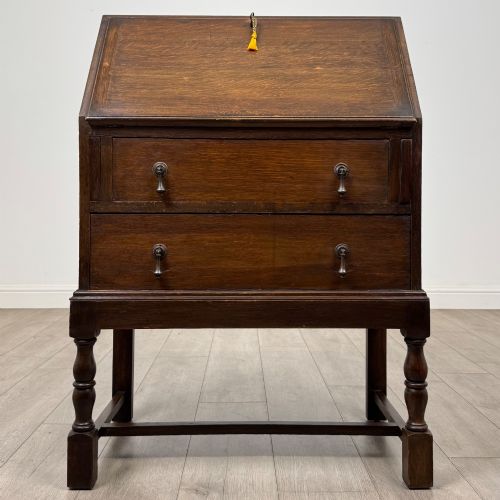
- A desk featuring a sloping hinged lid that drops down to form a writing surface, concealing small drawers and pigeonholes inside. It provides both enclosed storage and an active workspace.
- Secretaire
- A piece of furniture incorporating a pull-out or drop-front drawer that serves as a desk. This term frequently appears alongside bookcase combinations.
- Marquetry
- Decorative patterns formed by fitting together thin veneers of wood, ivory, or shell onto a structural surface. Floral designs are especially common in eighteenth-century pieces.
- Linenfold
- A style of wood carving that imitates folded parchment or linen, popular in Tudor revival and twentieth-century oak furniture.
- Davenport
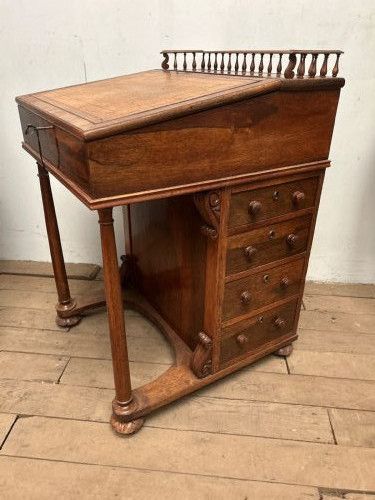
- A small, compact writing desk featuring a sloped top, side drawers, and a stationery compartment on top. They became particularly popular during the Victorian and Regency periods.
Carved Bureau Cabinet: Frequently Asked Questions
How do I use a bureau cabinet daily?
The drop-front writing surface folds down to provide a stable desk area while keeping stationery neatly organised in the internal compartments behind it. When finished writing, simply lift the flap to conceal paperwork and restore the tidy appearance of a cabinet.
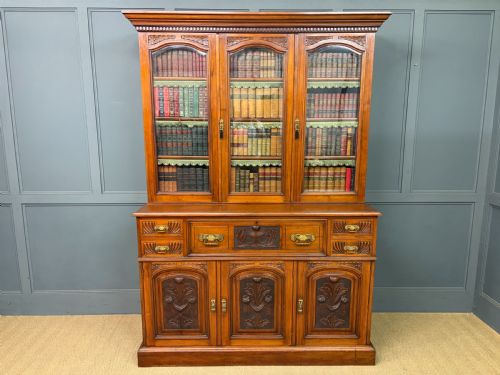
Upper shelving and glass doors allow the piece to function simultaneously as a bookcase or display cabinet for collections. This dual purpose makes it a practical choice for living spaces requiring both workspace and storage.
What is the difference between a bureau and a Davenport?
A standard bureau is typically a larger, floor-standing unit with a fall-front desk sloping outward from top to bottom, often topped by a bookcase. It offers substantial workspace and full-width drawer storage beneath.
A Davenport is a much smaller, highly compact desk with a top-sloping writing surface that lifts or slides, accompanied by drawers opening to the side rather than the front. It was designed for intimacy and portability within nineteenth-century drawing rooms.
How can I tell Victorian pieces from Edwardian ones?
Victorian pieces often display heavier proportions, darker finishes, and dramatic ornamentation such as green man carvings, robust mahogany, or ornate marquetry. They reflect the industrial expansion and varied revival styles of the nineteenth century.
Edwardian furniture tends toward lighter oak construction, simpler lines, and restrained decorative techniques like linenfold panels. These pieces lean into Arts and Crafts sensibilities and practical domestic comfort.
Are these pieces suitable for modern laptops?
Most antique writing compartments are engineered for paper and ledgers, so internal depth and height can be limited when using modern technology. Measuring the interior clearance of the drop-front surface is essential before placing a laptop inside.
Many owners choose to use the pull-out writing surface for display or occasional reading rather than daily computing. The surrounding drawers and upper bookcase provide ample storage for modern household items regardless.