





Carved Bronze Urns
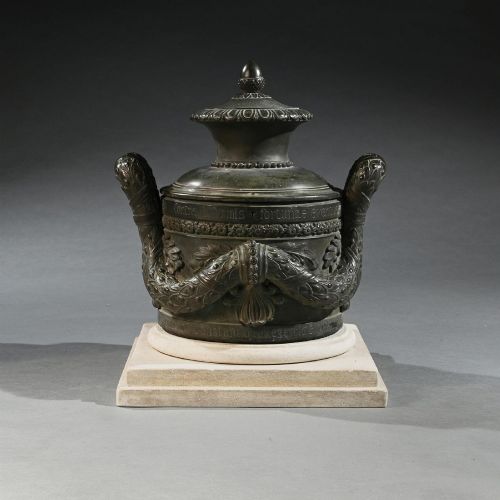
These carved bronze urns bring classical form and intricate metalwork into a room, offering heavy cast presence and patinated depth.
Carved Bronze Urns
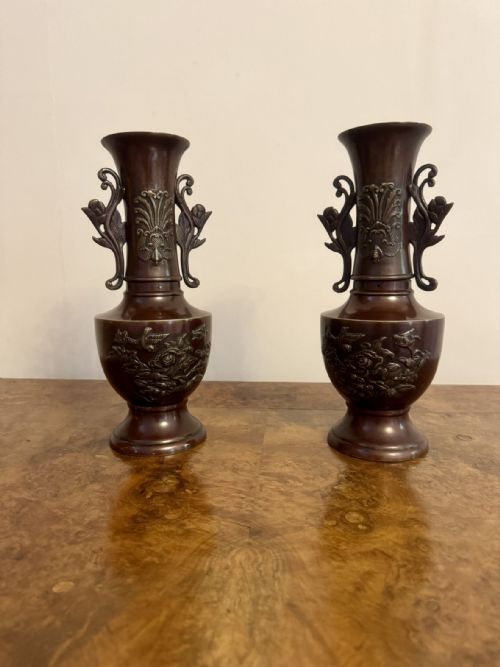
When you search for carved bronze urns, you are looking at substantial metal vessels designed for display, often taking the form of baluster vases, ritualistic bowls, or classical ewers. The version you are most likely to meet on this page originates from the nineteenth century, encompassing Japanese Meiji period works, Chinese vessels, and European Grand Tour souvenirs.
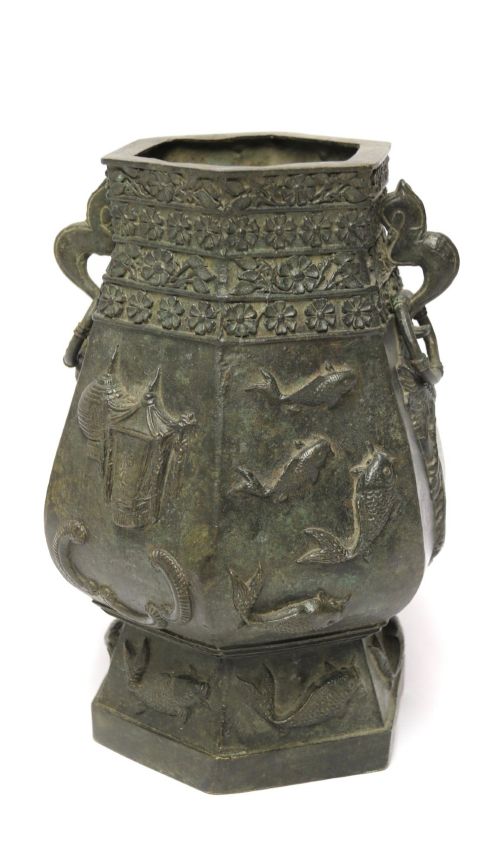
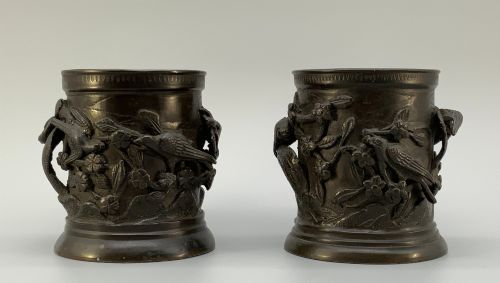
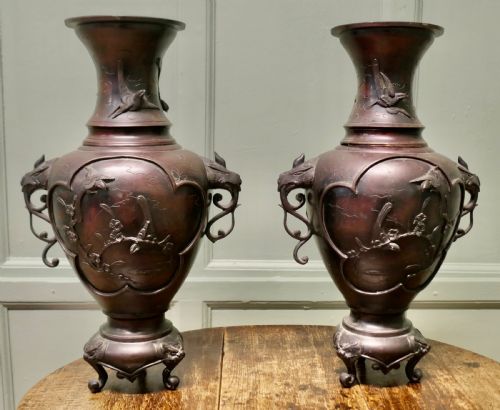
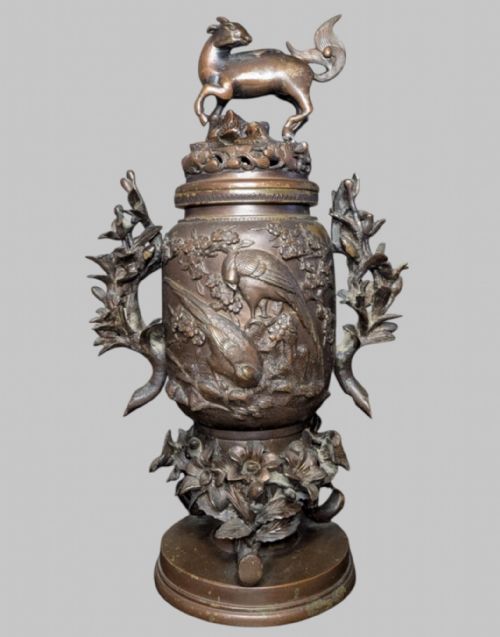
The objects span multiple cultures and traditions, including heavy ritualistic food bowls, twin-handled vases adorned with birds and blossom, and decorative French cassolettes. Many examples combine cast bronze with secondary materials like white marble or ormolu mounts, creating striking contrasts in texture and colour.
Makers and workshops across Britain, France, Italy, China, and Japan produced these pieces to satisfy a widespread Victorian appetite for decorative antiquity and exotic metalwork. Whether cast as monumental garden planters or small incense burners, each piece reflects the specific ornamental vocabulary of its origin.
Materials and technique
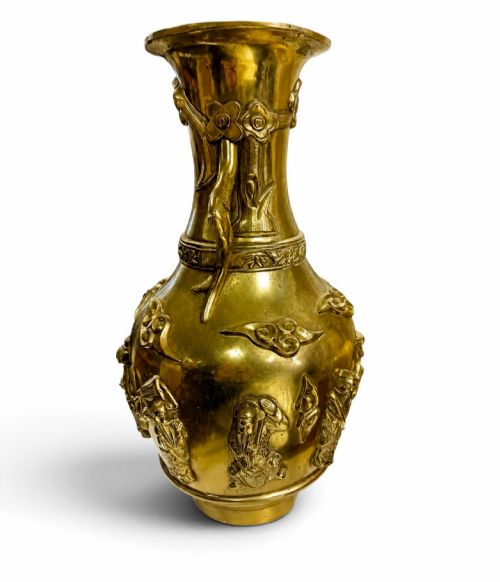
The foundation of these pieces lies in durable metal alloys, predominantly bronze, copper-alloy, and brass, shaped through traditional casting methods such as the lost-wax technique. Artisans then refined the raw metal surfaces using hand chisels, gravers, and punches to carve high-relief motifs like dragons, Daoist immortals, and floral sprays.
Many items receive further surface treatment, including chemical patination to darken the metal or applied gilt and ormolu highlights to accentuate cast details. Combinations with carved white marble bases or stone plinths add structural stability and elevate the visual weight of the bronze vessel.
Several items double as incense burners complete with mythical beast finials, ready to scent a nineteenth-century parlour.
Markers of quality
Quality rests in the crispness of the chased detail and the depth of the hand carving, where superior examples display sharp relief work rather than soft, mass-produced contours. The weight of the metal and the balance of the casting indicate the amount of material and labour invested by the original workshop.
The harmony between the primary bronze body and secondary elements, such as fitted marble plinths or intricate handles, separates standard production items from exceptional decorative statements. Preserved patination and clear signatures or base marks further distinguish superior pieces within the range.
The Carved Bronze Urns Glossary
- Ormolu
- Gilded bronze, where a layer of gold is applied to a bronze object using a mercury amalgamation process. This technique gives the metal a bright, durable golden finish popular in decorative mounts and table lamps.
- Patination
- The natural or chemically induced surface coloration of bronze over time. A rich patina adds depth and character to the metal.
- Baluster
- A vertical architectural form with a swelling lower belly and a narrow neck. This silhouette frequently defines the profile of vases and urns.
- Cassolette
- A decorative vessel shaped like an urn, often featuring a reversible lid that functions either as a container or a candle holder. French examples frequently combine bronze with marble.
- Tazza
- A shallow saucer-like bowl or cup mounted on a stem and foot. Classical Italian examples served as decorative souvenirs during the Grand Tour.
Carved Bronze Urns: Frequently Asked Questions
What are carved bronze urns made of?
These pieces consist primarily of cast bronze, copper-alloy, or brass, sometimes accented with gold leaf or ormolu. Secondary materials such as white marble frequently form the bases and plinths of the vessels.
Artisans often enriched the metallic surfaces through hand chasing and deep carving to produce textured pictorial scenes and decorative borders.
How were these urns used originally?
Many functioned as ornamental display pieces in nineteenth-century drawing rooms, libraries, and cabinets of curiosity. Others served specific ritualistic purposes, such as incense burning in Japanese settings or food offerings in Chinese contexts.
European Grand Tour pieces were collected as souvenirs of classical travels and displayed to demonstrate cultural refinement and worldly education.
How do I style a bronze urn at home?
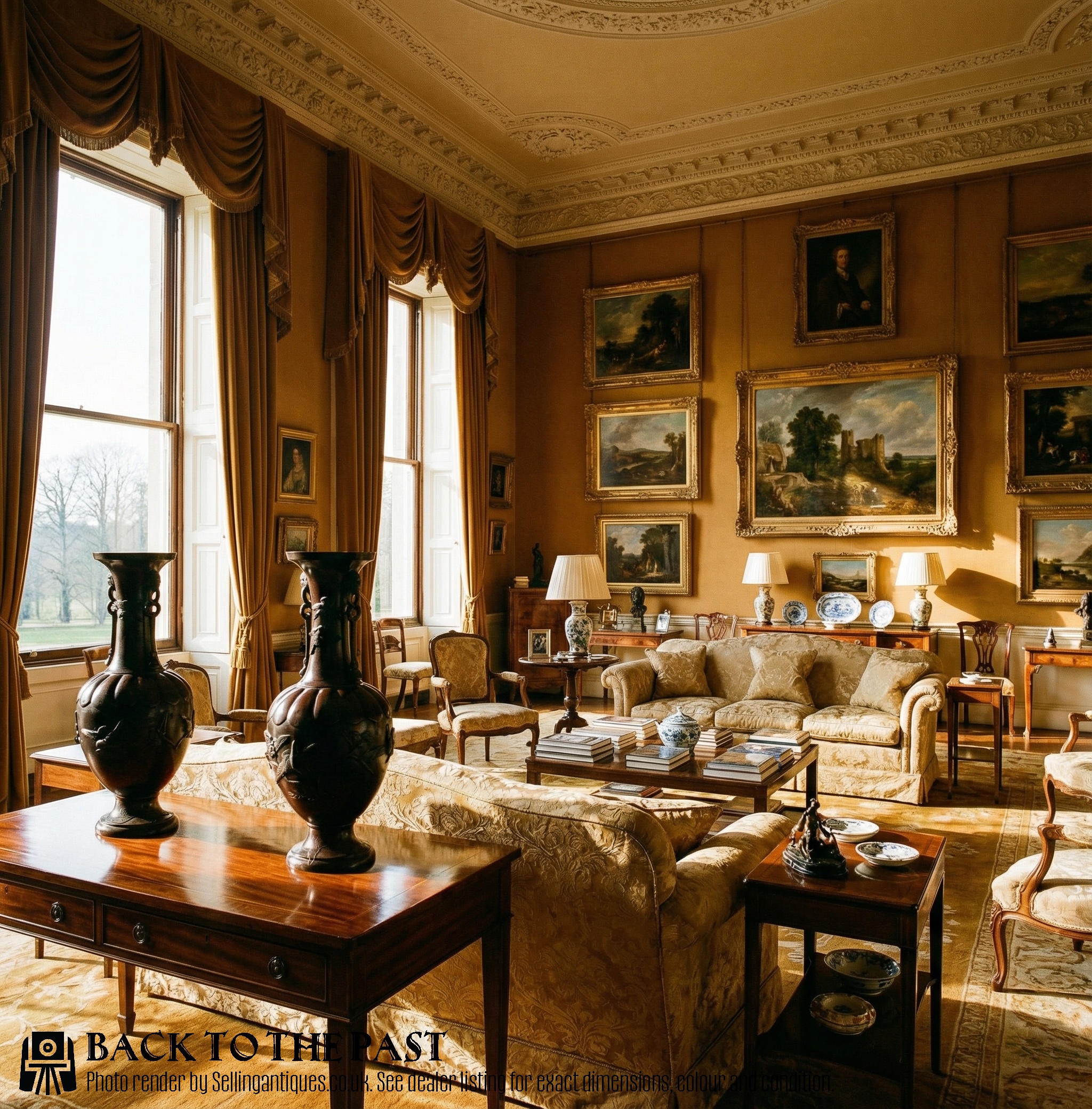
Place a substantial baluster vase or jardinière on a sturdy wooden console table or sideboard where its weight and patina can anchor the space. Pair smaller items with contrasting textures like polished wood or textiles to highlight the dark metallic tones.
Ensure the piece receives adequate directional lighting to reveal the fine chased details and relief carving across the surface.
How can I tell Japanese Meiji period bronze from European pieces?
Japanese Meiji pieces often feature naturalistic motifs such as birds, blossoms, dragons, and figures rendered in high relief through meticulous hand chiselling. European nineteenth-century works typically lean towards classical Neoclassical or Renaissance Revival styles, frequently incorporating architectural elements like rams' heads and ormolu mounts.
Examining the signature or base marks can also provide direct evidence of the workshop's origin and cultural context.