


Carved Brass Table Top
These pieces for a carved brass table top bring heavy engraved metal into domestic spaces, offering a tactile surface that sets them apart from plain timber.
Carved Brass Table Top
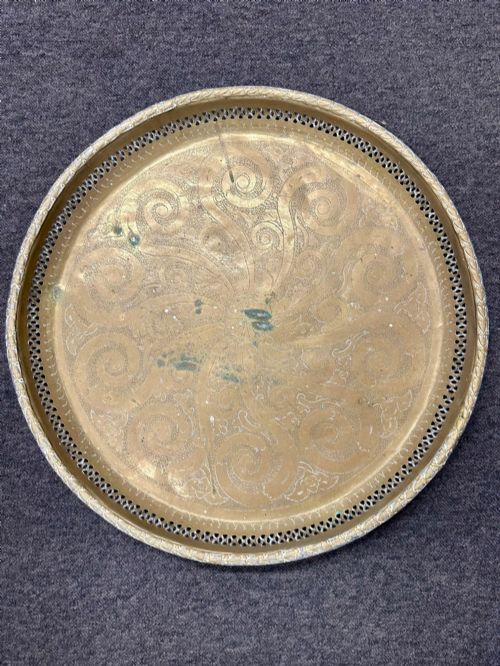
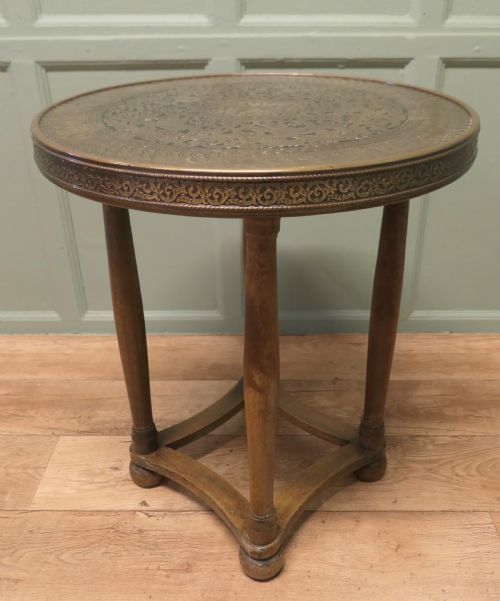
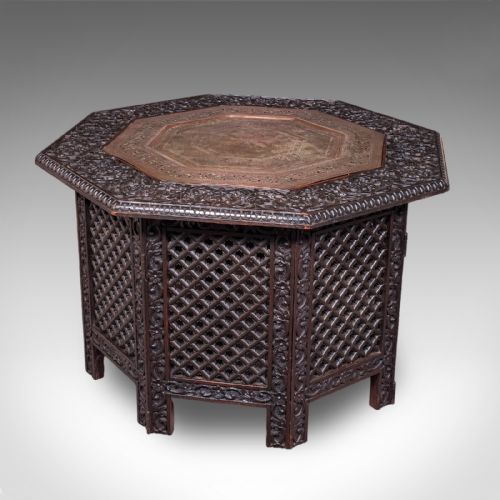
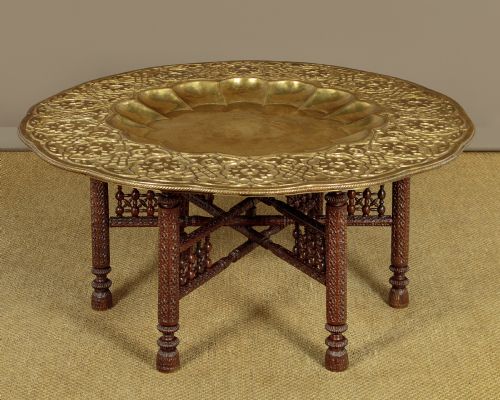
A carved brass table top draws together metalwork from the nineteenth century, particularly from Indian production hubs such as Benares and Hoshiarpur. When buyers search for a carved brass table top, they encounter both standalone trays designed for folding wooden bases and heavier plates integrated into occasional or tea tables.
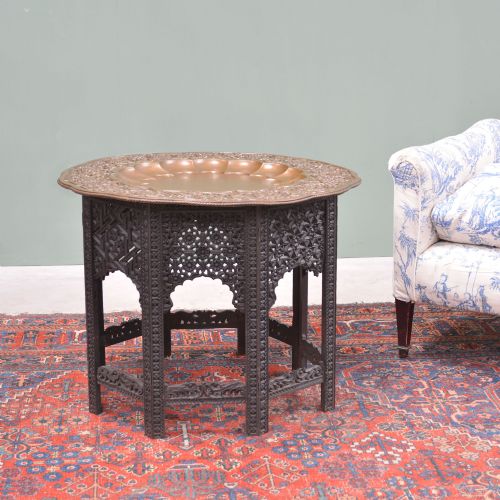
The forms span large wall chargers used as horizontal surfaces, specialist tea tables, and low occasional stands. Many examples incorporate intricate chased or pierced patterns showing fauna, foliage, and geometric motifs across the entire metal surface.
Origins stretch from domestic British workshops incorporating imported elements to direct Anglo-Indian imports from the late Victorian and Edwardian eras. The metal disc sits upon supporting frames of timber or stands alone as a portable tray.
Materials and construction
Construction relies on sheet brass hammered, chased, and engraved by hand to create recessed depths and raised motifs. Artisans used punches and chisels to map out dense foliage, figures, and scrollwork across the plane.
Supporting structures utilise native hardwoods like mahogany, rosewood, oak, or walnut, sometimes formed as folding spider stands or rigid pedestal bases. Copper insets and mixed metal details occasionally appear alongside the primary brass surface.
Carved Brass Table Top Retail Price Guide 2026
Typical asking prices for carved brass table top among the pieces listed under this phrase on Sellingantiques today, from the lower quarter to the upper quarter. They describe what is for sale here now, not the wider market.
Listings combine nineteenth-century brass work with timber frames in mahogany, oak, and rosewood across various occasional forms.
Assessing quality in metal and form
Depth and crispness of the hand-chased engraving separate routine production from superior examples. The finest pieces display sharp undercutting and intricate piercing that leaves no area flat or lifeless.
The integration between the metal top and its wooden support dictates structural integrity, as poorly fitted trays warp or rock under daily use. Heavy gauge brass maintains flatness and resists dents far better than thin, flexible metal sheets.
Gillows·Howard and Sons·Blyth and Son·Gillow and Co·Joseph Windmills·Ellicott and Smith
The Carved Brass Table Top Glossary
- Chasing
- A metalworking technique where the artisan pushes the metal from the front using hammers and punches to sink the design rather than cutting material away. This method creates textured relief across the surface of the tray.
- Pierced gallery
- An openwork border cut right through the metal edge of a tray or table top. It creates a delicate silhouette against the light.
- Anglo-Indian
- A descriptive term for decorative arts produced in India under British rule, combining traditional local craftsmanship with forms suited to European homes. These pieces often feature dense foliar carving.
- Benares
- A historic manufacturing centre in India known for brasswork and metal vessels exported in large quantities during the nineteenth century. Production here focused on densely decorated trays and occasional tables.
- Occasional table
- A small, movable table designed for light, specific uses around a room rather than dining or writing. They provide versatile surface area in Victorian interiors.
Carved Brass Table Top: Frequently Asked Questions
Are these table tops fixed to their bases?
Many examples feature removable trays resting upon collapsible wooden stands designed for easy storage and transport. Other configurations fix the brass disc permanently to a timber pedestal or frame.
Check the rim and underside for fastening pins or clips that indicate original attachment methods. Removable tops require careful handling when lifting to avoid bending the edges.
Where were these pieces originally made?
Production centres include workshops in Benares and the Punjab region of India, where artisans specialised in detailed hand-engraved metalwork. British firms imported these items to satisfy Victorian enthusiasm for exotic domestic furnishings.
Local European cabinetmakers occasionally paired the imported metal tops with native timber bases. This blend created hybrid furniture styles popular in late nineteenth-century parlours.
How do I date a brass table top?
Examine the tool marks and consistency of the engraving, as machine assistance appeared more frequently in twentieth-century production. Hand-beaten irregularities and traditional punch styles generally point toward late nineteenth-century origins.
The style of the wooden support stand, where present, offers parallel stylistic clues through turned legs or folding mechanisms characteristic of specific decades.