
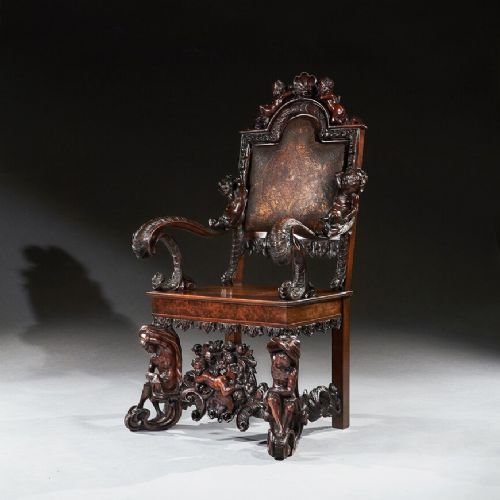
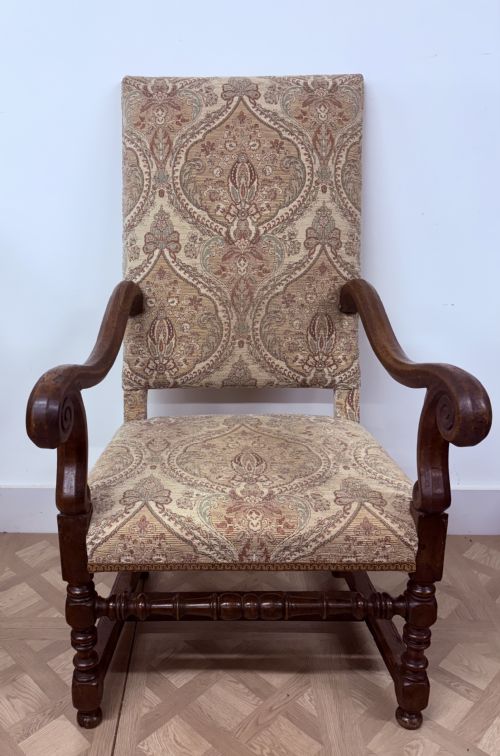
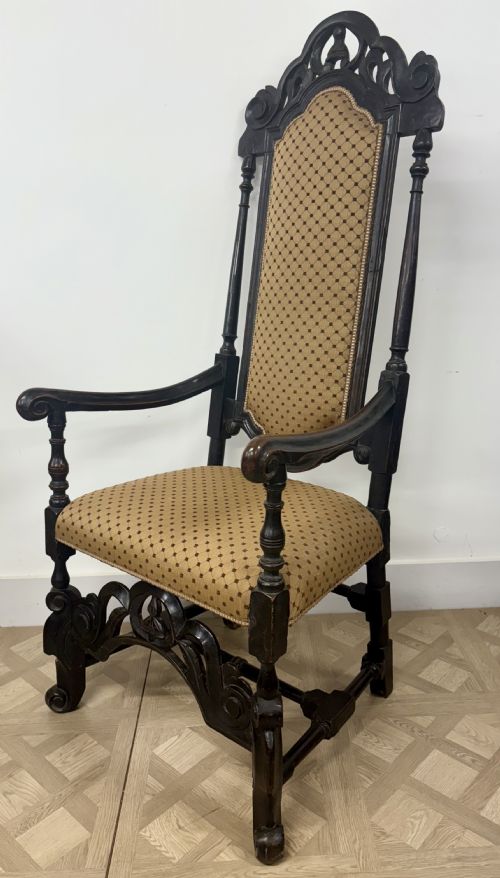
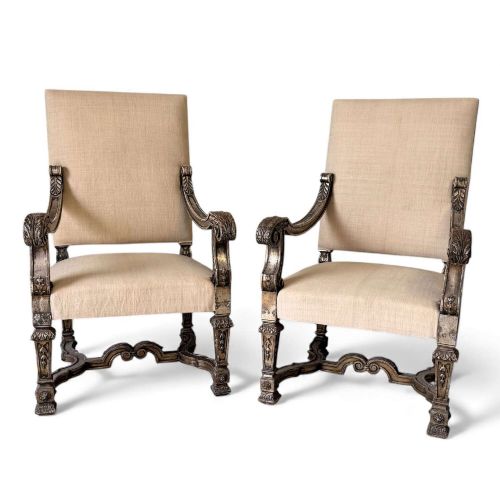

Carved Baroque Armchair
A carved baroque armchair brings dramatic proportion and deep timber relief into a room, offering both historic presence and a commanding seat.
Carved Baroque Armchair
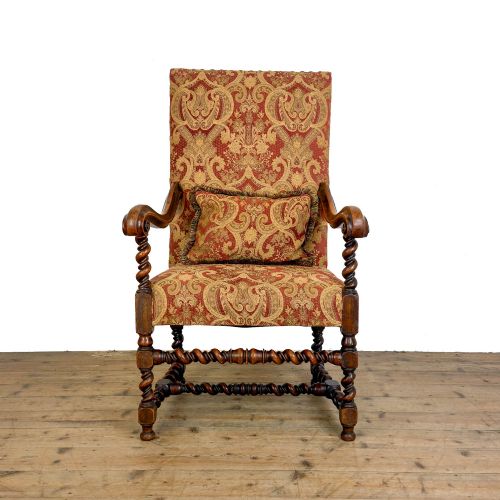
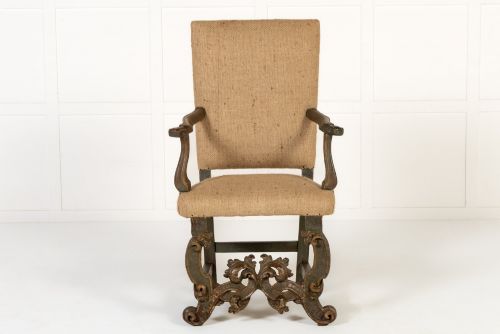
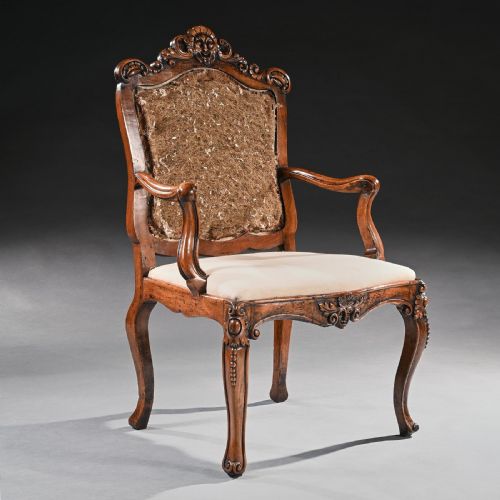
A carved baroque armchair displays robust frames, high backs, and scrolling arm supports that originate from seventeenth-century European traditions. Buyers searching for this phrase encounter seating built to project authority, whether through grand throne proportions or domestic elbow chairs.
The versions most commonly met on this page span authentic seventeenth-century origins alongside nineteenth-century revivals produced in walnut, oak, and giltwood. These pieces frequently incorporate regional expressions from Italy, France, and England.
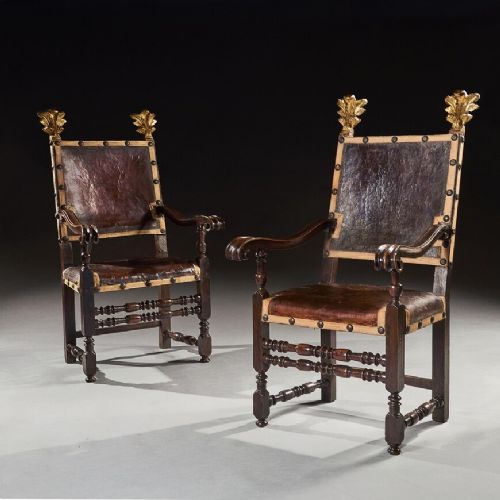
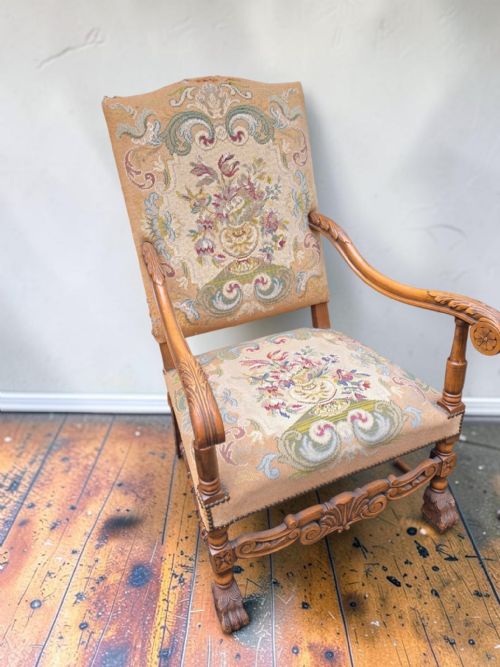
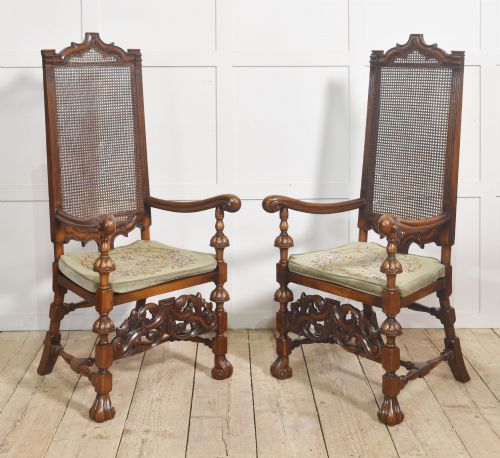
Makers utilised supportive seating forms, pairing generous proportions with tactile coverings such as leather, cane, and historical tapestry. The resulting pieces function equally as striking decorative elements and functional seats.
Materials and Construction Methods
Construction relies heavily on dense hardwoods, predominantly walnut and oak, which provide the structural integrity necessary to support deep hand-carving and weighty frames. Joinery methods secure high backs and robust arm supports against the stresses of daily use.
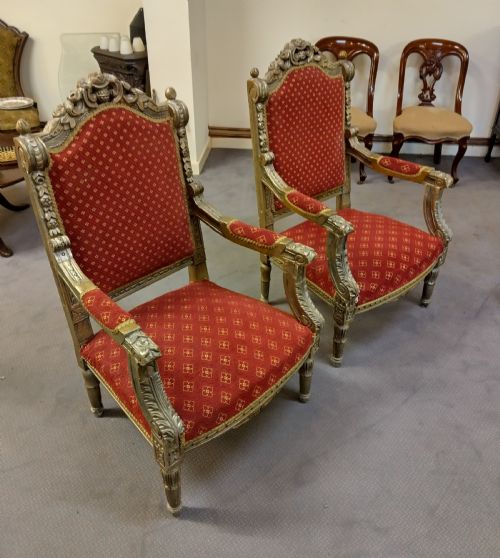
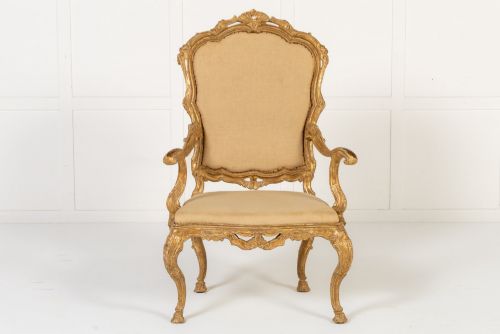
Surface ornamentation integrates gilded finishes, parcel-gilt highlights, and intricate brass detailing directly onto the carved timber structure. These metallic and painted elements catch ambient light to accentuate the relief work.
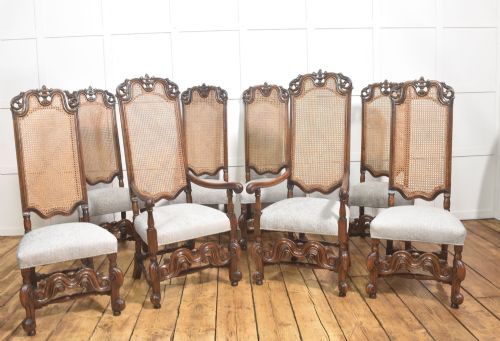
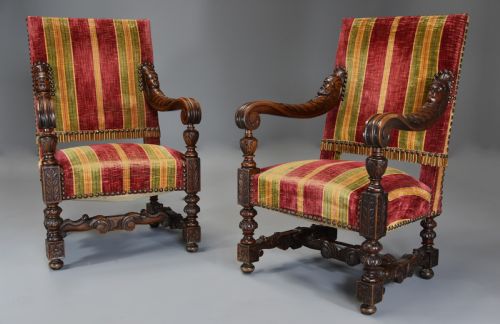
Upholstery methods combine traditional webbing and padding with tactile textiles including velvet, silk, needlepoint, and leather. Caned panels also appear frequently on backs and seats, offering lighter textural contrast against the heavy wood.
Several chairs feature exceptionally high backs designed specifically to keep seventeenth-century drafts away from the aristocratic ear.
Distinctions in Quality and Execution
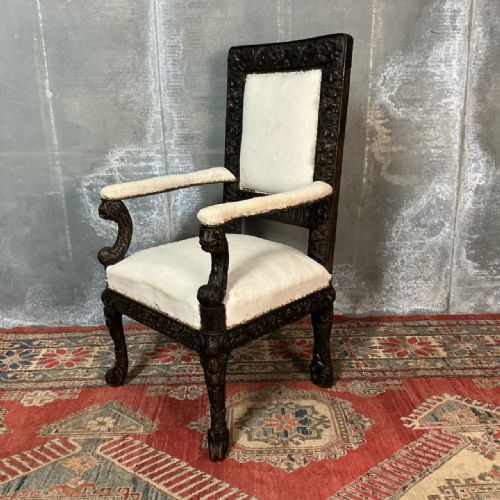
Quality reveals itself in the depth, crispness, and confidence of the wood carving, where superior examples exhibit undercut relief and purposeful chisel work rather than shallow or mechanical smoothing. The anatomical accuracy of scrolling elements and figurative details separates master workshops from routine production.
The selection and treatment of timber dictate structural longevity, with dense grain and minimal patching marking superior frames. Original material integrity across the arms, legs, and stretchers maintains the visual coherence intended by the maker.
The quality of the upholstery textile and the fidelity of its application complete the piece, with period-appropriate needlepoint, leather, or silk elevating the overall execution. Hand-applied finishing touches on giltwood surfaces demonstrate careful workshop attention.
Andrea Brustolon
The Carved Baroque Armchair Glossary
- Baroque
- A stylistic period spanning the seventeenth and early eighteenth centuries characterised by dynamic movement, exuberant carving, and monumental scale. It prioritises emotional impact and theatrical presence in furniture design.
- Giltwood
- Timber coated with a thin layer of gold leaf over a prepared ground. It provides a luminous, reflective surface that enhances prominent architectural carvings.
- Cane
- Woven rattan or split reed utilised for chair backs and seats. It offers a resilient, breathable panel that lightens heavy wooden frames.
- Fauteuil
- An open-framed armchair with upholstered seat and back, originating in France. The wooden armrests typically feature padded elbow rests.
- Carolean
- Pertaining to the reign of Charles II of England, a period noted for rich walnut framing, crown motifs, and scrolling foliage. This style forms the direct predecessor to later revival movements.
Carved Baroque Armchair: Frequently Asked Questions
How do I identify a true seventeenth-century piece?
Authentic seventeenth-century examples display natural timber oxidation, hand-cut joinery marks, and wear patterns consistent with centuries of use. The density of the walnut and the tool marks left by hand chisels provide key indicators of age.
Revival pieces from the nineteenth century often utilise machine-assisted techniques, standardised hardware, or timber preparation methods characteristic of later industrial workshops. Comparing the framing construction and joint pegging helps clarify the period of manufacture.
Where should I place a throne armchair?
Throne armchairs possess a commanding physical scale that suits entrance halls, libraries, or studies where they function as focal seating. Their high backs and gilded frames create a strong visual anchor against neutral walls.
In living spaces, pairing one with simpler furnishings prevents the heavy carving from overwhelming the room. Ensuring adequate clearance around the scrolling arms allows the sculptural qualities to remain visible.
Are these chairs comfortable for daily use?
Most historic seating prioritises upright posture and formal presentation over modern cushioned lounging. The rigid high backs and firm arm supports encourage an erect seating position rather than slouching.
Upholstered variants with padded velvet, leather, or needlepoint offer softer contact points. Modern placement often involves positioning them as accent seats rather than primary television lounging chairs.
How do I care for giltwood frames?
Giltwood surfaces require gentle maintenance using a dry, soft feather duster to remove surface particles. Avoiding moisture and chemical sprays protects the delicate gold leaf layer from lifting or tarnishing.
Stable indoor humidity prevents the underlying gesso and timber from expanding or contracting, which otherwise causes cracking. Direct sunlight should also be avoided to prevent fading on adjacent textiles.