

Carved Back Rosewood Chairs
Carved back rosewood chairs bring deep tropical timber and sculptural joinery into domestic spaces, uniting Regency and Victorian form.
Carved Back Rosewood Chairs
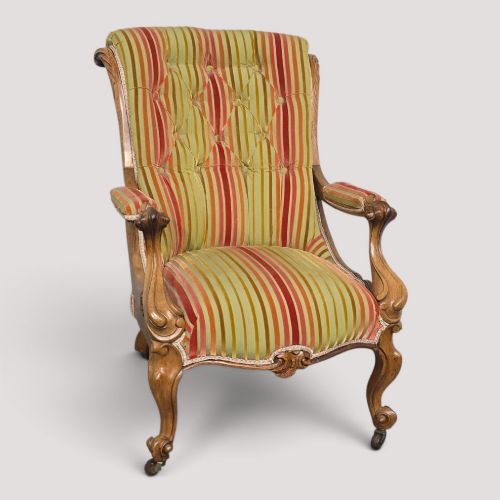
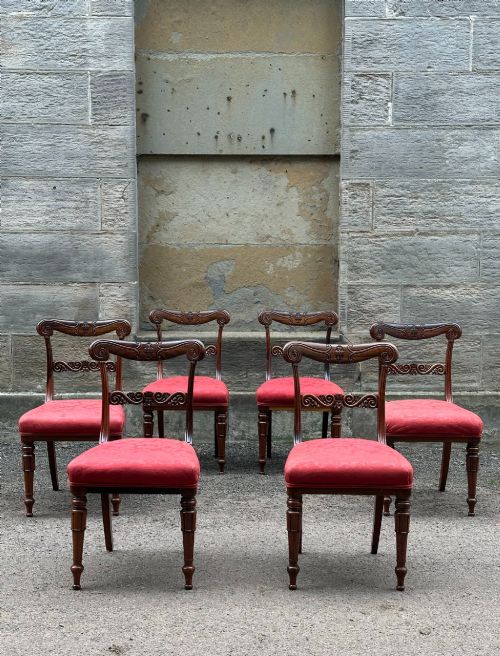
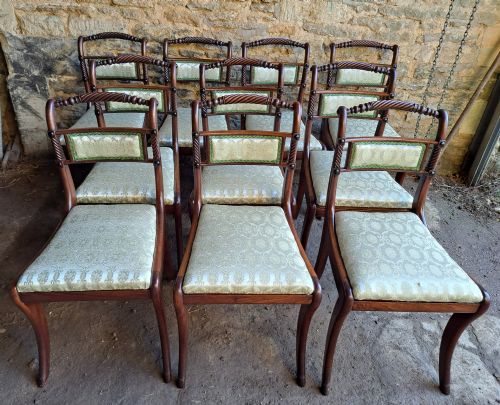
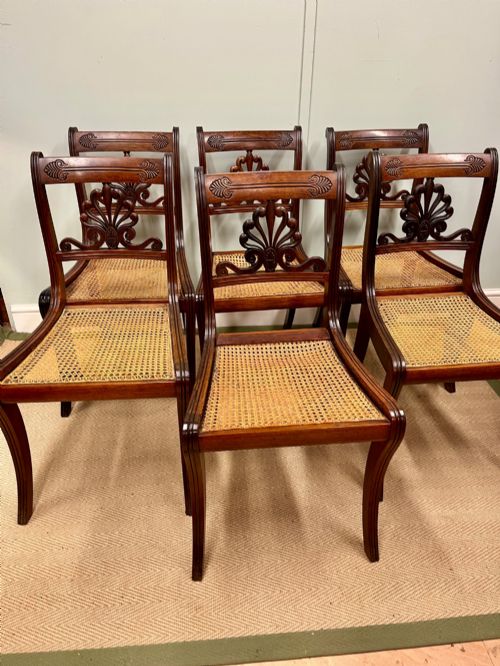
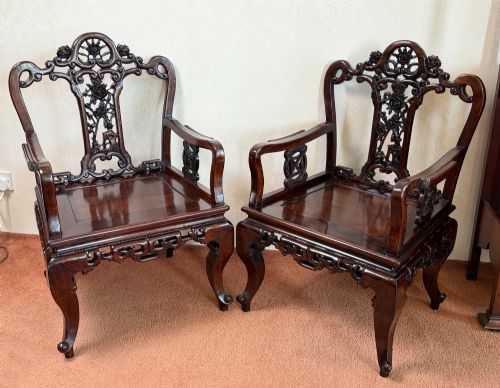
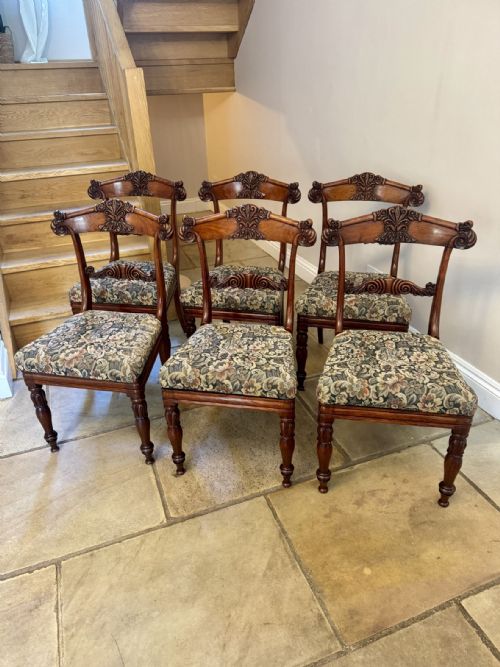
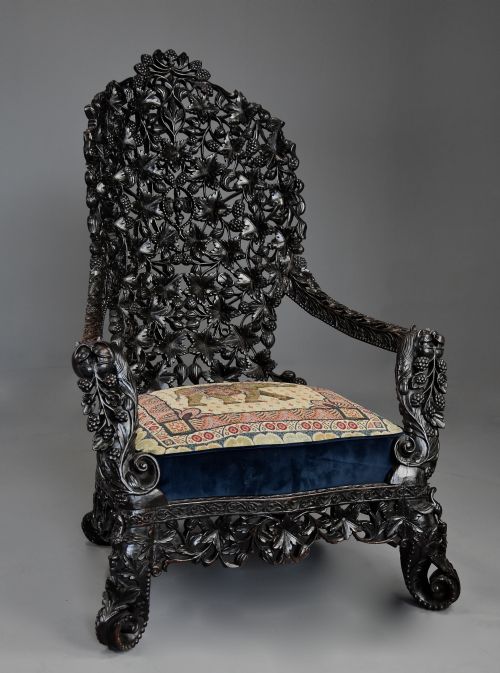
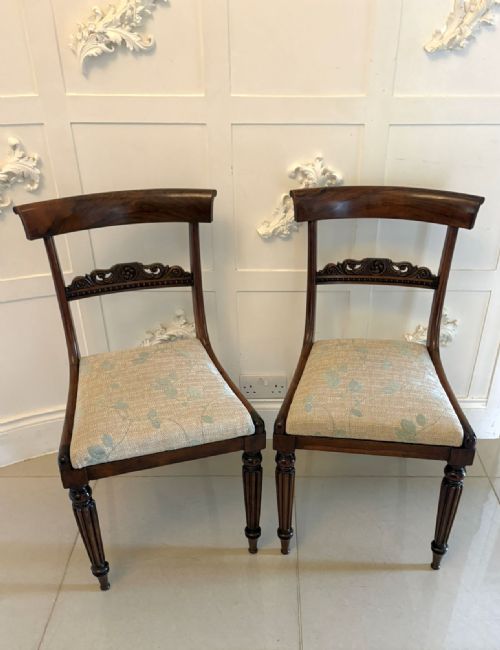
When searching for carved back rosewood chairs, collectors encounter dining sets, single armchairs, and occasional seating originating across the nineteenth century. The selection spans the Regency period through to Victorian Rococo Revival and William IV styles, alongside Chinese Qing Dynasty and Anglo-Indian variants.
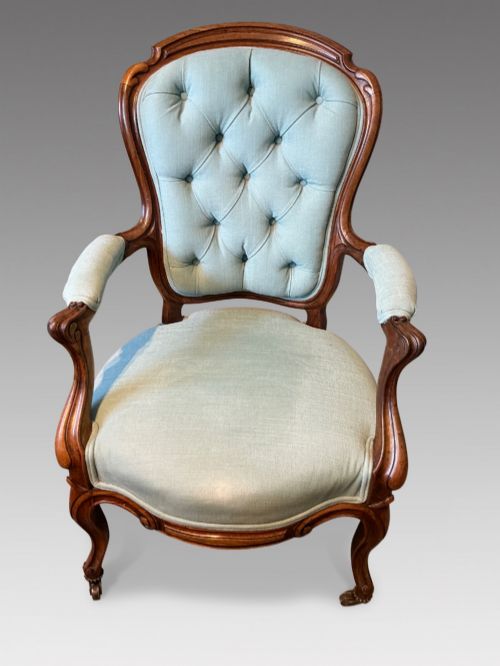
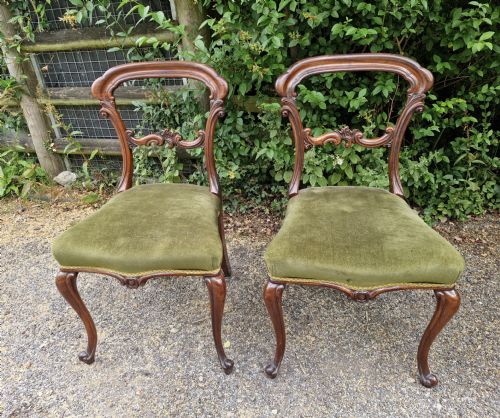
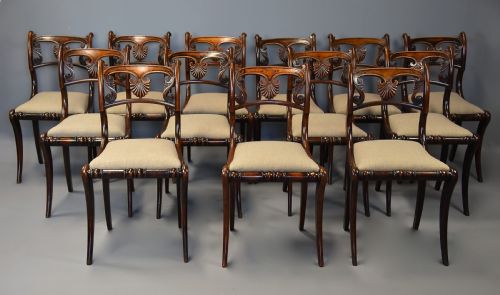
Dining chairs and balloon back pairs dominate the current selection, often appearing in sets of four, six, eight, or ten pieces. Side chairs and library armchairs also emerge, constructed from dense tropical hardwoods alongside simulated rosewood alternatives.
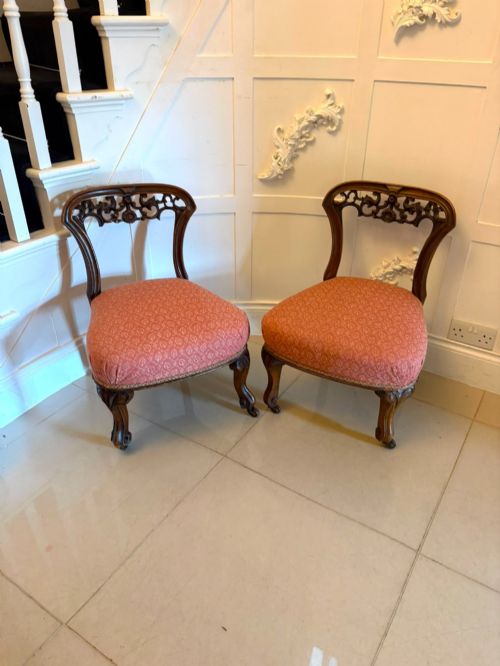
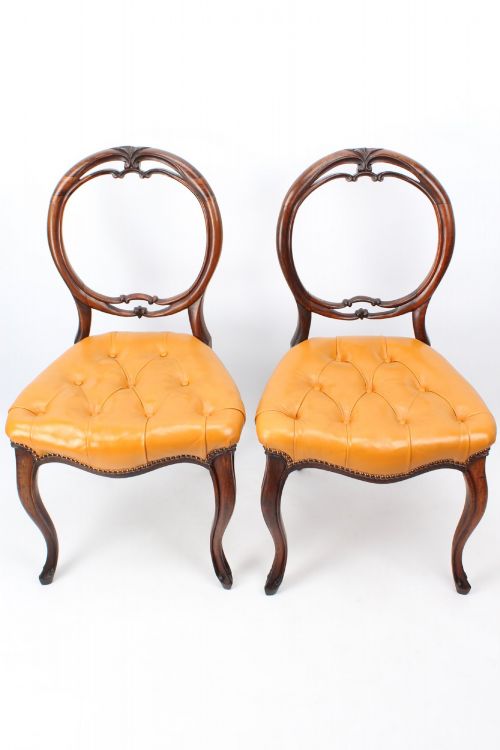
Makers utilised resilient rosewood timber to support intricate pierced and carved splats, cabriole legs, and upholstered pads. The forms range from restrained Regency lines to heavily sculpted Victorian showwood frames.
Materials and construction
Cabinet makers constructed these seats primarily from solid rosewood or hardwood, frequently incorporating brass castors and structural internal framing. Surfaces were polished to highlight the dark, rich grain of the timber.
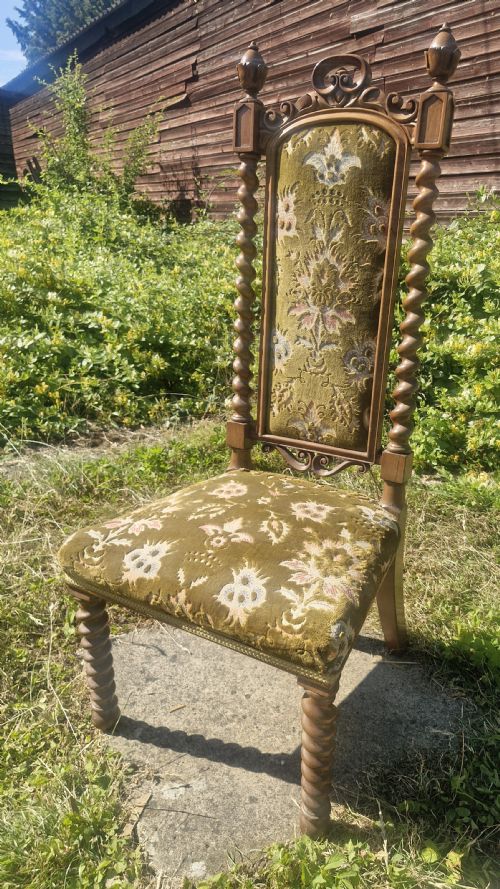
Upholstery techniques applied during the nineteenth century employed fabric, velvet, leather, and needlepoint, often secured over buttoned back panels or cane bases. Skilled artisans hand-carved the decorative crest rails and cabriole legs directly into the solid wood frames.
Nineteenth-century diners must have possessed remarkably upright postures to endure long feasts on such uncompromisingly rigid wooden splats.
Distinguishing quality in seating
Superior examples exhibit deep, crisp hand-carving along the crest rails and robust joinery that maintains structural integrity across larger sets. The density of the rosewood grain and the fluidity of the cabriole legs separate fine workshop output from standard production.
Original upholstery methods, intact showwood frames, and matching timber patination elevate the standing of a set. Lesser pieces display softer carved details or replacement components that alter the original proportions.
The Carved Back Rosewood Chairs Glossary
- Balloon back
- A rounded, oval-shaped chair back resembling the profile of a hot air balloon, popular during the Victorian era. This form provides ergonomic support while offering an expansive surface for carved wooden decoration.
- Showwood
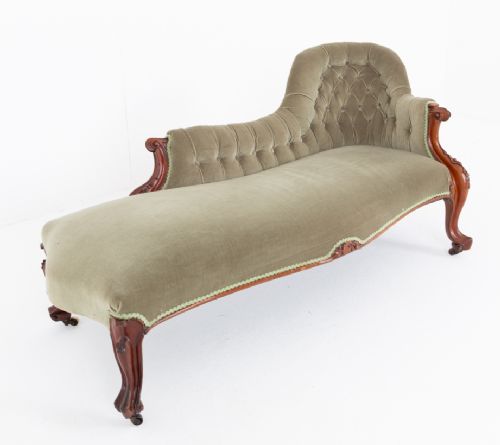
- Polished timber framing left visible around the upholstered portions of an armchair or chaise longue. It highlights the quality of the underlying rosewood and the precision of the joinery.
- Simulated rosewood
- An alternative finishing technique where a dense, lighter wood is painted or stained to mimic the distinctive dark grain of true rosewood. Cabinet makers utilised this method during the Regency period.
- Splat
- The vertical central strip of wood within a chair back that connects the seat to the top rail. Carved versions often define the stylistic period of the piece.
Carved Back Rosewood Chairs: Frequently Asked Questions
How do I care for antique rosewood chairs?
Keep wooden surfaces away from direct sunlight and heat sources to prevent the natural timber from drying out or splitting. Apply specialist wax polish sparingly to maintain the protective finish on the carved frames.
Inspect the joints periodically to ensure the historical glue remains stable under normal domestic use. Avoid harsh modern chemical cleaners on both the rosewood frames and the historical upholstery fabrics.
Can I use these chairs for daily dining?
Nineteenth-century dining chairs were built for daily domestic utility using dense hardwoods, making them robust enough for regular seating. Verify the structural integrity of the frame and joinery before assigning them to heavy daily use.
Larger dining sets offer uniformity around a table, though individual armchairs suit studies or occasional living room placement. Ensure that antique castors, where fitted, roll smoothly across modern flooring surfaces.
How do I date a rosewood chair?
Examine the overall silhouette, woodturning, and carving style to determine whether a piece belongs to the Regency, William IV, or Victorian eras. Regency examples typically display cleaner classical lines, whereas Victorian pieces favour heavier Rococo Revival curves and balloon backs.
Check the construction methods and fastener types hidden beneath the seat rails for additional chronological clues. Subtle shifts in timber selection and decorative motifs help narrow down the decade of production.
What is the difference between side and armchairs?
Side chairs are built without armrests, designed primarily to be tucked neatly around a dining table or placed against a wall. Their compact proportions allow larger sets to gather closely without overcrowding the room.
Armchairs incorporate structural armrests to provide greater comfort and physical support, making them suitable for libraries or reading corners. They often feature more elaborate carving on the arm supports and wider seat frames.