


Brown Rosewood Dining Chairs
These brown rosewood dining chairs bring rich grain and firm seating to the table, rooted in Regency and Victorian craftsmanship.
Brown Rosewood Dining Chairs
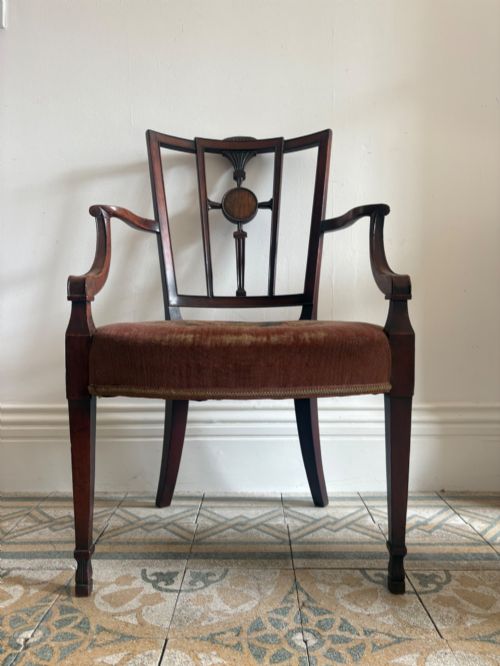
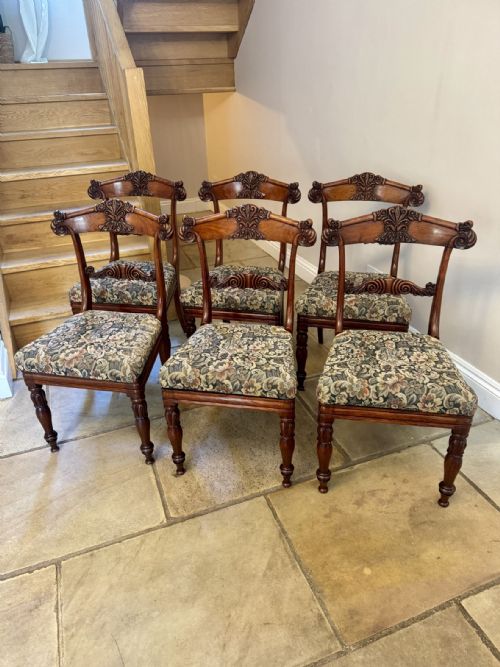
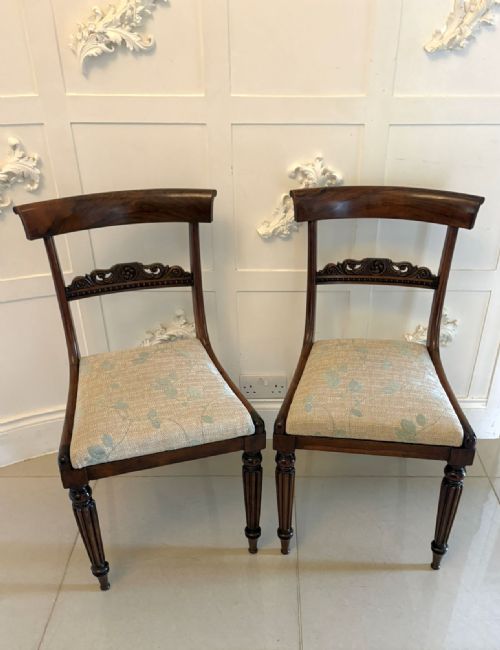
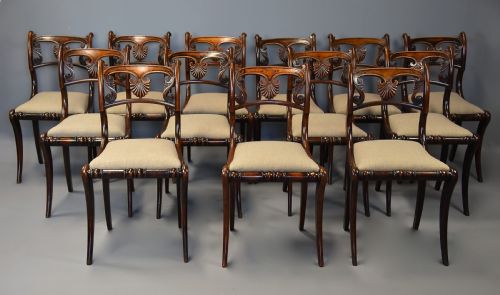
When you search for brown rosewood dining chairs, you encounter seating built primarily across the Georgian, Regency, and Victorian periods. The selection on this page centres heavily on Regency and mid-nineteenth-century examples, including sets of six alongside pairs and individual armchairs.
Forms range from formal dining chairs and side chairs to balloon backs, rope twist designs, and Anglo-Indian variants. Many pieces incorporate simulated rosewood finishes on beech or mahogany, reflecting the period desire for rich grain effects without solid timber costs.
What varies in quality
The distinction between ordinary and superior examples lies in the depth of the timber grain, the crispness of carved details like rope twists and balloon backs, and the integrity of the frame construction. Finer sets display uniform finishing across all matching chairs, whilst simulated versions rely on the skill of the original grain painter.
Original upholstery methods, intact caning, and maker stamps elevate the standing of a piece. Lesser examples show heavy surface wear, replacement structural components, or mismatched timber tones within a set.
Listings feature pieces spanning the 18th century through the Victorian era, utilising rosewood, mahogany, beech, and cane.
Gillows
The Brown Rosewood Dining Chairs Glossary
- Simulated rosewood
- A painted or grained finish applied to a secondary timber such as beech or mahogany to imitate the appearance of genuine rosewood. This technique was common in the Regency period.
- Balloon back
- A rounded, oval-shaped chair back resembling the profile of a hot air balloon, popular during the early and mid-Victorian eras. It provides ergonomic back support.
- Rope twist
- A carved decorative motif resembling a twisted rope, frequently found on the top rails or crossbars of Regency dining chairs. This detail adds texture to the timber surface.
- Anglo-Indian
- Furniture made in India by local craftsmen using regional timbers like rosewood, usually following British cabinetmaking forms for export. These pieces often feature intricate carving.
Brown Rosewood Dining Chairs: Frequently Asked Questions
How do I date a rosewood chair?
Dating relies on observing structural forms, such as the curved sabre legs typical of the Regency period or the rounded uprights of Victorian balloon backs. Joinery methods and finish types also provide clear chronological markers.
Comparing the timber preparation and secondary woods against known period examples helps confirm the decade of manufacture.
Are simulated rosewood chairs genuine antiques?
Simulated rosewood chairs dating from the Regency and Georgian periods are authentic antiques produced during an era when grain painting was a respected craft. They used alternative woods like beech or mahogany to achieve a fashionable dark finish.
These pieces hold historical validity equal to solid timber furniture from the same workshops.
How should I care for antique rosewood?
Maintain antique rosewood by keeping pieces away from direct sunlight and sudden temperature shifts that can dry out the timber. Apply a microcrystalline wax sparingly to preserve the polished surface.
Avoid using modern liquid polishes containing silicone, which can penetrate open grain and damage the historic finish over time.
Can I mix different sets of dining chairs?
Mixing different chair sets works well if the wood tones, heights, and general periods share a visual harmony around the dining table. Pairing Regency side chairs with matching carvers creates a balanced arrangement.
Ensuring the seat heights align correctly remains essential for comfortable dining use.