
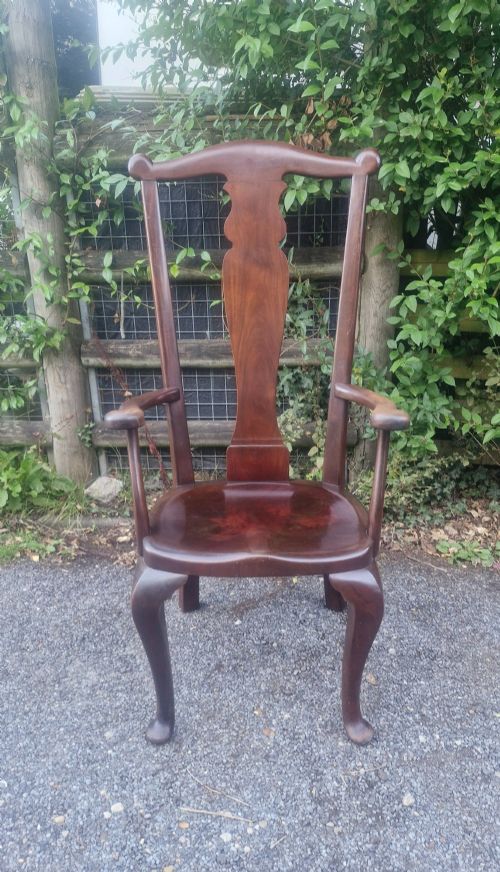
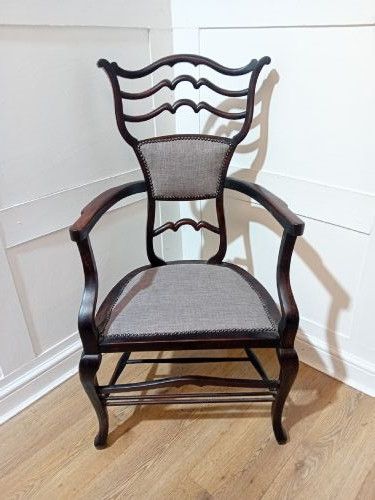
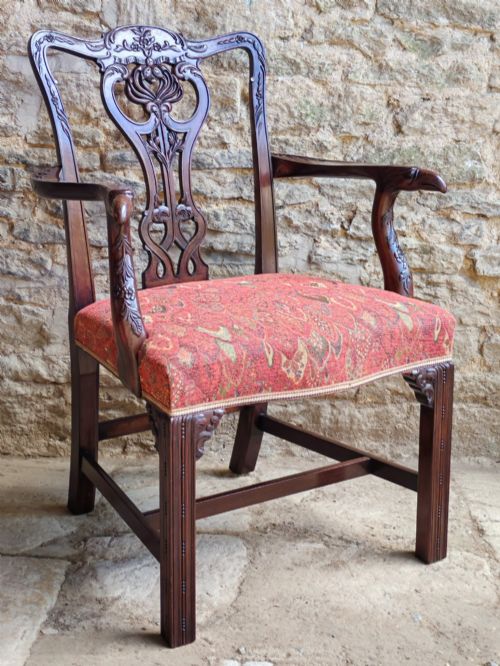
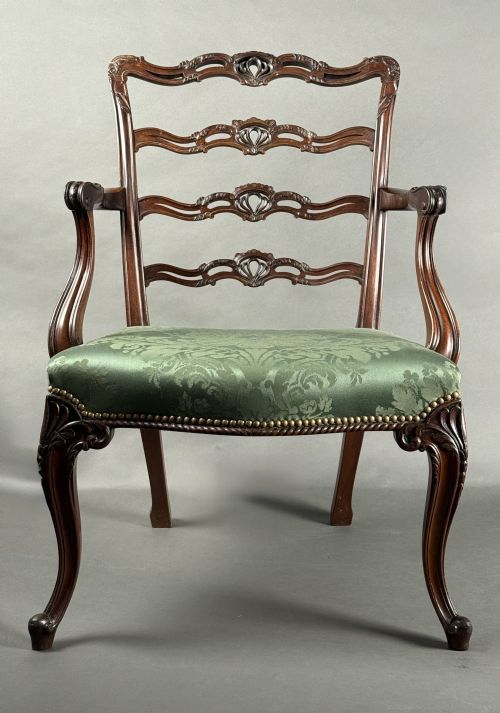
Carved Back Elbow Chairs
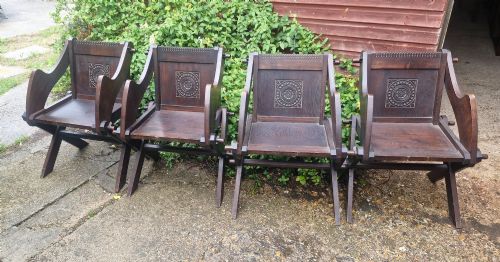
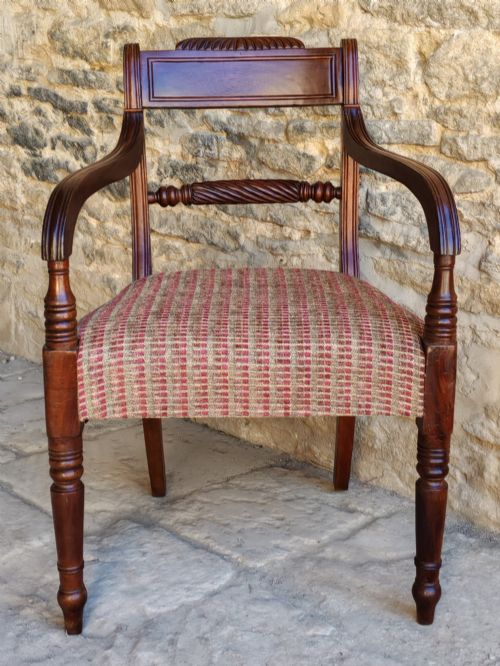
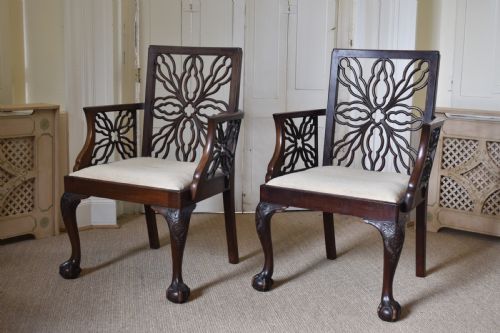
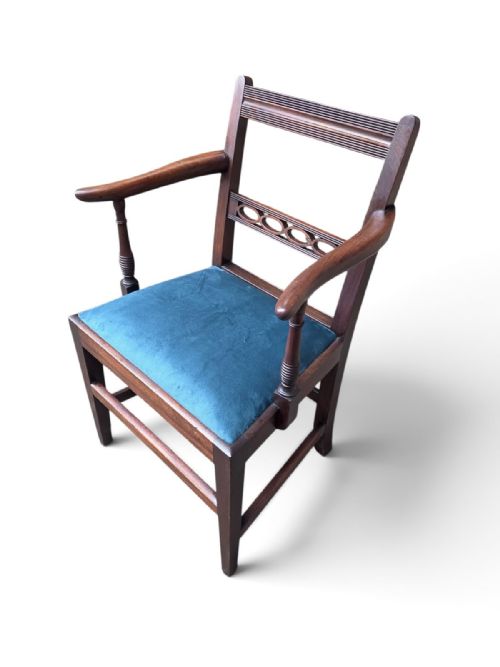
Carved back elbow chairs are substantial timber seats with supportive armrests, offering both utility and presence.
Carved Back Elbow Chairs
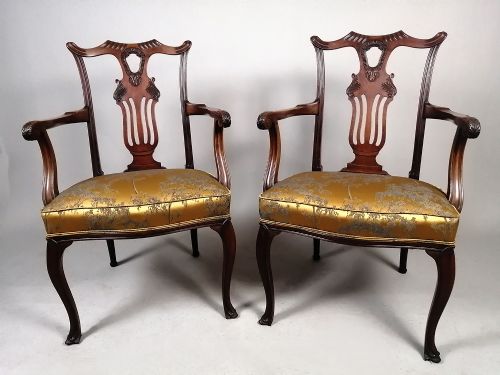
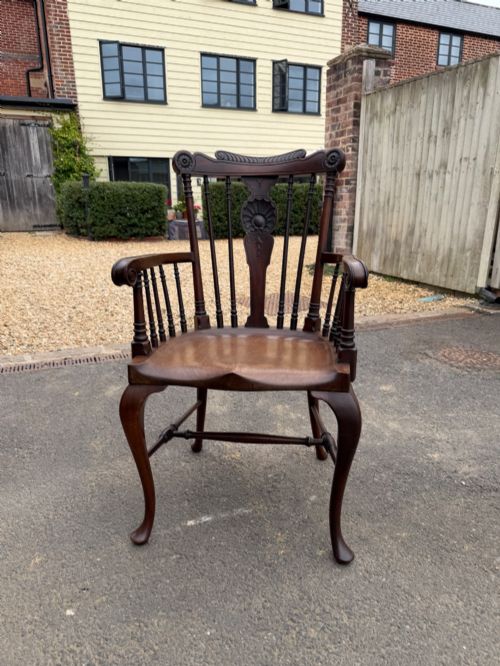
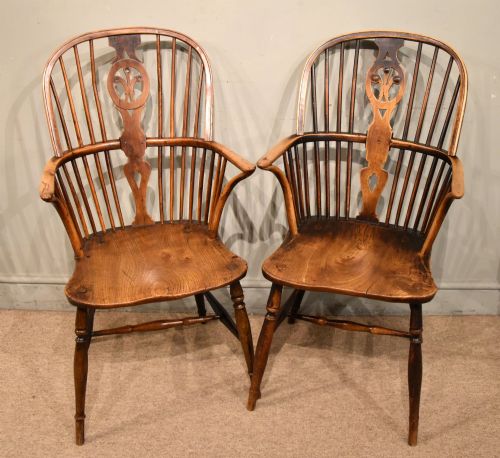
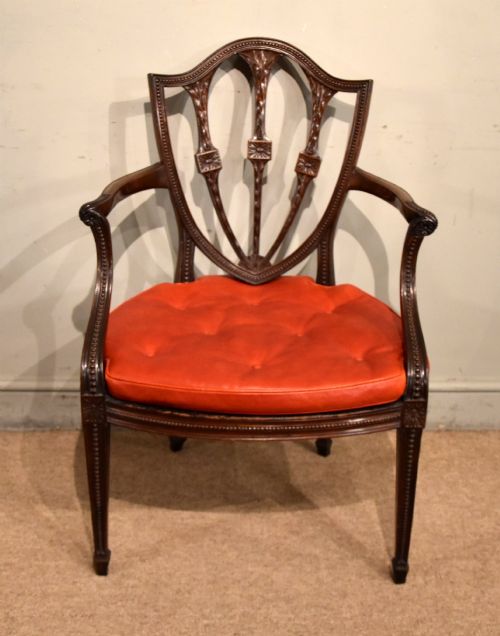
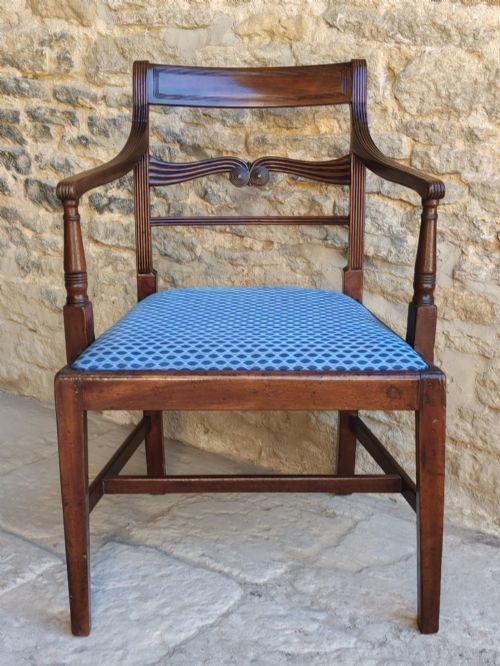
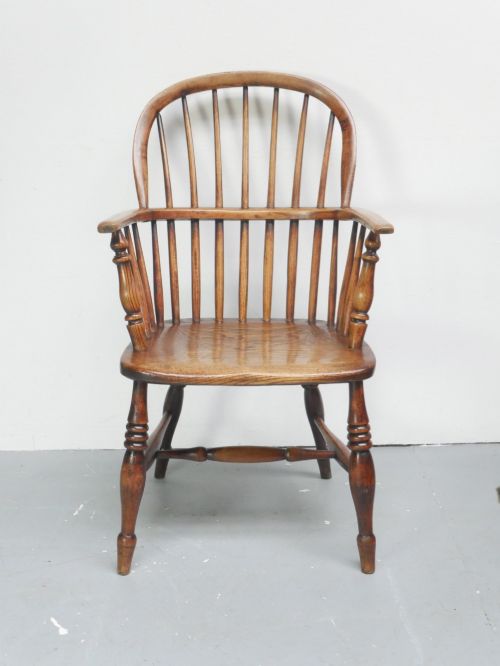
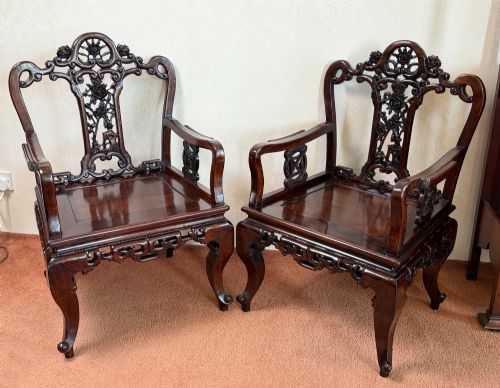
Carved back elbow chairs are timber seats featuring supportive armrests and decorative woodwork along the backrest. These pieces range from formal Georgian and Victorian mahogany designs to vernacular Windsor forms constructed from elm, ash, and yew wood. Buyers searching for carved back elbow chairs encounter numerous examples from the eighteenth, nineteenth, and early twentieth centuries, spanning both British and continental traditions.
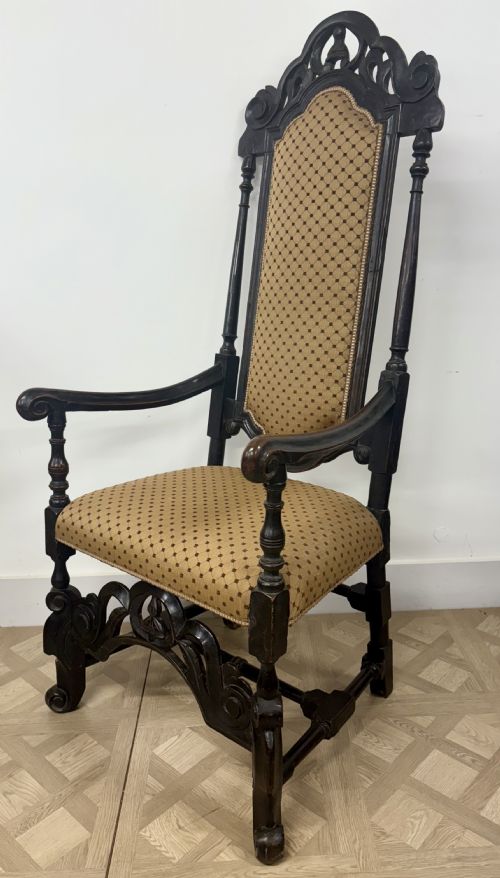
Mahogany open armchairs and revival pieces dominate the selections, alongside regional variations such as Welsh and Scottish Windsor chairs. Workshops also produced specialised seating such as desk armchairs, library chairs, and captain's chairs. While many follow classical Georgian and Chippendale styles, others draw on Carolean, Regency, or Queen Anne revivals, incorporating cane panels, fabric upholstery, or plain timber seats.
How they were made
Cabinet makers and vernacular joiners utilised solid hardwoods including mahogany, oak, walnut, and elm, often combining supplementary timbers such as yew, fruitwood, and laburnum within a single Windsor frame. Timber selection dictated the structural capability of the chair, allowing makers to carve intricate pierced splats, scrolled arms, and detailed crest rails without compromising weight bearing strength.
Joinery methods relied on traditional mortise and tenon joints, steam bending for curved components like bows and armrests, and skilful hand carving to ornament the splats and stiles. Surfaces received finishes ranging from polished French polish on mahogany to painted treatments on walnut or folk art pieces, occasionally incorporating cane work for seats and backs.
Listings feature eighteenth, nineteenth, and early twentieth century pieces in mahogany, oak, walnut, elm, and yew wood.
What varies in quality
Quality in these chairs rests upon the crispness of the hand carving, the choice and figuring of the timber, and the architectural proportion of the frame. Superior examples display deep, sharp relief work on the back splats and arms, whereas lesser pieces rely on shallow machine tooling or plain mouldings.
Structural integrity also separates the grades, visible in the tightness of the joinery and the selection of unblemished, dense hardwoods. Chairs that retain their original timber surfaces, proportional arm supports, and balanced frames command greater regard than those with heavy alterations or mismatched replacement components.
Howard and Sons
The Carved Back Elbow Chairs Glossary
- Carver
- An armchair designed to match a set of dining chairs, usually placed at the head of a table.
- Elbow chair
- A term for any chair fitted with side armrests, providing additional comfort and support.
- Splat
- The vertical central strip of wood in the back of a chair, frequently carved or pierced in revival styles.
- Windsor
- A traditional chair construction method featuring turned legs and spindles slotted directly into a solid shaped wooden seat.
- Stile
- The upright vertical post forming the outer edge of a chair back frame.
Carved Back Elbow Chairs: Frequently Asked Questions
What is a carver chair?
A carver chair is an armchair traditionally manufactured to match a set of dining chairs, typically positioned at either end of a dining table.
These pieces share the stylistic motifs, timber choices, and leg designs of their smaller companion chairs while offering the added support of armrests.
How do I identify a Windsor chair?
Windsor chairs are characterised by a solid wooden seat into which the legs, back spindles, and armbow are directly joined without a traditional frame.
They frequently utilise regional timbers such as elm, ash, and yew wood, resulting in sturdy vernacular seating.
What is the difference between mahogany and walnut chairs?
Mahogany chairs typically date from the mid-eighteenth century onwards, offering a dense, reddish brown grain suitable for sharp, crisp carving.
Walnut chairs frequently appear in earlier seventeenth and early eighteenth century designs, displaying rich, dark figured grain patterns.
Where should I place an elbow chair at home?
Elbow chairs function well as desk chairs, fireside seating, or as standalone accent pieces in a hallway or bedroom.
Their supportive armrests and decorative backs provide both practical utility and a strong visual focal point in a room.