



Victorian Glastonbury Armchairs
Victorian glastonbury armchairs are distinctive ecclesiastical seating derived from ancient monastic designs, offering solid joinery and deliberate historicism for the interior.
Victorian Glastonbury Armchairs
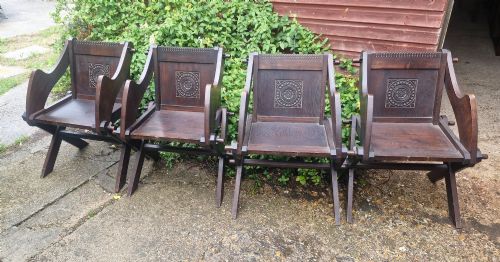
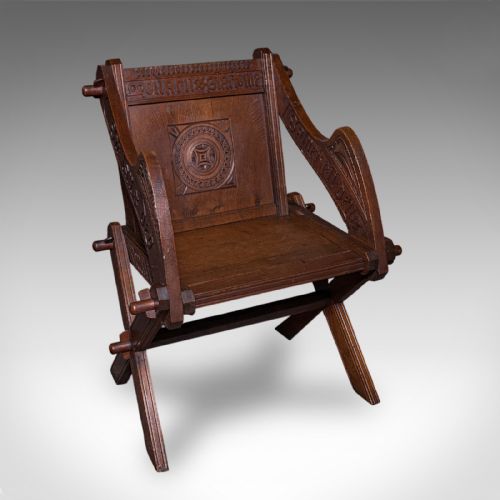
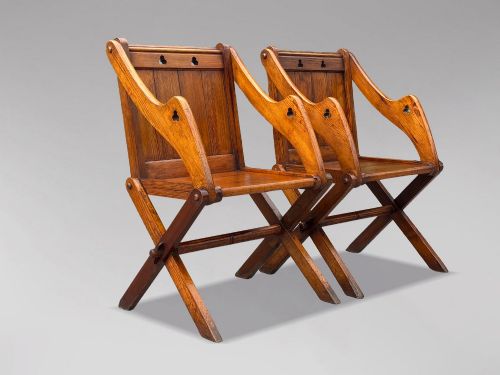
When you search for Victorian glastonbury armchairs, you encounter sturdy timber seating defined by folding X-frames, sloping armrests and high panelled backs. The listings show these pieces emerging primarily from the nineteenth century, spanning periods around eighteen eighty up to nineteen hundred.
How they were made
Makers constructed these chairs predominantly from solid oak or pitch pine, utilising interlocking pegged joints to build the characteristic X-frame structure without relying on metal hinges. Carpenters shaped the timber to form sloping arms and upright backs, frequently incorporating carved inscriptions or decorative panelling into the framework.
The aesthetic relies on strict adherence to Gothic Revival principles, uniting ecclesiastical proportion with straightforward carpentry. Selected pieces display deliberate surface carving typical of late nineteenth-century workshops producing vernacular and revivalist furniture.
Victorian Glastonbury Armchairs Retail Price Guide 2026
Typical asking prices for victorian glastonbury armchairs among the pieces listed under this phrase on Sellingantiques today, from the lower quarter to the upper quarter. They describe what is for sale here now, not the wider market.
Some antique glastonbury chairs feature secret inscribed messages carved into the wooden panels, giving a quiet voice to nineteenth-century makers.
What varies in quality
The standard of a Victorian glastonbury armchair rests upon the selection of timber and the crispness of its joinery. Dense, figured oak yields a more convincing historic presence than plain pitch pine, while tight interlocking joints separate superior cabinet work from looser assembly.
Proportion and the execution of carved inscriptions or panel details distinguish standard vernacular output from more ambitious decorative commissions. The integrity of the intersecting X-frame members dictates the overall structural success of each chair.
The Victorian Glastonbury Armchairs Glossary
- Gothic Revival
- An architectural and decorative style drawing on medieval forms, pointed arches and ecclesiastical motifs. This aesthetic dominated nineteenth-century furniture design.
- X-frame
- A structural arrangement where intersecting diagonal members form the support of a chair or table. Glastonbury armchairs utilise this folding architecture.
- Pitch pine
- A resinous softwood utilised in nineteenth-century joinery for its durability and distinctive grain pattern. It appears as an alternative to hardwood in certain regional pieces.
- Elbow seat
- A traditional term for an armchair, often denoting a heavy wooden form with solid armrests designed for upright sitting. Such seating suited ecclesiastical and domestic halls alike.
Victorian Glastonbury Armchairs: Frequently Asked Questions
Where were these chairs placed?
These chairs originated as ecclesiastical or domestic seating intended for studies, halls and libraries during the nineteenth century. Their architectural presence suited Victorian interiors designed in the Gothic taste.
They function well today as accent seating in period rooms or contemporary spaces, offering a distinct historical silhouette without occupying excessive floor space.
How do I identify the period?
Identification relies on examining the timber species, construction methods and stylistic markers such as Gothic Revival carving. Pieces date from the nineteenth century, specifically around eighteen eighty to nineteen hundred.
Makers working in this era combined traditional joinery techniques with revivalist designs, producing items that reflect late Victorian historicism.
Are these chairs comfortable?
Glastonbury armchairs feature solid wooden seats and rigid high backs designed for upright posture rather than lounging. Their ergonomics reflect medieval ecclesiastical seating rather than modern upholstered comfort.
Adding a loose squab cushion can soften the wooden seat while maintaining the visible profile of the X-frame and panelled back.
What woods were used?
The listings show these armchairs built primarily from oak, alongside pitch pine variants. English and Welsh workshops utilised these domestic timbers for their strength and grain.
Oak provides a traditional heavy aesthetic, whereas pitch pine offers a lighter resinous alternative common in nineteenth-century regional production.