

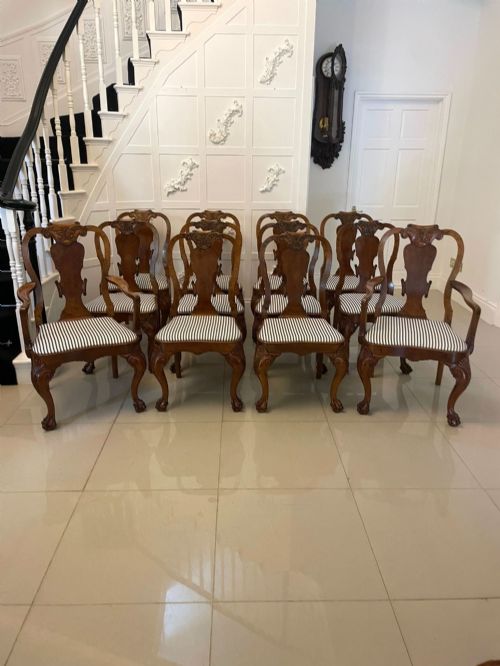
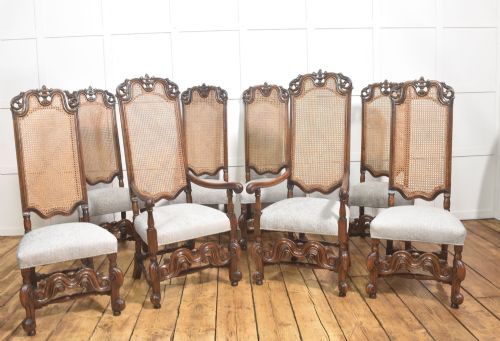
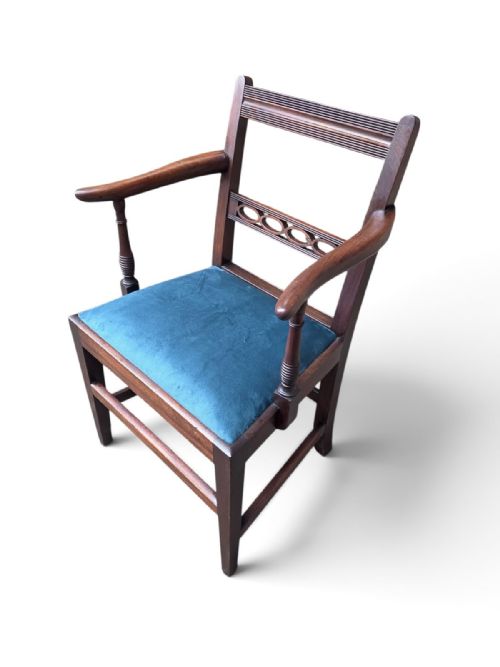
Carved Back Dining Armchair
A carved back dining armchair brings historical presence to a table, offering sturdy timber frames and sculptural backrests designed for comfort during long meals.
Carved Back Dining Armchair
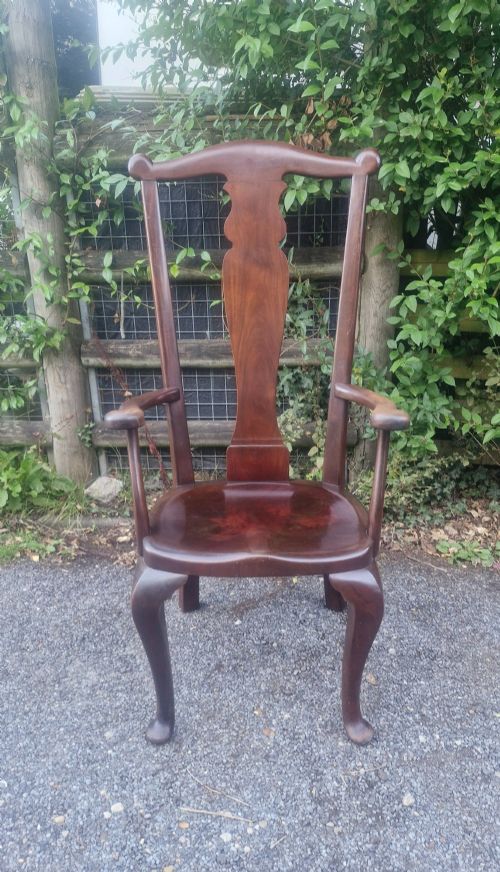
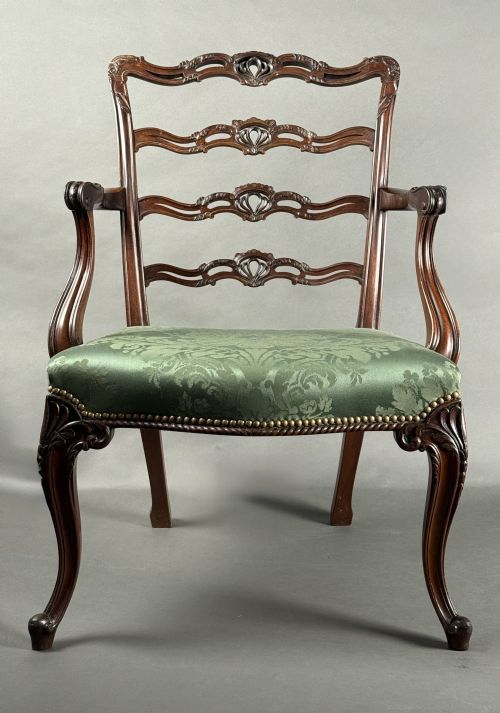
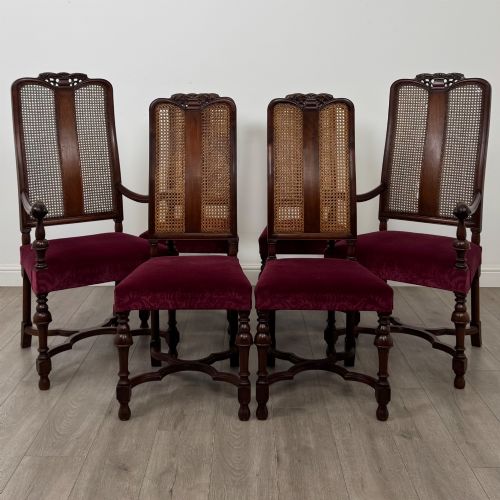
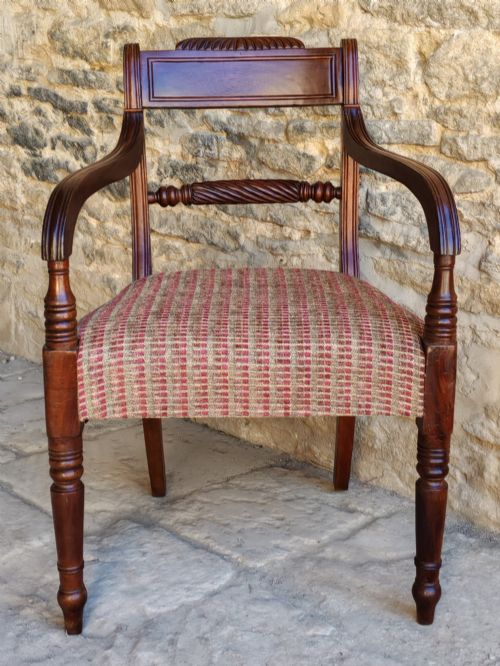
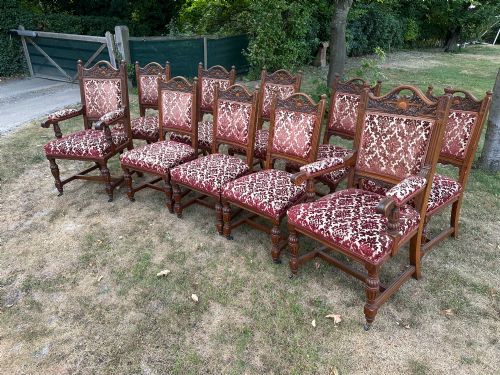
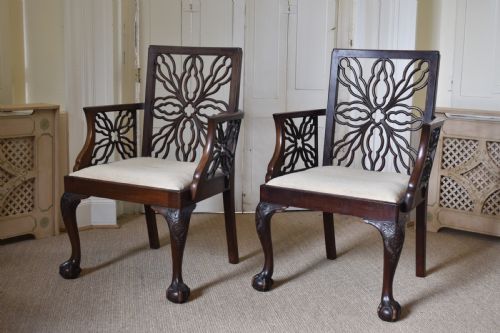
A carved back dining armchair is a seating form intended for the head of a table or as part of a matched dining set, distinguished by an ornamented backrest and supportive side arms. The examples available on this page originate primarily from the eighteenth and nineteenth centuries, alongside early twentieth-century revival pieces spanning Georgian, Victorian, and Edwardian periods.
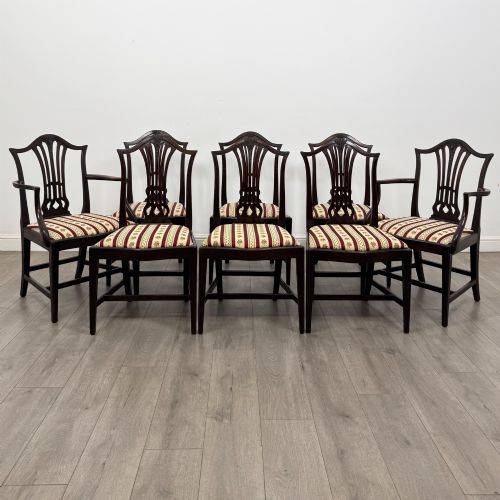
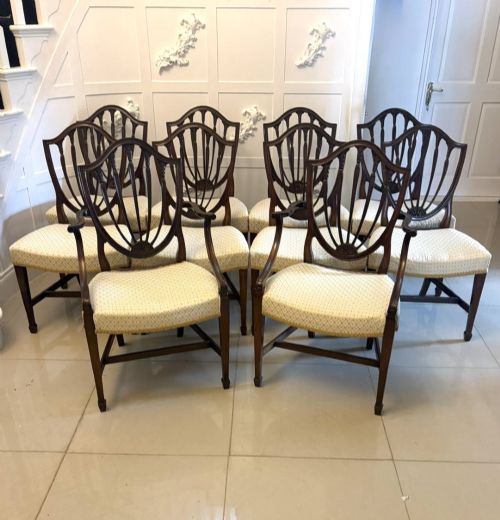
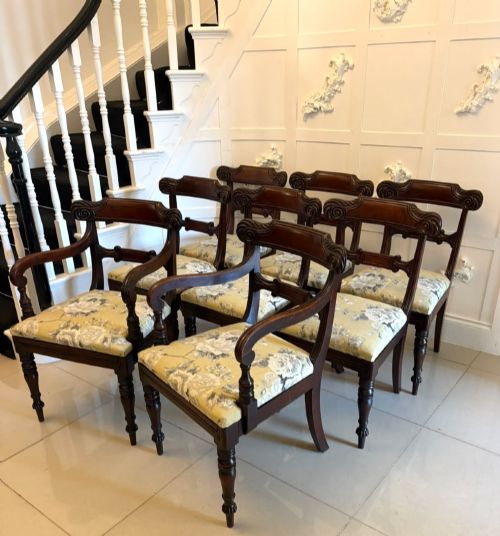
The common configurations range from single open-arm chairs to matched sets combining side chairs with accompanying carvers. These pieces utilise traditional forms such as shield backs, ladder backs, rope backs, and lyre backs executed in substantial hardwoods.
Origins stretch across English, Scottish, Welsh, and continental workshops, incorporating regional timber choices and stylistic influences from Chippendale, Hepplewhite, and Regency designs. Buyers encounter everything from robust vernacular oak chairs to refined mahogany and walnut formal seating.
Distinctions in Quality
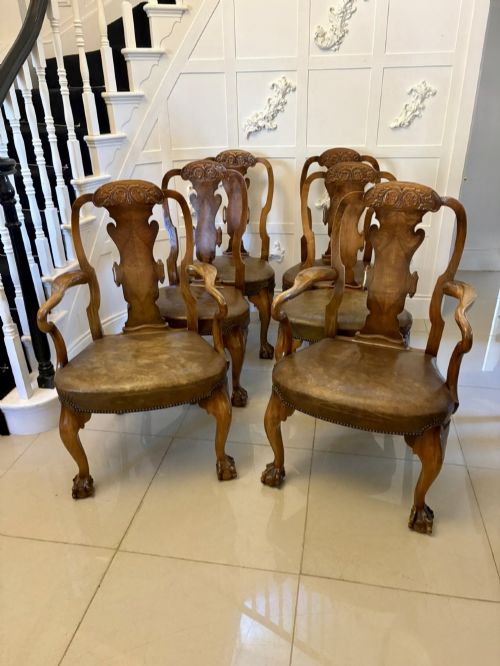
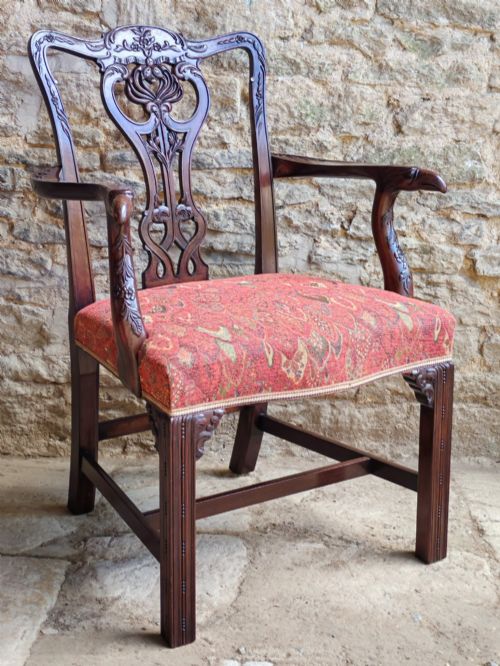
The calibre of a carved back dining armchair rests upon the crispness and depth of the timber carving on the splat and crest rail. Superior examples display sharp, undercut details executed by skilled hands, whereas lesser pieces show shallower, rounded tooling.
Timber selection and grain continuity further separate standard production from exceptional craftsmanship. Well-chosen mahogany and burr walnut with retained original surfaces and tight structural joinery command greater appreciation than heavily restored or mismatched timbers.
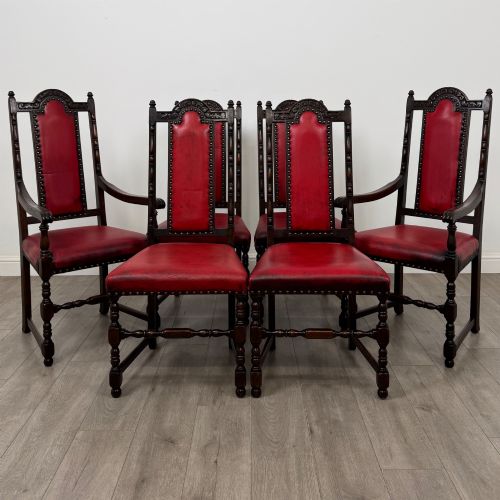
Several armchairs retain their original brass-studded leather hides, ready for another few centuries of stately slouching.
Howard and Sons·Maple and Co·Alfred Allen of Birmingham
The Carved Back Dining Armchair Glossary
- Carver
- A dining armchair designed with open arms to match a set of smaller side chairs. These pieces typically sat at the head and foot of the dining table.
- Shield Back
- A tapered, shield-shaped chair back popularised in the late eighteenth century by designers like Hepplewhite. It frequently encloses pierced wooden splats and carved wheat or drapery motifs.
- Ropeback
- A chair back featuring carved rope twist rails or splats. This design gained prominence during the Regency period.
- Wainscot
- An early heavy wooden armchair form constructed primarily of oak with panelled backs and solid seats. These seventeenth-century pieces represent foundational vernacular seating.
- Splats
- The vertical central strip of wood within a chair back connecting the seat to the top rail. Carvers ornamented these elements with pierced fretwork, foliage, or urn designs.
Carved Back Dining Armchair: Frequently Asked Questions
What is a carver chair?
A carver chair is an armchair built with open sides to match a set of dining chairs. It was traditionally placed at the head of the table for the host.
The term distinguishes armed dining seating from standard armless side chairs within the same suite.
How do I date a mahogany armchair?
Dating relies on stylistic shifts in the carved backrest, leg shape, and timber patination. Georgian pieces show crisp hand-carving in dense dark mahogany, while Edwardian revivals often utilise lighter finishes and machine-assisted detailing.
Construction marks beneath the seat, such as hand-cut screws or pegging, also provide clues to the period of manufacture.
Can I mix different styles around a table?
Mixing antique armchairs with different side chairs is a traditional practice in dining room furnishing. Pairs of carvers from the same broad period anchor a mismatched set successfully.
Matching timber tones or similar back shapes helps unify disparate seating arrangements around a single table.
How should I maintain leather upholstery?
Leather upholstery benefits from regular dusting and occasional treatment with appropriate conservation balms to prevent drying. Avoiding direct sunlight preserves the original tan or dyed finish.
Preserving the hide retains the character built up over centuries of use.