


Jacobean Style Oak Armchair
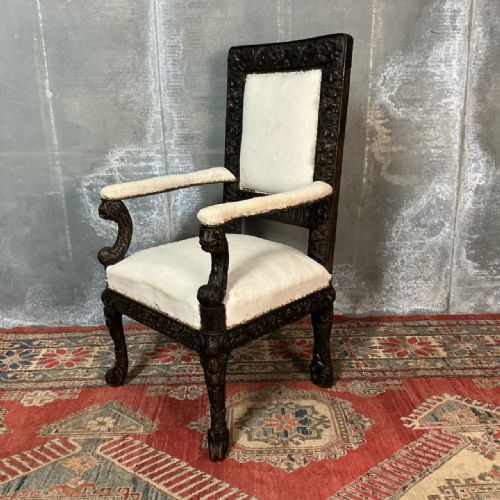
A jacobean style oak armchair carries the heavy presence of seventeenth century design into a room through carved timber and upright posture.

Jacobean Style Oak Armchair
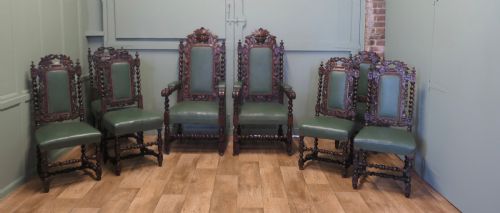
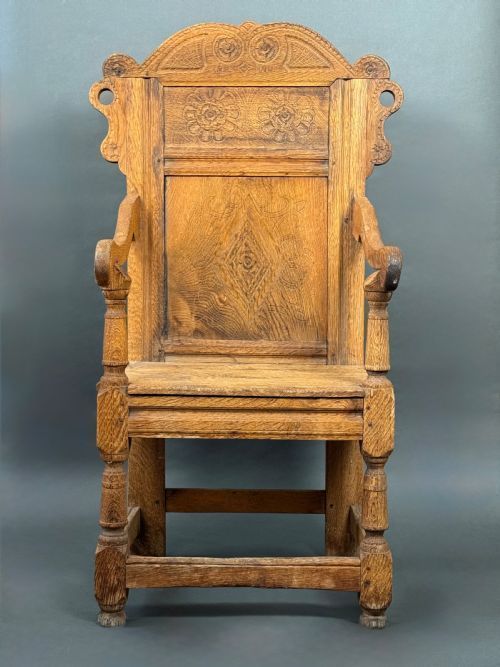
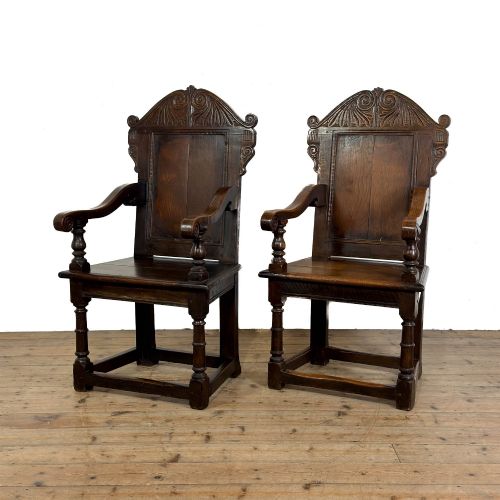
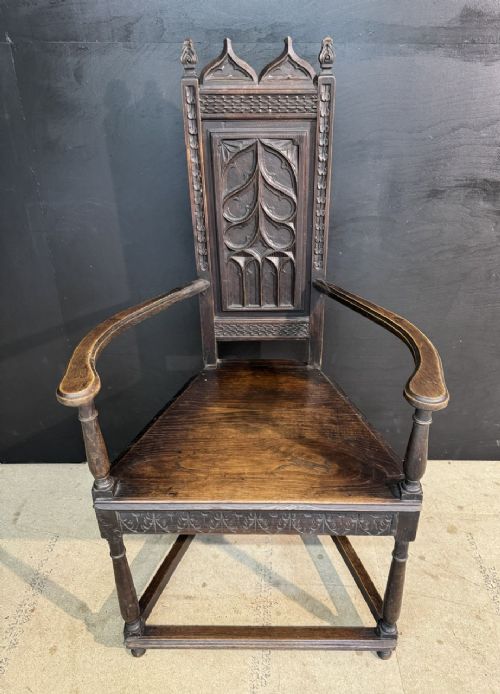
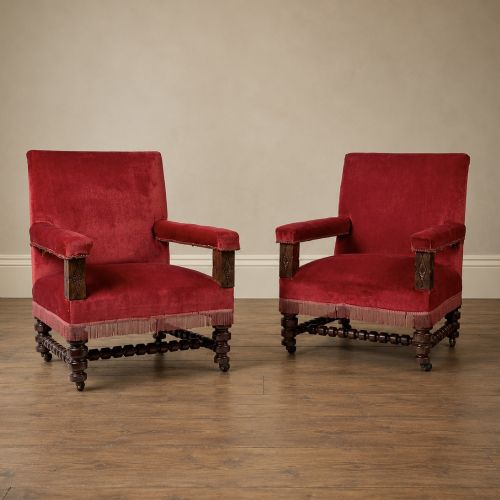
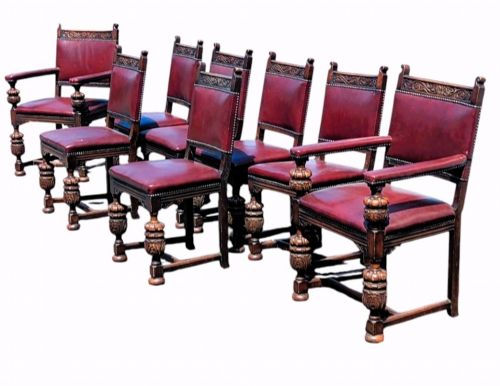
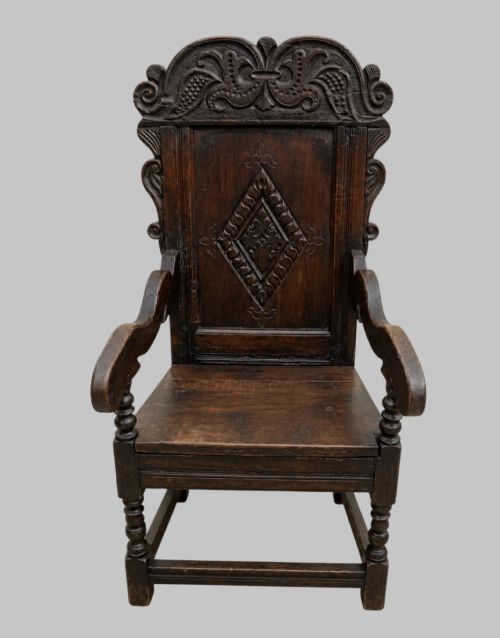
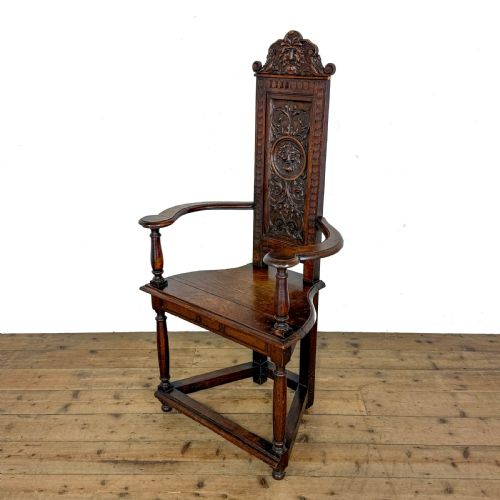
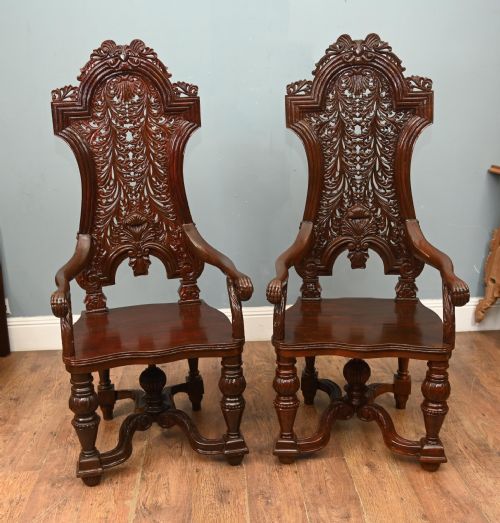
A jacobean style oak armchair takes several forms across the evidence, appearing as sturdy wainscot chairs with panelled backs, grand throne chairs, and revival pieces built in the nineteenth and early twentieth centuries. These seating options reflect both authentic seventeenth-century origins and later revivals that channel the period through heavy proportions and turned components.
Buyers will most frequently encounter nineteenth-century and early twentieth-century interpretations on this page, alongside genuine seventeenth-century examples and eighteenth-century survivals. The selection spans armchairs, desk chairs, and carver chairs that incorporate revival styles such as Carolean, Baroque, and Gothic alongside straightforward Jacobean forms.
The primary material uniting these diverse eras is oak, frequently paired with upholstery materials like leather, velvet, cane, and textile to soften the rigid timber frames. Whether selecting a small wainscot chair or an oversized throne chair, the buyer interacts with a lineage of craftsmanship that prioritises structural weight and linear presence.
Materials and Construction
Solid oak serves as the structural foundation for nearly every armchair in this category, providing the dense grain and substantial weight required for heavy carving and joinery. Makers utilised mortise and tenon joints to lock the uprights, rails, and panels together without relying on modern adhesives.
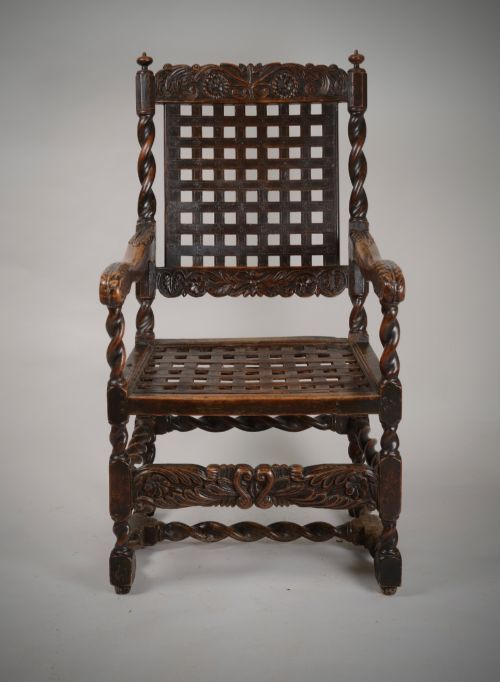
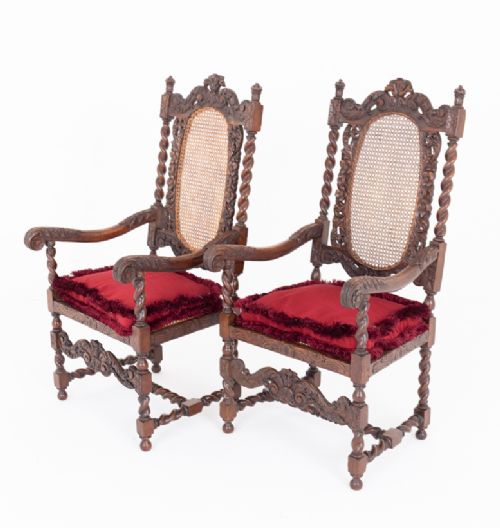
Surface embellishment relies heavily on hand carving, turning techniques such as barley twist legs, and panel moulding rather than applied veneers. Secondary elements like brass tacks, leather seats, and cane inserts appear across various pieces to introduce texture and contrast against the dark timber.
The listings on this page span eight distinct periods, stretching from the seventeenth century through to the nineteen thirties.
Judging Quality in Timber and Form
Quality separates pieces by the depth and crispness of the hand carving on the crest rails, back panels, and arm supports, where shallow machine work lacks the dimensionality found in superior examples. The choice of timber grain and the integrity of the original joints also determine how well a frame holds its rigidity over centuries.
Proportion and scale dictate the visual success of the armchair, distinguishing well-balanced country house pieces from awkward revivals. The integration of secondary materials, such as supple leather or tightly woven cane, further elevates an example above standard production.
The Jacobean Style Oak Armchair Glossary
- Wainscot chair
- A solid wooden armchair with a panelled back and panelled seat base, typical of seventeenth-century domestic interiors.
- Barley twist
- A type of turning shaped like a spiral rope, frequently found on the legs and stretchers of revival seating.
- Carolean
- Pertaining to the reign of Charles II, characterised by rich baroque carving, scrolls, and crown motifs on seating.
- Turners chair
- An early form of chair constructed entirely from cylindrical turned wooden spindles and rails.
- Cane
- Strips of rattan woven in an open mesh pattern to form lightweight seat and back inserts.
Jacobean Style Oak Armchair: Frequently Asked Questions
How do I identify a genuine seventeenth-century armchair?
Genuine seventeenth-century examples show hand-cut joinery, pegged joints, and timber patination developed over centuries of use.
Examination of the underside and interior panels reveals tool marks and construction methods distinct from later nineteenth-century revival pieces.
Were these armchairs used at dining tables?
Armchairs during the seventeenth century were primarily designated for the head of the household or important guests rather than everyday dining.
Later revival sets often paired a single armchair with matching side chairs for use around large dining tables.
How should I care for the oak frame?
Solid oak benefits from occasional applications of beeswax to nourish the timber and maintain a soft sheen without building up heavy wax layers.
Keep the wood away from direct heat sources and sudden humidity changes to prevent timber movement and cracking.