






17th Century Style Armchair
A 17th century style armchair brings sturdy timber and carved authority into a room, offering both history and solid seating.

17th Century Style Armchair
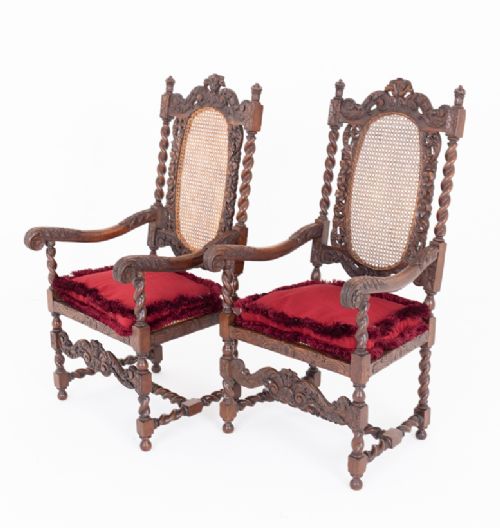
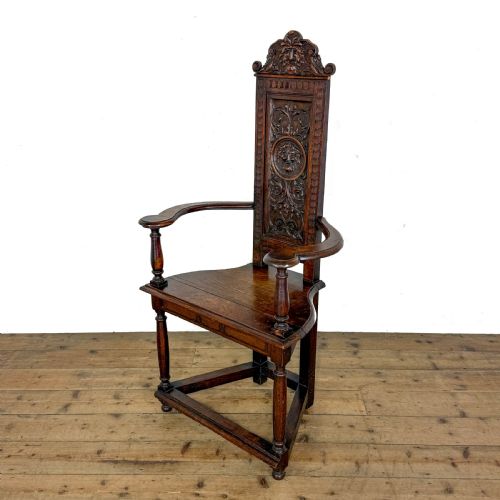
A 17th century style armchair draws on seventeenth-century forms like the wainscot, caquetoire, and high-back scroll design to recreate early seating. Buyers meet pieces originating from the seventeenth century itself alongside nineteenth- and early-twentieth-century revivals.
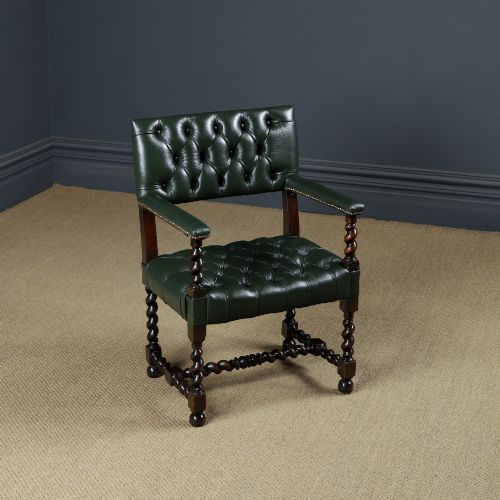
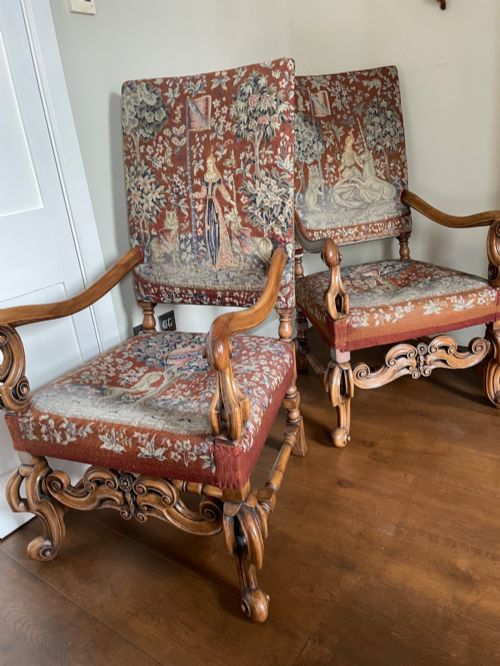
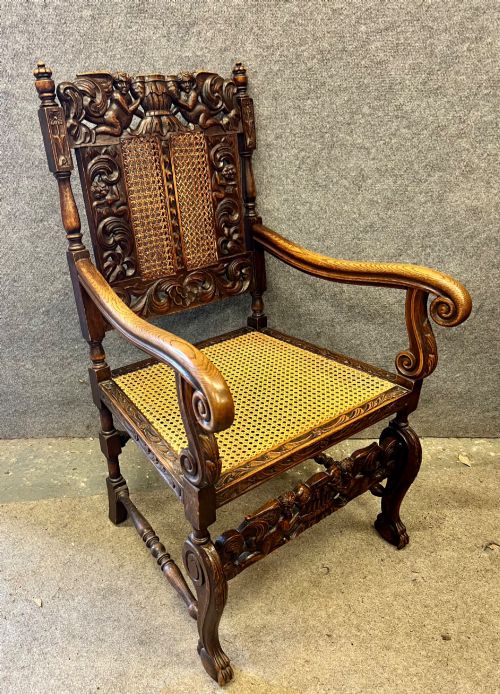
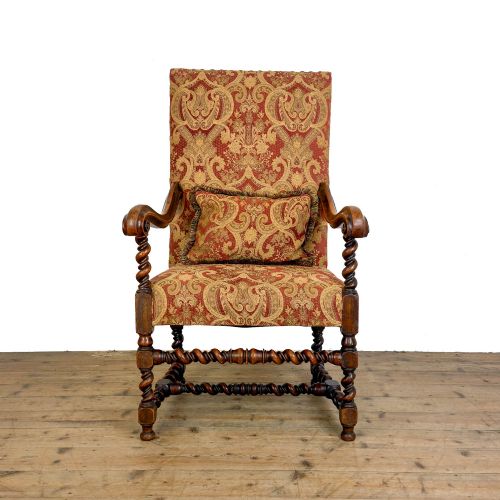
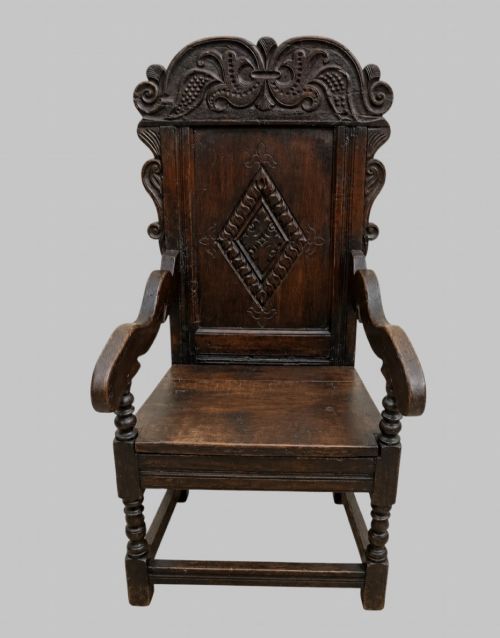
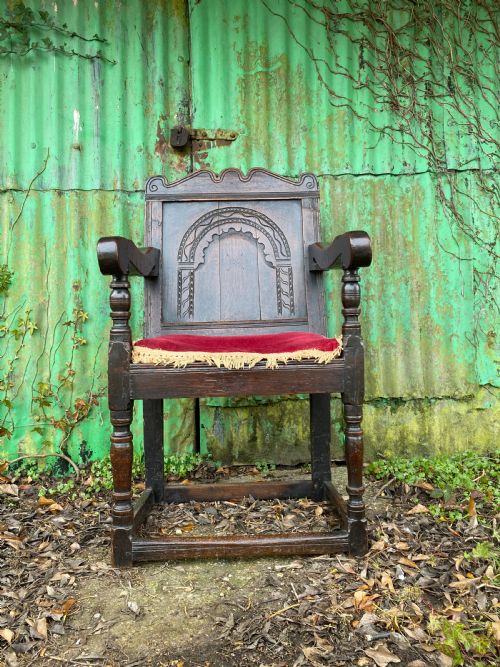
The selection ranges from heavy oak wainscot chairs with panelled backs to walnut elbow chairs finished with cane, leather, or textile fringe. Dining chairs and children's versions also appear across the selection.
Revival pieces from the nineteenth and twentieth centuries sit alongside genuine period examples from the seventeenth and eighteenth centuries. These items reflect Jacobean, Carolean, and Renaissance influences expressed through carved woodwork.
Materials and Construction
Construction relies primarily on solid oak and walnut, shaped into rigid frames with mortise and tenon joints. Carvers decorated the timber with strapwork, scrollwork, and geometric panels.
Upholstery materials include leather, velvet, fabric, and cane inserts, often secured with brass tacks. Textile fringe finishes some high-back scroll armchairs.
17th Century Style Armchair Retail Price Guide 2026
Typical asking prices for 17th century style armchair among the pieces listed under this phrase on Sellingantiques today, from the lower quarter to the upper quarter. They describe what is for sale here now, not the wider market.
Listings span oak, walnut, cane, leather, velvet, and brass fittings across multiple centuries.
Assessing Quality and Execution
Quality rests on the crispness and depth of the carved ornamentation on the oak or walnut frame. Sharp, confident relief work distinguishes superior examples from softer, more mechanical later copies.
The integrity of the structural joinery and the survival of original elements such as cane panels, leather upholstery, and brass fixings dictate the standing of the piece.
The 17th Century Style Armchair Glossary
- Wainscot chair
- A heavy wooden armchair with a panelled back, solid wooden seat, and turned legs, rooted in sixteenth- and seventeenth-century domestic life. These pieces often feature carved backrests.
- Caquetoire
- A lightweight, trapezoidal-shaped conversation chair designed in the sixteenth and seventeenth centuries with a tall, narrow back and open arms. They allow the sitter to turn easily in company.
- Carolean
- Pertaining to the reign of King Charles II from 1660 to 1685, noted for lavish carved walnut frames, scrollwork, and rich upholstery. Revival versions emulate this aesthetic.
- Jacobean
- Relating to the reign of King James I from 1603 to 1625, characterised by robust oak construction and rectilinear forms. The style returned in nineteenth-century revival furniture.
- Cane
- Strips of rattan woven into an open mesh pattern for chair seats and backs. This technique lightened heavy wooden frames during the late seventeenth century.
17th Century Style Armchair: Frequently Asked Questions
Are these armchairs comfortable for daily use?
Early wooden forms like the wainscot chair offer a rigid, upright seat intended for posture rather than lounging. Upholstered walnut and leather variants provide a softer sit.
Adding a loose cushion helps adapt these historic forms for modern seating preferences without altering the timber frame.
How do I distinguish a genuine period piece from a revival?
Examination of the timber shrinkage, tool marks, and construction joints reveals the age of the frame. Nineteenth-century revivals often display machine-cut elements or uniform patination.
Comparing the carving style with known seventeenth-century examples clarifies whether the piece belongs to the original era or later revivals.
How should I care for leather and oak?
Oak benefits from occasional wax polishing to nourish the grain and protect the surface from dry indoor air. Leather requires specialist conditioning to prevent cracking.
Keeping these chairs away from direct heat sources and strong sunlight preserves both the timber and the upholstery.