



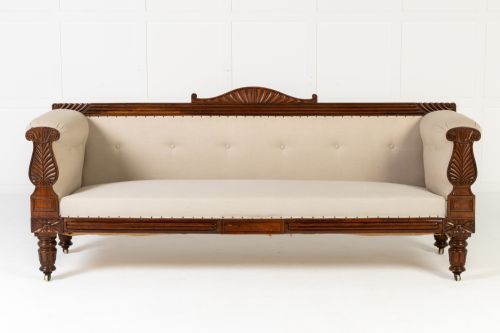

Carved Arm Settee
A carved arm settee brings a heavy frame of mahogany, rosewood or walnut into a room, offering deep seating shaped by Regency, Victorian and earlier hands.
Carved Arm Settee
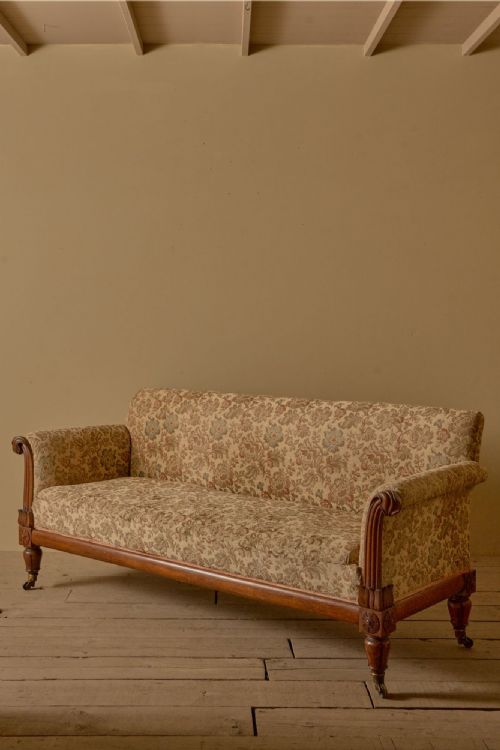
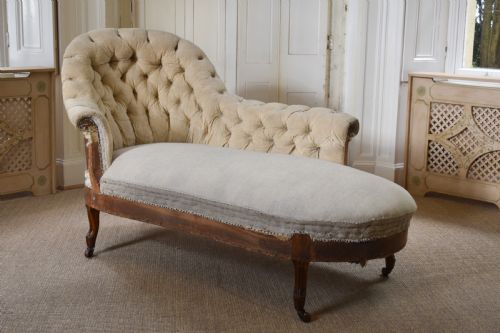
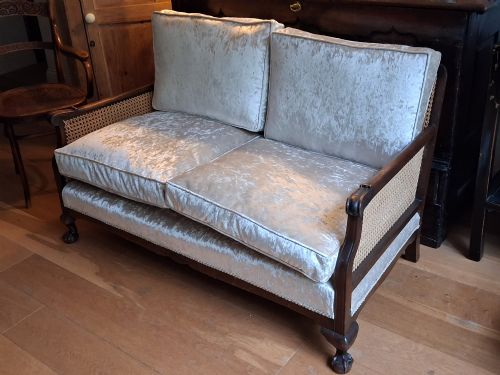
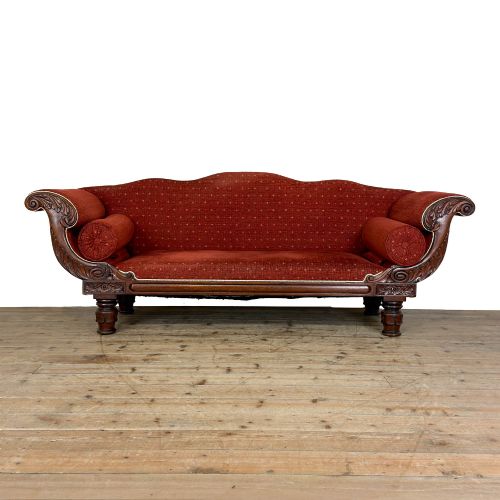
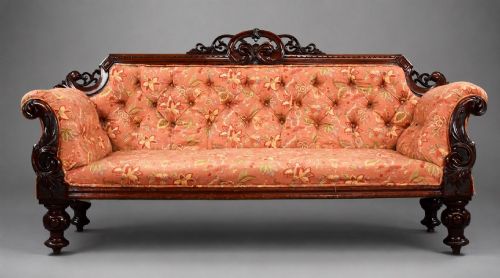
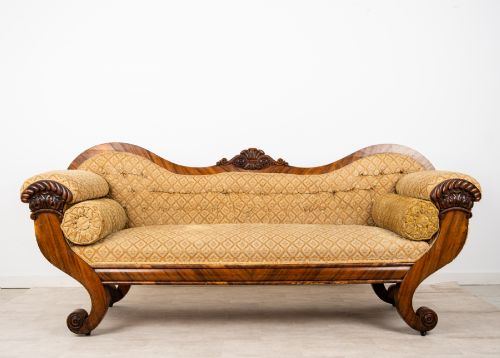
When you search for a carved arm settee, you are looking at substantial wooden seating designed for formal drawing rooms and country houses, predominantly appearing here in nineteenth-century incarnations alongside earlier eighteenth-century examples and later revivals. These pieces range from scrolling scroll-end sofas and double-ended settees to deep-buttoned chaise longues and chair-back forms.
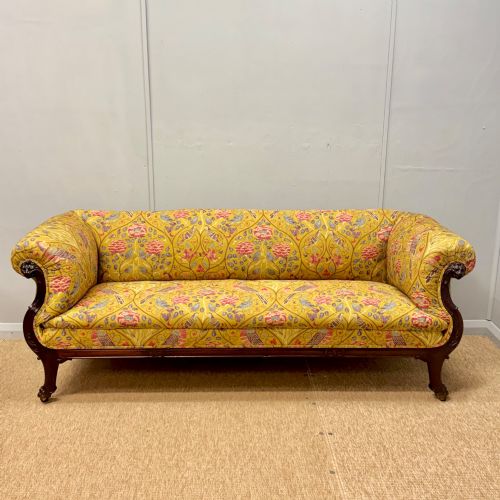
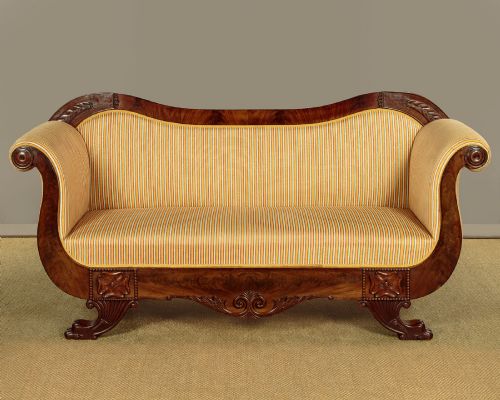
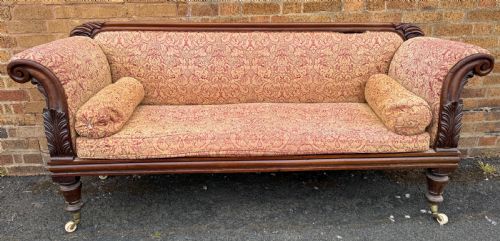
The version you are most likely to meet on this page is a mahogany or rosewood framed piece from the Regency or William IV periods, often featuring carved scroll arms, show frames, and upholstered seating. Such settees span various scales, from intimate two-seaters to large four-seater options and smaller window seats or end-of-bed benches.
How they were made
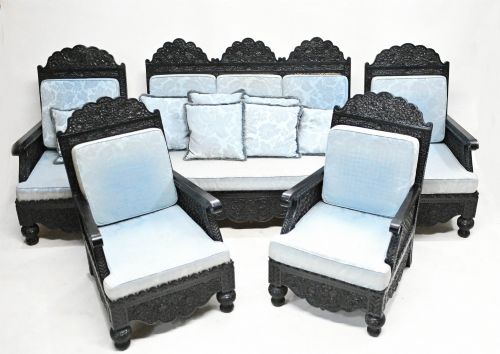
Makers constructed these frames from dense hardwoods like mahogany, walnut, rosewood, padauk, and ebonised timber, frequently employing simulated grain finishes or painted surfaces where solid exotic woods were not utilised. Carving was applied directly to show frames, scroll ends, and lion masks, establishing rigid structural lines that supported heavy sprung or stuffed upholstery.
Upholstery techniques varied widely across the eras represented, utilising traditional stuffing materials covered in fabrics such as velvet, leather, quilted William Morris prints, and cane work. Brass accents occasionally appeared in mounts or castors, anchoring the substantial wooden frames to the floor.
Carved Arm Settee Retail Price Guide 2026
Typical asking prices for carved arm settee among the pieces listed under this phrase on Sellingantiques today, from the lower quarter to the upper quarter. They describe what is for sale here now, not the wider market.
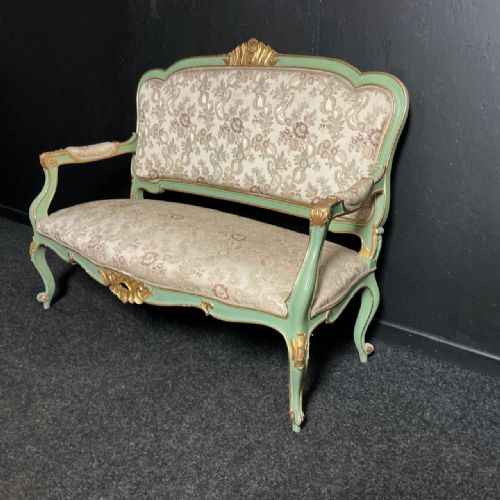
Listings span multiple eras, encompassing eighteenth-century mahogany pieces, Regency scroll ends, Victorian buttoned designs, and mid-twentieth-century French painted frames.
What varies in quality
The distinction between ordinary and exceptional pieces rests in the crispness and depth of the timber carving on the show frame and scroll arms, where skilled hands achieved fluid lines rather than shallow, mechanical stamping. Timber selection also dictates the tier, with figured rosewood, rich mahogany, and dense walnut outranking plain or heavily altered secondary woods.
Proportion and scale separate clumsy versions from those of bold, balanced design, particularly in double-ended settees and scroll-end sofas where the curve of the arm must harmonize with the length of the base. Furthermore, the integrity of the original framing underneath the fabric determines whether a settee holds its structural stance over generations of use.
The Carved Arm Settee Glossary
- Scroll end
- A sofa arm that curls outward in a tight wooden or upholstered spiral, frequently seen on Regency and William IV pieces. This shape defines much of the silhouette in nineteenth-century seating.
- Show frame
- The exposed wooden structure of a settee that surrounds the upholstered areas, allowing the carved mahogany or rosewood to remain visible. It separates show-frame settees from fully covered upholstered chairs.
- Double-ended sofa
- A settee featuring symmetrical scroll ends at both sides, allowing a person to recline comfortably facing either direction. These large pieces were central to grand nineteenth-century drawing rooms.
- Bergère
- A closed-arm French-style armchair or sofa featuring cane work on the sides or back. The cane work requires meticulous hand-weaving.
- Padauk
- A heavy, durable tropical hardwood with a reddish hue, occasionally found in colonial furniture imported from India. It provides immense structural strength for carved frames.
Carved Arm Settee: Frequently Asked Questions
Where did people place these settees?
These large seating pieces typically stood in formal drawing rooms, country house reception spaces, and large parlours where hosts entertained guests. Their substantial presence suited expansive rooms with high ceilings.
Smaller variants such as window seats and end-of-bed settees found places in private dressing rooms and bedrooms. They offered convenient seating for changing clothes or looking out over estates.
How do I spot a Regency frame?
Regency frames generally display dark timbers like rosewood or mahogany, often accompanied by bold scroll ends, brass inlays, or carved lion masks. The lines lean toward classical revival forms inspired by ancient Rome and Greece.
Makers working in this period favored symmetrical designs and restrained, elegant proportions. The woodwork often includes simulated rosewood finishes where less costly woods were painted to mimic exotic grain.
Are these settees comfortable for daily sitting?
Many nineteenth-century settees were built with firm, deep foundations designed for upright formal posture rather than slouching. Padding materials relied on traditional stuffing methods rather than modern foam.
Pieces like chaise longues and deep-buttoned variations offer relaxed reclining angles. Comfort ultimately depends on whether the upholstery has been recently restored with appropriate spring support.